Breathalyzer: How It Measures Blood Alcohol from Breath
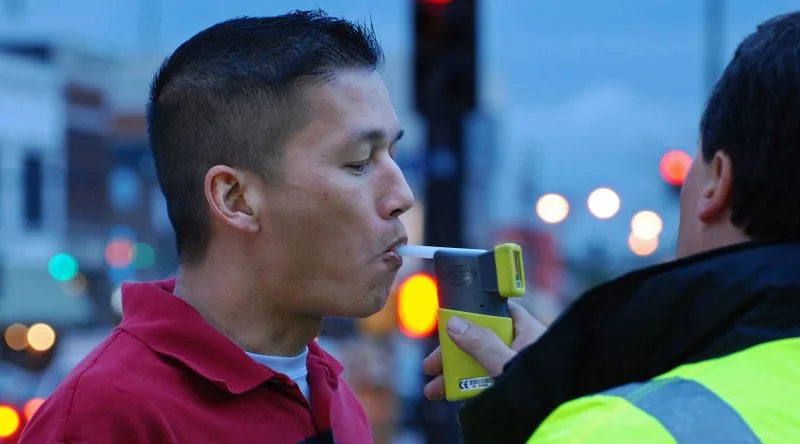
The breathalyzer measures blood alcohol content by analyzing the alcohol vapor in your exhaled breath, a technology that evolved from Francis Anstie's 1874 discovery that alcohol leaves the body through the lungs to Robert Borkenstein's 1954 invention of the practical roadside device. This simple yet ingenious tool has become the standard for roadside sobriety testing, turning a scientific curiosity into a fixture of traffic enforcement that has shaped public safety for over seven decades. Understanding how this device works reveals a remarkable story of chemistry, physiology, and the drive to make roads safer.
A breathalyzer estimates blood alcohol concentration by measuring the amount of alcohol in a person's breath, which correlates with the alcohol in their bloodstream. The technology builds on Francis Anstie's 1874 observation that alcohol is expelled through the lungs, and Robert Borkenstein's 1954 invention made this measurement practical for law enforcement. Modern devices use fuel cell sensors to provide quick, reliable readings.
- In 1874, British physician Francis Anstie reportedly discovered that alcohol consumed by a person is expelled from the body through the breath.
- In 1954, Indiana State Police captain Robert Borkenstein invented the first practical breathalyzer device for roadside blood alcohol measurement.
- Modern breathalyzers use fuel cell sensors that generate an electrical current proportional to the amount of alcohol in the breath sample.
- The ratio of breath alcohol to blood alcohol is approximately 2,100 to 1, meaning 2,100 milliliters of breath contain the same alcohol as 1 milliliter of blood.
- Regular calibration of breathalyzer devices is essential for accuracy, and most jurisdictions require periodic testing against known alcohol standards.
The Breathalyzer: How a Simple Breath Test Knows Exactly How Much You've Had to Drink
Blow into the tube, wait a few seconds, and a number appears that tells a police officer exactly how much alcohol is in your blood. It feels like magic, but the breathalyzer is actually a precise piece of science that reads a tiny fraction of the alcohol your body releases with every exhale. The whole trick comes down to one elegant fact: the alcohol vapor in your breath mirrors the alcohol concentration in your bloodstream, and a device that measures that vapor can calculate your intoxication level with remarkable accuracy.
The story starts in the 19th century with a British doctor named Francis E. Anstie, a physician, medical writer, and journalist who became fascinated with how alcohol moves through the human body. During his research, Anstie developed what became known as "Anstie's limit": the idea that a person could consume up to 1.5 ounces of pure ethanol daily without adverse effects, which works out to about 2.5 US standard drinks. As the story goes, it was around 1874 that he also noticed something curious during his experiments: small amounts of alcohol were being expelled through the breath. That observation, reportedly, planted a seed that would eventually grow into a tool used millions of times a day on roads around the world.
Decades passed before that seed bore fruit. In the 1950s, Robert Frank Borkenstein, an American inventor, researcher, and professor, built the first practical breathalyzer device for measuring alcohol through breath. Borkenstein's invention transformed traffic enforcement, giving police officers a portable, immediate way to test drivers on the spot. But to truly appreciate what that machine does, you have to understand what happens to alcohol the moment it enters your body.
From Anstie's Limit to Borkenstein's Invention: A Brief History of the Breathalyzer
The story of the breathalyzer starts not with a police officer, but with a Victorian-era doctor named Francis E. Anstie, a British physician, medical writer, and journalist who spent his career studying the effects of alcohol. In his research, Anstie derived what became known as "Anstie's limit," a precise calculation stating that a person could consume up to 1.5 ounces of pure ethanol daily without adverse effects, which is equivalent to about 2.5 US standard drinks.
According to the original account, Anstie made another significant observation during his experiments in 1874: he reportedly discovered that small amounts of alcohol are expelled through breath. While the exact details of this discovery remain uncertain in historical records, the idea that alcohol could be detected in exhaled air planted a seed that would eventually grow into a revolutionary law enforcement tool.
That seed lay dormant for decades until the 1950s, when Robert Frank Borkenstein, an American inventor, researcher, and professor, built the first practical device for measuring alcohol via breath. Borkenstein's creation, which he developed in 1954, worked by capturing a breath sample and chemically analyzing it to determine blood alcohol concentration. The device quickly became a standard tool for traffic police worldwide, transforming how law enforcement could identify impaired drivers on the spot rather than requiring a trip to the station for a blood test.
What made Borkenstein's invention so powerful was its simplicity: a driver could blow into the machine, and within moments, officers would have a reliable measurement of whether that person was over the legal limit. The breathalyzer turned Anstie's nineteenth-century curiosity about breath alcohol into a practical, portable instrument that would patrol highways and city streets across the globe.
The Science of Breath: How Alcohol Travels from Your Stomach to Your Lungs
That little plastic mouthpiece you're asked to blow into works because of a simple biological fact: the alcohol you drink doesn't stay in your stomach. Within minutes of that first sip, it's being absorbed through your stomach and intestinal walls straight into your bloodstream.
From there, your circulatory system becomes a delivery network. Alcohol rides along in the blood, reaching your brain, your organs, and eventually your lungs. Your liver tries to keep up, using an enzyme called alcohol dehydrogenase to break the alcohol down, but it works at a steady, unhurried pace: roughly 0.015 per mille per hour. That means the liver can only process so much, and whatever doesn't get metabolized keeps circulating.
Here's where the breathalyzer connection comes in. When that unmetabolized alcohol reaches the delicate tissues of your lungs, some of it evaporates. It vaporizes into the air sacs, and when you exhale, it rides out on your breath. That's the alcohol the machine is hunting for, the invisible vapor that carries the story of everything you drank.
The ratio between alcohol in your blood and alcohol in your breath is remarkably consistent, which is exactly why a breath sample can stand in for a blood test. The device doesn't need to touch your bloodstream at all. It just needs that exhaled air, the tiny fraction that escaped through your lungs.
Your liver keeps chipping away at the alcohol at its fixed hourly rate, but the unmetabolized portion keeps recirculating, keeps reaching your lungs, keeps evaporating. Every time you breathe out during those hours, you're releasing a small sample of what's still in your system. That's the scientific foundation that makes roadside testing possible, and it's why the device you're blowing into can read your blood alcohol level without ever drawing a drop of blood.
Three Ways to Catch a Drink: Fuel Cell, Semiconductor, and Infrared Sensors
Every breathalyzer on the market today relies on one of just three sensing technologies, and each one takes a completely different route to the same answer: how much alcohol is riding along in your breath. The oldest of the three, the fuel cell design, turns your exhaled air into a tiny electrical generator, and the stronger the current, the more you've had to drink.
Here's how that first trick works. When you blow into a fuel cell breathalyzer, your breath travels over electrodes coated in platinum. The alcohol in that breath gets oxidized right there on the platinum surface, shedding electrons in the process. Those freed electrons create an electric current, and the size of that current scales directly with how much alcohol is present. It's a clean, elegant chemical reaction, and it's been a trusted standard in law enforcement for decades.
The second approach skips chemistry for physics. Semiconductor sensor breathalyzers rely on a small, heated element usually made of tin dioxide (SnO2). When alcohol vapor touches that hot surface, it triggers a chemical reaction that changes the material's electrical resistance. The device measures that resistance shift and converts it into an alcohol reading. These sensors are cheaper to produce, which is why you'll often find them in personal, pocket-sized units.
The third method is the most sophisticated of the bunch. Infrared spectroscopy breathalyzers send your breath through a light spectrometer, where infrared light interacts with any alcohol present. The alcohol absorbs and reflects that light at very specific wavelengths, and by measuring exactly which wavelengths get absorbed and how strongly, the device calculates your alcohol concentration. No chemical reaction needed, just pure light physics.
One thing unites all three designs: they only stay accurate with regular calibration. A breathalyzer that hasn't been properly maintained can drift, and that's when you get readings that don't match reality. The machines are precise instruments, not magic boxes, and they need care to keep telling the truth.
Why Calibration Matters (and Why You Can't Fool the Machine)
Here is the honest truth about breathalyzer tests: the way you blow into the device, whether gently or with all your might, will not change the alcohol concentration the machine detects. The science behind this is solid, and the only scenario where you might get a misleading reading is if the device itself is malfunctioning or out of calibration. That is precisely why regular maintenance and calibration are non-negotiable for anyone relying on these instruments.
Think about what happens inside your body before you ever reach for that mouthpiece. Alcohol enters your stomach and intestines, gets absorbed into your bloodstream, and travels to your brain and other organs. Your liver works to break it down using the enzyme alcohol dehydrogenase, processing roughly 0.015 per mille per hour. But here is the key detail: whatever alcohol your liver has not yet processed keeps circulating in your blood, and when it reaches your lungs, a portion evaporates into the air you exhale. That is the breath the breathalyzer samples, and its alcohol content directly mirrors what is in your blood at that moment.
So when someone insists they can outsmart the machine by blowing softly, or holding their breath, or breathing shallowly, they are fighting basic physiology. The concentration of alcohol vapor in your deep lung air, which is what these devices are designed to capture, stays consistent regardless of your blowing technique. A properly calibrated breathalyzer reads that deep lung air accurately. If the reading seems off, the problem is not your technique, it is the equipment.
This is why calibration matters so much. A fuel cell breathalyzer, for instance, relies on platinum-coated electrodes that oxidize alcohol and generate an electric current proportional to the concentration. A semiconductor sensor uses heated tin dioxide that changes electrical resistance when alcohol vapor touches it. An infrared spectrometer measures how much light alcohol absorbs at specific wavelengths. All three technologies depend on precise, factory-set baselines. Over time, sensors drift, electrodes degrade, and readings can shift. Regular calibration brings the device back to its accurate state, ensuring that the number displayed truly reflects your blood alcohol level.
So the next time you see a police officer holding a breathalyzer, remember that the machine is not guessing. It is measuring a real, physical property of your breath, one that your body cannot disguise. The only way to guarantee a clean reading is to not drink and drive in the first place. Leave the car at home, call a ride, and let the machine stay idle.
Frequently asked questions
How does a breathalyzer measure blood alcohol content from breath?
A breathalyzer measures the concentration of alcohol in your exhaled breath and converts that reading to an estimated blood alcohol content using a standard mathematical relationship. When you drink, alcohol enters your bloodstream and some of it evaporates into the air sacs of your lungs. That alcohol vapor leaves your body when you exhale, giving the device something measurable to work with. The science rests on a simple correlation. The alcohol floating in your breath exists in a predictable proportion to the alcohol circulating in your blood. So when a police officer asks you to blow into the tube, the device captures a sample of that breath, analyzes its alcohol content, and applies the established ratio to estimate what your blood would show. The whole exchange takes less than a minute.
Who invented the breathalyzer and when?
Robert Frank Borkenstein, an American inventor, researcher, and professor, built the first breathalyzer device in 1954. His invention became widely adopted by law enforcement in the late 1950s and transformed how police handled drunk driving cases. Before Borkenstein came along, measuring alcohol in a suspect required a blood test or a urine sample, both of which took time and effort. His device changed that by letting officers get a reading on the spot, right there on the roadside. By the end of the 1950s, the breathalyzer had become standard equipment in patrol cars across the United States, and the technology eventually spread around the world.
What is the blood to breath alcohol ratio and how does it work?
The blood-to-breath alcohol ratio is approximately 2100 to 1. This means that 2100 milliliters of breath contains roughly the same amount of alcohol as 1 milliliter of blood. The breathalyzer uses this ratio to convert the alcohol concentration it detects in your breath into an estimated blood alcohol content reading. This ratio provides the mathematical bridge between what you exhale and what is actually in your bloodstream. Without it, a breath test would only tell you that someone had been drinking, not how much. The ratio is not perfectly identical for every person, which is one reason breath tests are considered estimates rather than exact measurements of blood alcohol.
Why is breathalyzer calibration important for accuracy?
Calibration keeps a breathalyzer's sensor readings accurate over time, and without regular calibration, the device can produce misleading results. Think of it like a scale that drifts slightly off zero; it will still give you a number, but that number will be wrong. A breathalyzer measures tiny electrical or optical changes caused by alcohol molecules, and those measurements depend on the sensor maintaining its original sensitivity. Over months of use, sensors can degrade or drift. That is why law enforcement agencies send their units in for regular maintenance and why a poorly calibrated machine is the only way someone can fool the science, as the saying goes.
What are the three main types of breathalyzer sensors?
The three main types of breathalyzer sensors are fuel cell sensors, semiconductor sensors, and infrared spectroscopy units. Each uses a different physical principle to detect alcohol in breath. Fuel cell breathalyzers use platinum-coated electrodes where the alcohol gets oxidized, producing an electric current proportional to the alcohol concentration. Semiconductor sensors rely on a heated element typically made of tin dioxide, which changes its electrical resistance when alcohol vapor touches it. Infrared spectroscopy units pass the breath through a light spectrometer, where infrared light gets absorbed or reflected by alcohol at specific wavelengths, revealing how much is present.
How does alcohol get into your breath in the first place?
Alcohol enters your breath through a straightforward biological path. When you drink, alcohol is absorbed quickly from the stomach and intestines into the bloodstream, then spreads to the brain and other organs. Your liver metabolizes the alcohol using an enzyme called alcohol dehydrogenase, breaking it down at a rate of approximately 0.015 per mille per hour. But before the liver can process it all, some of that alcohol travels to the lungs, where it evaporates into the air sacs. When you exhale, that evaporated alcohol comes out with your breath, which is exactly what the breathalyzer detects.
Did Francis Anstie discover alcohol in breath in 1874?
Francis E. Anstie was a British doctor, medical writer, and journalist who conducted alcohol research and derived what became known as Anstie's limit, stating that a person can consume up to 1.5 ounces of pure ethanol daily without adverse effects, equivalent to 2.5 US standard drinks. According to the original account, he also found during these experiments that small amounts of alcohol are expelled through breath, reportedly in 1874. The year 1874 and the exact attribution of that breath discovery are not clearly documented in available sources, so treat that specific detail with some caution. What is well established is that Anstie's work on alcohol consumption limits left a lasting mark on medical thinking. His research contributed to the foundation that later inventors like Borkenstein built upon when they created the breathalyzer in 1954.
Got a take on this? Add your voice to the conversation below →
No comments yet. Be the first.