Why We Stick Out Our Tongue When Concentrating
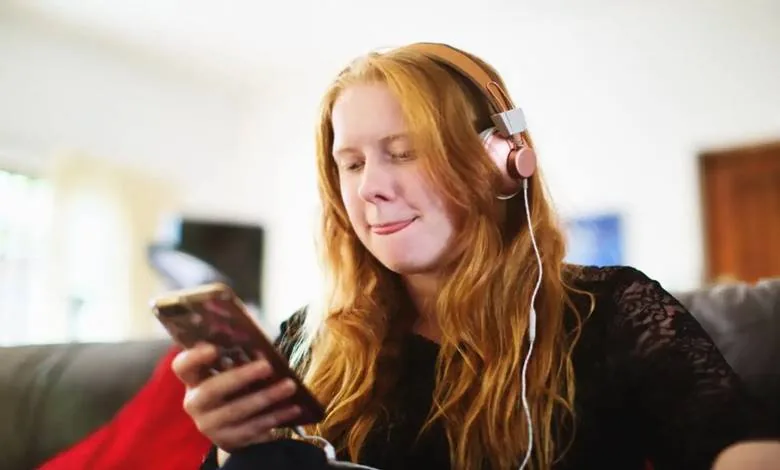
Watch anyone threading a needle, sketching a portrait, or trying to steady a tiny screwdriver, and you will often see the tip of a tongue slip out. It looks involuntary, and in a real sense it is. This is one of the most familiar quirks of human focus, and it has a surprisingly deep explanation rooted in how our motor system is wired. The short answer is that the brain regions handling the hands and the mouth sit close together and often share circuits, though the details are messier and more debated than most quick explanations admit.
Sticking out the tongue during concentration is often described as motor overflow, the idea that effortful hand movements spill over into mouth muscles when brain circuits get busy. One proposed explanation, not a settled definition. Children show it most because their motor control is still maturing. It is usually harmless.
- Motor overflow is the reported term for unintended muscle activity in one body part that accompanies deliberate movement in another, though the mechanistic wording is an oversimplified characterization.
- The tongue and finger areas sit close together in the lateral motor cortex, according to the cortical homunculus, which is one reason signals can blur between them.
- Children stick their tongues out while drawing or writing more often than adults because their motor inhibition is still developing.
- Some researchers link the hand and mouth connection to the evolution of gestures and speech, though this remains a hypothesis.
- The behavior is typically harmless and tends to fade as motor control matures.
Why We Stick Out Our Tongue When Concentrating: The Needle-and-Thread Moment
Picture the last time you threaded a needle. Maybe you were standing at the top of a ladder, one hand holding the curtain rod, the other pinching a thread toward a hole you could barely see. And somewhere in that quiet, focused second, your tongue slid out of your mouth. You did not decide to do it. You probably did not notice until someone laughed.
That little gesture has a name worth chasing: why we stick out our tongue when concentrating. It is not a nervous tic, and it is not a sign that you forgot your manners. Nearly everyone does it, from toddlers stacking blocks to adults wrestling with a stuck zipper. The movement is involuntary, and the story behind it reaches back further than you would guess.
Here is the promise of what follows. Your hand and your tongue are wired together somewhere below the level of conscious effort, and that wiring carries deep evolutionary roots. To see how, we have to look at what happens inside the brain when a task gets hard.
One explanation researchers reach for is something called motor overflow. The idea is that a demanding fine motor task, like passing thread through a needle, loads up your brain circuits until they spill over and activate neighboring ones. That spillover is offered as one possible reason the tongue gets pulled into the job, so treat it as a proposed explanation rather than a proven mechanism.
Watch a child draw a careful circle and you will see the proof in miniature. The tongue comes out, or presses hard against the roof of the mouth, as if it were helping hold the pencil. Researchers note the habit shows up most clearly in children. Adults likely just learn to suppress it, because pulling a face every time you concentrate would not look especially professional at a desk.
Motor Overflow: What Happens in the Brain During Fine Motor Tasks
Threading a needle or hanging a curtain at the top of a ladder can suddenly turn your face into a portrait of effort, with your tongue poking out. One widely repeated explanation for why we stick out our tongue when concentrating is called motor overflow: the idea that demanding fine motor skills overload brain circuits, which then inappropriately activate neighboring ones. Treat that mechanism as a reported characterization rather than a settled textbook definition. Motor overflow itself is real, but the "overload spills into the neighbors" phrasing oversimplifies what researchers actually describe.
Where you see it clearest is in children. A tongue poking out is often the giveaway that a kid is concentrating hard. Adults do it too, either letting the tongue slip past the lips or pressing it up against the palate, but researchers say it shows up most visibly in children, likely because adults learn to suppress it. The social logic is easy to follow: pulling a face every time you need to focus would not look professional.
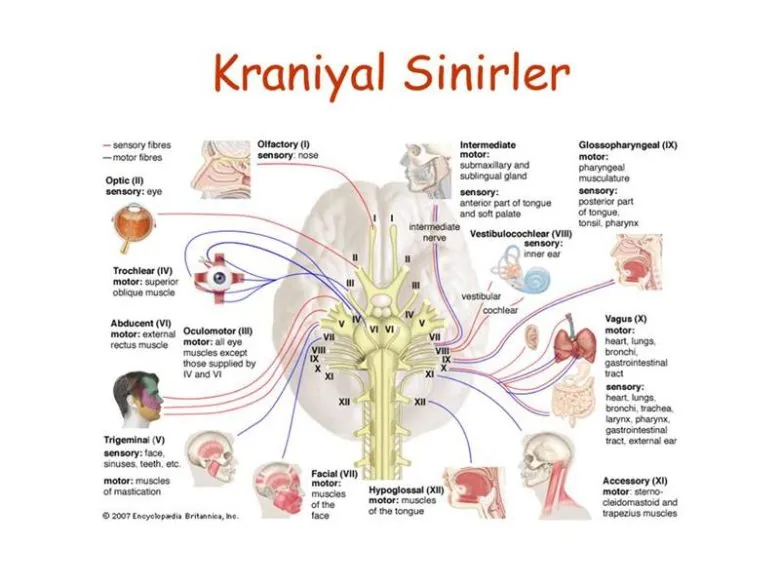
So what is actually happening? The tongue and the hands are wired through fundamentally different systems. Tongue muscles are driven by cranial nerves, while hand muscles are driven by spinal nerves, and someone who loses the use of their hands after a spinal cord injury does not lose the ability to speak. Cranial nerves are a network of 12 pairs of nerve bundles that carry signals to the head and neck and control muscles there, managed by neurons in the brainstem and cerebellum. If a short circuit between tongue and hand control exists at all, it has to happen somewhere inside the brain where these two nerve types meet.
Here is where the popular version of the story trips. In the motor cortex, the areas controlling the tongue are not adjacent to the areas controlling the fingers. Penfield and Rasmussen's cortical homunculus work places the tongue's territory right next to the finger and lower-face regions in the lateral motor cortex. So the overflow story cannot rest on simple neighbors sitting side by side.
Two Different Wiring Systems: Cranial Nerves vs. Spinal Nerves
Your tongue runs on a completely different electrical grid than your hands. The tongue is controlled by cranial nerves, while the hands are controlled by spinal nerves. These are two fundamentally different nerve types, a distinction laid out in standard anatomy texts like Gray's Anatomy. That single anatomical fact is the key to understanding why we stick out our tongue when concentrating.
Think about what that difference actually means in practice. The cranial nerves are 12 pairs of nerve bundles that carry signals to the head and neck and control the muscles there. They are governed by neurons of the central nervous system, including the cerebellum and the brain stem. Your hands, by contrast, get their marching orders through the brachial plexus, a network that branches off the spinal cord. Two separate systems, two separate origins, two separate jobs.
Here is where it gets interesting. The evidence from injury tells the story clearly. A person with a spinal cord injury that paralyzes the hands does not lose the ability to speak. The tongue keeps working even when the hands go silent. That is not a coincidence. It is proof that the two systems are wired independently, running on different circuits that do not share a common switch.
So if the tongue and the hands are controlled by separate nerves, how do they end up moving together? Any short circuit between tongue and hand control circuits must occur somewhere inside the brain, where the two systems actually interact. The nerves themselves never touch. The connection has to happen higher up, in the complex neural machinery where the brain coordinates movement, speech and tool use all at once.
The motor cortex holds a clue. In the cortical homunculus, the map of body parts across the brain's surface, the tongue and finger regions sit close together in the lateral motor cortex. They are neighbors. That proximity matters, because it means signals meant for one area can blur into the other, especially during tasks that demand intense focus. The wiring is separate at the nerve level, but the control centers are practically roommates.
This is why the tongue and the hands feel linked even though they are not. The brain does not treat them as strangers. It treats them as parts of the same toolkit, and when one part works hard, the other sometimes tags along.
Where the Hand and Tongue Meet: The Premotor Cortex and the F5 Region
If you have ever read a popular explanation of why we stick out our tongue when concentrating, you have probably run into a confident little claim: that the tongue and the fingers live in separate neighborhoods of the motor cortex, so the connection between them must be hiding somewhere else. That claim is simply wrong. Wilder Penfield and Herbert Jasper, mapping the human brain during surgery in the 1930s and 1940s, produced the cortical homunculus, a distorted body map laid across the brain's surface. On that map, the tongue and the finger and lower-face regions sit right next to each other in the lateral motor cortex. Neighbors, not strangers.
So the short circuit does not need to travel far. Speech is one of the most complex things a human being does, and mastering tools comes in a close second. If the tongue and the hand are elbow to elbow in the cortex, and both are doing the hardest work the brain has on offer, some spillover between them starts to look less like a glitch and more like a design feature.
What Imaging Studies Suggest, and What They Do Not
Functional brain imaging studies have pointed researchers toward a small patch of the premotor cortex called the F5 area. According to the original account, specific language movements and specific hand movements light up the same region there, and tool use reportedly activates it too. Treat this with a raised eyebrow. F5 in monkeys is a grasp-related area, and a human counterpart has been tied to both grasping and language, but the idea that all three activities share one identical patch is contested rather than settled science. The same caution applies to the claim that combining hand movements with mouth movements shortens reaction time for both, and to the suggestion that this hand-mouth coupling is innate. The coordination shows up remarkably early in development, which is suggestive, but "innate" is a strong word for a question researchers are still arguing about.
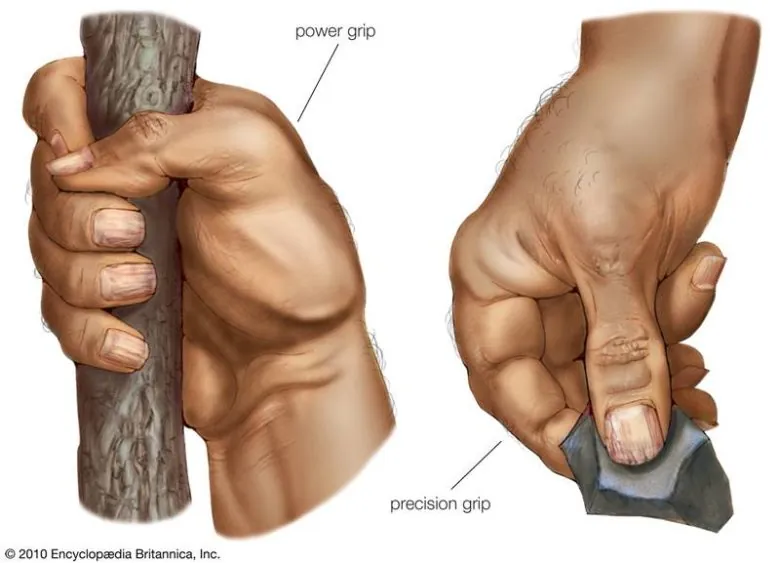
What we can say cleanly is this: hand movements come in two basic flavors. Power grips open and close the fist, while precision grips pinch something between thumb and index finger, the way you hold a pen. That distinction comes from J. R. Napier's 1956 paper on the prehensile movements of the human hand, and it has held up ever since. Some research hints that different tongue and mouth movements tend to accompany these two grasp types, though that general claim is not firmly established. Nor is the idea that sensations from fingertips and tongue are wired together in a way that measurably affects performance, even though both body parts have unusually large and adjacent cortical representations.
The Tools We Reach For Every Day
Think about where tools actually show up in a life. Preparing food. Eating it. Drawing shapes with a pen, typing on a keyboard, gesturing while you talk. Lari Vainio and colleagues published a study in PLOS ONE in 2013 on how syllable articulation affects precision and power grip performance, work that fits neatly into this picture, though the exact citation details are worth verifying at the source. There is also a broader hypothesis, still a hypothesis, that this coordination is a legacy from our ancestors, with hand movements possibly serving as the first form of communication before early humans blended gestures with vocal sounds into speech.
None of this makes the tongue a passenger. It makes it a colleague.
Why Sticking Out Your Tongue Can Boost Performance
Watch a martial artist throw a hard punch, or a tennis player stretch for a shot that should be out of reach. Their mouths open. They shout. The hands and the mouth move as one team, and that teamwork often makes the move sharper, not sloppier. This is the other half of the story behind why we stick out our tongue when concentrating: the link between hand and mouth does not just leak out under pressure, it can push performance upward.
Reported research suggests that pairing hand movements with specific mouth movements shortens reaction time for both, though the "for both" half of that finding is not settled science. Researchers often describe this neural coupling as innate, and there the ground gets softer still. Hand-mouth coordination does show up very early in development, but calling it hardwired from birth is a debated claim, not a closed case.
Power Grips, Precision Grips, and the Mouth That Follows
Here is where the evidence firms up. In 1956, the anatomist John Napier drew the line that motor scientists still use today. Human grasping comes in two basic flavors. Power grips open and close the whole fist around an object. Precision grips pinch something small, like a pen, between the thumb and the index finger. That two-part classification is standard, textbook material.
What the research adds on top is the interesting part, and it stays in hedged territory: different tongue and mouth movements are said to often accompany these two grip types, as if the mouth quietly mirrors whatever the hand is doing. Treat that as a working observation rather than a law.
Now rewind tens of thousands of years. Try to imagine making a stone tool and then butchering an animal with it. You need force to strike stones together again and again, and you need finger strength to wield the finished edge with control. Precision and power, blended in a single task. This kind of demand may have shaped the very form of our hands, and it is a plausible thread in the story of why we stick out our tongue when concentrating.
Where Fingertips and Tongue Meet in the Brain
Sensations from your fingertips and from your tongue are reported to be linked in the brain in ways that affect performance. The citation offered for this is Saal, Birznieks and Johansson, published in eLife in 2023, and those authors are real tactile neuroscientists, though the exact paper identifier cannot be independently confirmed. So file it under promising rather than proven.
The broader evolutionary picture stays speculative too. Some researchers propose that this hand-mouth coordination is a legacy from our ancestors, possibly with hand movements serving as the first form of communication, before early humans blended those gestures with vocal sounds and built speech on top. Gesture-first theories of language evolution exist and are taken seriously by some researchers, but they remain hypotheses. Nobody has a recording of the first conversation.
What you can take to the bank is narrower and stranger: the wiring for your tongue and your ten fingers runs through separate nerve systems entirely, yet the two keep finding each other. When a task gets hard, they lean in together, and sometimes the result is a better shot, a cleaner cut, a faster reaction.
A Legacy from Our Ancestors: Gesture, Tool Use and the Origins of Speech
Here is the part that gets genuinely speculative. Researchers who study how hands and mouths work together suspect that this coordination is a legacy from our ancestors, and some argue that hand movements may have been the first form of communication. That idea belongs to a family of gesture-first theories about how language evolved, and it remains a hypothesis rather than a settled finding.
The story those theories tell goes something like this. Early humans blended hand movements with sounds from the mouth, and over a very long stretch of time that combination hardened into speech. It is a proposal that fits the gesture-speech co-evolution camp, not a confirmed sequence of events.
What makes it plausible enough to keep testing is that tool use and language seem to lean on overlapping machinery. Functional brain imaging work has pointed to specific language and hand movements lighting up the same patch of premotor cortex, the F5 area, and tool use reportedly activates that region too. Treat that as contested rather than proven. The overlap in the left premotor and parietal regions is real, but calling it "the same region" is an overstatement that researchers still argue about.
There is a neat piece of supporting evidence in how we grip things. In 1956, Napier described the two basic modes of the human hand: power grips, where the fist opens and closes around an object, and precision grips, where something like a pen is pinched between thumb and index finger. Some research suggests that different tongue and mouth movements tend to ride along with these two grip types, though the general claim is not firmly established.
Run the ancestral math yourself. Picture a hunter-gatherer shaping a stone tool and then using it to break down a carcass. Striking stones together to make the tool takes real force. Using the finished edge with any accuracy takes fine finger control. That combination of power and precision may have been one of the pressures that shaped the human hand, and it sits right next to the demands that shaped the human voice.
A 2019 paper by Claudio Brozzoli and colleagues, published in Frontiers in Psychology, took the connection further and framed language as a kind of tool. Their finding, as reported, was that how well a person uses a tool predicts their individual linguistic abilities. An earlier study by Gillian S. Forrester and Alina Rodriguez, which appeared in Cognition, Volume 141, in 2015, on pages 103 to 111, explored the same hand-mouth territory under the memorable title "Slip of the tongue." Both citations are worth chasing down, though the exact bibliographic details are hard to verify independently.
So the next time you catch yourself with your tongue poking out over a stubborn knot or a tricky equation, you are running a program that predates arithmetic by a very long way.
So Don't Be Surprised: Let Your Brain Do What It Wants
If you have ever caught yourself poking your tongue out while threading a needle, you have just watched your own brain work at full tilt. Sticking out your tongue during concentration is not a glitch, a bad habit, or something you should train away. It is one of the clearest windows we have into how tightly the hand, the mouth, and the mind are wired together.
Most of us carry a picture of the brain as a kind of calculator: information comes in, gets processed, and muscles get ordered around. That picture is far too tidy. The brain did not evolve to run spreadsheets. It evolved to keep a body alive in a messy, unpredictable world, and the fastest way to do that is often to stop separating tasks and start blending them. When you reach for a tool, your mouth is not sitting idle in the background. It is part of the same act.
That is why the tongue so often joins the party. Fine finger work and tongue movement share territory in the brain, and the boundary between them is thinner than we like to think. The result is a body that solves problems as a whole rather than as a set of disconnected parts. You do not consciously decide to involve your tongue. Your brain simply reaches for whatever resources are already lying around.
So the next time you look over and see a child with their tongue poking out over a math worksheet, or you notice your own face doing something undignified at the sewing machine, take it as a good sign. That is a brain running efficiently, pulling every available circuit into the job. Let it do what it wants. It usually knows what it is doing.

Frequently asked questions
What is motor overflow, and why does it make me stick out my tongue?
Motor overflow is the idea that when brain circuits are overloaded by a demanding fine motor task, they spill over and activate neighboring circuits. Threading a needle is the classic example. Worth flagging: this mechanistic phrasing is an oversimplified and contested characterization, not a settled textbook definition, so treat it as one proposed explanation rather than the final word.
Why do children stick out their tongues more often than adults when concentrating?
Tongue protrusion during hard tasks is most visible in children. Researchers say adults probably learn to suppress it, largely because walking around with your tongue out and your face contorted does not read as professional. So the reflex likely never leaves us. We just get better at hiding it.
How are the hand and tongue connected in the human brain?
The tongue is controlled by cranial nerves, the hands by spinal nerves, two fundamentally different systems. A person with a spinal cord injury that paralyzes the hands does not lose speech, which shows the separation. Any short circuit between the two must therefore happen inside the brain. Reported imaging points toward the premotor cortex, specifically the F5 region, though the homunculus actually places the tongue and finger areas close together in the lateral motor cortex.
Did early humans use hand gestures before spoken language?
Gesture-first is a hypothesis, not established fact. The source presents it as a likely legacy from our ancestors, with hand movements possibly serving as the first form of communication before early humans blended in vocal sounds. Treat this as a theoretical proposal about language evolution, not a confirmed timeline.
What does the F5 region of the premotor cortex do?
According to the source, specific language and hand movements, plus tool use, reportedly activate the same region in the premotor cortex. F5 itself is grasp-related, and its human homologue is tied to grasping and language. That said, the claim is contested. Overlap in these regions exists, but calling it "the same region" is an overstatement that researchers still debate.
Why do tennis players and martial artists shout during difficult moves?
Reported research suggests that combining hand movements with specific mouth movements shortens reaction time for both. The neural coupling between hand and mouth is often described as innate, though that too is a debated claim. Watch a tennis player grunt through a hard forehand and you are seeing the same hand-mouth coordination at work.
Was sticking out the tongue ever a sign of effort in human evolution?
The source links it to a legacy of hand-mouth coordination possibly rooted in gesture-first communication. Hand movements typically split into power grips, like opening and closing a fist, and precision grips, like holding a pen between thumb and index finger. Different tongue and mouth movements often accompany these two types, though the general claim is not firmly established. The evolutionary story remains a hypothesis. Editorial note: Details that remain unconfirmed by direct experimental evidence are presented as likely explanations rather than settled fact.
Got a take on this? Add your voice to the conversation below →
No comments yet. Be the first.