Reptilian Brain Myth: Why the Lizard Brain Isn't Real
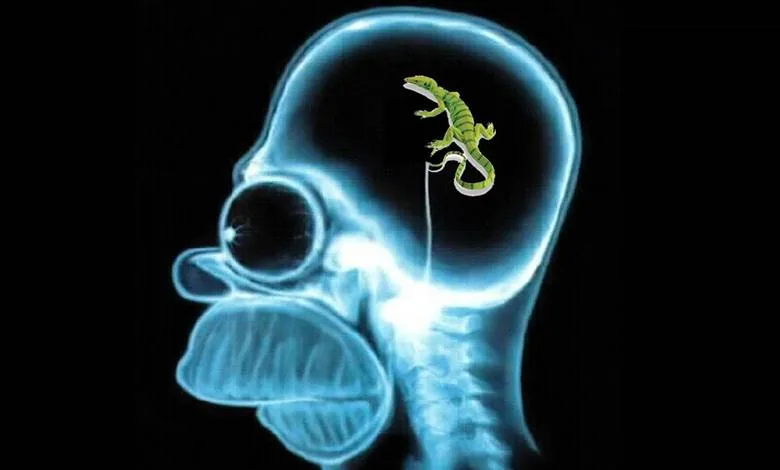
The reptilian brain myth is the widespread belief that a primitive lizard-like brain still lurks beneath our human cortex, and it went mainstream when Carl Sagan championed Paul MacLean's triune brain model in his Pulitzer Prize-winning book The Dragons of Eden. Sagan's vivid prose gave millions of readers a tidy story: an ancient reptile mind buried under newer mammalian layers, forever threatening to hijack our reason. It was a compelling metaphor, and it spread through pop science, self-help, and everyday conversation. The trouble is that the metaphor was never quite right, and modern neuroscience has spent decades quietly dismantling it.
The reptilian brain is a myth rooted in Paul MacLean's triune brain model, which Carl Sagan popularized in The Dragons of Eden. Modern neuroscience shows the brain did not evolve as three stacked layers but as one interconnected system, so the idea of a separate lizard brain controlling our impulses is not supported by the evidence.
- Paul MacLean developed the triune brain model, proposing that the human brain is built from three evolutionary layers.
- Carl Sagan brought the idea to a mass audience in his book The Dragons of Eden, which won the Pulitzer Prize for General Nonfiction.
- The model labels a "reptilian complex" as the seat of instinct and aggression, with a "mammalian" limbic system and a "human" neocortex layered on top.
- Comparative neuroanatomy has since shown that mammal and reptile brains share many of the same structures and evolved along interconnected paths, not as separate stacked additions.
The Reptilian Brain Myth: Why We Blame a Lizard That Isn't There
You snap. Someone cuts you off in traffic, your face goes hot, and before a single rational thought forms, your hand is on the horn. Later you hear the explanation, sometimes from your own mouth: "My reptile brain took over." It sounds scientific. It sounds like a fact about human biology.
It isn't. The reptilian brain myth says that during intense stress or sudden anger, an ancient leftover from our reptile ancestors hijacks the controls. Modern neuroscience tells a different story. Your brain isn't built like a layer cake with a reptile at the base. It's a single, tightly woven network where every region constantly communicates with the rest.
The idea escaped the lab a long time ago. Countless books, articles and popular videos now tell people to "override" their inner reptile to behave better. Some of that advice is harmless. Some of it is built on a model that researchers have been dismantling for years.
To understand where the myth came from, you have to meet two men. One is Carl Sagan, the astrophysicist and science communicator who won the Pulitzer Prize for General Nonfiction for The Dragons of Eden, his book about how intelligence and consciousness emerged in humans. The other is Paul D. MacLean, the neuroscientist whose triune brain theory Sagan gave a very large stage to.
Not everyone applauded. Parts of the scientific community pushed back hard on Sagan's book, and the main reason was exactly that: his generous treatment of MacLean's three-layer model and its "reptilian brain." The popular version outlived the criticism, which is usually how these things go.
How Carl Sagan Put the Reptilian Brain on the Map
If you have ever heard that a primitive part of your brain seizes control during a moment of raw stress or sudden rage, you have Carl Sagan to thank for the phrasing. The astrophysicist and science communicator won the Pulitzer Prize for General Nonfiction for The Dragons of Eden, a book about how intelligence and consciousness arose in humans. It also handed the reptilian brain myth its most famous megaphone.
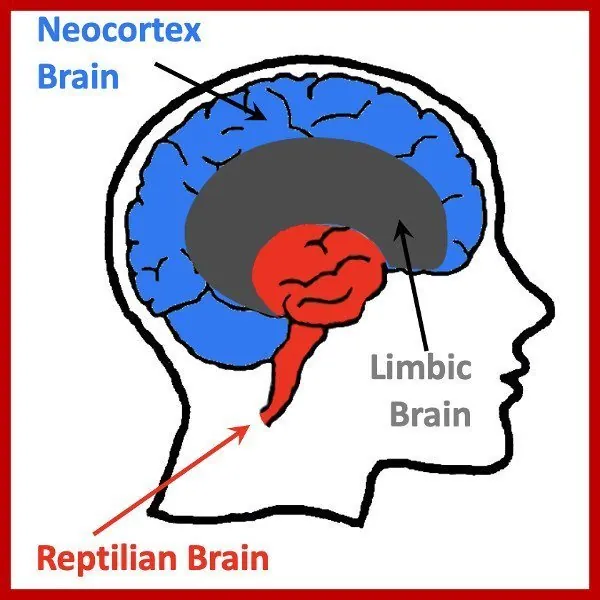
Sagan did not invent the idea. He borrowed it from the neuroscientist Paul D. MacLean, whose triune brain model split the human brain into three evolutionary layers: the reptilian brain at the base, the paleomammalian complex, better known as the limbic system, wrapped around it, and the neocortex on top. MacLean laid the theory out in full in his 1990 book The Triune Brain in Evolution, though he had been developing it in papers for decades before that. Sagan found the story irresistible, and he told it beautifully.
Not everyone thanked him for it. The book drew sharp criticism in scientific circles, and the main complaint was exactly this: Sagan gave generous space to MacLean's model and the reptilian brain idea, presenting a contested framework to millions of readers as settled science. Many researchers pushed back hard.
You can still feel that influence everywhere. Countless books, articles and popular videos insist that our inner reptile runs the show and that we must "rise above" it to behave decently. There is a sliver of truth in the picture, since basic drives like hunger and threat detection really can be modulated by higher-order thinking. But the brain does not work as three stacked blocks, and as the next part of this story shows, the model has aged badly.
What Paul MacLean's Triune Brain Model Actually Claimed
In 1990, the neuroscientist Paul D. MacLean published The Triune Brain in Evolution through Plenum Press, and inside that book he laid out one of the most seductive ideas in twentieth-century brain science. His claim was simple enough to draw on a napkin: the human brain is not one organ but three, stacked like geological strata, each layer a fossil of a different evolutionary era.
MacLean had spent years watching animals, and he kept noticing the same handful of behaviors turning up in both reptiles and mammals. Holding to a routine. Guarding a patch of territory. Reacting fast when something moved in the grass. He read those behaviors as older, more "primitive" material, and he assumed the brain structures behind them must be older too.
From that assumption came the three layers.
The Reptilian Brain
The oldest layer, inherited from reptile ancestors. According to the model, this is where routine, territory defense and raw survival reactions live.
The Paleomammalian Complex
The limbic system, which MacLean said grew around the first layer as mammals evolved. Emotion and memory territory, in his telling.
The Neocortex
The newest layer, developing later in higher primates and tied to language, reasoning and complex thought.
Notice what the model asks you to picture: a brain built like a house with new wings added on, where the old rooms stay exactly as they were. MacLean treated the three layers as separate, and he ranked them. Reptile at the bottom, mammal in the middle, human on top.
The appeal was immediate. Here was a single tidy diagram that seemed to explain road rage, dieting failures, superstition, war, and every moment a person does something foolish and then wonders who was driving. The reptilian brain myth did not need a laboratory to spread. It needed a good metaphor, and it had one.
It traveled fast into popular culture, into self-help shelves, into management seminars and into the way ordinary people started talking about their own worst impulses. A short while later, a Pulitzer Prize-winning book would carry the idea to an even larger audience.
Why Neuroscientists Say the Triune Brain Model Is Wrong
There is no little lizard curled up inside your skull. The brain is not three stacked parts, and it does not run as three separate engines. It works as one whole, and modern neuroscience has known this for years. The reptilian brain myth survives mostly because it is a great story, not because the evidence holds up.
Here is the test that breaks the stacked-layers picture. If Paul D. MacLean had been right, the ancient regions would look nearly identical across every mammal, with only newer layers bolted on top. Research shows the opposite. Evolution does not leave old brain parts untouched and stack new ones above them. It modifies, develops and interconnects what is already there.
Take the amygdala. The original account claims it is much more developed in monkeys than in rats, and that line gets repeated as proof of the layered model. Treat it with caution. Both rats and monkeys have well-developed amygdalae with comparable core nuclei, so the vague comparative claim is not clearly supported by evidence. It is contested, not settled fact.
The formal pushback arrived in 2020. Cesario, Johnson and Eisthen published "Your Brain Is Not an Onion With a Tiny Reptile Inside" in Current Directions in Psychological Science, arguing directly against the triune model. Two years later, David Hain and colleagues published a study on the molecular diversity and evolution of neuron types in the amniote brain in Science. Their tool was single-cell transcriptomics, and their subjects spanned reptiles, birds and mammals. The study is verified as published. The popular framing that a "2022 evolutionary study revealed humans don't have a lizard brain" is a reported gloss on that work, not a settled headline.
So what does the layered model get wrong in practice? Old regions can spark quick impulses and fast reactions. But those reactions never fire alone. An angry outburst is a complex emotion, not a primitive reflex, and calling it "my reptilian brain made me do it" flattens the whole system into a cartoon.
One honest concession: the triune model is not entirely wrong. Basic drives like hunger and threat perception can be regulated by more advanced thinking. You can size up a situation, weigh the context and change your first reaction. That is the integrated brain doing its job, not a reptile losing an argument with a cortex.
What the Brain Is Actually Doing When You Lose Your Temper
When you snap at someone, the old story says your reptilian brain myth took the wheel. But that story gets the mechanics wrong. Modern neuroscience, including a 2020 paper by Cesario, Johnson and Eisthen, describes the brain as one integrated system rather than a stack of separate layers. Anger does not arrive from a lone primitive compartment while the rest of you watches.
For decades, though, the layered picture felt convincing. Old neuroscience, shaped by Paul D. MacLean's triune model, assumed the ancient regions worked on their own. Anger came from the reptile brain. Watching the stars and wondering why we exist came from the neocortex. Two different rooms, two different jobs.
Today we know that is not quite right. As the brain evolved, it gained new functions, grew, and changed shape. But the parts did not stay separate. Every region built strong connections to the others. The so-called old "reptilian" regions can still initiate sudden impulses and fast reactions, but those reactions never act alone. The brain works as a whole.
Think of a car ignition. The ignition starts the engine, but the whole system has to work together before the car moves. The driver is part of that system too. In this picture, the driver is the neocortex.
Anger is a very complex emotion, not merely a primitive reaction. So "my reptile brain made me do it" is far too simple an explanation. It is worth noting that the source also repeats a comparative claim about the amygdala being much more developed in monkeys than in rats. That specific comparison is shaky, so treat it as a reported claim rather than settled fact.
So Is There Any Truth Left in the Reptilian Brain Idea?
Yes, a sliver of truth survives, just not the version most people repeat. Basic reactions such as hunger, threat perception and negative emotion really can be regulated by more advanced thinking processes. You can size up a situation, weigh the context and change your first reaction before it becomes your behavior. That much holds up.
What does not hold up is the layered anatomy. The brain does contain old structures that keep you alive, and those structures matter enormously. But they do not decide alone. They sit inside a connected system, wired to other regions that shape, delay or override what they start.
This is why the reptilian brain myth keeps its grip. It feels intuitive. It gives you a tidy villain for a bad afternoon, a single ancient culprit you can blame and then outgrow. The anatomy simply does not back that story. A brain built from three stacked, independent layers would leave its oldest parts nearly untouched across mammals, with new tissue merely added on top. That is not what the evidence shows, as the 2020 paper by Cesario, Johnson and Eisthen argued when they described the brain as something other than an onion with a tiny reptile inside. Hain and colleagues reached a similar conclusion in 2022 in Science, mapping neuron types across reptiles, birds and mammals and finding shared, deeply interconnected machinery rather than sealed compartments.
So keep the useful half. Your first flash of anger or fear is real, and it is fast. Your ability to pause, read the room and choose differently is real too, and it runs on the same integrated organ. The myth survives because it feels true. The brain, unfortunately for the slogan, was never built that way.
Frequently asked questions
What is the reptilian brain theory and where did it come from?
So where did this lizard brain story actually start? It goes back to Paul D. MacLean's triune brain model, which he detailed in his 1990 book The Triune Brain in Evolution . MacLean proposed that the human brain holds three evolutionary layers: a reptilian complex, a paleomammalian complex (the limbic system), and a neomammalian complex (the neocortex). The reptilian brain myth grew directly out of that layered picture.
Did Carl Sagan really popularize the reptilian brain idea in The Dragons of Eden?
Yes, he did. Carl Sagan, the astrophysicist and science communicator, won the Pulitzer Prize for General Nonfiction for The Dragons of Eden , a book about how intelligence and consciousness arose in humans. It gave wide space to MacLean's triune model, which helped spread the reptilian brain myth far beyond neuroscience, though some scientific circles criticized the book sharply for it.
Why do neuroscientists say the triune brain model is wrong?
Because the brain is not three stacked parts. It works as one interconnected system, and evolution does not leave old structures untouched while bolting on new ones. In 2020, Cesario, Johnson and Eisthen made exactly this case in a paper titled "Your Brain Is Not an Onion With a Tiny Reptile Inside," published in Current Directions in Psychological Science .
How did the human brain actually evolve if not in stacked layers?
As one growing, complexifying structure. Regions built strong connections with each other rather than staying separate, and existing structures were modified rather than preserved intact. A 2022 study by David Hain and colleagues in Science , on the molecular diversity and evolution of neuron types in the amniote brain, supports this interconnected picture across reptiles, birds and mammals.
Was Paul MacLean's triune brain theory ever accepted by scientists?
It became very popular and shaped older neuroscience, which treated the brain's ancient regions as independently operating. Today it is heavily criticized and considered outdated. MacLean detailed the model in 1990, and the reptilian brain myth it inspired still circulates widely in popular content, even as researchers have moved past the layered framing.
Does the amygdala act as an independent primitive brain during anger?
No. Anger is a complex emotion, and the brain works as a whole. Old regions can initiate fast reactions, but nothing acts alone. The idea that an independent reptilian brain hijacks you during anger is a myth; the whole system, including higher-order processes, participates in what you feel and do.
What does it mean that the brain works as one interconnected system?
It means old regions can start impulses, but no region decides by itself. The entire system, including higher-order processes, takes part. Think of a car's ignition: it starts the engine, but the whole vehicle has to work together for the car to move, and the driver is part of that system.
Is there any truth left in the idea of a lizard brain controlling us?
Partly. Basic drives like hunger and threat perception exist, and they can be regulated by more advanced thinking. We can assess a situation, weigh the context, and change our first reaction. But those old structures do not decide on their own; they work as part of a connected system inside the modern human brain. Editorial note: Any details that remain unconfirmed are presented here as such, and the piece sticks to what the scientific record supports.
Got a take on this? Add your voice to the conversation below →
No comments yet. Be the first.