Why USB Is Not Reversible: The 1990s Cost Decision
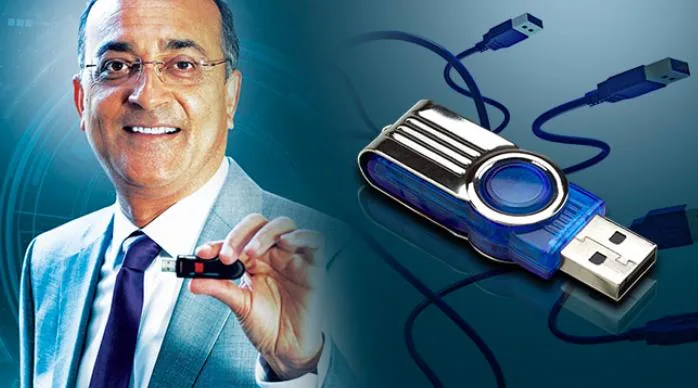
The reason USB is not reversible comes down to a 1990s cost decision made by Intel's Ajay Bhatt and seven tech giants, who prioritized saving a small amount per connector over user convenience. That single financial call, made in the mid-1990s, shaped the frustrating one-way USB-A port that billions of people have flipped, turned, and cursed for three decades. It is a story of engineering trade-offs, corporate pragmatism, and the quiet acceptance of a design flaw that became so universal we stopped questioning it.
In the mid-1990s, a consortium of seven companies led by Intel's Ajay Bhatt designed the Universal Serial Bus. They chose a non-reversible, one-way USB-A connector to keep manufacturing costs low. That cost-saving measure became the standard, and the reversible USB-C only arrived commercially much later.
- The USB standard was developed in the mid-1990s by a seven-company consortium including Intel, Microsoft, IBM, and NEC, with Intel's Ajay Bhatt as the lead architect.
- The one-way USB-A connector was deliberately chosen because a reversible design would have raised the per-port cost, though the exact rationale is not fully documented.
- USB 1.0 was released in January 1996, cementing the non-reversible connector as the global default.
- The reversible USB-C connector, which finally solved the orientation problem, is now the modern standard.
- The cost decision was central to the choice, even if the exact breakdown of those costs was never fully documented.
The 1990s Mess That Made USB Necessary
Picture your desk in the mid-1990s. Your mouse plugs into one round socket, your keyboard into another, your monitor into a third, and your speakers need their own cable entirely. Now imagine charging a phone, a razor, and a walkie-talkie, each with its own proprietary adapter, and some devices demanding two separate cords just to function: one for data, one for power. That was the chaos that pushed seven of the world's biggest tech companies to finally sit down and build something better.
In the mid-1990s, Intel, Microsoft, IBM, Compaq, NEC, Nortel, and Digital formed a consortium with a single goal: build one universal port that every device could share. The logic was refreshingly simple. One simple entry point, power flowing from one side, data from the other. It had to be easy to plug in, easy to pull out, and ergonomic enough that people wouldn't dread using it.
The team leading this effort was headed by Ajay Bhatt, an Indian-born Intel engineer whose name you probably have never heard, even though his work sits on your desk right now. In the mid-1990s, his group developed the first USB prototype and presented it to those seven companies. The prototype they showed that day was, by all accounts, nearly identical to the USB-A connector still in use decades later. The shape, the pin layout, the whole physical design, essentially unchanged.
Here is where the story takes a turn that will make you sigh. According to the original account, Bhatt and his team mentioned they were considering a symmetric design, one that would work no matter which way you flipped it. That idea did not survive the meeting. A reversible connector would have driven up costs considerably, since both sides would need to handle both data and power transfer, and the consortium members balked. The exact rationale isn't fully documented, but the asymmetric prototype won their approval instead, with only minor tweaks before it entered the world.
So the next time you flip a USB stick three times before it finally clicks in, remember this: the people who invented it in the 1990s had thought about making it reversible. They simply decided the extra cost was not worth your convenience.
Ajay Bhatt and the Prototype That Almost Wasn't Reversible
Ajay Bhatt, an Indian-origin Intel engineer, walked into a room full of the world's most powerful tech executives in the mid-1990s carrying something that would change computing forever. His team had spent months building a prototype for a universal port, and the shape they held in their hands looked almost exactly like the USB-A connector you still find on cables today. Same rectangular outline, same frustrating one-way orientation that would drive millions of people to curse at their computers for the next three decades.
The pitch was deceptively simple. Seven major companies, Intel, Microsoft, IBM, Compaq, NEC, Nortel, and Digital, had come together to solve a growing mess. Every device needed its own cable. Mice had one connector, keyboards another, speakers a third. Printers demanded yet another port, and some gadgets needed separate cables for power and data. Bhatt's team proposed a single standard that would handle both jobs, one port that would be easy to plug in and comfortable to use.
But here's where the story takes a turn that still frustrates anyone who has ever flipped a USB stick three times before it finally clicked into place. According to the original account, Bhatt and his engineers suggested making the connector symmetric, so it would work no matter which way you held it. The idea was rejected. The reasoning, as the story goes, was that a reversible design would significantly increase manufacturing costs for both data and power transfer. The exact rationale isn't fully documented, but the decision stuck.
The prototype received enthusiastic approval with only minor adjustments. So the USB-A you've been wrestling with since the late 1990s isn't a design failure. It's a deliberate choice made in a conference room decades ago, a cost-conscious call that traded daily convenience for cheaper production. Bhatt's team knew the frustration they were building into the future. They just decided the price of fixing it was too high.
The Cost Decision That Stuck for 30 Years
The prototype Ajay Bhatt's team showed to the seven companies was a hit, and it went into production with only minor tweaks. That near-final design, presented in the mid-1990s, looked almost exactly like the USB-A connector you still wrestle with today. The shape, the pin layout, the stubborn one-way orientation: all of it was locked in before the first USB 1.0 spec shipped in January 1996.
What made the decision stick was money. Bhatt and his team floated the idea of making the connector symmetric, so it would fit no matter which way you held it. But a reversible design required extra complexity for both data and power transfer. The cost jump was steep enough that the consortium balked. As the story goes, the price tag for that symmetry was the reason it never made the cut, though the exact breakdown of those costs was never fully documented.
So the one-way USB-A went out into the world, and for the next three decades, billions of people found themselves flipping a flash drive, pausing, flipping it again, and muttering under their breath. The infamous "USB dance" became a universal ritual, a small daily frustration baked into the design of modern computing.
Here is the uncomfortable irony: that cost-focused choice may be exactly why USB succeeded. The article's own speculation, unverified but worth sitting with, is that a pricier symmetric port might have slowed adoption or kept USB from becoming the universal standard at all. A more elegant connector could have flopped. The clunky one, cheap and simple, spread everywhere.
That trade-off, made in a conference room in the 1990s, is why USB is not reversible. It was never an oversight. The engineers knew exactly what they were giving up, and they made the call anyway, betting that affordability would win over convenience. Thirty years of connector-flipping later, it is hard to argue they lost the bet, even as we all wish they had.
Frequently asked questions
Why is USB not reversible?
The original USB-A design was a cost-driven decision made in the mid-1990s. A symmetric connector would have raised production costs for both data and power transfer, so the team behind USB chose the simpler, one-way design we know today. The exact rationale isn't fully documented, but cost concerns were central to the choice.
Who invented the USB port?
Ajay Bhatt, an Indian-origin Intel engineer, led the team that developed the first USB port in the mid-1990s. His group designed the prototype and presented it to seven major technology companies before USB 1.0 was officially released in January 1996. Bhatt is widely credited as the lead architect of this now-universal connector.
What was the original USB prototype like?
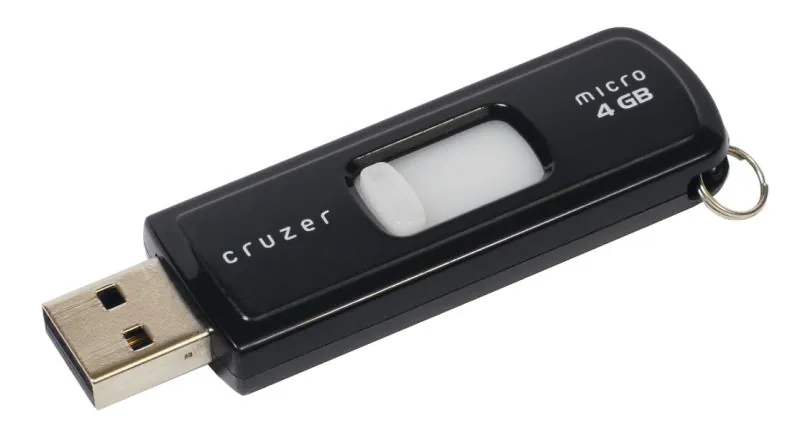
The original USB prototype was nearly identical to today's USB-A connector. It had the same rectangular shape and the same pin layout that you still see on modern cables and ports. When Bhatt's team demonstrated it to the seven partner companies in the mid-1990s, the design was so well received that only minor corrections were made before it entered production.
How did the USB standard come about?
Seven companies, Intel, Microsoft, IBM, Compaq, NEC, Nortel, and Digital, collaborated to create a universal port that could replace the tangle of different connectors for keyboards, mice, speakers, and other peripherals. Their joint effort produced the USB 1.0 specification, which was released in January 1996. The goal was simple: one standard connection for both data and power across all devices. Editorial note: Any facts which remain unconfirmed are presented as such, hedged where the historical record is incomplete.
Got a take on this? Add your voice to the conversation below →
No comments yet. Be the first.