Inert Knowledge: Why Memorizing Isn't Learning

Inert knowledge is information a student can recall on a test but cannot apply to a new situation, a problem first named by philosopher Alfred North Whitehead in 1929. It explains why so many learners memorize facts, pass the exam, and then forget everything within weeks. The frustration is real: you studied hard, you knew the material, and yet when life asked you to use it, your mind went blank.
Inert knowledge is memorized information that sits unused in the mind, never connected to real problems or new contexts. Alfred North Whitehead popularized the phrase in 1929 to describe ideas that are received without being tested or applied. It happens when students learn for the test rather than for understanding, and it leaves them unable to transfer skills to everyday life.
- Alfred North Whitehead first described inert ideas in his 1929 book The Aims of Education.
- Inert knowledge is recall without application, meaning a student can define a concept but cannot use it to solve a novel problem.
- Traditional classrooms often reward rote memorization, which produces inert knowledge rather than durable understanding.
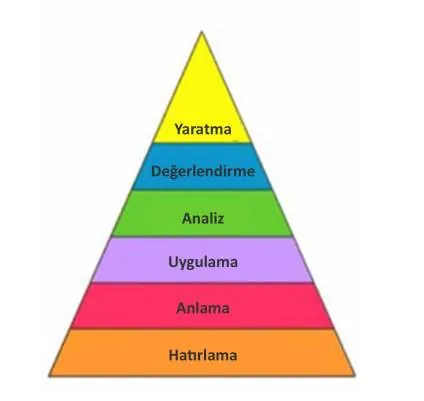
- Bloom's taxonomy places application above mere recall, which is often cited as a reason why inert knowledge sits at the lowest level of learning.
- Active learning strategies, such as problem-based tasks and real-world projects, help convert inert knowledge into usable skill.
The Trap of Knowing Without Understanding
You know the feeling. You memorized something for an exam, aced the test, and then realized a week later you couldn't explain it to save your life. That's what educators call inert knowledge: information that sits in your head, fully memorized, yet completely disconnected from how you actually think and live.
Think of a student who memorizes a math formula the night before a test. The formula is in their brain, no doubt. But ask them what it actually means, when it applies, or why it works, and you'll likely get a blank stare. The knowledge is there, but it's frozen. It doesn't move, doesn't connect, doesn't do anything useful.
The problem is everywhere. Consider language learning. Many of us spent years in school studying grammar rules. We could recite verb conjugations and sentence structures on demand. Yet when we finally faced a real foreign speaker, our minds went blank. All those years of rules, and we couldn't form a simple sentence in the moment. That's inert knowledge in action.
This isn't a new observation. The philosopher and educator Alfred North Whitehead wrote about it in his 1929 book The Aims of Education. He warned against what he called "inert ideas," ideas that are merely received into the mind without being used, tested, or combined with new ideas. He believed this was the most important thing to avoid in education, and he linked it to what he described as mental decay.
Whitehead offered two simple rules to fight this problem: "Do not teach too many subjects" and "What you teach, teach thoroughly." His point was that a shallow sweep across many topics leaves students with disconnected fragments. A few ideas, explored deeply and revisited in different contexts, actually become part of how a person thinks.
Lee S. Shulman, an educational researcher, picked up this thread in his 1999 essay "Taking Learning Seriously." He argued that knowledge is necessary for making meaning, but it is never sufficient alone. The key distinction is between having knowledge and being able to think with it. Memorization fills the mind; understanding transforms it.
So the next time you catch yourself nodding along to a fact you can repeat but not explain, pause. That's the trap. Knowing the words is not the same as knowing the meaning. The real test of learning isn't whether you can say it back, but whether you can use it when it matters.
The Math Formula and the Foreign Language: Two Faces of Inert Knowledge
Think back to the night before a math exam. Maybe it was trigonometry, maybe calculus. You stared at a formula until the symbols felt like old friends, and you could write it out from memory without a second thought. The next morning, you aced that question. And then, a week later, someone asked you what the formula actually meant, and your mind went completely blank. That is the signature experience of inert knowledge.
The formula was stored in your head, no question about it. But stored is the operative word. It sat there like a book on a shelf, never opened, never used, never connected to anything else in your life. You could reproduce it under exam conditions, but you could not tell anyone what it represented, why it worked, or when they might want to reach for it in the real world. The information was present. The understanding was absent.
The same pattern plays out in foreign language classrooms everywhere. Students spend years memorizing grammar rules, verb conjugations, and vocabulary lists. They can fill in the blanks on a worksheet with impressive accuracy. Then they step off a plane in another country, and a local asks them a simple question. The words they have studied for years suddenly feel unreachable. They freeze. All that grammatical knowledge is in there somewhere, but it will not come out when it matters.
That frozen feeling is what happens when knowledge stays inert. The mind has accepted the material, filed it away, and then effectively locked the drawer. The learner knows the facts without being able to think with them, to rearrange them, or to apply them to a situation the textbook never anticipated. Years of language classes can produce someone who can conjugate a verb perfectly on paper but cannot order a cup of coffee out loud.
Both examples share the same underlying problem. The knowledge was acquired without being tested, without being used, and without being combined with other ideas. It was learned for the sake of passing a test, not for the sake of understanding the world. And that is precisely why it fails when real life comes calling.
Whitehead's Warning: The Danger of Inert Ideas
The man who gave this problem its most famous name was Alfred North Whitehead, a British philosopher and mathematician who lived from 1861 to 1947. In his 1929 book The Aims of Education, Whitehead laid out the danger in terms so clear that educators have been quoting him ever since. He wrote: "In education, the most important thing to avoid is inert ideas, ideas that are merely received into the mind without being used, tested, or combined with new ideas."
Whitehead did not stop at naming the problem. He warned that filling young minds with such passive, disconnected facts leads to something he called "mental decay." He was not talking about a slow forgetting of school material. He meant something more corrosive: a mind that has learned to accept information without ever putting it to work, a mind that stops asking how one idea connects to another or to the world outside the classroom.
Against this decay, Whitehead offered two simple rules for teachers. The first: "Do not teach too many subjects." The second: "What you teach, teach thoroughly." He believed that a handful of genuinely important ideas, revisited again and again in different contexts, would serve a child far better than a parade of superficially covered topics. When a student merely memorizes a formula or a definition and never tests it, never bends it, never sees it appear in an unexpected place, that knowledge stays frozen. It becomes inert knowledge, parked in the mind but useless in life.
How to Spot Inert Knowledge in Yourself
Here is a quick self-test you can run on any concept you think you know: Can you explain it in your own words, without echoing the textbook? Can you come up with a fresh example that wasn't in the lesson? Can you connect it to something else you already understand? If you stumble on any of those three, you are likely holding onto inert knowledge.
The test is brutally simple, and it works because it forces your brain to do something with the information. Repeating a definition from memory is a party trick. Explaining a concept to a friend who knows nothing about it, inventing a new scenario where it applies, or linking it to a different field entirely, that is where real understanding lives.
Take a statistical concept you learned in a class. Maybe you can recite its formal definition perfectly. But if someone shows you a real-world chart and asks you to point out where that concept is at work, do you freeze? If the formula is rearranged or presented in an unfamiliar context, do you still recognize it? If the answer is no, the knowledge is sitting in your mind like a labeled box that never gets opened. It is stored, but it is not yours to use.
Here is the comforting part: inert knowledge is not a binary state. It is a spectrum. You might understand a concept deeply in one context but struggle to apply it in another. That partial understanding is incredibly common, and it does not mean the knowledge is worthless. It means you have a clear signal about where to focus your next round of study. The goal is not to shame yourself for having gaps. The goal is to use those gaps as a map for deeper learning.
So the next time you finish a chapter or a lecture, run the three-question test before you move on. If you can explain it, exemplify it, and connect it, you are in good shape. If not, you have just identified a piece of inert knowledge that deserves another look.
What Teachers Can Do: From Rote Learning to Active Understanding
The fix starts in the classroom, and it starts with how teachers frame their own role. In 1929, philosopher and educator Alfred North Whitehead published The Aims of Education, a collection of essays that would popularize the very concept of inert knowledge. His core warning was simple: a mind stuffed with unused facts is a mind headed for what he called mental decay. The antidote, he insisted, was teaching that connects ideas to a student's actual life from day one, fostering what he described as the joy of discovery.
Two practical approaches stand out for any teacher hoping to break the cycle. First, teach for active knowledge. Presenting a concept means more than writing its definition on the board. Students need to see how it connects to what they already know, and where it shows up in their everyday world. That kind of constructive learning, guided by the teacher, turns a static fact into something students can actually wield.
Second, steer students toward active learning. That means teaching them how to evaluate new information, not just handing it over. One direct method: tell students about inert knowledge itself. Explain why it is problematic, and ask them to question how useful and meaningful each new piece of information really is. When students learn to interrogate their own understanding, they stop being passive receivers.
Bloom's revised taxonomy offers a useful lens here. Inert knowledge is often described as staying parked at the lowest cognitive level, the simple act of remembering. When information moves up to understanding, applying, or creating, it becomes active and usable. A word of caution: the link between inert knowledge and the remembering level is a common interpretation rather than a settled law of cognition. It is a helpful framework, but educators should treat it as a guide rather than gospel.
Whitehead's own rules for education cut to the chase. "Do not teach too many subjects," he wrote, and "what you teach, teach thoroughly." Surface-level coverage of many topics produces exactly the disconnected, passive ideas that define inert knowledge. The better path is fewer ideas, revisited across different contexts, woven into the child's thinking until they become part of how the child sees the world. Education, in Whitehead's view, must connect general ideas to the flow of events a student actually encounters in life. That is where real learning happens, not in memorizing, but in integrating.


Frequently asked questions
What is inert knowledge?
Inert knowledge is information you have memorized but never truly understood or put to use. You might be able to recite a definition or formula on demand, yet you cannot explain it in your own words, connect it to other ideas, or apply it when a new situation calls for it. The knowledge sits in your mind, stored but lifeless.
Who popularized the term inert knowledge?
The philosopher and mathematician Alfred North Whitehead popularized the term in his 1929 book The Aims of Education . In that work, he warned against what he called "inert ideas," which he described as ideas received into the mind without being used, tested, or combined with new ideas. Whitehead's phrasing gave educators a lasting vocabulary for this problem.
Why is memorization without understanding problematic?
Memorization without understanding leaves you unable to think flexibly with what you know. Whitehead connected this condition to what he called "mental decay," a kind of intellectual stagnation where facts remain isolated and useless. When you cannot adapt your knowledge to fresh problems or unfamiliar contexts, the effort spent memorizing has produced little real value.
How can teachers help students avoid inert knowledge?
Teachers can help by teaching for active understanding rather than simple recall. That means connecting each concept to real life, showing how new ideas relate to what students already know, and guiding students to use knowledge in meaningful ways. Whitehead offered two direct rules: "Do not teach too many subjects" and "What you teach, teach thoroughly." He believed a few important ideas, explored deeply and revisited in different contexts, beat a long list of superficially covered topics. Active learning, where students question and apply what they study, also keeps knowledge from going dormant.
How does Bloom's taxonomy relate to inert knowledge?
Bloom's taxonomy, the framework that sorts thinking skills into levels, is often linked to inert knowledge through its lowest tier of "remembering." This connection is a common interpretation rather than a formal part of the taxonomy itself. The idea holds that knowledge stuck at simple recall, never rising to understanding, application, or creation, behaves exactly like inert knowledge in practice. Editorial note: Any facts that remain unconfirmed are presented as such, hedged for accuracy.
Got a take on this? Add your voice to the conversation below →
No comments yet. Be the first.