Why Is My Tap Water Cloudy? The Air Bubble Answer
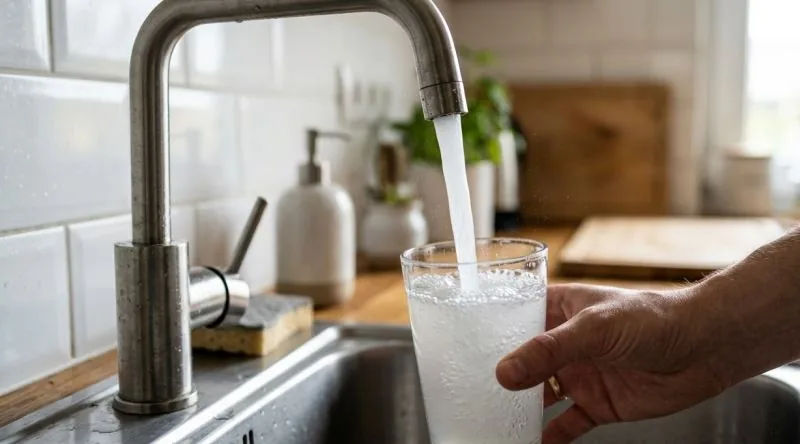
If you are asking why is my tap water cloudy, the short answer is that it is almost always air. When water travels through pipes under pressure, it holds dissolved air, and that air escapes as millions of tiny bubbles when the water leaves your faucet. The glass looks milky for a minute or two, then clears from the bottom up. It is a common household question, and it is also one of the least alarming.
Cloudy tap water is usually caused by tiny air bubbles trapped in the water by pipe pressure. The water turns white or milky for a short time and then clears on its own. It is generally safe to drink, and it is not a sign of contamination in most cases.
- Cloudy water that clears from the bottom of a glass upward within a few minutes is typically caused by trapped air, not by dirt or chemicals.
- Cold water can hold more dissolved air than warm water, so the tap may look cloudier in winter or after the water has sat in cold pipes.
- Water main repairs and pressure changes in the lines can push extra air into the system, which shows up as milky water at the faucet.
- Cloudy water that stays cloudy, or that comes with a strange smell or color, is the case worth reporting to your water provider.
- A simple test is to fill a clear glass and watch it: bubbles rise and the water clears, while contamination does not settle out the same way.
The Milk-in-a-Glass Moment
You turn the faucet, fill a glass, and instead of clear water you get something that looks like a small batch of ayran brewing right there in your kitchen. This is the everyday scene behind the question why is my tap water cloudy: the water runs milky white, not slightly hazy but genuinely opaque, like milk poured from the tap.
The first reaction is almost always the same, and it is panic. "What got into this water?" We trust water by appearance. If it is colorless we relax, if it is odorless we relax a little more, and if it is clear we say "all good." So when the stream comes out white, the mind races through a short, vivid list: rust in the pipes, limescale, chemicals, a municipal crew working down the street, the building's storage tank, and finally the question of whether the household is switching to bottled water starting today.
That panic is understandable, and it is also usually misplaced. Milky white tap water is most often caused by tiny air bubbles, not contamination. Water can pick up air while traveling under pressure through the supply pipes, and those bubbles become visible the moment the water reaches normal atmospheric pressure at the tap. The whiteness in the glass is basically a crowd of bubbles putting on a show.
Utilities and water-science sources say the same thing. The USGS publishes explanations of why drinking water can appear cloudy, and the Drinking Water Inspectorate, United Utilities and California Water Service all publish consumer guidance on white or cloudy water. In most cases the cause is simply air, not something sinister dissolved in your supply.
The Real Culprit: Air, Not Contamination
Here is the short answer to "why is my tap water cloudy": the white cloud in your glass is almost always air, not contamination. Water traveling under pressure through the supply pipes picks up tiny air bubbles, and when you open the tap that water hits normal atmospheric pressure and the bubbles suddenly become visible. Nothing bad got in. The water simply picked up air on its way to your kitchen.
Picture what happens inside the pipes before the tap ever opens. Water moves through the mains under pressure, and along that journey it can entrain air, especially during maintenance work, when valves open and close, when pressure shifts, when air pockets sit trapped in the line, or when temperatures swing. All of that agitation works air into the flow in the form of bubbles too small to see. The moment the water leaves the spout, the pressure drops, and those bubbles expand into the milky haze filling your glass.
So the white is a mass showing of tiny bubbles, a crowd of them catching the light all at once. There is no secret milk powder in the mains. The pipes are not secretly making you a latte. It is just air made visible, and it tends to clear from the bottom of the glass upward within a few minutes as the bubbles rise and escape.
Watch the glass for a minute. If the cloud starts dissolving from the bottom up, you are almost certainly looking at trapped air, nothing more.
You may notice the effect more after a water outage, a round of mains maintenance, a plumbing change, or any pressure shift in the system. Cold water can hold more dissolved air, so the whitish look may be more pronounced in winter, and the bubbles can separate out as the water warms inside your home. The USGS publishes explanations of cloudy drinking water, and utilities such as the Drinking Water Inspectorate, United Utilities and California Water Service offer the same consumer guidance: white, bubbly water that clears on its own is a matter of physics, not a safety scare.
The Bottom-Up Test: How to Tell It's Just Air
Fill a glass, set it on the counter, and wait a few minutes. If the whiteness clears from the bottom up, with the bottom of the glass turning clear first while the cloudiness above it fades away, you are almost certainly looking at air bubbles and nothing more. That upward-clearing pattern is the visual signature that separates harmless trapped air from a real problem.
Watch it happen and the logic is obvious. The tiny bubbles rise through the water, break free into the air, and the glass settles back to its normal clear state. Nothing is left behind. No film, no grit, no smell. Just water that looked milky for a minute and then thought better of it.
This matters because the eye is a terrible judge of a glass of water on its own. Milky white triggers every worry at once: pipe rust, limescale, chemicals, a maintenance crew working down the street, the building's storage tank. All of that panic usually rests on one glance at a single glass. The few minutes of waiting cost you nothing and answer the question faster than any phone call to the utility.
So the next time you catch yourself wondering why is my tap water cloudy, do the simplest thing first: pour, wait, and watch which end of the glass clears. If the water clears from the bottom up, the answer is air, and the water is fine.
When It's More Noticeable: Outages, Repairs, and Cold Weather
If you're asking yourself why is my tap water cloudy, the timing often tells the story. The whitish, milky look tends to surface at very specific moments, and those moments are the ones that get the phone calls rolling in to water utilities.
Picture the scene: the maintenance crew has just finished work on the mains line down the street, or the building's plumbing was opened up for a repair. Then someone turns on a faucet and out comes water that looks like it belongs in a cereal bowl. That is no coincidence. Any event that disturbs pressure in the pipes, an outage, a valve being opened or closed, a plumbing change inside the building, or even a pocket of trapped air shifting in the line, can push extra air into the water. When the tap opens and the pressure drops back to normal, all that trapped air shows up as a burst of tiny bubbles.
Why Winter Makes It Worse
Cold weather adds its own twist. Colder water can hold more dissolved air than warm water, so the supply arriving at your door in January may be carrying a bigger hidden load of gas. Bring that water indoors, let it sit in a warm kitchen, and the dissolved air has nowhere to stay. It separates out as bubbles, and your glass goes white all over again. Same story, same ending: a few minutes of milk-white, then clear.
These are exactly the situations the original account flags as the ones most likely to draw complaints, because the contrast is so jarring. Everything was fine a day ago, and suddenly the faucet is pouring something that looks like it came from a dairy. Once you know the pattern, though, the alarm fades. The whiteness shows up after a disturbance to the system, and it leaves on its own.
The Good News, and the Warning Signs That Actually Matter
White water that clears fast, smells like nothing, and leaves no tint in the glass is usually not a health emergency. The bubbles appear and then disappear within a few minutes. But the reverse is just as true: a strange-looking glassful is not automatically innocent, and a few specific signals flip the story from harmless air to a genuine water-quality question.
So what separates the two? Watch the glass. If the whiteness clears from the bottom upward and the water turns clear within a few minutes, you are almost certainly looking at trapped air. Now run the checklist for the other outcome: the cloudiness lingers, it never clears bottom-up, tiny particles drift around in it, the color leans yellow, brown or rust, there is an odor, the taste has shifted noticeably, or your neighbors are seeing the exact same thing. Any one of those and the picture changes.
That is when air bubbles stop being the explanation. Plumbing, a building storage tank, work on the supply network, rust or stirred-up sediment can all be involved, and each one points somewhere different. Brown or yellow water is a separate story from the foamy white kind, since rusty pipes, sediment kicked loose after network maintenance and building tanks come into play there. A bad smell deserves the same seriousness. "Milky white" and "odd-smelling, colored, gritty" are not the same glass of water.
What matters is not just whether the water is white but how it is white. Are bubbles visible against the glass? Does it clear on standing? Does it clear bottom-up? Any smell? Is the color truly white or closer to yellow and brown? Is it one faucet or the whole house? Hot water or cold? Those small distinctions tell you which way to point the panic.
Quick rule of thumb: clears in minutes with no smell, color or sediment, and it is almost certainly air. Persists, carries color, odor or grit, or you honestly doubt it is safe? Ask building management, the water authority or a plumber.
Frequently asked questions
Why does my tap water sometimes look white and cloudy?
Most of the time, milky white tap water is caused by tiny air bubbles, not contamination. Water picks up air while traveling under pressure through the supply pipes, and those bubbles become visible the moment the water hits normal atmospheric pressure at your faucet. The whitish look is simply a crowd of bubbles catching the light.
Is cloudy tap water safe to drink?
If the cloudiness clears within a few minutes and the water is odorless and colorless, it is usually not a health concern. That quick-clearing white haze is entrained air, and utilities such as the USGS, the Drinking Water Inspectorate, United Utilities and California Water Service all describe it as harmless. Persistent cloudiness, color, particles or odor are a different story.
How can I tell if cloudy water is just air bubbles or something harmful?
Fill a glass and let it sit. If the white haze clears from the bottom of the glass upward within a few minutes, you are almost certainly looking at air bubbles rising and dissipating. If the cloudiness lingers, if particles float in it, or if the water turns yellow or brown or smells bad, treat it as a real water-quality question worth investigating.
Why does cloudy tap water clear from the bottom up?
Because bubbles rise. The tiny air pockets suspended in the water float upward and escape into the air, so the clearest part of the glass is the bottom, and the haze shrinks from below until the whole glass is transparent again. That bottom-up clearing is the signature of air, not sediment.
What should I do if my tap water stays cloudy and has a bad smell?
Contact your building management, your local water authority or a plumber. Cloudiness that does not clear, combined with odor, discoloration or grit, can point to rust, sediment stirred up by supply-network work, or a problem in the building's plumbing or storage tank. A bad smell should always be taken seriously.
Does cold weather make tap water look more cloudy?
Yes. Cold water can hold more dissolved air than warm water, so the effect tends to be more noticeable in winter. Once that cold, air-rich water warms up indoors, the trapped gas separates out as visible bubbles, and your glass goes milky for a few minutes before settling clear.
Why does cloudy water happen after a water main break or repair?
Pressure changes are the trigger. When a main is repaired, a valve is opened or closed, or service is restored after an outage, air pockets and sediment get disturbed and pushed through the pipes. That surge of entrained air shows up at your tap as white, cloudy water that usually clears on its own.
Is it normal for tap water to look milky right after opening the faucet?
Completely normal. The water sitting in your pipes is under pressure, and the instant you open the faucet that pressure drops to normal atmospheric level. The dissolved air comes out of solution all at once, which is why the first pour often looks the milkiest and later pours look clearer. Editorial note: Any details that remain unconfirmed are presented as such, and readers with ongoing water quality concerns should check with their local water provider.
Got a take on this? Add your voice to the conversation below →
No comments yet. Be the first.