Adolf Hitler Paintings: The Failed Artist of Vienna
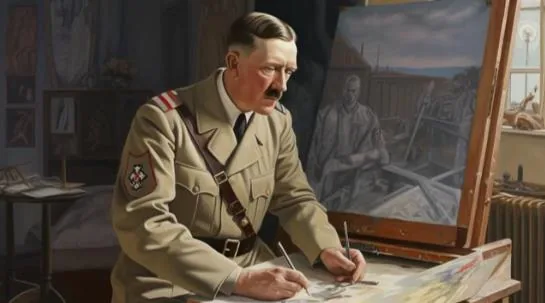
Adolf Hitler paintings date from his years in Vienna between 1908 and 1913, when the young Austrian hoped to make a living as an artist and instead was twice rejected by the city's Academy of Fine Arts. He kept painting anyway, copying postcard views and selling watercolors to tourists and small dealers. Those modest pictures later became some of the most scrutinized objects of the twentieth century, valued less for their brushwork than for the signature in the corner. The story of the failed artist is also a story about how the world handles relics of a man who turned out to be something far worse than a bad painter.
Adolf Hitler lived in Vienna from 1908 to 1913 and tried to become a painter. The Academy of Fine Arts rejected him, reportedly for weak drawing, and he sold watercolors and postcard copies instead. His paintings survive today in private hands and museum storage, and they surface at auction and in seized-art debates.
- Hitler moved to Vienna in 1908 and remained there until 1913, supporting himself partly through his painting.
- He applied to the Academy of Fine Arts in Vienna and was turned down, with the rejection commonly tied to his poor figure drawing.
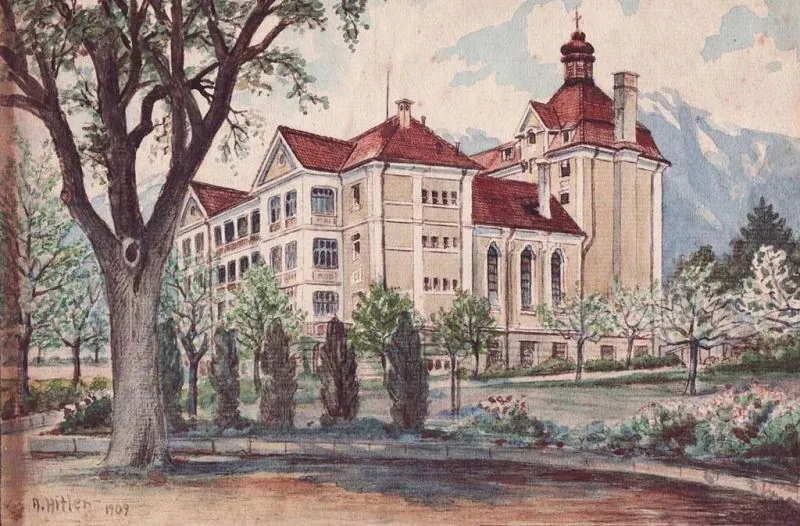
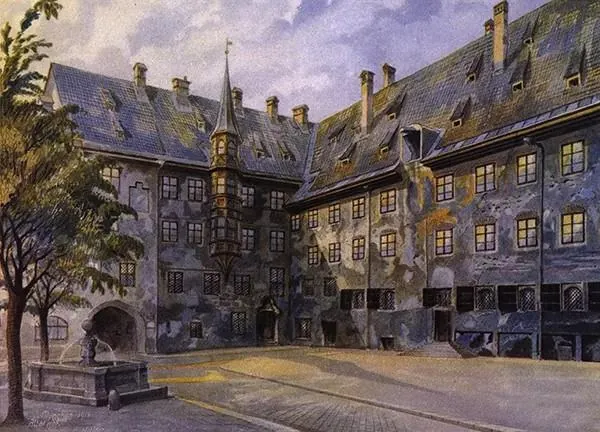
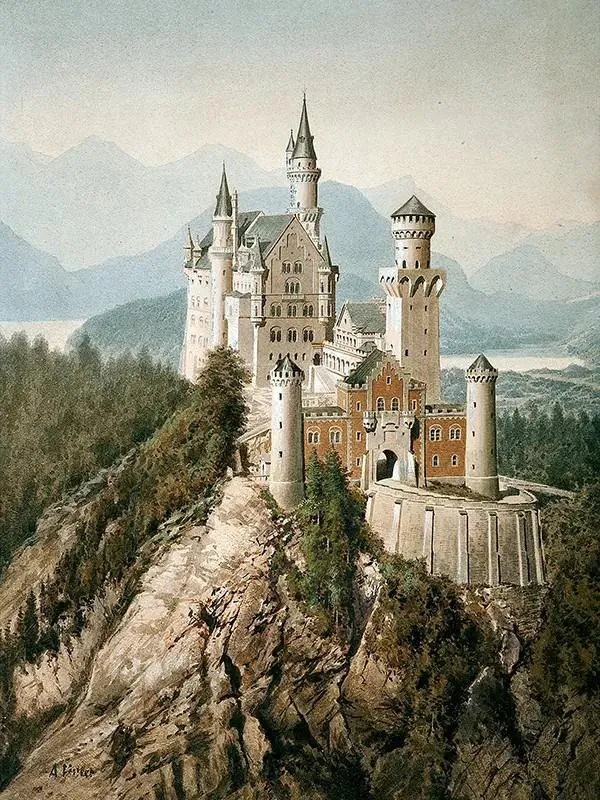
- During his Vienna years he produced watercolors and small paintings, often copied from postcards and prints, and sold them to tourists and dealers.
- His paintings have since appeared at auctions and in discussions of art seized during and after the Second World War.
- The pictures carry little artistic standing, and their value today is driven mainly by historical association.
The Would-Be Painter of Vienna
Before the speeches, before the war, there was a young man in Vienna with a paintbrush and not much else. Adolf Hitler lived in the Austrian capital from 1908 to 1913, and he tried to keep himself fed by selling paintings and postcards. The pictures from those years are small, careful watercolors of rooftops, churches and quiet streets, made by someone desperate to make a sale. He mostly didn't.
His commercial success stayed meager the whole time. He colored postcards and turned out pictures to order, and the money never added up to a living. One buyer stands out in the records: Samuel Morgenstern, a Vienna frame dealer who purchased a number of his watercolors, according to Brigitte Hamann's account of those years. A frame shop buying watercolors makes sense, of course. Frames and pictures travel together.
The rejections came first, and they shaped everything after. Hitler sat the entrance exam at the Vienna Academy of Fine Arts in 1907 and again in 1908. He failed both times. The examiners looked at his work and concluded he had no gift for painting, though they did note an aptitude for architecture. Picture that for a second: a teenager told he can draw buildings but not people, standing outside a door that just closed.
What happened to the paintings afterward is its own strange thread. At the end of World War II, the US Army found a cache of his works, and some are believed to have stayed in Germany. Others were carried to the United States along with other seized material. The claim that the US government still holds them and refuses to let them be exhibited is reported but contested. In the 2000s, many of these works began turning up at auction, which is how a mediocre Vienna watercolor became a headline.
Why Was Hitler Rejected from the Vienna Academy of Fine Arts?
Adolf Hitler failed the entrance exam at the Vienna Academy of Fine Arts twice, in 1907 and again in 1908. The verdict was not that he lacked ambition, but that his gift pointed elsewhere. Academy examiners told him he was better suited to architecture than to painting, and officials noted that he struggled badly when it came to drawing people.
Picture the scene. A teenager from the provinces stands in a room with his portfolio open, convinced his future is already decided. The examiners look at the same sheets and reach a different conclusion. According to Ian Kershaw's account in Hitler: 1889-1936: Hubris (1998), the rejection hinged on the human figure. Buildings and streets he could manage. Faces and bodies, the heart of any painter's training, kept slipping through his hands.
That single piece of feedback is where the story turns. The advice about architecture was not a consolation prize; it was a genuine redirection. Yet he would not take it. He stayed in Vienna and kept working at the easel, and between 1908 and 1913 he scraped a living by coloring postcards and selling his watercolors. The rejection did not end the dream. It just pushed the dream underground.
So the answer to the question is almost disappointingly simple. He was turned away because the Academy judged his drawing of people too weak, and because the one door that might have opened, architecture, was never the door he wanted to walk through. Everything that followed in Vienna, the postcards, the small sales, the stubborn self-belief, grew out of those two failed exams.
The 1939 Remark: "I Am an Artist, Not a Politician"
In August 1939, with Europe days away from war, Adolf Hitler reportedly sat down with Nevile Henderson, Britain's ambassador to Germany, and said something that has echoed ever since: that he was an artist, not a politician, and that once the Poland question was settled he wanted to end his life as an artist. The meeting itself fits the calendar perfectly. The exact words do not.
That is the strange thing about this famous line. The encounter between Hitler and Henderson in the summer of 1939 is entirely plausible, sitting right at the edge of the invasion of Poland that September. But the quotation as it circulates, polished and neat, cannot be reliably confirmed. No solid record pins those sentences to that room. So when you see the remark repeated as a smoking gun, treat it the way historians do: as a story passed down, not a transcript.
The wording that circulates, though no reliable record confirms it:
"I am not a politician but an artist. Once the Polish question is resolved, I want to end my life as an artist."
Why does the line stick? Because it lands against everything we know about the paintings story. Here was a man who, decades earlier, had tried to make his living with a brush and failed. The idea that he still carried the artist inside him, even as he steered a continent toward catastrophe, is almost too tidy. That tidiness is exactly the reason to hold it loosely.
So the remark survives as a reported claim, not a verified fact. The date is real. The ambassador is real. The war about to break is real. The sentence itself is the part that wobbles.
Who Bought Adolf Hitler's Paintings in Vienna?
The most documented buyer of Hitler's Vienna watercolors was Samuel Morgenstern, an Austrian businessman who ran a frame shop in the city. During Hitler's Vienna period, roughly 1908 to 1913, Morgenstern purchased a large number of his paintings. Those sales were part of a broader, mostly unsuccessful push to earn a living from art.
Picture the transaction itself. A young man walks into a frame dealer's shop with a stack of small watercolors, mostly city scenes, and hopes the owner will take a few off his hands. Morgenstern, a Jewish businessman running his own shop in Vienna, kept buying from him over a stretch of years. That steady customer mattered, because Hitler's commercial success in these years was thin at best. Every sale kept the rent paid a little longer.
A second name surfaces in the accounts of these dealings. An unconfirmed story mentions a lawyer named Josef Feingold who supposedly bought several of Hitler's paintings depicting old Vienna, the narrow streets and familiar landmarks of the city as it looked before the war. Treat that one with care. Feingold's identity and the details of his purchases are not reliably confirmed, so it belongs in the "as the story goes" column rather than the record.
What the buyers had in common was simple. They were Viennese customers paying modest sums for modest pictures, the kind of small-scale commerce that filled a young artist's days between failed applications and uncertain plans. Morgenstern's shop stands as the firm, documented anchor of that trade. The rest of the client list is thinner, and the honest version of the story says so.
The 1910 Self-Portrait and the US Seizure
At the close of World War II, the US Army found a number of Adolf Hitler paintings, and some of those works are believed to still be in Germany. That much is well documented. What happened next is where the story gets murky, because the trail of these canvases runs from a Vienna boarding house to American custody, and not every step is cleanly recorded.
The most quoted detail concerns a self-portrait. An unverified account claims that in 1910, at the age of 21, Hitler painted his first self-portrait. That same account says the canvas turned up in 1945 alongside twelve of his other paintings, recovered by American forces sweeping through the wreckage of the Reich. Treat the "first" and the exact count with care, because no solid record pins down either the 1910 date or the tidy bundle of thirteen. The broader picture is firmer: US troops did gather up Hitler's artwork along with other captured material, and shipped it across the Atlantic.
What the American government did with it afterward is the contested part. As the story is told, the works were taken to the United States and are held by the US government, which refuses to let them be exhibited. That claim of a standing blanket refusal is hard to verify and should be read as reported rather than settled. Meanwhile, plenty of Hitler's paintings never crossed an ocean at all. Some stayed in private hands, passed quietly between owners, and only began surfacing at auction in the 2000s, where they drew crowds, headlines and no small amount of discomfort.
Picture the scene: a young man in a rented room, brush in hand, painting a face in the mirror. Decades later, soldiers in a defeated country pack that same face into a crate. The canvas is a strange kind of witness, an ordinary object that outlived the catastrophe its maker set loose.
How Art Critics Viewed Adolf Hitler's Paintings
The Vienna Academy of Fine Arts turned Hitler down because its examiners judged him unable to draw people well, a weakness that mattered more than any grand verdict about genius. That is the documented core of the rejection. The sharper critical language that circulates about his paintings comes from a later, less certain source, and it should be read that way.
According to the original account, the American journalist and author John Gunther took a direct look at the watercolors Hitler had once submitted to the Vienna academy. The year given is 1936, when Hitler was already chancellor of Germany and the paintings were nearly three decades old. Gunther reportedly came away unimpressed. As the story goes, he called the works ordinary, and said they were entirely lacking in rhythm, color, feeling, or spiritual imagination.
That is a devastating sentence, and it is worth pausing on how it lands. It does not accuse the young Hitler of laziness or sloppiness. It accuses him of flatness, of surfaces with nothing breathing underneath. A critic who writes that a painting has no rhythm and no feeling is really saying the hand moved but the eye never woke up.
The Gunther examination and his exact wording are reported rather than firmly documented, so treat the quotation as the version that has come down to us, not as a transcript pulled from an archive drawer.
What the academy's own examiners put on record is narrower and more concrete. When they rejected his application, they noted his difficulty drawing people. Figures, faces, the human body in motion: that was where his hand failed him. Buildings and streets he could manage. People he could not.
Set the two judgments side by side and they rhyme. A painter who cannot render people is a painter who struggles to put life on the page, and a critic who finds no feeling in the work is describing the same absence from a different angle. One is a grading note from a Vienna examination room. The other is a journalist's verdict delivered decades later, in 1936, from a distance.
Frequently asked questions
Where did the US Army's finds end up?
At the close of the war in 1945, US Army personnel found a batch of Hitler's paintings, and some of those works are believed to have remained in Germany. The rest were carried to the United States together with other seized material. According to the original account, the US government still holds them and reportedly refuses to let them be exhibited.
Did every painting go to America?
No. Plenty of the works never entered government hands at all. They stayed with private owners, passed along quietly for decades, and stayed out of public view. That split, some seized and shipped abroad, some kept in living rooms and storage, explains why the paintings surfaced in such scattered places later on.
When did the paintings start showing up at auction?
In the 2000s, many of these works began appearing at auctions. After roughly sixty years out of sight, watercolors and sketches that had once been sold on Vienna's streets were suddenly back on the market, drawing curious bidders and uneasy headlines in equal measure. Editorial note: Details that remain unconfirmed, including the exact wording of his academy rejection and the current whereabouts of many individual paintings, are presented here as reported or unverified rather than as settled fact.
Got a take on this? Add your voice to the conversation below →
No comments yet. Be the first.