Why Heart Cancer Is So Rare: The Cell Division Answer
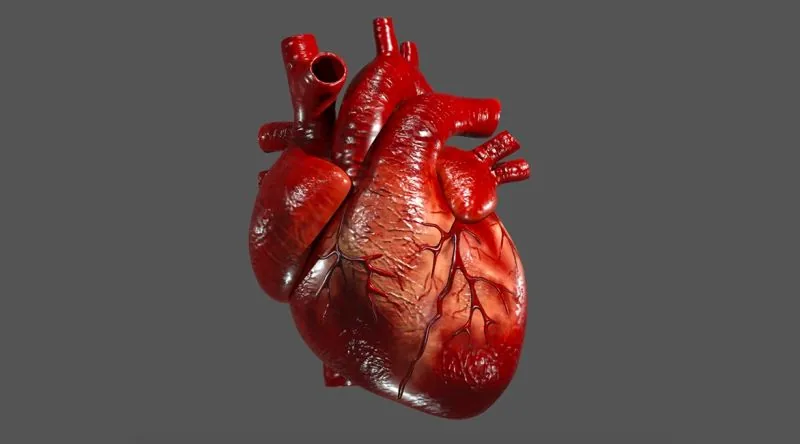
You have heard of heart attacks. You have heard of heart failure. But when was the last time anyone you know talked about heart cancer? There is a reason for that silence, and it hides in the strange biology of the organ itself. Cardiomyocytes, the working cells of the heart muscle, step out of the cell cycle shortly after birth and settle into a quiet, non-dividing life. Most cancers need dividing cells to collect the genetic mistakes that drive a tumor, so the heart offers very few openings. That stillness, plus the heart's limited contact with outside carcinogens, is why a cancer starting in the heart itself is a medical oddity rather than a familiar diagnosis.
Heart cancer is rare because heart muscle cells almost never divide after early childhood, and cancer typically needs dividing cells to develop. The heart is also shielded from most environmental carcinogens. When tumors do appear in the heart, they are far more often cancers that spread there from elsewhere in the body.
- Primary heart cancer, a tumor that begins in the heart itself, is among the rarest of all cancers.
- Heart muscle cells largely stop dividing after birth, which limits the cell turnover that cancer depends on.
- The heart has minimal contact with external carcinogens such as tobacco smoke or ultraviolet light.
- Metastatic tumors that spread to the heart from other organs are more common than tumors that start there.
- When heart muscle is injured, it tends to form scar tissue, a process called fibrosis, rather than regenerate through active cell division.
We Hear About Heart Attacks, Never Heart Cancer
Heart attack. Cardiac arrest. Heart failure. Those three phrases are practically a chorus in everyday conversation, and each one describes a heart in trouble. Yet you can go a lifetime without hearing anyone say the words "heart cancer." That gap is not an accident of language, and it is not because the heart is somehow shielded from the disease. It points to something genuinely strange about the organ sitting in the middle of your chest.
So the question worth asking is simple: why is heart cancer so rare while cancers of the skin, lung, breast and blood are so familiar?
Start with the daily grind. Your body spends every hour of every day absorbing a steady stream of toxins, acids, enzymes and ultraviolet rays. Tissue gets damaged. Cells die off. To keep you intact, stem cells and progenitor cells divide to replace what was lost, which is how the body renews itself. Every one of those divisions means the cell has to copy its DNA first, and copying is not perfect. Errors happen.
Cells do not simply accept those errors. Proofreading mechanisms and DNA repair processes normally catch them and shut problems down. But with roughly 37 trillion cells in the human body and constant exposure to harmful substances, the sheer volume of copying makes genetic mutations inevitable. Some cells accumulate enough of them to turn cancerous. In a bitter irony, the body's own repair effort can produce the diseased tissue it was trying to prevent.
That is the backdrop for the real puzzle. If division and renewal create the openings for cancer, then an organ that barely divides should rarely develop it. The heart, unlike most of the rest of the body, is exactly that kind of organ.
Cancer Is the Price of Repair
Every single day, your body takes a beating. Toxins, acids, enzymes, harsh sunlight, and a long list of other harmful substances all leave their mark on your cells and tissues. When the damage adds up, stem cells and progenitor cells step in and start dividing actively to replace what was lost. That is renewal, and it is happening inside you right now.
But here is the catch. Every time a cell divides, it copies its DNA. And copying is not perfect. Sometimes, in the middle of that repair process, a mistake slips through.
Your cells do not take this lying down. They run error-checking mechanisms and DNA repair processes that are genuinely robust, and most of the time those systems catch the slip before it becomes a problem. The trouble is scale. With roughly 37 trillion cells in the body, and tissue like skin under constant stress, the occasional genetic mutation is no surprise at all. Too many cells, too much harmful exposure, and the errors start to accumulate. A cell can quietly collect genetic mutations until it crosses the line and turns cancerous.
And here is the cruel twist. The body is not trying to hurt itself. It is trying to heal. But in the act of healing, a copying error can produce cancerous tissue and throw the whole system into a far bigger danger than the one it was repairing.
Which raises the question this whole thing has been building toward: if division and repair are what create cancer in the first place, why is heart cancer so rare? The answer starts with how little the heart actually divides.
Why Heart Cancer Is So Rare: The Heart Barely Renews Itself
The biggest reason heart cancer is so rare comes down to simple math inside your cells. Every time a cell divides, it copies its DNA, and every copy is a chance for a mistake. The more divisions a tissue racks up over a lifetime, the more chances it gets to accumulate the genetic mutations that turn a cell cancerous. Your heart, it turns out, barely divides at all.
Think about how the rest of your body behaves. Day after day it meets toxins, acids, enzymes and UV rays. When cells and tissues take damage, stem and progenitor cells actively divide to replace what was lost. That is renewal, and it is relentless in places like your skin and gut. During that repair work, a dividing cell duplicates its DNA, and sometimes the copy comes out flawed. Cells do fight back with error-checking machinery and DNA repair, but with roughly 37 trillion cells in the human body, mutations are bound to slip through somewhere. A tissue that renews constantly is simply buying more lottery tickets.
The heart barely buys any tickets at all. Unlike the rest of the body, cardiac tissue has very little cell renewal. Instead of rebuilding through cell division, damaged heart tissue repairs itself by forming scar tissue, a process known as fibrosis. Fewer divisions means fewer DNA-copying errors, and fewer errors means fewer chances for a tumor to take hold. Some carbon-14 dating studies suggest that roughly half of the heart cells present at birth may stay with a person for life, though this figure is not firmly established. Treat it as an illustration of the principle rather than a hard number.
There is a second layer to the answer. The heart is also far less exposed to carcinogens than your skin, your digestive system or your lungs. Your skin faces the sun directly. Your lungs take in whatever is in the air. Your gut handles everything you swallow. Your heart sits tucked behind your breastbone, swimming in blood, mostly cut off from the outside world. Less exposure, less renewal, and a repair strategy built on scarring instead of copying. Put all that together, and you have a tissue that almost never lets cancer get a foot in the door.
Two Kinds of Heart Cancer, and They Could Not Be More Different
When doctors talk about a tumor in the heart, the first thing they ask is where it started. A sarcoma is the rare case that starts right inside the heart's own tissue. It grows from the muscle or the connective tissue of the heart itself. This type is extraordinarily rare, and its death rate is punishingly high. Then there is the secondary heart tumor, a completely different beast. It starts somewhere else in the body, often far from the chest, and only later makes its way to the heart. It gets there by slipping into the lymph channels or the bloodstream, the same highways cancer uses to spread to the bones, the liver, or the brain. One is a cancer that grew up in the neighborhood; the other is a stranger that wandered in from somewhere else.
Which cancers tend to make that trip? Some reports suggest that metastatic forms of kidney, lung and breast cancer are among those most often reported to involve the heart, alongside lymphoma, melanoma and leukemia. Treat that list with a little caution. Calling any of these "common" heart cancers would be misleading, because the heart is such an unwelcoming destination for wandering tumor cells. The honest headline is the one that keeps surprising people: the odds of any cancer spreading to the heart are low. Really low.
And that brings us right back to why heart cancer is so rare in the first place. The heart simply does not give cancer much to work with. Its cells barely divide, and its tissue mends through scar formation rather than fresh growth. Cancer needs busy, dividing cells to sink its roots in, and the heart does not offer that kind of soil. So even when malignant cells do reach it through the blood, they usually fail to take root. In a strange way, the heart is protected by its own stillness.
Frequently asked questions
Why is primary heart cancer so rare compared to other cancers?
Cancer usually grows out of cells that divide often, and heart muscle cells barely divide at all. When the heart is injured, it repairs itself mainly through fibrosis, a scarring process, rather than by making new cells. Fewer divisions mean fewer chances for DNA copying errors to pile up into a tumor.
Does the heart heal through cell division or through fibrosis?
Through fibrosis. Adult heart muscle cells have very little capacity to multiply, so damaged tissue is replaced mostly by scar tissue laid down by fibroblasts. That is why a heart attack leaves a permanent scar instead of regrowing fresh muscle the way skin or liver tissue can.
What is the difference between a primary heart sarcoma and a secondary heart tumor?
A primary heart sarcoma starts in the heart's own tissue. It is extremely rare, and its death rate is very high. A secondary heart tumor begins somewhere else in the body and then spreads to the heart through the lymph system or blood vessels, so the heart is the destination rather than the origin.
Which cancers are most likely to spread to the heart?
Some reports suggest that metastatic forms of kidney, lung and breast cancers are among those most often reported to reach the heart, along with lymphoma, melanoma and leukemia. Even so, the probability of any given cancer spreading to the heart is low, so cardiac involvement stays uncommon overall. Editorial note: Details that remain unconfirmed are presented as such, and readers should treat any figures or claims not independently verified as provisional.
Got a take on this? Add your voice to the conversation below →
No comments yet. Be the first.