Toxic Relationship Movies: 15 Films and Series to Watch
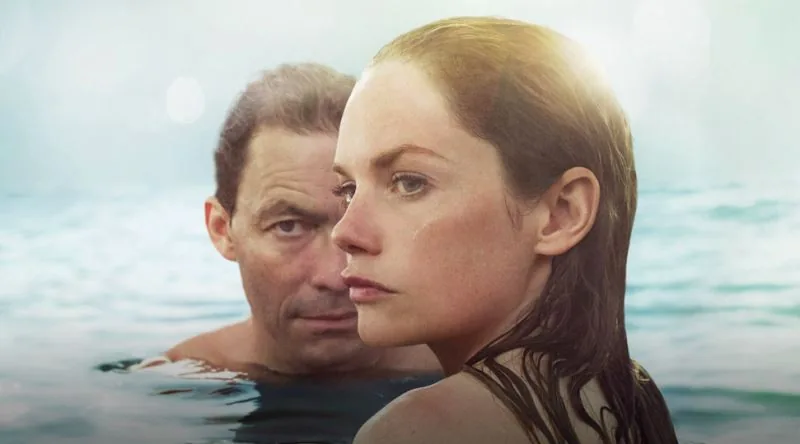
Toxic relationship movies and TV series have become their own genre of comfort and warning, and the list below covers 15 titles worth watching. The best of them, from Blue Valentine to Scenes from a Marriage, refuse to tidy up the mess. They show the slow drift, the small cruelties, the arguments that repeat for years. Watching them can feel like holding a mirror at arm's length, close enough to recognize, far enough to breathe.
This is a guide to 15 films and TV series about toxic relationships, including Blue Valentine, Marriage Story, Scenes from a Marriage, and 500 Days of Summer. Each one examines how love curdles into resentment, control, or quiet distance, and offers viewers an outside view of patterns they may recognize.
- Blue Valentine, released in 2010, cuts between a marriage's hopeful beginning and its painful unravelling.
- Marriage Story, released in 2019, follows a divorce through the legal system.
- Scenes from a Marriage was remade as an American miniseries in 2021, tracing the long arc of a volatile marriage.
- 500 Days of Summer, released in 2009, is widely discussed as a story about projection and mismatched expectations rather than a straightforward romance.
- These titles share a focus on ordinary people rather than villains, which is part of why they resonate with viewers.
Watching Toxic Relationships From the Outside
On February 28, 2025, a list of toxic relationship movies and TV series went up on eksiseyler.com under the byline "senaristbey," a writer on ekşi sözlük. It pulled in 19b reads and 486 shares. The idea was simple: watch other people wreck their love lives, and you might see your own more clearly.
That is the strange bargain these stories offer. You sit on your couch with a bowl of something warm, and a marriage falls apart two feet from your face. Nobody is grading you. Nobody is asking why you flinched at a particular line.
The writer framed the whole exercise as a kind of mirror. Watching these stories, the argument goes, lets you look at your own relationship from the outside, at least a little. And if you have never been through that kind of dynamic yourself? Then it works as practice, a way to spot the signs before they happen to you.
There is a reason this genre keeps pulling us back. Fiction gives us distance, and distance gives us permission to notice things we would rather not notice up close. The couple who cannot stop scoring points. The partner who says "I'm fine" in a voice that means the opposite. The slow drift from affection into resentment, played out over ten episodes or ninety minutes, long enough for us to see the shape of it.
It helps that the material is rich. A therapy-bound couple bickering in a pub before each session. Two people who love each other fiercely and keep loving each other wrong. A husband who writes his ex-wife a novel that is really a knife. An all-night argument soaked in alcohol and cruelty. None of it is comfortable, and that is the point.
So the list works as a kind of curriculum. Watch enough of these, and you start to build a vocabulary for the things that go unsaid in real rooms. The control disguised as care. The apology that never quite arrives. The moment someone decides the fight matters more than the person.
Some of these titles are gentle about it. Others are not gentle at all. Either way, the writer's suggestion stands: use them. Look sideways at your own life through someone else's script, and see what surfaces.
TV Series That Capture Toxic Relationships
If you want to study this canon, the small screen is where the damage gets the most room to breathe. Four shows in particular keep coming back in these conversations, and each one picks a different weapon: therapy, perspective, timing, or outright war.
State of the Union (2019)
Ten minutes. That is the whole episode. State of the Union premiered in 2019, and its first season runs ten episodes of roughly ten minutes each. The setup is almost cruelly simple: a married couple meets in a pub for a drink before walking into their weekly therapy session, and the camera just sits with them. There is infidelity in the mix. The genius of the short runtime is that you get the argument in fragments, the way real couples rehearse a fight before they actually have it.
The Affair (2014-2019)
The Affair ran for five seasons, from 2014 to 2019, and its trick is structural. Every episode hands the same events to a different person, so a kiss, a lie, or a missed phone call gets rebuilt from another angle. A forbidden love wrecks four lives, and the show keeps insisting that everyone is telling the truth as they remember it. By the end you stop asking who is lying and start asking whether anyone can be trusted with their own memory.
Normal People (2020)
The adaptation arrived in 2020, and it is the gentlest entry on this list. Two people love each other deeply and still cannot love each other in the right way, which is not quite the same thing as toxicity. The word for it is more like a tidal relationship: pulled in, pushed out, over and over, until you are exhausted on their behalf. It hurts precisely because nobody in it is a villain.
Scenes from a Marriage (2021)
The 2021 version adapts Ingmar Bergman's original, and it moves in three stages: love, then questioning, then war. Nobody sets out to be cruel. The deepest wounds come from the two people who know exactly where to put the knife. Each episode deepens the collapse a little further, so by the final hours you are watching something that once looked like a marriage and no longer resembles one.
Four shows, four different mechanisms of ruin. The next section turns to the films that do the same job in two hours or less.
Films About Love That Turns Destructive
Start with Blue Valentine (2010), where a marriage is cut between two timelines: the goofy, tender courtship and the brutal present in a cheap motel room. The film's ache is simple. Sometimes loving someone is not enough. Sometimes it is the biggest mistake you make.
Revolutionary Road (2008) stars Leonardo DiCaprio and Kate Winslet, and this time they are trapped in a marriage that is sinking. They play Frank and April Wheeler, a couple drowning inside the picture of the perfect family they were told to want. Then Closer (2004) strips away the romance entirely. Nobody in it is innocent. Everyone manipulates. It is a web of betrayal, lies and power games, and you leave unsure whether you watched love or just two sets of egos at war.
500 Days of Summer (2009) opens by announcing, flat out, that this is not a love story. It is the most painful shape of one-sided love: you think you are in a romance, and the other person has already moved to a different book. Tom even says it out loud, that films are to blame for lying to us about all of this.
In Nocturnal Animals (2016), a man writes a novel for his ex-wife, and the novel is really a revenge letter. She reads it and finally sees her past mistakes, far too late. Who's Afraid of Virginia Woolf? (1966) takes one night, one marriage, and a river of alcohol and humiliation, and leaves nothing behind but wreckage. The people who know you best are the ones who can cut deepest.
Marriage Story (2019) shows how a civilized divorce slides into mutual destruction, and how you start hating your favorite person. The Painted Veil (2006) begins with betrayal and revenge and somehow turns into something else, because love is sometimes born out of hate and sometimes survives as nothing more than habit.
Kramer vs. Kramer (1979) is a little different. A woman walks out, a man learns to raise his child and himself, and then she returns for custody. That is where the film truly begins, and its heart is the father and son, not a toxic romance. The War of the Roses (1989) is the opposite: two people who once loved madly now fight to destroy each other, because when love ends, only war remains. And Newness (2017) is not a great film, but it is an important and uncomfortable one about modern relationships: dating apps, open relationships, fear of attachment, social media. Everything is newness, and the feeling underneath is always emptiness.
Frequently asked questions
What are the best movies about toxic relationships?
Among the strongest picks are Blue Valentine (2010), Revolutionary Road (2008), Closer (2004), 500 Days of Summer (2009), Marriage Story (2019), and Kramer vs. Kramer (1979). Each traces love curdling into distance, betrayal, or open war, and together they form a solid starting shelf for anyone exploring toxic relationship movies and TV series.
Why is 500 Days of Summer not considered a love story?
Because it opens by announcing that it is not one. The 2009 film states flatly, "This is not a love story," and then spends its runtime on one-sided love: Tom believes he is inside a romance while Summer has already moved on. The mismatch, not the romance, is the point.
How does Scenes from a Marriage portray a relationship falling apart?
The 2021 series, adapted from Ingmar Bergman's original work, moves through three stages: love first, then questioning, then war. Nobody wants to be the villain, yet the couple inflicts the deepest wounds on each other, and every episode pushes the collapse a little further down.
Who are the main characters in Normal People and why is their relationship toxic?
The 2020 series follows two people who love each other deeply but can never love each other the right way. The bond swings back and forth so constantly that the source calls it a "tidal" relationship, a fitting label for a connection that keeps pulling them apart and back together.
How does The Affair show the same events from different perspectives?
The series, which ran from 2014 to 2019, follows how one forbidden affair wrecks four people. Each episode revisits the events through a different person's eyes, and the result is the discovery that everyone carries their own version of the truth. Editorial note: Any details that remain unconfirmed are presented as such, and readers should treat uncertain claims with appropriate caution.
Got a take on this? Add your voice to the conversation below →
No comments yet. Be the first.