First Servile War: Eunus and the 134 BC Slave Revolt
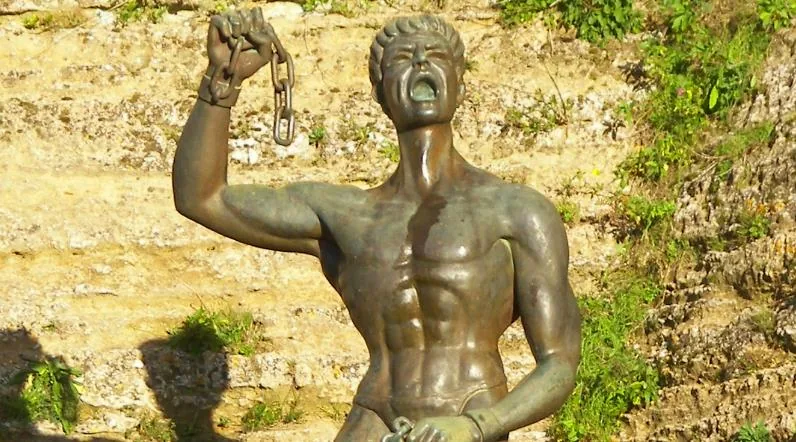
The First Servile War broke out around 135 BC in Enna, Sicily, when enslaved workers turned on the masters who had brutalized them. The man at the center of it was Eunus, a Syrian slave who said the gods spoke to him, and he turned that reputation into a crown. What started in the streets of one city spread across the island, drew in tens of thousands of the exploited, and forced Rome to send consuls and armies to put it down. For a few years, the people at the very bottom of the ancient world ruled themselves.
The First Servile War was a major slave uprising against Roman rule that began around 135 BC at Enna in Sicily, led by the enslaved Syrian prophet Eunus, who was proclaimed king under the name Antiochus. Rebels under Eunus and the leader Cleon defeated several Roman forces before the revolt was finally put down, and its leaders killed or captured.
- The revolt broke out around 135 BC at Enna in central Sicily, where enslaved workers rose against their owners.
- Eunus, an enslaved man from Syria, was chosen as the rebels' leader and took the royal name Antiochus.
- A second rebel force under Cleon joined Eunus and helped the uprising spread across much of Sicily.
- Roman armies, including forces led by consuls, were sent to the island and eventually broke the rebellion after several years of fighting.
- Eunus was captured and died in prison, according to ancient accounts, bringing the revolt to an end.
When Sicily Became Rome's Wheat Machine
Sicily became Roman territory as a direct result of the First Punic War, and once Carthage was beaten, Rome took over an island that would feed the republic for generations.
The Romans set to work with a single-minded focus. Land that had mostly been left to grazing animals was broken open and replanted, field by field, until Sicily became the grain storehouse of the Mediterranean. Ships left its harbors loaded with wheat, and that grain fed Roman cities and kept Roman armies in the field.
The labor behind that wheat came from enslaved people, and a striking number of them had been brought from Syria. That mattered more than it might sound. Because they spoke the same language and shared the same customs, they could talk to each other, plan together, and pass word from one estate to the next in a way that scattered, isolated workers never could. That shared world is part of what made the First Servile War possible.
One of those workers was Eunus. He toiled in the fields around Enna, the central Sicilian city known today as Castrogiovanni, and many of his fellow slaves had been brought from Syria just as he had.
Eunus was not an ordinary field hand in the eyes of his companions. According to the original account, he claimed to be in touch with the gods, and he had one trick that never failed to amuse his owners: he would hide a sulfur-filled nutshell in his mouth and produce flames. His masters, Damophilus and his wife Megallis, were cruel to the people they owned. When the workers finally had enough, they went to Eunus and asked him to find them a way out.
He asked for a little time alone. When he came back, he told them the gods had commanded them to rise against their masters.
Eunus, the Fire-Breathing Slave Who Talked to Gods
Eunus worked the grain fields around Enna, the inland town at the center of Sicily, and he is the figure at the heart of the First Servile War. He told anyone who would listen that he was in direct contact with the gods. He also had a trick that never failed.
Diodorus Siculus, the ancient historian whose account is our main window into all of this, describes exactly how it worked. Eunus would hide a sulfur-filled nutshell in his mouth, then breathe out a thin stream of fire. He saved the performance for his free hours, when he entertained his owners with it. Picture the scene for a second: a man in the wheat stubble, cheeks full of burning sulfur, smoke curling from his lips, and his masters looking on in amusement. They thought they were watching a clever servant do a stunt. He was building something else entirely.
The claim about the gods was not a joke to him, at least not in the way it was to his audience. According to Diodorus, Eunus genuinely presented himself as a channel for divine messages, and the people around him started to believe it. His owners were Damophilus and his wife Megallis, and by every account they were harsh masters. That cruelty is the soil everything else grows out of. When the workers finally had enough, they did not go to a general or a politician. They went to the fire-breather.
He asked them for a little time alone. When he came back, he had an answer for them: the gods demanded that they revolt. Whatever you make of the sulfur and the smoke, that moment is where the First Servile War stops being a rumor and starts being a rebellion.
Damophilus, Megallis, and the Uprising at Enna
Eunus belonged to Damophilus and his wife Megallis, and by the account of Diodorus Siculus, the couple were brutal to the people they owned. Enna, a hilltop town in central Sicily (today's Castrogiovanni), sat in wheat country worked by slaves brought mostly from Syria, so the workers spoke the same language and shared cultural ties and could talk to each other in the fields.
What set Eunus apart was his act. He claimed the gods spoke to him, and he could produce flames by hiding sulfur in a nutshell in his mouth. In his free hours he entertained his masters with the trick. When the slaves finally came to him worn down by Damophilus and Megallis, they asked for a way out. Eunus asked for a little time, went off, and came back with the answer: the gods demanded they revolt.
Then it broke open. According to the original account, a reported 400 slaves rose up and massacred the inhabitants of Enna, though that figure cannot be reliably confirmed from the sources. They sent word to nearby villages, calling for others to join them. Eunus adopted the royal name Antiochus and was declared king.
The man who breathed fire for his masters' amusement was now the king of a rebellion.
This is the spark of the First Servile War, the uprising that would spread across the island before Rome answered it in force.
Cleon Joins and Rome's Armies Fall
Eunus had barely taken the name Antiochus before a second rebel slave forced his way onto the stage. His name was Cleon, and he arrived with his own following. As the story goes, Cleon commanded some 5,000 men, and within a few months he had drawn together a reported 70,000 rebels. Then he did something that says a great deal about how this revolt held together: he placed himself under Antiochus's command. Two leaders, one throne, and no split.
Antiochus had already appointed a subordinate of his own. According to the original account, a man named Achaeus was given charge of 6,000 men and sent out to burn and plunder towns and villages across the countryside. Neither his background nor that troop figure can be confirmed, so treat both with caution.
Then came the news that turned a slave uprising into a war. A Roman army under a commander named Lucius Hypseus was defeated. More forces followed, and according to the original account the armies of Manlius Lentulus and Lucius Piso were broken as well. The names of these commanders cannot be reliably confirmed, but the pattern is unmistakable: Rome kept sending men, and Rome kept losing them.
What the rebels did with their victories is the strangest part of the story. They took cities and villages one by one, yet they left the people in them alone. They held a particular respect for those who worked the fields, the same labor that had once been their own. It was not indiscriminate slaughter. It was a revolt with a target.
By this point, ancient sources claim the rebels held all of Sicily and fielded an army of 200,000. Those figures come down to us through ancient writers who had every reason to inflate them, and they should be read with real caution. What is clear is the scale of the emergency the First Servile War had become for Rome.
The First Servile War Ends at Enna
By the final phase of the First Servile War, Rome had stopped sending second-rate commanders to Sicily. According to the original account, a consul named Calpurnius Piso reportedly landed on the island and is said to have pushed the rebels out of Messina, but he could not put Enna, their stronghold, under siege. The year given in that account is 134 BC, though the war is conventionally dated from 135 BC, so treat the timing with caution. What is clear is that Piso did not finish the job.
Publius Rupilius was sent to do what his predecessor could not. He blockaded Enna and let hunger do the work. As the story goes, the siege dragged on until the defenders were starving, and then the Romans found a way inside the walls. What followed was not a battle. It was a massacre. Rebels were tortured first, then thrown down from the citadel, according to the account. Cleon, the rebel commander who had once led his own band of insurgents, is said to have died in that slaughter, though the details of his death at Enna cannot be fully verified.
Antiochus, the man born Eunus who had been proclaimed king by the rebels, did not die on the walls. He escaped with a handful of men. He was captured later and imprisoned, but he never faced the punishment Rome had prepared for him. He died of illness first, still in captivity. That much Diodorus Siculus records, and it is the one ending in this whole grim episode that we can state as fact. The king of the slaves did not die a king's death or a rebel's death. He simply wasted away in a Roman cell.
The revolt was over. Sicily returned to its masters, and the men who had dared to claim it for themselves were gone.
Frequently asked questions
What was the First Servile War in Sicily?
The First Servile War was a large slave uprising on the island of Sicily that began around 135 BC and lasted several years. It erupted after enslaved laborers, many of them brought from Syria to work the wheat fields, rose against their owners. The Greek historian Diodorus Siculus is the main source for the revolt.
Who was Eunus and why did he lead a slave revolt?
Eunus was an enslaved man from Enna, in central Sicily, owned by Damophilus and his wife Megallis. He claimed to communicate with the gods and reportedly produced fire by hiding a sulfur-filled nutshell in his mouth. He turned that reputation into leadership, and the rebels proclaimed him king under the name Antiochus.
How did the First Servile War begin?
Fed up with cruel treatment, enslaved workers came to Eunus and asked for a way out. He told them the gods willed them to rise against their masters. The rebels then turned on the people of Enna and sent word to surrounding villages, calling on others to join them. As the story goes, the first group numbered around 400.
Who was Cleon?
Cleon was a second rebel leader who emerged during the revolt and joined forces with Eunus. According to the original account, he gathered a large following and placed himself under Antiochus's command, which turned scattered uprisings into a far more organized campaign across the Sicilian countryside.
Why did Rome struggle to crush the revolt?
Early Roman forces sent against the rebels were defeated, and the uprising spread widely across the island. Ancient sources claim the rebel army eventually grew to enormous numbers, though those figures are unreliable. It took a sustained campaign, including a long siege of Enna, before Roman commanders finally broke the revolt.
What happened to Eunus?
When Enna fell, Eunus escaped with a small band of followers but was later captured and imprisoned. He died of illness before he could be punished, so the man who had been proclaimed King Antiochus never faced the execution his captors intended for him.
Was the First Servile War the same as Spartacus?
No. Spartacus led the Third Servile War, which took place decades after the Sicilian revolt. The First Servile War was centered on Sicily and led by Eunus, while Spartacus's uprising unfolded in Italy years later. They are separate conflicts, often confused because both involved large-scale slave rebellions against Rome. Editorial note: Details that remain unconfirmed by the surviving evidence, including some numbers and personal fates, are presented here as hedged or attributed rather than as settled fact.
Got a take on this? Add your voice to the conversation below →
No comments yet. Be the first.