Six Drinks That Shaped History: From Beer to Cola
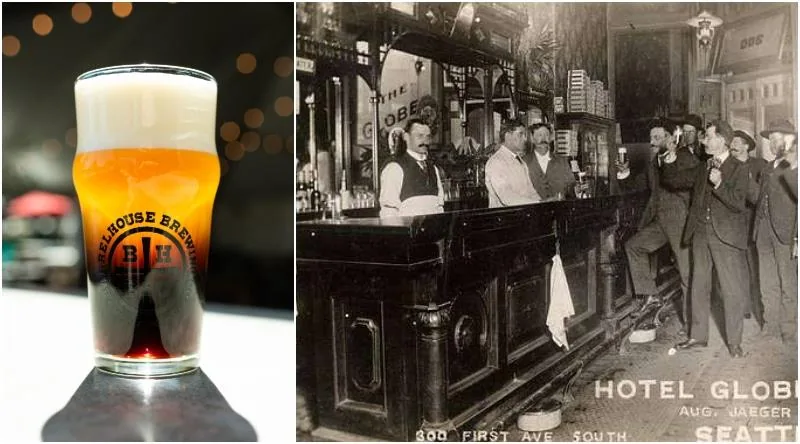
The six drinks that shaped history, beer, wine, spirits, coffee, tea, and cola, each fueled a different era, from the first cities of Mesopotamia to the global reach of American brands. Tom Standage's book A History of the World in 6 Glasses traces this story across thousands of years. It is a reminder that what people sip often says more about their world than any monument. Follow the glass and you follow power, trade, faith, and revolution.
Six ordinary drinks, beer, wine, spirits, coffee, tea, and cola, each rose alongside a distinct period of human history. Beer accompanied the first cities in Mesopotamia, wine traveled with Greece and Rome, distilled spirits powered exploration and colonial trade, coffeehouses hosted Enlightenment debate, tea linked Britain to global commerce, and cola became a symbol of American influence.
- Beer was central to daily life in ancient Mesopotamia, where some of the earliest written records mention it.
- Wine played a central role in Greek and Roman social and religious life, including the symposium and the cult of Dionysus.
- Distilled spirits such as rum and brandy became valuable trade goods during the Age of Exploration and the colonial era.
- Coffeehouses in seventeenth and eighteenth century England became meeting places for debate, business, and Enlightenment ideas.
- Tea tied Britain to global trade networks, and disputes over the tea trade contributed to the Opium Wars between Britain and China.
Six Drinks That Shaped History: A Very Short Introduction
What if the single clearest clue to which era of history you belong to is not a monument or a border, but the glass in your hand? Tom Standage built a whole book on that idea: A History of the World in 6 Glasses. His argument is simple and a little mischievous. Six drinks, six turning points, and the world reshaped around each one, whether the drinks wanted the job or not.
So here is the lineup: beer, wine, spirits, coffee, tea, and cola. That is it. No grand machinery of kings and parliaments, just what people poured at breakfast, at the tavern, and on the deck of a ship. Standage ties each one to a distinct era: exploration, reason, revolution. Trace the glass and you trace the age.
The Six, In Order
- 1Beer, born in ancient Mesopotamia around 4000 BCE, the great humanizer.
- 2Wine, the drink of culture and the Greek symposium.
- 3Spirits, distilled and ready for the Age of Exploration.
- 4Coffee, the fuel of the Age of Reason.
- 5Tea, the lifeblood of the Industrial Revolution.
- 6Cola, the symbol of American dominance.
Here is the part that makes the thesis stick. Nobody sat down and planned any of this. A Mesopotamian worker handed a beer ration instead of coins had no idea he was helping define what separates humans from the rest of nature. A Greek philosopher raising a cup at a drinking party was not thinking about the Enlightenment. And a New England merchant grumbling about a tea tax certainly was not sketching out a revolution.
Yet the drinks kept doing the work anyway. Standage's claim is not that beverages caused history on their own. It is that each one became the quiet carrier of its moment, the thing people reached for while everything else was changing. So let's walk through all six, one glass at a time. Beer comes first, and it starts earlier than almost anyone expects.
Beer: The Great Civilizer of Ancient Mesopotamia
Beer is the oldest of the six drinks that shaped history, and it shows up in ancient Mesopotamia around 4000 BCE. Water, grain, and wild yeast were all it took. No recipe book, no brewery, no class barrier. Everyone drank it, from the richest household to the workers digging canals under the sun.
Here is the part most retellings get wrong. In the Epic of Gilgamesh, it is not the hero who hands Enkidu a cup and pulls him out of the wild. It is Shamhat, the temple prostitute, who gives the hairy man bread and beer. That act is what civilizes him. The popular version that credits Gilgamesh himself is a misreading, and it erases the one figure the epic actually puts at the center of the moment.
Beer was also money. Mesopotamian workers were sometimes paid in beer rations rather than coin, partly because fermented drink was safer than plain water, which could carry whatever was making people sick. A day's labor could be settled in loaves and jugs.
So beer did not just quench thirst. It marked a line between human beings and the rest of nature, a drink you had to make, share, and account for. The first of the six drinks that shaped history was also the first one that made civilization feel like a place you belonged.
Wine: The Philosophers' Drink in Ancient Greece
Wine has always carried a price tag and a whiff of sophistication, and no culture made that clearer than ancient Greece. An Assyrian king is sometimes credited with promoting wine at court around 870 BCE, but this is not firmly established. What is clearer is that wine truly took hold in Greece, where it became far more than a beverage. It became a ritual, a social glue, and a way of thinking out loud.
Picture the scene: a room of men reclining on couches, cups in hand, the evening stretching on. These were the symposia, the philosophical drinking parties where Plato and Socrates both participated. You have to wonder: why would the sharpest minds of antiquity dull their wits with alcohol instead of sharpening them?
Some modern interpreters suggest Socrates saw drunkenness as a way to confront and master your dark side. That reading is not a clearly attested Socratic doctrine, but it fits the mood of those gatherings. The wine was not there to blur thought. It was there to loosen the grip of pretense, to let a man meet the parts of himself he usually kept hidden.
That paradox sits at the heart of wine's place in the story of the six drinks that shaped history. A drink that marked cost and sophistication, poured freely among the very people who taught the West how to reason.
Spirits: Distillation, Rum, and the Road to Revolution
First, a definition, because the word does a lot of quiet work here. A spirit is a distilled alcoholic drink, the kind that comes off a still instead of a barrel or a vat. Distilled spirits expanded in the sixteenth and seventeenth centuries and became part of the colonial economy, and one of them ended up in the middle of a war.
Brandy was the trader's friend. Across the Atlantic, merchants used it as currency, passing bottles where coins were scarce or simply impractical. Then came sugarcane, and sugarcane gave the world rum.
Rum solved a problem that wine and beer could not. It was more stable and more concentrated, which meant it survived long voyages without spoiling. For a sailor on a months-long crossing, that was not a small thing. It became the drink of choice at sea, a ration with a shelf life.
Now the escalation. When Britain taxed its colonies, a cat-and-mouse game of smuggling and tax evasion took hold, and that friction is one major factor behind the American Revolutionary War that broke out in 1775. It is not the whole story, and the tidy version that reduces a revolution to a tax on a drink is an oversimplification. But the thread runs from a still to a customs officer to a battlefield, and once you see it, you cannot unsee it.
The broader claim that distillation fueled the Age of Exploration is where the story gets ahead of itself. Distilled spirits expanded through this period and were part of colonial economies, but the great voyages of exploration began in the late fifteenth century, before these drinks were widespread. The spirits arrived, then the empires argued over them. The order matters.
Coffee: The Drink of the Enlightenment
Legendary accounts place coffee's discovery somewhere between roughly the ninth and fifteenth centuries, so a first-millennium date is plausible for early use but not firmly documented. What we can say with more confidence is that coffee spent its early life as an Arab drink, and it did not reach European tables for centuries.
The story of how it crossed over has a famous character in it: Pope Clement VIII. As the tale is told, his curiosity about the dark, bitter brew helped open the door for its acceptance in the West. That story is a popular legend of dubious historicity, and European acceptance seems to have been driven more by commerce and fashion than by any papal blessing. Keep that one filed under legend.
What happened next is not legend at all. Coffeehouses spread rapidly across England during the 1600s, and they became something closer to public institutions than to cafes. Men gathered there to argue about politics, philosophy and world events, and the caffeine in the cup kept the arguments going longer than they otherwise would have. The psychotropic stimulation was part of the point.
This is the chapter where coffee earns its place among the six drinks that shaped history. Coffeehouses were certainly important venues for Enlightenment debate, but crediting coffee itself with inspiring the Enlightenment is a contested thesis rather than established fact. Whether the beverage deserves the credit, or merely the room where the credit was earned, is still an open argument.
Tea: The Industrial Revolution and the Opium Wars
By the 1800s, tea had become the fuel of the British working day. Tea was enormously important to British consumption and trade, though the counterfactual that the Industrial Revolution could not have happened without it is an unprovable strong claim. What is certain is that tea was everywhere in Britain, and somebody had to pay for it.
The same account suggests caffeine freed workers' bodies from their natural daily rhythms, letting them keep to the man-made schedules of the mill and the mine. It is a debated thesis, plausible but not consensus. The trade itself, though, was brutally concrete. Tea traveled from China to England through the East India Company, and contrary to the popular version, that company did not ship opium to Britain. It grew opium in India and sold it into China to raise the silver that paid for the tea.
When China moved to ban the drug, the Opium Wars of 1839 to 1842 followed. Britain won, and walked away with Hong Kong and a string of treaty ports. The romantic version of the story says Britain thereby became the world's new ruler. That overstates it. Britain was already a leading global power before the first shot was fired; the war expanded its reach in Asia, it did not crown it.
So the comforting cup that kept the English worker upright was, on the other side of the world, paid for in addiction and gunboats. The same leaf that sweetened a Manchester morning helped hollow out a Chinese afternoon.
Cola: The Symbol of American Global Power
Coca-Cola's worldwide success became a symbol of American dominance, and it carried American identity along with it. That much is well documented. The rest of the story, the part about cola dethroning tea at the world's table, is more of a rhetorical flourish than a measurable fact. Tea still ranks among the most consumed beverages on the planet, so treat the "replacement" framing as storytelling shorthand rather than a literal accounting.
In the 20th century, as the United States took over from Britain as the leading global power, a new drink was said to have taken over from tea as everyone's beverage. The parallel is neat, almost too neat, and the source leans into it. Britain's former colony had once rebelled over heavy taxes on tea, and now that colony's signature product was going global. If the earlier chapters of this list of six drinks that shaped history traced empire through the cup, this final one traced empire through the bottle.
There is a claim that after "OK," the word "coke" is the most widely known English word in the world. It gets repeated constantly, often credited to Coca-Cola's own marketing or to linguistic surveys, but no one has ever verified it rigorously. So file it under "as the story goes."
What is not in doubt is the chemistry. Coca-Cola removed cocaine and eventually the active coca alkaloids from its formula in the early 20th century, and the modern drink is not psychotropic. It is a soft drink in the plainest sense.
And yet the source's parting image gives it a stranger power. Cola stands as the symbol of a new hedonism, the determination to enjoy life simply because you can. Not a medicine, not a ration, not a ritual. Just pleasure, bottled and sold everywhere.
Frequently asked questions
What are the six drinks that shaped human history according to Tom Standage?
Tom Standage names beer, wine, spirits, coffee, tea and cola as the six drinks that shaped human history. His book, A History of the World in 6 Glasses , treats each beverage as a lens on a different era, from ancient Mesopotamia through the Age of Exploration, the Enlightenment and the rise of American global influence.
How did beer help civilize early humans in ancient Mesopotamia?
Beer appeared in ancient Mesopotamia around 4000 BCE, brewed from water, grain and wild yeast, and it was safer to drink than untreated water. Workers were sometimes paid in beer rations, and in the Epic of Gilgamesh it is Shamhat, not Gilgamesh, who gives Enkidu bread and beer and thereby civilizes him.
Why did ancient Greek philosophers drink wine at symposia?
Plato and Socrates both took part in philosophical drinking parties called symposia, with Socrates a central figure in Plato's Symposium . Some modern interpreters suggest Socrates saw drunkenness as a way to confront and master your dark side, though this reads more like a modern reading than a clearly attested Socratic doctrine.
How did rum and brandy drive the Age of Exploration and the American Revolution?
Distilled spirits expanded through the 16th and 17th centuries, and brandy served transatlantic traders as a form of currency while Caribbean sugarcane plantations produced rum. Rum kept better and hit harder than wine or beer, so sailors preferred it, and when Britain taxed its colonies, smuggling and tax evasion became major grievances behind the revolution that began in 1775.
What role did coffeehouses play in the Enlightenment?
Coffeehouses spread rapidly across England in the 1600s, becoming hubs where people debated politics, philosophy and world events. The claim that coffee itself inspired the Age of Reason is a contested thesis rather than settled fact, and the popular story that Pope Clement VIII blessed coffee is a legend of dubious historicity. European acceptance owed more to commerce and fashion.
How did tea fuel the Industrial Revolution and lead to the Opium Wars?
Tea was enormously important to British consumption and trade, though the counterfactual that the Industrial Revolution could not have happened without it is unprovable. The East India Company traded opium from India to China to pay for tea, and when China banned opium, the First Opium War of 1839 to 1842 followed.
Why is Coca-Cola considered a symbol of American global dominance?
Coca-Cola's worldwide success is widely analyzed as a symbol of American cultural and economic influence, carrying American identity with it. The drink stopped being psychotropic once its formula shed the active coca alkaloids in the early 20th century, and it became something else entirely: a small, everyday pleasure you could simply buy.
Was coffee really banned by Pope Clement VIII, and what happened?
The story that Pope Clement VIII blessed coffee is a popular legend of dubious historicity, and no reliable record confirms a ban or a papal blessing. European acceptance of coffee was driven more by commerce and fashion than by any single decree from Rome. Editorial note: details that remain unconfirmed by independent sources are presented here as such, and no claim should be treated as settled fact without further verification.
Got a take on this? Add your voice to the conversation below →
No comments yet. Be the first.