Euler Characteristic: Proving Earth Is a Sphere Without Space
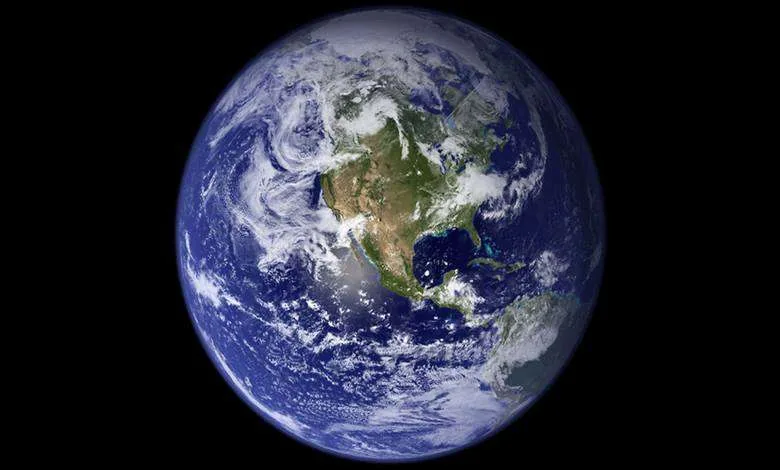
The Euler characteristic is a single number, V − E + F = 2, that describes the shape of a surface, and it holds for any sphere-like object. Long before satellites, thinkers like Eratosthenes used geometry and shadow angles to measure Earth's size. The Euler characteristic asks something different and, in some ways, deeper: not how big a world is, but what kind of shape it must be. You can work it out on a beach ball, a globe, or a map of your own neighborhood.
The Euler characteristic is a number that stays the same no matter how you bend or stretch a surface. For any sphere-like shape, vertices minus edges plus faces always equals 2. This tells us Earth is topologically a sphere without launching a rocket.
- Leonhard Euler's work in the 1700s gave the formula V − E + F = 2 its footing.
- Eratosthenes estimated Earth's circumference by combining geometric calculation with physical observation.
- Any surface that can be smoothly deformed into a sphere has an Euler characteristic of exactly 2.
- A Möbius strip is non-orientable, which is how topology tells it apart from a sphere.
- Topology studies shape properties that survive stretching, while geometry studies exact distances and angles.
The Number That Tells You What Shape You're Standing On
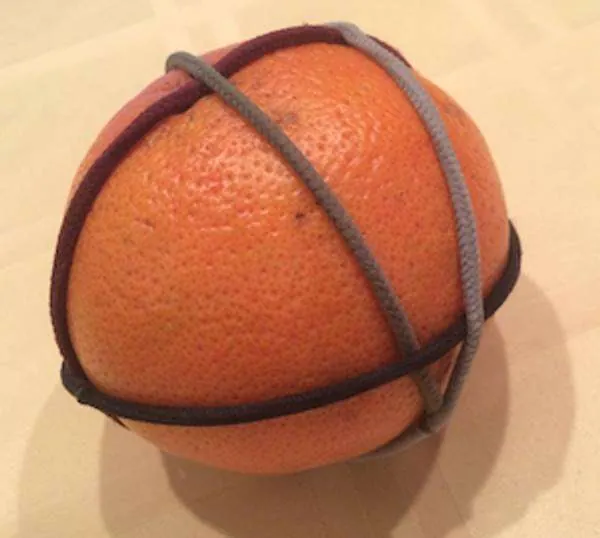
Imagine handing someone a grapefruit and a few rubber bands. Wrap the bands around it, count the crossings, and you can work out the shape of the whole fruit. That is roughly the trick behind the Euler characteristic, a single number that reveals whether the surface you are standing on is a sphere, a doughnut, or something stranger. And you can find it without ever leaving the ground.
There is a more obvious way to learn a planet's geometry: send a craft into space and photograph the surface from outside. The catch is that only a limited number of people have ever directly obtained images that way. The pictures we do have show a spherical shape, which is reassuring but expensive to confirm.
You do not need a rocket. The Euler characteristic, named for the mathematician Leonhard Euler, whose name is attached to a remarkable number of foundational rules, lets you determine the geometric properties of a surface using nothing but observations made on that surface. And here is the quietly powerful part: you can put a theoretically strong tool for understanding Earth's structure to the test with string and a handful of friends.
One thing worth saying plainly: Earth's spherical nature was known long before the space age, and long before fifteenth-century sailors set out to prove it. It was not discovered through the Euler characteristic. The method earns its place for a different reason. It shows that a surface's topological structure can be pinned down from the inside, purely from what you can measure while standing on it.
What the Euler Characteristic Actually Is
Think of it the way you think of your age. It is not a shape, not a drawing, not a measurement in inches or degrees. The Euler characteristic is just a number, one single value that a surface carries around with it, named for the Swiss mathematician Leonhard Euler, whose work in the 1700s gave the idea its footing.
For two-dimensional surfaces, the kind you can wrap your hands around, that number comes from three counts. Vertices, edges, faces. Take the vertices, subtract the edges, add the faces back in:
V − E + F
Start with something sitting on your desk. A cube has 8 vertices, 12 edges, and 6 faces. Run the numbers: 8 − 12 + 6 = 2. That 2 is the cube's Euler characteristic, and it is not a coincidence or a rounding trick. Those counts are exact, and so is the answer.
A sphere is a stranger case. Run your finger over a beach ball and try to find a corner. There isn't one. No natural vertices, no natural edges, nothing to count. So you make them up. You draw them yourself.
One approach is to sketch an equator across the ball and add a few meridians running pole to pole. No globe handy? Grab a grapefruit and wrap rubber bands around it. Where the bands cross, you get vertices. The band segments between crossings become edges. The patches of peel they enclose become faces. The photo of that rubber-banded grapefruit? The author took it herself, a nice reminder that this is kitchen-table math, not observatory math.
Now count. In that particular arrangement you end up with 6 vertices, 12 edges, and 8 faces. Plug them in: 6 − 12 + 8 = 2. Same answer as the cube, from a completely different set of numbers. Note that those counts describe one specific way of laying bands on the fruit, and a different wrapping pattern would hand you different vertices, edges, and faces. The total refuses to budge.
That stubbornness is the whole point. The Euler characteristic does not care how you drew the lines. Move the rubber bands, add a meridian, shift a crossing, and the individual counts change, but the final value stays locked at 2. What you are reading is a property of the surface itself, not of your drawing on it. For any closed surface without holes, sphere, cube, or tetrahedron, the value is always 2. These shapes are topologically identical, just wearing different costumes.
Polyhedra play along too. Take an icosahedron, the twenty-faced solid: 12 vertices, 30 edges, 20 faces. Plug them in and you get 12 − 30 + 20 = 2. The pattern holds for nearly every polyhedron you can build. It breaks in exactly one place, and you can probably guess where. Shapes with holes punched through them.
A quick caution: you will sometimes see the sphere example written with 6 vertices, 12 edges, and 8 faces, as if those were the sphere's own numbers. They are not. Those counts belong to an octahedron, or to one particular rubber-band arrangement, and the arithmetic happens to land on 2 either way.
Rubber Bands on a Grapefruit: Getting 2 from a Sphere
A grapefruit will do. Wrap rubber bands around it, the way a globe is wrapped in an equator and a few meridians, and something strange happens: the fruit stops being a fruit and becomes a counting machine. Those bands slice the curved surface into pieces, and once it is sliced, you can count.
You count three things. Vertices, the points where the bands cross. Edges, the band segments running between those crossings. Faces, the patches of peel enclosed by the bands.
In the worked example, the bands cross at 6 vertices, run 12 edges between them, and carve out 8 faces. Feed those into the formula and you get 6 − 12 + 8 = 2. The arithmetic checks out cleanly, though it is worth flagging that this particular set of counts describes an octahedron, so treat it as an illustrative example rather than the one canonical answer for every sphere.
Here is the part that makes the Euler characteristic worth caring about. Move the rubber bands. Loop them tighter, cross them somewhere else, add another band, and the three counts shift. New vertices, new edges, new faces. The surface underneath has not changed one bit, and neither has the answer.
That is the whole trick. As long as the surface stays closed and spherical, with no holes punched through it, V − E + F keeps landing on 2 no matter how you scribble on it. The numbers you count are yours to choose. The number they produce is not.
So the Euler characteristic is a property independent of your choices. A grapefruit, a beach ball, a globe, all the same surface wearing different rubber bands, all reporting 2.
Why a Cube, a Sphere and an Icosahedron All Give 2
The Euler characteristic is a topological invariant, which means it survives any redrawing, stretching or relabeling you throw at a surface. For any closed surface without holes, sphere, cube or tetrahedron, the answer always lands on the same number: 2. These shapes are topologically identical, so the arithmetic cannot help but agree.
Take the icosahedron, the twenty-faced solid built from equilateral triangles. Count its corners and you get 12 vertices. Count the line segments where two triangles meet and you get 30 edges. Count the triangular faces themselves and you get 20. Now run the formula: 12 − 30 + 20 = 32 − 30 = 2. Same answer, different shape entirely.
That is the quiet power of the tool. It does not care how many faces you carved the surface into, or whether you drew your grid with a compass or with rubber bands wrapped around a grapefruit. Perturb the drawing and V, E and F all shift, yet the combination V − E + F refuses to budge. The formula holds for virtually every polyhedron you can build. The one case where it breaks down is a shape with holes punched through it.
Testing the ground under your feet
You do not need a rocket to run this test on Earth. All you need is a few people and some long pieces of string. Everyone stands at a chosen point on the ground and ties the strings together, so the strings stretch out and cross between them. Then you count three things: the number of people, which is your vertex count V; the number of string segments, which is your edge count E; and the number of closed regions the strings enclose, which is your face count F. Run V − E + F.
If you land on 2, the topology of the surface you are standing on is equivalent to a sphere. If you land on something else, one of two things happened. Either you miscounted, or you are standing on a genuinely different surface. When that second possibility is real, the Euler characteristic alone is not enough. You also have to weigh the surface's orientability and its number of boundaries before you can pin down not just what it looks like but its exact topological type.
Orientability is the sharper of those two ideas. On an orientable surface the inside and the outside stay distinguishable, and a walk that returns you to your starting point brings your sense of direction home intact. On a non-orientable surface, that same loop flips your orientation. The Möbius strip is the classic example, described by the German mathematician August Möbius in 1858, and it has fascinated artists, engineers and mathematicians ever since.
Boundaries matter too. A surface with an edge you can walk off is not closed. One boundary or several, the count changes the topology directly. Each boundary piece drags the Euler characteristic down by one. Land on 1 and you have a sphere with a hole opened in it, equivalent to a polygon lying flat in the plane. Land on 0 and you may be looking at a torus, or at a punctured disk.
Orientation and Boundaries: When the Answer Isn't 2
Two more properties decide what kind of surface you are actually standing on, and the Euler characteristic alone cannot see either of them. The first is orientability. The second is how many boundaries the surface has. Get both wrong, and a surface that looks sphere-like can quietly be something else entirely.
When it comes to classifying surfaces topologically, orientability is the deciding factor. The Möbius strip is the most famous non-orientable surface. Start at any point, walk all the way around, and you come back flipped. On an orientable surface that never happens: you can tell inside from outside, and you come back the same way you left.
Since German mathematician August Möbius first described the strip in 1858, it has captivated environmentalists, artists, engineers and mathematicians alike, and the reason is simple. The Möbius strip is full of surprises, and a single twisted band is enough to break the neat rule that every closed surface gives you 2.
The second property that matters is how many boundaries a surface has. An edge changes the topological structure directly. If a surface has an edge you can walk off, it is not closed. It might have one boundary or several. Think of a disk, or a figure-eight shape.
Combine the Euler characteristic with orientability and boundary count, and the surface's topological type snaps into focus:
| Euler characteristic | What it tells you |
|---|---|
| 2 | Topologically identical to a sphere |
| 1 | A sphere with a hole punched in it, equivalent to a polygon in the plane |
| 0 | May be a torus, or a disk with boundaries |
Every boundary you add knocks the Euler characteristic down by one. Punch one hole in a sphere and it drops from 2 to 1; punch two and it falls to 0. So the next time your count comes out to something other than 2, do not assume you miscounted. Check orientability, check the boundaries, and the surface will tell you what it really is.
Topology Says Sphere-Shaped. Geometry Says Sphere.
You have done the counting. Vertices minus edges plus faces came out to 2, and that tells you the surface you are standing on is topologically the same as a sphere. But here is the catch that trips up almost everyone: topologically the same as a sphere is not the same as actually being a sphere. The Euler characteristic has just given you its last useful piece of information. From this point on, it stays silent.
Think about what it never told you. A cube and a beach ball share the same Euler characteristic, yet nobody would confuse the two in their hands. Topology only cares about which surfaces can be stretched into each other without tearing. It has no opinion on curvature, no opinion on whether a bump is gentle or sharp, no opinion on whether the thing you are living on is a perfect ball or a lumpy potato. Those are geometry questions, and geometry needs different tools.
This is where you have to think like Eratosthenes. The source credits him with proving Earth is round not only by observation but by measurement, combining geometric calculations with physical observations to obtain a surprisingly accurate measurement. That framing deserves a small correction, though. The idea of a spherical Earth predates Eratosthenes by centuries. What he actually did was measure it, and measure it startlingly well.
His method is the template for everything that follows. Look at shadows. Measure the angle at which light arrives. Calculate how tilted the surface is at a given point. If a stick in one city casts no shadow at noon while a stick hundreds of miles away casts a clear one, the surface between them must be curved. No spacecraft required, no photograph from orbit, just a shadow, a known distance, and a little trigonometry.
So the sequence runs like this. First topology: the Euler characteristic tells you the shape is a sphere and not a doughnut. Then geometry: shadows and angles tell you how round, how smooth, how close to a true ball. One question is about kind. The other is about degree. Eratosthenes answered the second one with nothing but sunlight and patience.
That is the whole trick, and it is worth sitting with. A number like 2 can tell you what family a surface belongs to. It cannot tell you what the surface looks like. For that you have to go outside and measure something.
Frequently asked questions
What is the Euler characteristic and what does it measure?
The Euler characteristic is a single number that describes the topological structure of a two-dimensional surface. For any such surface, you calculate it as V − E + F, where V is the number of vertices, E is the number of edges, and F is the number of faces. It stays the same no matter how you draw the mesh.
How do you calculate the Euler characteristic of a sphere?
A sphere has no natural vertices or edges, so you draw them yourself. One approach is to wrap rubber bands or draw an equator and meridians across the surface. One such arrangement of a grapefruit gives 6 vertices, 12 edges and 8 faces, so 6 − 12 + 8 = 2. That count actually describes an octahedron, but the method illustrates the principle.
Why does the Euler characteristic of a cube equal 2?
A cube has 8 vertices, 12 edges and 6 faces. Plug those numbers into the formula: 8 − 12 + 6 = 2. That result of 2 tells you the cube is topologically equivalent to a sphere, closed and without holes, which is why it shares the same Euler characteristic as any sphere-shaped surface.
Was the Euler characteristic used to prove Earth is round?
No. Earth's sphericity was known long before the space age and was not reached through the Euler characteristic. The method is theoretically notable because it works from surface observations alone, but it played no role in establishing that our planet is a sphere. That knowledge came from other sources entirely.
What is a Möbius strip and why is it non-orientable?
The Möbius strip is a well-known non-orientable surface, discovered by the German mathematician August Möbius in 1858. Travel from a point along the strip and return to where you started, and your orientation is reversed. On orientable surfaces, inside and outside are distinguishable, and your orientation is preserved on return.
How did Eratosthenes prove the Earth was a sphere?
Eratosthenes combined geometric calculation with physical observation for a surprisingly accurate measurement. But the spherical idea predates him, so crediting him with proving roundness overstates the case. He measured Earth's circumference with remarkable precision, yet the notion of a spherical Earth already existed before his work.
What is the difference between topology and geometry?
Topology classifies the surface type. An Euler characteristic of 2 means the surface is sphere-equivalent, regardless of its actual shape. Geometry measures the actual shape, tilt and curvature, using shadows and light angles. Once topology is settled, the Euler characteristic stops giving information, and you turn to geometry to understand the real form.
Can you determine a planet's shape without going to space?
Yes. A few people and long strings let you count vertices, edges and faces directly on the ground. If V − E + F comes out to 2, the surface has sphere-equivalent topology. If you get another number, you must also weigh orientability and the boundary count to pin down the topological type. Editorial note: Details that remain unconfirmed or debated among historians and mathematicians are presented here as such, with appropriate hedging.
Got a take on this? Add your voice to the conversation below →
No comments yet. Be the first.