Nocturnal Animals: Tony Is Actually Susan
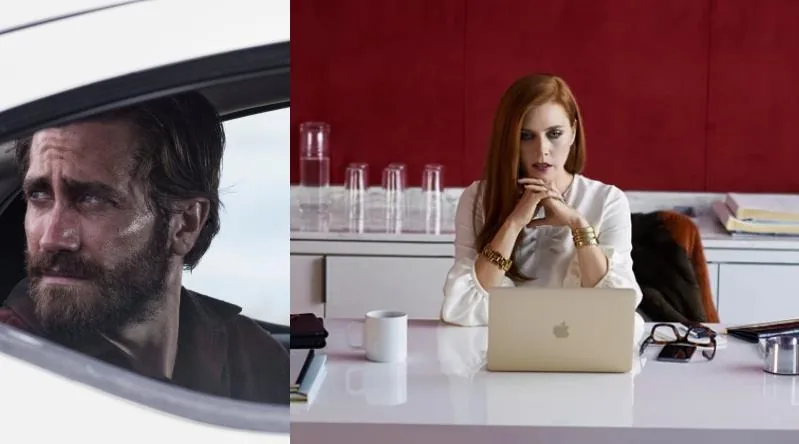
The Nocturnal Animals Tony Susan theory holds that Tony Hastings, the grieving avenger in Edward Sheffield's manuscript, is not Edward at all but Susan Morrow herself, and the film invites that reading from its opening frames. Watch Susan read the pages she once refused to understand and you start to see her own face in every line. The novel inside the film is not Edward's confession. It is her mirror, and she cannot look away.
In Tom Ford's 2016 film Nocturnal Animals, Susan Morrow reads a manuscript by her ex-husband Edward. The revenge story's protagonist, Tony Hastings, is read here as mirroring Susan's guilt, her abandonment of Edward, and her buried self-recognition. This reading frames Tony as Susan's double, not Edward's stand-in.
- Nocturnal Animals, directed by Tom Ford, was released in 2016 and follows gallery owner Susan Morrow as she reads a novel manuscript sent by her ex-husband Edward Sheffield.
- The manuscript, titled Nocturnal Animals, follows Tony Hastings, whose wife and daughter are killed by a group of men on a Texas highway, and who seeks revenge with detective Bobby Andes.
- Susan left Edward for another man early in their marriage, a decision the film returns to as the emotional root of her present unhappiness.
- The film crosscuts between Susan's present, her memories of Edward, and the events of the manuscript, inviting direct comparison between Tony and Susan.
- The ending, in which Susan waits alone at a restaurant and Edward never arrives, is often interpreted as his final act of revenge, though the film leaves his intent unconfirmed.
The Reading That Flips the Whole Film
Tom Ford's Nocturnal Animals, released in 2016, gives Jake Gyllenhaal two roles at once: Edward Sheffield, the novelist Susan Morrow left behind, and Tony Hastings, the grieving husband inside Edward's manuscript. Ask most viewers who Tony is and you get the same answer. Tony is Edward's fictional stand-in, a thinly veiled version of the man Susan (Amy Adams) abandoned years earlier. That reading is solid, and the film supports it. But the Nocturnal Animals Tony Susan theory asks a stranger question. What if Tony is not Edward at all? What if Tony is Susan?
One viewer who floated this reading admits the film nearly lost them early. A familiar metaphorical revenge story, they thought, maybe a 7 out of 10. Then the last ten minutes landed, and the whole thing rearranged itself, climbing to a 9 out of 10 in their personal estimation. That reaction is subjective, one viewer's experience, not a fact about the film. Still, it is the kind of jolt that sends people back to the beginning, counting scenes.
Here is the turn the theory rests on. Edward does not appear in a single present-day scene. He exists only in flashbacks, plus the final moment where he stands Susan up at the restaurant. Everything else we watch is his novel, and according to this alternative reading, that novel is not a portrait of Edward. It is a mirror Edward built and aimed straight at Susan. He is not telling his own story. He is showing her hers.
That is the hook, and it is worth sitting with before the mapping starts. If Tony is Susan, then every death in the manuscript is something Susan already survived, or caused, or refused to see. The man she walked away from wrote a book that puts her at the center of the violence, and she reads it in one sitting, unable to stop.
This reading is offered as one interpretation, not settled fact. The standard interpretation is still the standard interpretation, and the Tony-as-Susan idea is a lens, one that either sharpens the film or cracks it, depending on who is holding it.
Edward's Manuscript as a Mirror, Not a Stand-In
Jake Gyllenhaal plays two roles in Nocturnal Animals, and the easy assumption is that Tony, the grieving man in the novel, is simply Edward in disguise. One viewer's reading flips that: as they see it, Edward wrote the book to show Susan herself, not to represent himself.
Watch the present-day timeline and the point becomes concrete. Edward appears only in flashbacks of Susan's past. He is absent from her life until the final scene, when he agrees to meet her at a restaurant and never shows up. That absence is the whole argument in miniature. The man who supposedly poured himself into Tony refuses to occupy the same room as Susan.
The essayist's core claim is that the novel works as a mirror. In their reading, Tony is not Edward's stand-in but Susan's, and the manuscript forces her to sit with what she did. As the reading goes, the revenge is not Edward's. It is Susan's, aimed at herself. According to the original account, she even forgets she hung the painting, which fits the idea that the confrontation happens below her own awareness.
This is one viewer's interpretive reading, not established fact. It is the kind of argument you make after the final ten minutes rearrange everything you thought you were watching, and the essayist says exactly that: a film that felt like a standard metaphorical revenge story snapped into a different shape once the ending landed. The Nocturnal Animals Tony Susan theory lives in that gap between what the story shows and who the story is really about.
The reading also carries a darker message. If Tony dies on the night of the abortion, then Edward is telling Susan that he died for her then, in a sense, and that she is the one who has to carry it.
Mapping the Characters: Ray, Lou, and the Rest
Start with the boldest piece of the Nocturnal Animals Tony Susan theory: the essayist insists Tony is not Edward (Jake Gyllenhaal) at all, but Susan herself. Edward, in this reading, simply holds up a mirror. From there the writer lays out a tidy one-to-one chart. Tony's aborted baby stands in for Susan's abortion. Tony's wife becomes Edward. Turk becomes her father. Lou becomes her husband Hutton. Ray becomes her mother. And Bobby becomes the idealistic younger Susan, the version who married Edward, defied her mother, and died for it. It is a satisfying diagram. It is also, on close inspection, contested, and several of its correspondences do not hold.
Take the most glaring problem. Hutton is Susan's current husband, not a stand-in for some earlier figure, and Bobby is not a significant named character in the film at all. That weakens the symmetry the chart depends on. Then there is Ray, whom the essay places at the center of everything, stronger and more ruthless than the rest, a man who, in the essayist's telling, slips free of the charges with a lawyer's help, just as Susan's mother was never formally blamed for the abortion or the divorce. The essayist argues that both Tony and Susan see Ray and the mother as the true guilty party. But in the film Ray is killed by Tony, so the escape the essay describes does not match what actually happens on screen.
The dialogue parallels are offered with the same confidence, though the exact lines cannot be verified. In their final conversation, Ray is said to call his wife deserving of death, while Susan's mother is said to have told her that Edward deserved to be left for his weakness. Ray also reportedly urges Tony toward killing by calling it fun, much as the mother, over a restaurant table, tries to remake Susan in her own image. The result, the essay argues, is that Tony is destroyed physically and Susan spiritually.
Lou gets the secondary blame. He hands Tony the wheel of his own car and drops him at an unrelated spot, and the writer reads that ride as a portrait of premarital relations and of the lostness of the abortion day, Tony trusting Lou's directions the way he once trusted Hutton. That symbolic layer is interpretive, but the mechanical fact stands: Lou does let Tony drive, and the drop-off leads straight toward the ambush.
Eyes, Breakdowns, and the Parallel Editing
Watch how Tom Ford cuts the film, and the Nocturnal Animals Tony Susan theory starts to feel less like a stretch. The camera keeps jumping between Susan's gray Los Angeles present and the violent Texas of Tony's manuscript, and every time Tony takes a hit, Susan seems to flinch in her own timeline. The cross-cutting invites the interpretation that Susan's distress mirrors Tony's breaking points, though that simultaneity is a reading rather than something the film confirms outright.
Jake Gyllenhaal plays both Edward and Tony, and Edward only ever appears in flashbacks, never in the present-day story until the final scene where he stands Susan up. That structural choice is what fuels the reading that Tony is Susan's stand-in rather than Edward's. The essayist reads Tony's eyes as carrying the sadness Edward once attributed to Susan, and points to the bathing scenes, the shower and the bathtub, as moments where the two timelines appear to run side by side. That pairing is suggestive, not proven.
The ending is where the parallel tightens. Tony fires his gun before he dies, and Susan emails Edward asking to meet. Both are left alone. The final shots dwell on their open eyes, and the essayist notes what looks like both of them clutching their necklaces at once, a detail that cannot be verified from the film alone. What the essayist reads into Tony's transformation is regret, the regret of a man who could not protect his family, and she sees the same regret in Susan over the choices she made. Whether that symmetry is Ford's design or the viewer's projection is the open question the Nocturnal Animals Tony Susan theory leaves hanging.
What the Ending Leaves Us With
Edward never shows up. In the present-day timeline of Nocturnal Animals, Jake Gyllenhaal's Edward exists only in Susan's flashbacks until the very last scene, when he agrees to meet her at a restaurant and simply does not come. Susan waits, alone, and the film cuts to black.
That final absence is the whole argument. As one reading of the film goes, Edward did not write Nocturnal Animals to entertain Susan. He wrote it to hand her back to herself. Through the novel, he conveys Susan to Susan, exacts a kind of revenge, and delivers a message that he died for her on the night of the abortion. According to this interpretive reading, the novel is not a thriller. It is a letter she cannot refuse to read.
Worth being honest about what this is. The Nocturnal Animals Tony Susan theory is a lens, not a verdict. It is a highly interpretive reading of the film, and it is not the dominant one. The more common assumption, that Tony is Edward's fictional stand-in, remains widely held, and nothing in the film closes the door on it. The two readings can sit side by side.
What the ending does leave fixed is the shape of the loss. Susan reaches out. Edward stays away. The man who was supposed to be there is not, and the woman waiting at the table is the one who has to live with that.
Editorial note: Details the film leaves ambiguous, including Edward's motives and the restaurant ending, are presented here as interpretation rather than confirmed fact.
Got a take on this? Add your voice to the conversation below →
No comments yet. Be the first.