The Dispossessed: Le Guin's Utopia That Begins in the Mind
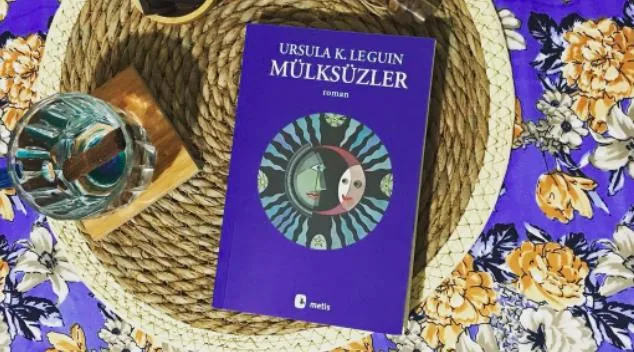
Ursula K. Le Guin published The Dispossessed in 1974, a novel about a physicist named Shevek who leaves the anarchist moon Anarres for the capitalist world of Urras. It won major awards and remains one of the few books that takes utopia seriously as a place people actually have to live in. Shevek's journey asks a question most science fiction avoids. What happens when a society built on sharing starts to calcify into its own kind of authority?
The Dispossessed is Ursula K. Le Guin's 1974 novel about Shevek, a physicist from the anarchist moon Anarres who travels to the capitalist planet Urras. It explores whether a society without property can stay free, and it earned major science fiction awards.
- Ursula K. Le Guin published The Dispossessed in 1974, and it went on to earn major science fiction awards.
- The novel's protagonist, Shevek, is a physicist who leaves the anarchist moon Anarres for the capitalist planet Urras.
- Anarres was settled by people who left Urras generations earlier to build a society without private property or central government.
- The book alternates between Shevek's life on Anarres and his time on Urras, so the two worlds comment on each other.
- Philosopher Slavoj Žižek has argued that people today find it easier to imagine the end of the world than the end of capitalism, a claim often discussed alongside Le Guin's novel.
The Dispossessed: A Utopia That Asks a Harder Question
Ursula K. Le Guin published The Dispossessed in May 1974, and it went on to win major science fiction awards, a haul that made it one of the most successful political science fiction novels ever written. Yet the book's real distinction is simpler and stranger. It is a genuine utopia, not a dystopia.
Slavoj Žižek, the Slovenian philosopher, made an argument in Living in the End Times (2010) that has haunted readers ever since. Capitalism has burrowed so deep into us, he said, that a meteor strike or an alien abduction feels easier to picture than a world that simply works differently. That is the exact wall The Dispossessed walks up to and starts chipping at.
Le Guin's answer is an anarchist society on Anarres, a world whose soil is stingy, whose weather is hostile, and where nobody owns anything because ownership itself was left behind. No money, no landlords, no inheritance. Just people, and the question of whether they can stand each other without a system forcing them to.
Read it young and it rearranges the furniture in your head. Le Guin thinks through the small stuff too. How you love someone, whether to have a child, what work means, even why you would bother buying a new shirt. Nothing about daily life escaped her attention while she was building that world.
Žižek's point lands harder once you notice how rarely fiction imagines things going right. Apocalypse is easy to sell. A functioning alternative is not. That is why The Dispossessed still gets handed to teenagers with a quiet "read this one."
Why Žižek Says It's Easier to Imagine the End of the World
Slavoj Žižek, whose 2010 book Living in the End Times wrestles with exactly this problem, made a claim that refuses to leave your head once you hear it. Capitalism has dug in so deep that picturing a meteor slamming into the planet, or being hauled onto a spaceship by aliens, feels easier than picturing the world actually changing. Than picturing us living some other way.
Sit with that for a second. A rock from space? Fine, we can storyboard it. A takeover by little green visitors? Sure, we have seen that movie forty times. But a different arrangement of work, money, housing, and relationships, one that does not run on the same old machinery? That one stalls out somewhere between the ears.
Writers and critics have also noticed that dystopian and apocalyptic films and stories seem to be multiplying. Treat that observation as a general impression rather than a settled fact, since it is hard to tie to one specific speech or source. The direction of it, though, is hard to argue with. Our screens are crowded with collapse. Our imaginations are not crowded with alternatives.
And that is precisely what makes The Dispossessed so valuable. Ursula K. Le Guin's 1974 novel does the thing we apparently cannot do on our own. It walks you through a society organized on completely different terms, then lets you live inside it long enough to stop finding it strange. Other ways of living are possible. Someone wrote the whole blueprint down.
A Planet Where Survival Means Holding On to Each Other
Ursula K. Le Guin's The Dispossessed unfolds on a world that is the opposite of Earth in almost every way. Anarres is barren, poor in resources, and harsh for human life, roughly the mirror image of a fertile planet. For the people living there, solidarity does not grow out of pure idealism. It grows out of a constant, unrelenting need to survive.
The setting is the most interesting part of the book, and also the most quietly bleak. The Anarresti are locked in a permanent struggle against nature. That gives the impression that what holds them together is not a shared wish to live beautifully, but a shared obligation to stand against the environment. On this world, unity is less a chosen virtue than an imposed necessity.
That is exactly why comparing Anarres to our own situation is tricky. Yet it also throws something into relief. The distance we put between ourselves and nature, the swagger of acting as if we had conquered it and stood apart from it, becomes much easier to see when set beside Anarres's brutal conditions.
Le Guin cannot help asking the question. Do the demands of coping with nature, of standing together against it, of defending yourself and staying alive, teach the human race to live a little more decently? Or is that just a comforting illusion? The value of The Dispossessed lives right here. It whispers that another world, another way of living, might be possible. And it does this while thinking through everything, from relationships to having children, from work to clothing and buying new shirts. Le Guin probably lived inside that world herself until the novel was finished.
The Dispossessed and the Idea That Revolution Starts Inside Your Head
One reading of The Dispossessed holds that its central argument is simple and stubborn. Revolution and enlightenment begin and end in the mind. That is an interpretive claim rather than a settled fact of literary criticism, so take it as the thread many readers pull from the book. In this reading, the real upheaval is not a barricade or a ballot. It is a shift in consciousness, and everything political grows out of it.
The novel is remembered for pressing this idea into a very specific window of life. As the account goes, it suggests that somewhere around the age of twenty a person arrives at a fork with no middle ground. On one side, you spend the rest of your life being like everyone else. On the other, you take the things that make you different and turn them into a virtue. Readers describe the passage as a light switching on in the brain, the kind of line that makes you put the book down for a second. The exact phrasing and the age reference are unverified, so hold the wording loosely and the idea seriously.
Why does that fork feel so familiar? Because almost nobody gets to stand in the middle of it. You either fold into the pattern, or you make your oddness into something you can stand on.
Le Guin, in this reading, clearly favors the second road. She suggests that sameness, anonymity and pure identification with the crowd carry a real danger, and she refuses a world where everyone is a copy of everyone else. The person who manages the turn, the argument goes, has pulled off an individual revolution and a private enlightenment at once. Happiness, freedom and clarity are not waiting somewhere out there. They are found inside.
The real revolution, on this view, is not the one you join. It is the one you survive inside yourself.
Why It Still Matters: Keeping Ourselves from Becoming Copies
Ursula K. Le Guin does not leave her readers on the fence. In The Dispossessed, she sides squarely with turning your differences into a virtue. Sameness, anonymity and uniformity are the dangers she keeps circling. A world where everyone is a copy of everyone else is exactly the world the book refuses.
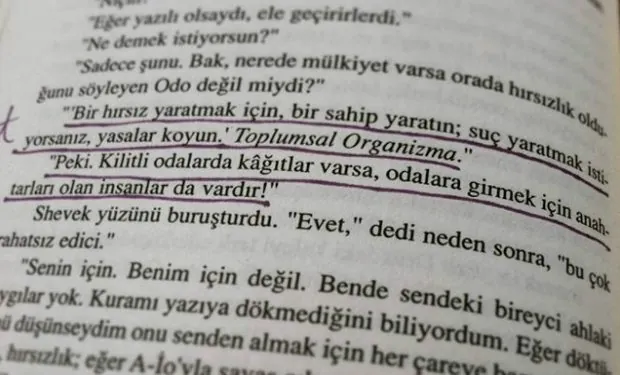
Then comes the line that stops people cold. As the account goes, Le Guin writes that somewhere around the age of twenty there is a moment when you must choose. Spend the rest of your life being like everyone else, or make your differences into a strength. The exact wording and the age reference are unverified, so treat that passage as the novel's spirit rather than a verified quotation. Even so, the fork in the road is real, and there is no middle path.
Take one branch and life fills up fast. You marry, raise children, watch television in the evening, visit the neighbors, sit through apartment meetings, walk the same route from home to work and back, see the relatives at holidays, cast a vote, keep hoping. Then one day you look up and ask yourself what you actually lived, whether any of the dreams you had at twenty survived. The other branch is harder and lonelier. It is also the one Le Guin trusts.
The claim that revolution and enlightenment begin and end in the mind is an interpretive reading of the novel rather than a settled critical fact, so hold it loosely. What is not loose is the warning underneath it. Conformity is not safety, it is erasure. The person who breaks free of it has carried out a private revolution and a personal awakening, and nobody hands out medals for either.
Protect yourself from becoming like everyone else. Look for happiness, enlightenment and freedom inside yourself, not outside.
That is the takeaway worth carrying out of The Dispossessed, and it is why a political science fiction novel from 1974 still lands on a reader today. It does not promise a better world. It asks whether you are still capable of imagining one, and whether you are still willing to be someone rather than a copy.
Frequently asked questions
What is The Dispossessed by Ursula K. Le Guin about?
The Dispossessed is Ursula K. Le Guin's 1974 novel, published in May of that year, set largely on Anarres, a harsh and resource-poor world where settlers have built an anarchist society without private property. It follows physicist Shevek as he questions that world's limits and reaches beyond them.
Why is The Dispossessed considered a utopian novel rather than a dystopia?
Because it insists that another way of living is genuinely possible. Life on Anarres is hard and often bleak, yet the book never treats that hardship as proof the experiment failed. Where dystopias imagine collapse, this novel imagines solidarity, which is why it remains one of the most celebrated political science fiction works.
What does Slavoj Žižek say about imagining utopia versus dystopia?
Slavoj Žižek argued that capitalism has penetrated so deeply that people now find it easier to imagine a meteor striking the world or an alien abduction than to imagine the world actually changing, or living differently. That observation, developed at length in his 2010 book Living in the End Times , is exactly why a novel like The Dispossessed still matters.
What does Le Guin mean by the quote about being around twenty years old?
According to the original account, the novel contains a passage suggesting that somewhere around the age of twenty a person faces a choice. Spend the rest of life being like everyone else, or turn their differences into a virtue. The exact wording and the age reference are unverified, so treat the phrasing loosely and the idea seriously.
How does the planet Anarres shape life in The Dispossessed?
Anarres is described as naturally unproductive and unsuitable for life, roughly the opposite of fertile Earth. That scarcity forces its people into constant struggle against nature, and the shared effort, rather than pure idealism, is what holds them together. Solidarity on Anarres is a survival mechanism before it is a philosophy.
Was The Dispossessed part of Le Guin's Hainish Cycle?
Yes. The novel belongs to the Hainish Cycle, the loose future history Le Guin built across several books and stories. It shares that invented universe with her other Hainish works while standing entirely on its own, which is part of why readers can start here without any prior background. Editorial note: Details that remain unconfirmed or are matters of interpretation are presented here as such, and no claim is made beyond what the novel and its public record support.
Got a take on this? Add your voice to the conversation below →
No comments yet. Be the first.