Surreal Numbers: Conway's Weird Math of Infinity

Surreal numbers are a complete number system invented by mathematician John Conway around 1970 that extends the real numbers to include infinite and infinitesimal values, all built from a surprisingly simple set of construction rules. This discovery, which emerged from Conway's analysis of the ancient board game Go, gives us a way to do precise arithmetic with quantities like infinity plus one, or the square root of infinity, and it continues to reshape how mathematicians think about the continuum.
Surreal numbers are a number system created by John Conway around 1970 while studying the game of Go. They include all real numbers plus infinite and infinitesimal values, built from two simple rules. Donald Knuth coined the name in a book from the early 1970s, and the system has since found applications in combinatorial game theory and mathematical logic.
- John Conway invented surreal numbers around 1970 while analyzing the game of Go.
- The system contains every real number, plus new infinite numbers like ω (omega) and infinitesimal numbers like 1/ω.
- Donald Knuth named the system "surreal numbers" in his mathematical novelette from the early 1970s, after Conway had privately called them "games."
- Every surreal number is constructed as a pair of sets of previously created numbers, with no number in the left set greater than or equal to any in the right set.
- Surreal numbers have found applications in combinatorial game theory, where they represent game positions, and in mathematical logic.
What Are Surreal Numbers? The Math System That Makes Infinity Doable
What is the square root of infinity? It sounds like a riddle, not a serious mathematical question. But within the surreal numbers system, that question has a real, workable answer, and it all started with a mathematician playing a board game.
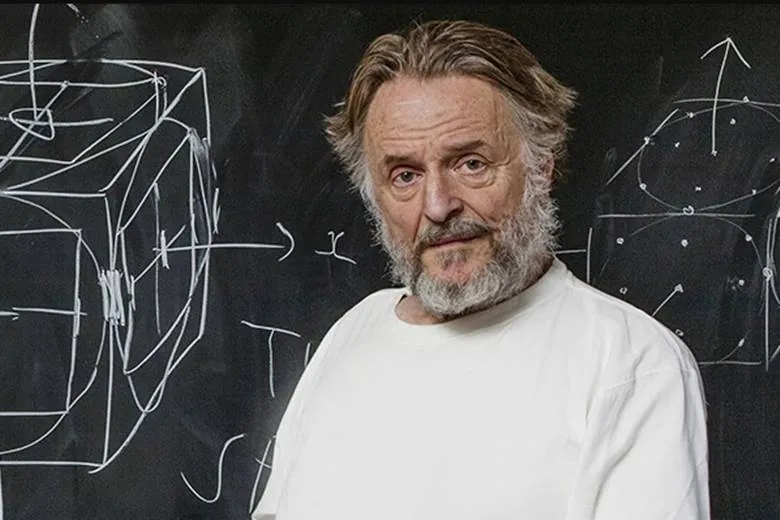
John Horton Conway, the Princeton mathematician who would later pass away from COVID-19, invented this remarkable number system around 1970. The popular story claims he stumbled onto it while analyzing the ancient board game Go, and that's exactly what happened. What matters is what he found: a simple set of rules that could generate every number we know, plus a whole universe of numbers we never imagined existed.
The system lets you do things that would make a high school algebra teacher raise an eyebrow. You can add infinity to infinity. You can subtract one infinity from another. You can even take the square root of infinity and get a perfectly valid answer. It's a playground where the usual rules of math just don't apply.
Conway was a man who approached mathematics with childlike glee. He was the same person who invented the Game of Life, the famous cellular automaton that simulates living organisms, and the Doomsday algorithm, a clever mental trick for calculating the day of the week for any date in your head. His love for puzzles and games fed directly into his mathematical genius.
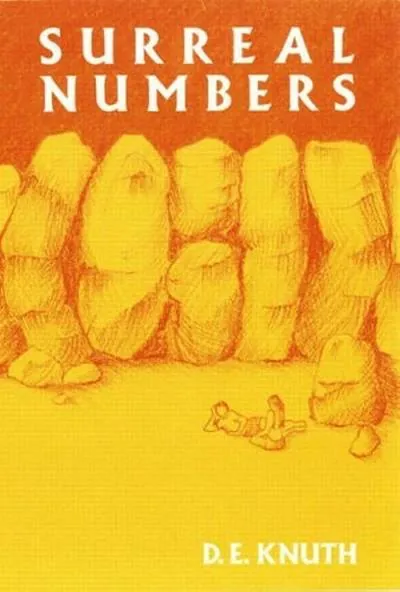
But Conway was not the one who gave these strange numbers their name. That honor belongs to Donald Knuth, the legendary computer scientist. In the early 1970s, while on holiday in Oslo, Norway, with his wife, Knuth woke up in the middle of the night with an overwhelming urge to write. He booked a hotel room, sat down, and produced the book Surreal Numbers: How Two Ex-Students Turned On to Pure Mathematics and Found Total Happiness. Written as a dialogue between two fictional students, Alice and Bill, the book introduced the term "surreal numbers" to the world and cemented the concept in mathematical culture.
The construction itself looks deceptively simple. Every surreal number is defined by two sets of numbers, written as {L : R}, where every number in the left set must be smaller than every number in the right set. Zero is simply { : }, with both sets empty. One is {0 : }, and negative one is { :0}. The number halfway between zero and one, {0 : 1}, is one-half. Keep playing this game, and you generate all the integers, all the fractions with powers of two in the denominator, and eventually, numbers that exist nowhere on the ordinary number line.
This is where things get truly wild. Omega, written as ω, is defined as {1, 2, 3, ... : }, the simplest number greater than every finite integer. It represents a countable infinity, one that can be listed one by one. And epsilon, written as ε, is {0 : 1, 1/2, 1/4, ...}, an infinitesimal so small that no real number can represent it. It is greater than zero but smaller than every positive fraction you can name. In this system, you can add one to infinity to get ω + 1, or subtract one to get ω - 1. Infinity becomes just another number you can do arithmetic with.
How Do You Build a Surreal Number?
The whole trick to surreal numbers is that you don't start with a list of numbers at all. You start with nothing, simply an empty set, and you build everything from there using just two simple rules.
Every surreal number is written as x = {L | R}. The L stands for the left set, the R stands for the right set, and both sets contain previously created numbers. The first rule is that every number in the left set must be smaller than every number in the right set. That's it. That single constraint, applied over and over, generates the entire number system.
The very first number, 0, is defined as { | }, with both sets completely empty. There's nothing on the left, nothing on the right, and since there are no elements to violate the rule, it works perfectly. From that humble starting point, everything else cascades into existence.
Once 0 exists, you can use it to make new numbers. Put 0 in the left set and leave the right set empty, and you get 1 = {0 | }. Flip it around, put 0 on the right with an empty left set, and you get -1 = { | 0}. Place 0 on the left and 1 on the right, and the simplest number that fits between them is 1/2 = {0 | 1}. This is how Knuth chose to write these numbers in his book, and the pattern continues: 2 = {1 | }, -1/2 = {-1 | 0}, and -2 = { | -1}.
Keep applying this process that builds on itself, and you'll generate every integer and every fraction whose denominator is a power of 2. These are called dyadic rationals, and they form the backbone of the system. But here's where it gets interesting. This simple method, starting from nothing and following one rule, eventually produces numbers that don't exist in the familiar real number line at all. The construction doesn't stop at fractions. It keeps going, and that's where the surreal numbers truly earn their name.
When Infinity Enters the Picture, Surreal Numbers Get Weird
Here is where the surreal numbers truly earn their name. Once you accept the construction rules, you can define ω (omega) as {1, 2, 3, ... | }, which represents a countable infinity larger than every natural number, and ε (epsilon) as {0 | 1, 1/2, 1/4, ...}, an infinitesimal smaller than any positive real number. These aren't metaphors or limits; they're actual numbers you can do arithmetic with.
Think about what just happened there. The same two-set recipe that gave us 1/2 and 2 now hands us something no real number can capture. Omega sits beyond the entire natural number line, yet it's a perfectly legitimate surreal number. And epsilon? It's so small that no real number can represent it, yet it's greater than zero. The construction that started with simple fractions has wandered into territory where infinity and the infinitely small live side by side.
The operations keep working, too. You can add one to omega and get ω + 1, a new infinity bigger than the first. Subtract one and you get ω - 1. The rules don't break; they just keep producing surprises. Irrational numbers like √2 and π also fit into this framework, defined through the same left-set/right-set approach that generated everything else.
Now, a common claim floating around says these numbers don't form a continuous structure, that gaps exist between them. That's wrong. The surreal numbers are densely ordered with no gaps at all. Between any two surreal numbers, you can always find another one, and the system continues without interruption. The confusion likely comes from the sheer strangeness of the territory, but the mathematical reality is that this system is as continuous as it gets.
What makes this genuinely astonishing is that all of it flows from those two simple rules Conway established. No exotic axioms, no special pleading. Just a recursive definition that keeps giving birth to new numbers, each one stranger than the last, until you're holding infinity in one hand and the infinitely small in the other.
Why Should You Care About Surreal Numbers?
The man behind surreal numbers, John Horton Conway, was not a one-dimensional figure. Before he passed away from COVID-19, the Princeton mathematician had already gifted the world two other beloved creations: the Game of Life and the Doomsday algorithm. The man clearly had a talent for making complex ideas feel playful.
Conway's Game of Life, a cellular automaton that simulates living cells on a grid, became widely known among programmers and hobbyists. The Doomsday algorithm, meanwhile, is a clever mental trick that lets you calculate the day of the week for any given date in your head. These inventions show a mind that loved puzzles, and surreal numbers were perhaps his most ambitious puzzle of all.
So why should a working physicist, or a curious student, care about a number system that includes infinities and infinitesimals? Some physicists have wondered the same thing. A handful have explored whether surreal numbers might help describe the universe at its most extreme scales. So far, none of these attempts has produced a concrete, testable physical theory. The ideas remain intriguing but unproven.
That uncertainty did not stop Donald Knuth, the computer scientist who popularized the term, from believing in their fundamental importance. He wrote the book that introduced surreal numbers to the world, and he held a strong opinion about their place in mathematics. As Knuth put it: "If people had learned this for a hundred years, they would think this is the way numbers are."
It is a bold claim. But numbers, after all, are inventions of the human mind. We made up the rules for counting, for fractions, for negative numbers. If we had grown up learning a system that handles infinity as easily as it handles the number 2, perhaps we would find that system perfectly natural. The surreal numbers might look strange today, but they could lead to a different way of thinking about numbers, one that could still find its moment.

Frequently asked questions
What are surreal numbers and who invented them?
Surreal numbers are a number system so vast it contains every real number, plus infinite and infinitesimal values that don't exist on the ordinary number line. They were invented by mathematician John Horton Conway around 1970 while he was analyzing the endgame of the board game Go, and later named by Donald Knuth in his book from the early 1970s.
How are surreal numbers constructed?
Surreal numbers are built using a single recursive rule written as x = {L | R}, where every number is defined by a left set and a right set. It all starts with 0 = { | }, the simplest number, and from that one definition you can generate all real numbers, plus infinite numbers like ω and infinitesimal numbers like ε.
What is the difference between surreal numbers and real numbers?
Real numbers form a line that stops at infinity and never reaches infinitesimals, but surreal numbers include both. The surreal system contains every real number, yet it also holds values like ω (larger than every counting number) and ε (smaller than every positive fraction), and the whole collection is so enormous it cannot even form a set.
Why did Donald Knuth write a book about surreal numbers?
Donald Knuth, a computer scientist, learned about Conway's discovery and became fascinated. While on vacation in Norway with his wife in the early 1970s, he felt a sudden urge to write and booked a hotel room in Oslo, where he produced the book "Surreal Numbers: How Two Ex-Students Turned On to Pure Mathematics and Found Total Happiness" during that trip.
Can you take the square root of infinity with surreal numbers?
Yes, you can. Because the surreal system includes infinite numbers like ω and is closed under many operations, expressions such as the square root of infinity actually have meaningful answers. This is one of the most astonishing features of the system, and it works because the rules that build surreal numbers keep generating new values without stopping.
What are the potential applications of surreal numbers?
Surreal numbers have found a natural fit in combinatorial game theory, where Conway first used them to analyze positions in games like Go. Physicists have also explored whether surreal numbers could help model phenomena in physics, though so far those attempts have not produced a concrete physical theory that has gained wide acceptance. Editorial note: Any facts that remain unconfirmed, such as specific historical anecdotes about Conway's discovery process, are presented as such and stated with appropriate caution.
Got a take on this? Add your voice to the conversation below →
No comments yet. Be the first.