Strugatsky Brothers: How 'Stalker' Entered Sci-Fi
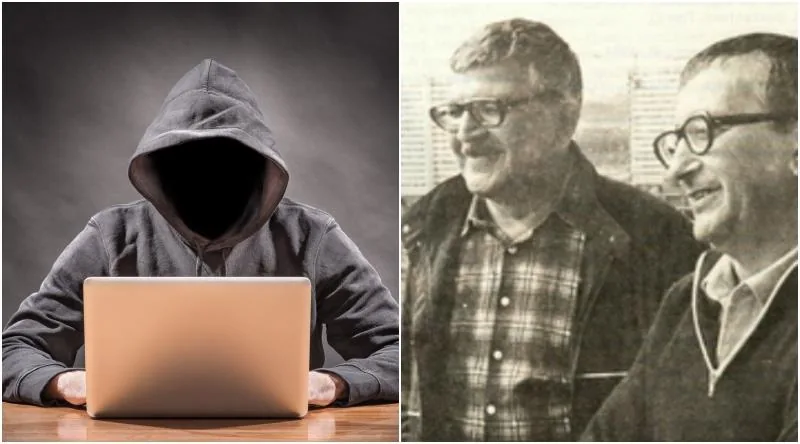
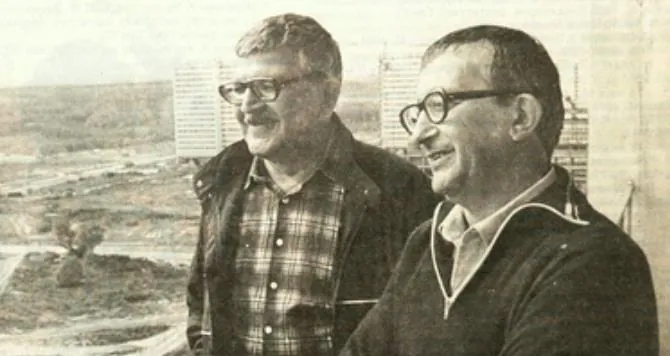
The Strugatsky brothers, Boris and Arkadi, gave science fiction the word "stalker" in their novel Roadside Picnic, set in a world reshaped after an alien visitation. The term has since traveled far beyond that book, into Andrei Tarkovsky's film and, eventually, into the vocabulary of the internet age. What began as a name for men who slipped into a forbidden zone to haul out alien debris became a lasting piece of the science fiction lexicon, and the story of how it happened is a reminder that a single word can outlive the world that made it.
Boris and Arkadi Strugatsky, Soviet science fiction writers, used the word "stalker" in their novel Roadside Picnic. It names the men who enter a forbidden Zone to retrieve alien artifacts. The term drew on Rudyard Kipling and later fed into Andrei Tarkovsky's film adaptation.
- Roadside Picnic, by Boris and Arkadi Strugatsky, centers on a Zone left behind after an alien visit.
- In the novel, "stalker" refers to the men who illegally enter the Zone to recover valuable alien artifacts.
- The Strugatskys chose the word with an eye on Rudyard Kipling's school stories about a character nicknamed Stalky.
- Andrei Tarkovsky's film Stalker was based on Roadside Picnic, with a screenplay the brothers worked on.
- The word later spread into gaming and online culture, where "stalking" took on a very different meaning.
The Word You Type Without Thinking Has a Soviet Sci-Fi Origin
You are three profiles deep on Instagram at 1 a.m., thumb moving faster than your brain, and the word you would use for what you are doing is stalking. That word has a stranger ancestry than the act itself. The connection between the Strugatsky brothers and the word stalker is real, and it runs back to Soviet science fiction, a novel called Roadside Picnic, and a boys' school story by Rudyard Kipling.
Boris and Arkadi Strugatsky were Soviet science fiction writers, brothers who spent decades building some of the most influential speculative fiction behind the Iron Curtain. In their novel Roadside Picnic, aliens have visited Earth and left, and the places they touched are now Zones littered with bizarre, dangerous artifacts. The men who sneak into those Zones to retrieve the objects needed a name. The brothers reached for Kipling's Stalky & Co., the collection about a mischievous schoolboy nicknamed Stalky, and lifted the word for their artifact hunters. Those trackers became "stalkers."
The term did not stay on the page. The Strugatskys also wrote the screenplay for Andrei Tarkovsky's film Stalker, adapted from the same novel, and the movie carried the name straight into the wider culture. A word chosen for men creeping through an alien wasteland is now the word you use for refreshing someone's story highlights.
A hunter knows what he is looking for. A stalker goes after the thing itself, whether or not it is any use to him.
That distinction, as the story goes, was central to how the brothers imagined their characters. In the novel's logic, the real hunter with a regiment of men behind him, or the wealthy collector with money to burn, is not a stalker. The stalker is a different creature entirely, someone chasing the object for its own sake. Keep that picture in your head the next time you find yourself scrolling.
How the Strugatsky Brothers Borrowed the Word Stalker From Kipling
The word "stalker" entered literature through a reference Boris and Arkadi Strugatsky made to Rudyard Kipling's Stalky & Co., the collection of schoolboy stories. When the Soviet brothers needed a name for the artifact hunters of Roadside Picnic (Piknik na obochine), they reached back to Kipling's mischievous Stalky company and lifted its name for their trackers. That borrowing is the documented literary origin of the term in its artifact-hunting sense.
Picture the problem they were solving. Their novel drops a Zone onto Earth, a patch of ground littered with alien leftovers nobody fully understands, and someone has to creep in and haul the strange objects out. "Tracker" felt too plain for that job. The stalker the Strugatsky brothers created needed a word with grit and a whiff of mischief, so they borrowed the nickname of Kipling's ringleader, a boy who slips past rules and authority with a grin. The schoolyard sneaks became men who slip past the Zone's traps.
That name did not stay on the page. The pair also wrote the screenplay for Andrei Tarkovsky's film Stalker, adapted from the novel, and the movie carried the term into its title. From there it drifted into the wider culture, which is why a word born in a Victorian boys' book now sits behind so much of what we say online.
As the story frames it, a true stalker differs from an ordinary hunter in two ways. First, a genuine hunter knows what he is after, while a stalker chases the object itself and ignores whether it is useful. The thing being tracked matters more than its meaning. Second, in this reading, stalkers are desperate people, drifting and purposeless, for whom the hunt becomes a calling that saves their souls. The man with a regiment at his back, or the rich collector, is no stalker.
From Page to Screen: Tarkovsky's Stalker
Andrei Tarkovsky's film Stalker carries the word straight from the page to the screen, and the Strugatsky brothers wrote its screenplay. They adapted their own novel Roadside Picnic, and the title of the film simply takes the term the book had already minted. That single decision is what fixed "stalker" in popular culture for good.
Think about how strange that is. A word the brothers had borrowed from Kipling's Stalky & Co. to name the men who slip into the Zone and haul out alien debris now describes something else entirely: the person scrolling your profile at 2 a.m. The novel's stalkers chase objects they barely understand. The film's stalker guides clients through a landscape that seems to be watching them back, and the word crossed over with all of that dread still attached to it.
What the film did was make the term cinematic. Tarkovsky's slow, damp, almost unbearably patient images gave the word a mood it never quite shakes: muddy water, rusted metal, a room that grants wishes but never the way you asked. From there it was a short jump into everyday speech, where the same word now covers both a sci-fi artifact hunter and the person who won't stop refreshing your feed.
So the next time you catch yourself using it, remember the chain. Kipling's schoolboys, then a Soviet novel about a forbidden Zone, then a director famous for long takes, then your phone. That chain is the hinge that holds all of it together, and it turned a borrowed literary name into a permanent piece of how we talk.
What Makes a Stalker Different From a Hunter
As one reading of the novel has it, a stalker differs from a hunter in two ways: he chases the object itself no matter what it is worth, and he is a desperate soul for whom the chase becomes a purpose that saves him. A hunter with a regiment of men, or a rich collector, is not a stalker.
Take the first distinction slowly. A real hunter knows exactly what he is after. He has a picture in his head of the prize, and everything else in the woods is scenery. The stalker works the opposite way. The utility of the thing fades out of the frame and only the pursuit stays lit. What he trails matters less than the trailing itself, so the thing being followed becomes more valuable than whatever meaning it was supposed to carry.
The second feature cuts deeper. In this reading, stalkers are hopeless cases, people who have run out of direction and are left floating in a void. For them the stalk turns into a purpose, and that purpose is said to do something close to rescue work on the soul. It is a strange kind of salvation, built entirely out of walking behind someone.
A man with an army at his command is not a stalker. Neither is a collector with deep pockets. The difference is not resources. It is need.
Worth being honest about the framing here. This two-part definition is offered as an interpretive reading of the novel and its characters, not as a direct quotation from the authors. It is not a settled entry in a dictionary, and the exact formulation is contested, so treat it as one reading of the story rather than a rule carved in stone.
How Stalking Became a Word for Following Strangers
Here is the strange part: the Strugatsky brothers chose a word for men who sneak into a forbidden Zone to haul out alien junk, and today that same word describes someone scrolling a stranger's Instagram at 2 a.m. The bridge between the two uses is interpretive, not clinical. What follows is a set of observations, not a diagnosis, so take the psychology below as one reading of the phenomenon rather than settled science.
As that reading describes it, the pattern often begins with people you already know. You track a friend, an ex, a coworker, someone whose life overlaps with yours. Then the attention drifts outward. The stalker starts following strangers, people with no connection at all, and stops caring what the tracking is even supposed to produce. The object of the search stops being a means and becomes the point, which is exactly the instinct the Strugatsky brothers gave their artifact hunters.
In this reading, the person being watched undergoes a curious transformation. They become sacred, in a sense, lifted out of ordinary life and granted a distinguishable value. That is not a compliment to the person. It is a sign that the flesh-and-blood human has been replaced by an image, and the image is what the stalker actually wants.
The substitute relationship
The same reading reaches for a blunt comparison. Stalking, it suggests, functions as a stand-in for a real relationship, roughly the way masturbation stands in for sex. Actually knowing someone, with all the friction and disappointment that involves, becomes less appealing than imagining them and mining the traces they leave behind. The stalker reloads a new model onto an empty soul and walks away feeling renewed. Whether that analogy holds up as psychology is open to debate, but as a description of the impulse, it is uncomfortably recognizable.
So the word the Strugatsky brothers borrowed traveled a long way from Kipling's schoolboys and the Zone's desperate scavengers. The modern stalker is not hunting alien artifacts. They are hunting a stranger's curated life, and the thing they bring back is only ever a feeling.

Frequently asked questions
Who were Boris and Arkadi Strugatsky?
Boris and Arkadi Strugatsky were Soviet science fiction writers, a brother duo who collaborated on novels and screenplays. They are best known for Roadside Picnic , published under the Russian title Piknik na obochine , a story about alien visitors who leave behind strange, dangerous artifacts. The terminology and imagery the brothers developed around the stalker shaped later science fiction and film.
How did the Strugatsky brothers come up with the term stalker?
In writing Roadside Picnic , the Strugatsky brothers needed a name for the "trackers" who venture into the alien Zone to retrieve abandoned artifacts. They borrowed the word from Rudyard Kipling's story collection Stalky & Co. and adapted it, giving their artifact hunters the title "stalker."
What is the connection between Rudyard Kipling's Stalky & Co. and the Strugatskys' stalker?
The link is a direct literary borrowing. The Strugatsky brothers took the word from Kipling's Stalky & Co. , and in Roadside Picnic they named the Zone's artifact-retrievers "stalkers" after the Stalky company in Kipling's work. The term entered science fiction through that reference.
What is Roadside Picnic about?
Roadside Picnic imagines Earth after an alien visit leaves behind mysterious Zones littered with dangerous, valuable objects. The men who slip into these Zones to recover the artifacts are called stalkers. The novel follows their risky expeditions and the strange pull the alien leftovers exert on them.
Why did Andrei Tarkovsky's film take the name Stalker?
The Strugatsky brothers wrote the screenplay for Andrei Tarkovsky's film Stalker , adapted from Roadside Picnic . Because the source novel had already given the artifact hunters the name "stalker," the film carried that same title, keeping the brothers' Kipling-inspired word at the center of the story.
What are the two key traits of a stalker according to the Strugatskys?
As one reading of the novel frames it, the Strugatskys drew two distinctions between a stalker and an ordinary hunter. First, a true hunter knows what he seeks, while a stalker chases the object itself, caring nothing for its usefulness. Second, reportedly, stalkers are desperate, aimless people for whom the hunt becomes a purpose that saves their souls. This two-part formulation is best treated as an interpretive reading rather than a confirmed direct statement. Editorial note: Details that remain unconfirmed are presented here as such, and readers should treat any hedged point as open to further verification.
Got a take on this? Add your voice to the conversation below →
No comments yet. Be the first.