Hell or High Water: The 2016 Heist That Indicts Banks
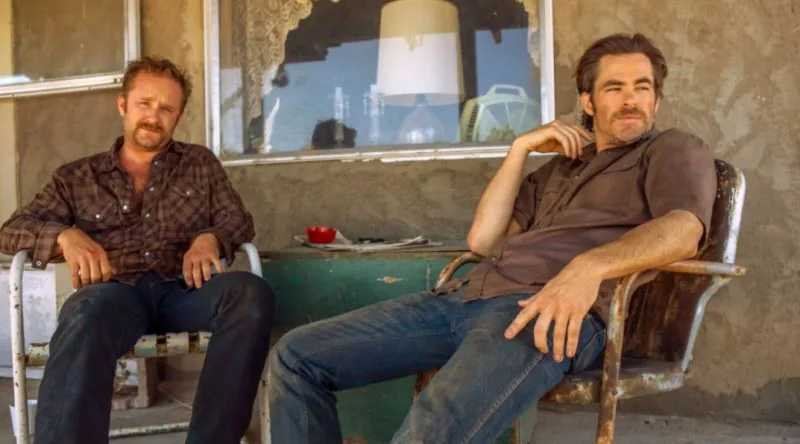
Hell or High Water, David Mackenzie's 2016 neo-Western, follows two brothers robbing Texas banks to save their family land, and it doubles as a quiet indictment of the financial system that trapped them. Toby and Tanner Howard are not glamorous outlaws. They are broke, angry, and running out of time. The film asks a question that lingers long after the credits: who is the real thief when the bank holds the deed? Chris Pine and Ben Foster carry that tension with a restraint that makes the violence feel earned.
Hell or High Water is a 2016 film directed by David Mackenzie. It follows two brothers in West Texas who rob a chain of banks to pay off a reverse mortgage, while a retiring Texas Ranger pursues them. The film frames their crimes as a response to predatory lending.
- Hell or High Water was released in 2016 and directed by David Mackenzie.
- The story is set in West Texas and centers on brothers Toby and Tanner Howard, played by Chris Pine and Ben Foster.
- The brothers rob branches of the same bank chain to raise money and pay off a reverse mortgage tied to their family's land.
- Jeff Bridges plays Marcus Hamilton, a Texas Ranger nearing retirement who tracks the brothers across the region.
- The film pairs its crime plot with a pointed critique of the banking system and the fallout of the 2008 financial crisis.
A Heist That Looks Familiar, Until You Look Closer
Hell or High Water opened in 2016, directed by David Mackenzie, with Chris Pine playing Toby Howard. On paper it reads like something you have seen a dozen times: two brothers, Toby and Tanner Howard, driving across West Texas and robbing one bank after another. Familiar setup, worn boots, a genre you can predict from the first frame. Then the camera settles in, and the film turns out to be about something far stranger than a heist.
That surface is real. The plot is a standard Western robbery story, and it does not pretend otherwise. What changes everything is the way Mackenzie keeps his camera moving through small West Texas towns, unhurried, letting the dust and the heat and the flat country do their work. He is quietly writing a biography of American rural life as much as he is telling a crime story. No shouting, no grand speeches. The critique arrives through the landscape and the silences, and it settles under your skin.
The cast carries it. The film runs on two pairings, two sets of two, four actors total, and every one of them plays it restrained and unshowy. Nobody steals a scene. Each performer builds a character out of small, exact details, and the result is minimal acting that lands harder than any showpiece. Chris Pine is the one to watch. Here is a handsome leading man whose reputation never quite promised what a good director can pull out of him.
Underneath the familiar plot, the film is doing a second job. It is a critique of the banking system, the mortgage machine, and the wreckage the 2008 global financial crisis left across the American interior, and it carries all of that without ever raising its voice. But Mackenzie goes further back than 2008. The story keeps circling the roots of the myth of the great American nation, and it does so by tracing history straight into the middle of a present-day story, framing the whole thing in the Western genre and choosing Texas as the backdrop for good reason.
There is a deliberate irony baked into all that sunlight. The villain of this film never appears as a man with a gun. There is no concrete evil standing across the street, no physical object to hate. The menace is the shadow that institutions cast over people, and Mackenzie paints it in a blaze of yellow and dust and hard sun, so the darkness grows out of the brightness itself. Making an audience believe in characters' motives without ever showing them the villain who shaped those motives is not something every director can pull off.
One reading of the film makes the case plainly: the script is familiar on the surface, even clichéd, and the director's touch is what lifts it. That reading holds up. A classic, recognizable story, worked with care down to its cinematic, historical and cultural myths, and still arriving at something original for the present day. That is the hard part that looks easy, and it is the film's real achievement.
The Real Target: Banks, Mortgages, and the 2008 Hangover
Strip away the dust and the six-shooters and Hell or High Water is a film about paperwork. David Mackenzie's 2016 movie follows two brothers, Toby and Tanner Howard, robbing branches across West Texas, and the engine pushing them is a reverse mortgage and a stack of predatory bank terms rooted in the fallout of the 2008 financial crisis that began in the United States and spread worldwide. The villain never walks into frame wearing a black hat. It sits behind a teller's window.
What makes the critique land is how quietly Mackenzie builds it. He does not shout the argument at you. There is no crude cinematic sloganeering, no character pausing to deliver a speech about subprime lending. Instead the case assembles itself through image and tempo: the flat glare of the sun, the long stretches of highway, the towns that look hollowed out from the inside. By the time the point arrives, you have already felt it in your chest.
And that is the trick of the whole thing. Mackenzie's camera is writing a biography of the American rural landscape as much as of the characters moving through it. The foreclosed lots, the gas stations, the diners where nobody orders anything fancy, they all carry the same story the plot does. The system does not need a monologue. It just needs a wide shot and enough patience.
Rewriting the Myth: White Americans as the New Natives
Look past the dust and the gunfire, and Hell or High Water is asking a much older question than who robs which bank. According to one reading of David Mackenzie's 2016 film, the heist plot is a Trojan horse. Behind the system critique sits a quieter interrogation of the "great American nation" myth itself, the story the country tells about how it was built and who it was built on.
Here is the turn. The people who once took the land from Native Americans now find themselves squeezed by banks, corporations, and the state. In this reading, the white Americans who were once the ones doing the dispossessing have become the new natives, the ones hemmed in, the ones whose land and livelihood get carved up by forces with more power than they have. The film's dialogue does gesture at that older history of Native dispossession, though the fuller catalogue of historical wrongs is one reading of the film rather than something it literally stages on screen.
And the logic tightens from there. Anyone who owes the system something, who is in debt to the bank or the government, is now, in effect, "Indian." That is the sting of the reversal. The category of the dispossessed has not disappeared. It has simply been refilled.
So what happened to the outlaws on horseback? They traded the saddle for a suit. The bandits now wear uniforms and sit behind desks at banks, tax offices, oil companies, and multinational corporations. The bullets are gone. Interest rates and loans took their place, and nobody has to fire a shot to take your house.
Mackenzie never gives you a villain to boo. There is no sneering face to hate, no concrete embodiment of evil standing in the sun. That absence is the point, and it is what makes the film's critique land so hard. The menace is institutional, diffuse, and dressed in paperwork, which is far harder to shoot at than a man.
Why Texas and Why the Western Form Fits
David Mackenzie did not pick West Texas by accident. The director of Hell or High Water needed a landscape that could carry the Western frame, and Texas gave him exactly that: wide, sparse, sun-scorched country where a bank robbery feels like a scene from a hundred years ago. The state is a deliberate choice, and it matches the genre beat for beat.
There's a real history underneath that choice. "Wild West" is not just a movie phrase. It describes America's sparsely settled far-western regions, and it has hardened into a fixed cultural subconscious, the kind of image that surfaces before you even think about it. A society that leans toward violence gets drawn more honestly against that backdrop. Mackenzie slips his hidden metaphor into the frame without ever raising his voice.
Texas also carries a reputation for heavy gun ownership, at least as the original account frames it. That detail matters, because the Western's oldest myth is the volunteer posse: ordinary townspeople grabbing rifles and joining the hunt for bank robbers. The same thing happens here. Local men saddle up and go after the two brothers, telling themselves it's for the public good and, more to the point, for the survival of the state.
And then the genre delivers its ritual. A shootout erupts in the middle of a town, civilians still on the street, bullets flying in broad daylight. The film stages that climactic gunfight in a Texas town, and it lands with a jolt.
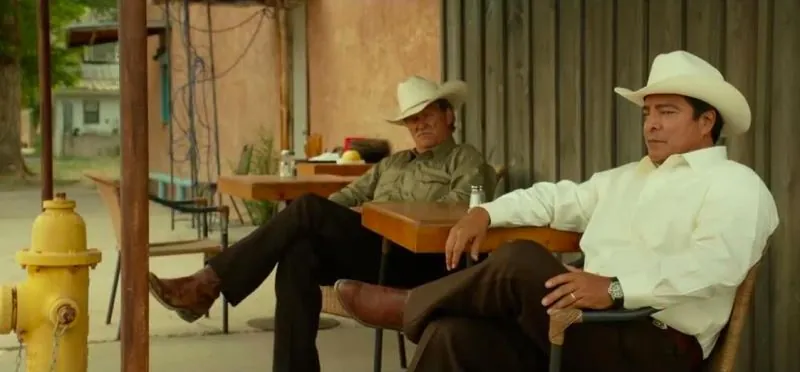
Texas Ranger Marcus Hamilton, played by Jeff Bridges, is the man on their trail. He is old, tired, and stubborn, the lawman archetype worn down to the bone but still moving.
Here is the twist that makes the frame hum. The Native Americans of this story are long assimilated. Some have even become lawmakers, and according to the original account, they worked harder than anyone to join the white man's side. The old frontier is gone. The posse rides anyway.
No Villain in the Frame: Evil as Heat and Dust
There is no man in a black hat in Hell or High Water. David Mackenzie never gives us a body to hate, no sneering banker to boo, no object that stands in for the wrong. That absence is the whole trick, and it is where the 2016 film earns its quiet power.
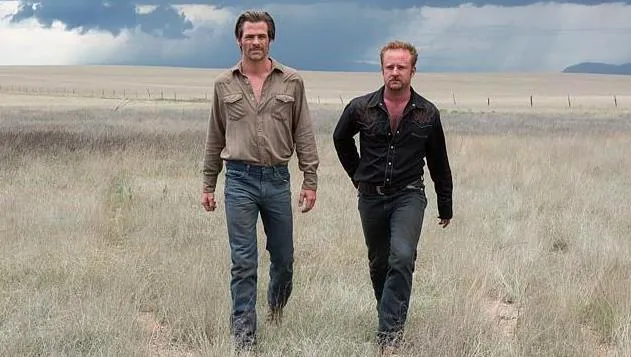
Instead, the evil lives in the weather. Mackenzie shoots West Texas as a furnace of scorching sun, blowing dust, and every shade of yellow the frame can hold. The landscape itself seems to press down on the characters. He builds a formal irony out of it: the darkness grows inside the brightness, so the harm is baked into the light rather than lurking in a shadow.
The Howard brothers sit at the center as the most innocent people in the system, and yet Mackenzie refuses to either absolve them or dress them up as heroes. He flips the old myth on its head without ever letting the camera wink. Toby's oil-based salvation is the one moment pushed hard into the viewer's eye, an exaggerated irony delivered on purpose.
Tanner is where the film gets its edge. His self-justifying physical violence ties him to a rootless, free-floating brutality, and that tie seals his absolute end. Still, the director neither forgives nor punishes anyone. He just gives each character their room and lets us sit with them.
What the Ending Leaves Standing
Toby Howard walks away with the money, and the money buys land. The robbery proceeds in Hell or High Water go straight into acreage and the oil rights beneath it, and that purchase is the family's financial salvation, the one clean exit the film allows. It is the strangest kind of happy ending: a man outruns a bank by becoming, in a small way, a landholder with a stake in the ground.
That resolution is also where the irony lands hardest, and David Mackenzie aims it right at you. The hero's turnaround arrives through petroleum, of all things, the very machinery that hollowed out the small towns he grew up in. He does not escape the system. He buys a seat inside it.
What stays with me is how little the film needs a villain to make its case. Hollywood runs on sharp lines between good and evil, a clean face to hate and a clean face to cheer. Hell or High Water builds a wide, systemic critique without ever handing you a concrete villain to boo. The antagonist is a shadow cast by institutions, and Mackenzie paints that shadow in merciless sunlight, in dust and every scorching shade of yellow, so the darkness grows out of the brightness itself. Not every director can make an audience believe in a motive without ever showing the people who created it.
And the old story does not stay buried in the past. The archaic Western form gets carried into the present, and the parallel between then and now holds: the villains simply changed costumes. Bullets and horses gave way to banks, interest rates, loans, oil wells and tax offices, bandits in suits and uniforms. The film draws that line without shouting it.
So where does that leave the movie? For me, Hell or High Water is the first film of David Mackenzie's maturity, and one of 2016's clear top three to five. It refuses to acquit anyone and refuses to punish anyone either, and it trusts you to sit with that. Watch it.
Frequently asked questions
Why do the bank robberies mean more than greed?
The robberies in Hell or High Water are staged as survival, not appetite. Brothers Toby and Tanner Howard target branches of the same institution that holds their family's land, using the stolen money to buy back what the bank was about to take. The film frames them as the most wronged people in their own story, and it refuses to either romanticize or absolve them.
How does the film critique banking?
Hell or High Water reads the 2008 crisis and the mortgage machinery behind it as a new kind of banditry. The banks, the tax offices and the oil companies have taken the place of the outlaws on horseback, and paper and interest rates have replaced bullets. The point lands hardest because the film keeps its villains offscreen and institutional.
Why is it a modern Western?
Hell or High Water is a Western in modern dress: Texas towns, posses of armed locals, and a climactic shootout in the middle of a town with civilians caught in the crossfire. What changes is the enemy. The old frontier had physical villains; this one has institutions, so the genre's good-versus-evil spine gets bent into something murkier.
What does the ending signify?
In the end, Toby's escape route runs through oil. He uses the robbery proceeds to secure land and oil rights, and the film frames that salvation as deliberate irony, a rescue built on the very extractive system that ruined him. Nobody is absolved and nobody is punished, and that unresolved balance is the whole point.
Does Hell or High Water touch on Native American history?
The film's dialogue reaches back to Native dispossession, with characters recalling how the land was taken before it was taken again. The precise catalogue of historical wrongs is harder to pin down on screen. Treat those references as the film's backdrop of inherited guilt, not as a literal history lesson. Editorial note: Details that remain unconfirmed are presented as such, and no claim here should be read as settled beyond what the film itself establishes.
Got a take on this? Add your voice to the conversation below →
No comments yet. Be the first.