Storytelling Structure: 5 Frameworks That Never Changed
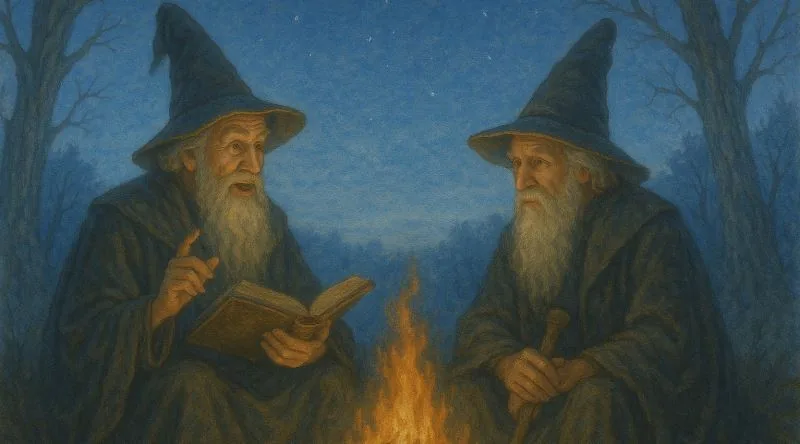
Storytelling structure frameworks are the recurring maps writers have used for thousands of years to shape a narrative, and five of them still dominate the conversation today. Aristotle sketched one of the earliest surviving frameworks in his Poetics in ancient Greece, and he was only getting started. Georges Polti counted 36 dramatic situations in the 1800s, Vladimir Propp traced 31 functions inside Russian folktales, Joseph Campbell mapped a hero's journey across world myth, and Christopher Booker argued that all stories reduce to seven basic plots. Read them together and you notice something quietly astonishing: nobody has really reinvented the wheel.
Five storytelling structure frameworks have shaped how writers build stories for centuries: Aristotle's Poetics, Georges Polti's 36 dramatic situations, Vladimir Propp's 31 functions of the folktale, Joseph Campbell's hero's journey, and Christopher Booker's seven basic plots. Each maps recurring patterns in how narratives begin, escalate, and resolve.
- Aristotle's Poetics is widely regarded as the first surviving work to treat storytelling as a structured craft.
- Georges Polti argued that every dramatic story falls into one of 36 recurring situations.
- Vladimir Propp identified 31 recurring functions while studying the structure of Russian folktales.
- Joseph Campbell described the hero's journey as a pattern recurring across myths worldwide.
- Christopher Booker proposed that all stories reduce to seven basic plots.
Storytelling Structure: 5 Frameworks That Never Changed
Humans are story-telling animals, and we have been telling stories for thousands of years. We create fiction and consume novels, films, and plays. Even sporting events and criminal trials emerge as stories. Here are some narrative types that have survived for thousands of years without changing much.
Despite being a tradition thousands of years old, storytelling has reached the present day without undergoing much change, and it is a phenomenon at the center of many arts. The importance of the subject has actually been known for more than two thousand years. Aristotle's Poetics, for instance, is widely regarded as the earliest surviving systematic work on narrative, though earlier reflections on storytelling did exist. But the intensification of research dates back to the early 20th century. Researchers began analyzing stories structurally and proposed various templates. Of course, it should not be forgotten that these templates reflect not the idea that "a good story should be like this" but the idea that "stories have been told like this for thousands of years, so we have narrative stereotypes in our mental world that we cannot deny."
In this article, I will briefly convey five templates put forward by various researchers. Let me note: the existence of archetypal characters such as the hero, the enemy, the mentor, the ally, the herald, and the princess does not require us to limit these templates to fairy tales or myths. Here, the function of characters and events matters more than their names.
The first example, Polti, actually presents 36 conflict situations that generally appear in dramas. It is not a template or narrative scheme on its own. The other four examples (Propp, Campbell, Vogler, Booker) intend to summarize narrative schemes used for thousands of years. But the last one (Booker), unlike the others, presents not a single narrative but seven narrative examples. In the other examples (Propp, Campbell, Vogler), the plot stages of a single narrative are listed.
Georges Polti - The Thirty-Six Dramatic Situations (1895)
1) Supplication: the oppressed person begs the authority to be saved from the tyrant.
2) Deliverance: the rescuer saves the unfortunate person from the threat.
3) Crime pursued by vengeance: an unrequited crime is committed and the avenger seeks justice.
4) Vengeance taken for kin upon kin: the avenging relative (a friend can also be put in place of a relative) struggles with the guilty relative for the victim relative.
5) Pursuit: the fugitive escapes from a punishment for which he is innocent.
6) Disaster: the character is defeated by the enemy and loses his position.
7) Falling prey to cruelty or misfortune: the character is in trouble as a result of misfortune or the actions of a tyrant.
8) Revolt: the conspirators rebel against the tyrant.
9) Daring enterprise: the brave leader defeats the enemy and obtains the reward.
10) Abduction: the character abducts the protected person/thing from its guardian.
11) The enigma: the questioner presents a problem to the seeker to solve.
12) Obtaining: the parties disagree about obtaining an object.
13) Enmity of kin: relatives who dislike each other are forced to conspire together.
14) Rivalry of kin: the person who is the object of rivalry prefers one of the relatives.
15) Murderous adultery: two people who commit adultery plan to kill the betrayed spouse.
16) Madness: a person goes mad and attacks the victim.
17) Fatal imprudence: the imprudent person loses an object or causes someone to be harmed due to negligence or ignorance.
18) Involuntary crimes of love: the loving couple learns that they have unknowingly broken a taboo.
19) Slaying of a kinsman unrecognized: the character unknowingly kills his relative.
20) Self-sacrifice for an ideal: the hero allows someone or something to be taken.
21) Self-sacrifice for kin: the hero allows someone or something to be taken.
22) All sacrificed for passion: the hero loses what he has forever.
23) Necessity of sacrificing loved ones: the loved one must be sacrificed.
24) Rivalry of superior and inferior: the weak defeats the strong and wins the reward.
25) Adultery: two people who cheat conspire against the betrayed spouse.
26) Crimes of love: two lovers come together at the cost of breaking taboos.
27) Discovery of the dishonor of a loved one: the character becomes aware of the crimes of a person he loves.
28) Obstacles to love: two lovers face obstacles.
29) An enemy loved: the character falls in love with his enemy, while the lover's friend hates that person.
30) Ambition: the ambitious person pursues something but is opposed by his rivals.
31) Conflict with a god: a mortal engages in a struggle with an immortal.
32) Mistaken jealousy: the character becomes jealous as a result of a misunderstanding and engages in a struggle with his partner.
33) Erroneous judgment: the character, as a result of a misunderstanding, finds the real culprit right and the innocent wrong.
34) Remorse: the guilty person wrongs someone or commits a crime, and also conflicts in vain with the person trying to understand the situation.
35) Recovery of a lost one: the seekers pursue the lost person.
36) Loss of loved ones: the character witnesses the murder of his murdered relative.
Vladimir Propp - Morphology of the Folktale (1928)
1) Absentation: one of the family members leaves home.
2) Interdiction: the hero encounters a prohibition.
3) Violation of interdiction: the prohibition is violated.
4) Reconnaissance: the attacker tries to obtain information.
5) Delivery: the attacker collects information about his victim.
6) Trickery: the attacker tries to deceive his victim or their fortune to seize it.
7) Complicity: the victim is deceived and thus unwittingly helps his enemy.
8) Villainy: the attacker harms one of the family members.
9) Mediation, the transitional moment: the news of the villainy or the lack spreads, the hero is appealed to with a wish or a command, the hero is sent or goes.
10) Beginning counteraction: the seeker-hero agrees to act or decides to act.
11) Departure: the hero leaves his home.
12) The first function of the donor: the hero encounters a test, an interrogation, an attack, etc. that enables him to obtain a magical object or a helper.
13) The hero's reaction: the hero reacts to the actions of the person who will later grant him a gift.
14) Provision or receipt of a magical agent: the magical object is given to the hero.
15) Guidance, journey between two kingdoms: the hero is transported to the place where the sought object is located, is guided or taken.
16) Struggle: the hero and the attacker come face to face in a struggle.
17) Branding: the hero acquires a special mark.
18) Victory: the attacker is defeated.
19) Liquidation: the initial villainy is liquidated or the lack is fulfilled.
20) Return: the hero returns.
21) Pursuit: the hero is pursued.
22) Rescue: the hero is helped.
23) Unrecognized arrival: the hero arrives in his own country or another country by disguising his identity.
24) Unfounded claims: a false hero puts forward unfounded claims.
25) Difficult task: a difficult task is proposed to the hero.
26) Solution: the difficult task is fulfilled.
27) Recognition: the hero is recognized.
28) Exposure: the true identity of the false hero, the attacker, or the villain is revealed.
29) Transfiguration: the hero acquires a new appearance.
30) Punishment: the false hero or the attacker is punished.
31) Wedding: the hero marries and ascends the throne.
Joseph Campbell - The Hero with a Thousand Faces (1949)
1) The call to adventure: indicates the fate that has called the hero and drawn his spiritual center of gravity from the boundaries of his society to an unknown region. This important treasure and danger region can be presented in various forms: a distant country, a forest, a kingdom underground, under the waves or above the sky, a secret island, a misty mountain top, or a deep dream state.
2) Refusal of the call: in real life often, and in myths and folk tales abundantly, we encounter a strange situation like an unanswered call; because turning to other interests is always possible. Refusal of calls turns the adventure negative.
3) Supernatural aid: after responding to the call made to him and continuing to advance courageously as events unfold, the hero finds all the powers of the unconscious with him. Mother nature herself supports the difficult task. And as long as the hero's action is in harmony with what his society is ready for, it seems to advance on the great rhythm of the historical process.
4) The crossing of the first threshold: the hero, together with the personifications that guide and help him in his adventure, advances until he reaches the "threshold guardian" at the entrance of the region of excessive power. Such guardians, by stating the limits of the hero's current field or life horizon, bound the world in four directions, and also below and above.
5) The belly of the whale: the idea that passing through the magical threshold is passing into a region of rebirth is symbolized all over the world by the belly of the whale, the image of the womb. The hero, instead of seizing the power of the threshold or reconciling with it, disappears into the unknown and appears to have died.
6) The road of trials: after crossing the threshold, the hero advances in the dream world of strangely fluid, uncertain forms to undergo a series of trials. This is a beloved stage of the myth-adventure; it has created a world literature full of miraculous trials and tortures. The hero benefits from the advice, talismans, and secret tools of the supernatural helper he encountered before entering this region. Or he may realize for the first time here that there is a kind-hearted power that supports him everywhere during his superhuman journey.
7) The meeting with the goddess: the meeting with the goddess (reincarnated in every woman) is the final test the hero will give to win the love reward, which is life itself celebrated as the veil of infinity (generosity: amor fati). Often the last adventure, coming when all obstacles and giants have been overcome, has been presented as the mystical marriage of the successful hero with the queen goddess of the world.
8) Woman as the temptress: the person seeking life beyond life must go beyond woman, ignore the attraction of her calls, and rise to the perfect ether beyond.
9) Atonement with the father: the father is the sign of the future task for his son and the future spouse for his daughter. Whether he knows it or not and whatever his position in society, the father is the initiating priest who enables the young being to pass into the great world. The father or the person who takes the father's place will give the symbols of obligation only to a son completely stripped of inappropriate childish cathexes.
10) Apotheosis: it is a model of the divine state that the human hero will reach by going beyond the last fears of indifference. He becomes free from all fears. This is the secret that will be freed through the heroism within all of us and that everyone can reach.
11) The ultimate boon: it is what the hero seeks, what the guardians hide. The guardians present it only to those who obtain it with difficulty. But these guardians can be excessively harsh, excessively careful; then the hero must steal their treasures. Heroes who deceive and kill or pacify the guardians are honored as world saviors.
12) Refusal of the return: when the hero's adventure ends, the adventurer must return from his life-changing journey. The hero must bring back the talismans of wisdom, the golden fleece, or his sleeping princess to the world of people. But responsibility has often been refused.
13) The magic flight: if the hero who achieved victory obtains the blessing of the god or goddess and is tasked with returning to the world with an elixir for the reconstruction of society, he is supported by all the powers of his supernatural master in the last stage of his adventure. On the other hand, if he obtained the loot despite the objection of his guardian, or if the hero's desire to return to the world was deemed inappropriate by gods and demons, the escape may be complicated by magical obstruction and miracles of escape.
14) Rescue from without: the hero may need to be brought back from his supernatural adventure with outside help. That is, the world may need to come and take him. A definite rescue takes place and the adventurer returns.
15) The crossing of the return threshold: the returning hero must be able to overcome the influence of the world in order to complete his adventure. The first problem of the returning hero is to accept as real the ongoing joys and pains of life, its stereotypical aspects and noisy obscenities, after an experience belonging to the soul-satisfying conception of successfully performing a task.
16) Master of the two worlds: it is the skill of the master to go back and forth between the distinction of two worlds, without mixing the principles of one with those of the other, by enabling the mind to recognize the virtue of one with the other.
17) Freedom to live: just as one takes off worn clothes and puts on new ones, the embodied self takes off worn bodies and puts on new ones. Weapons do not cut it; fire does not burn it; water does not wet it; wind does not chill it. This self cannot be cut, burned, wetted, or chilled.
Christopher Vogler - The Writer's Journey (1992)
1) The ordinary world: many stories take the hero from the ordinary, banal world to a new and foreign special world. Countless films and TV series have been born from this familiar "fish out of water" idea.
2) The call to adventure: the hero is presented with a problem, a challenge, or an adventure to embark on. Once he encounters the call to adventure, he can no longer stay in the peaceful environment of the ordinary world.
3) The refusal of the call: at this point the hero often hesitates at the threshold of the adventure with the refusal of the call or by showing reluctance. After all, it is he who will face the greatest of all fears and the terror of the unknown. The hero has not yet completely surrendered himself to the journey and may perhaps be thinking of turning back. To pass this turning point, another factor is needed: a change in circumstances, another attack against the natural order, or the encouragement of a mentor.
4) Meeting with the mentor: when this moment comes, many stories bring in a Merlin-like character who will undertake the mentoring of the hero. The mentor's function is to prepare the hero to face the unknown. He can advise him, give him magical tools, or guide him.
5) Crossing the first threshold: now the hero has accepted the adventure and, with the crossing of the first threshold, has taken his first step and completely entered the special world of the story. He accepts dealing with the problems or struggles caused by the call to adventure; the moment the story rears up, the moment the adventure really begins, is this moment.
6) Tests, allies, enemies: after the first threshold is crossed, the hero naturally encounters new challenges and tests, begins to learn the rules of the special world by winning enemies and allies.
7) Approach to the inmost cave: the hero finally reaches the border of a dangerous place where what he seeks is hidden, sometimes to the depths of the underground. This is often the headquarters of the hero's main enemy, the most dangerous place in the special world, the deepest part of the cave. When the hero enters this frightening place, he will cross the second important threshold.
8) The ordeal: at this stage, the hero, who directly confronts his greatest fear, hits rock bottom. He is faced with the possibility of death and is brought to the threshold of a clash with the enemy force. Since we do not know whether the hero will live or die, we remain in tension and uncertainty, so the ordeal is a "dark moment" for the audience.
9) The reward: the hero who survived death, defeated the dragon, or ended the life of the minotaur, and the audience, enter a festive mood. The hero now takes possession of the treasure he sought, his reward.
10) The road back: this phase underlines the decision to return to the ordinary world. The hero understands that the special world must eventually be left behind and that there are still dangers, provocations, and tests ahead.
11) The resurrection: before returning to the ordinary world of life, the hero must be reborn and purified one last time. Death and darkness attack desperately one last time before being completely defeated. The hero will change through these life-and-death moments and can return to ordinary life as someone with new insights.
12) Return with the elixir: the hero returns to the ordinary world; but unless he brings back some elixir, treasure, or a cautionary tale from the special world, the journey is meaningless. Until something is brought from the ordeal in the inmost cave, the hero is cursed to repeat his adventure.
Christopher Booker - The Seven Basic Plots (2004)
1) Overcoming the monster: heroes set out to defeat the threatening enemy.
2) Rags to riches: the poor hero obtains wealth, loses it, regains it.
3) The quest: heroes set out to obtain an object or reach a place, encounter obstacles, engage in struggle.
4) Voyage and return: the hero goes to mysterious lands, has adventures, returns as a matured person.
5) Comedy: characters experience events that end entertainingly and happily, where complex events reach a single and simple solution, achieving victory over their rivals.
6) Tragedy: heroes who have great flaws or make mistakes that will result in their own destruction meet a tragic end.
7) Rebirth: the hero, due to the misfortunes he experienced, steps into a new life, tries to become a different person.
[According to Booker, all these plots follow these five stages: the anticipation stage (the call) > the dream stage (initial successes) > the frustration stage (confrontation with the enemy) > the nightmare stage (the final ordeal) > the death of the monster/miraculous escape/destruction stage]
Editorial note: Any details that remain unconfirmed are presented as such, and nothing here should be read as a claim of certainty beyond the established record.
Got a take on this? Add your voice to the conversation below →
No comments yet. Be the first.