Suicide by Proxy: The 1668 Vienna Executions
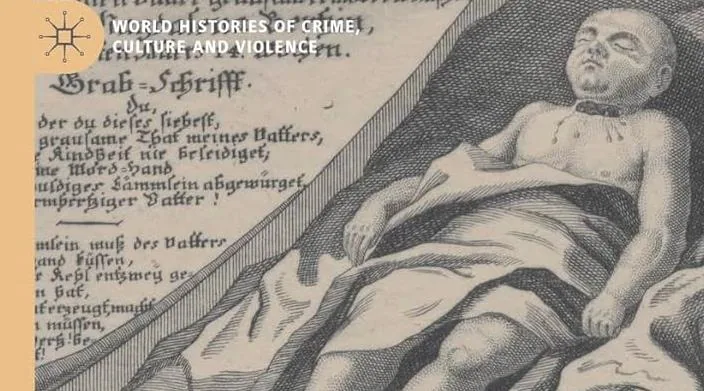
According to one account, roughly 400 women in German-speaking Europe between 1580 and 1839 killed children so they would be executed and escape damnation for suicide, a phenomenon known as suicide by proxy. In Vienna, records from 1668 to 1783 are said to document dozens of these cases, including one tied to the name Eva Lizlfellner. Those figures and that name remain unverified. Still, the women behind them were not monsters in the eyes of their communities. They were desperate souls who believed that dying by the sword of a willing executioner offered a path to salvation that self-murder could never provide.
In German-speaking Europe, women reportedly killed children so courts would execute them, believing this avoided the damnation that awaited suicides. One account puts the total near 400 cases between 1580 and 1839, with many more said to come from Vienna between 1668 and 1783. Historian Kathy Stuart has documented the phenomenon known as suicide by proxy. The numbers and the name Eva Lizlfellner remain unverified.
- Suicide by proxy describes cases where a person, most often a woman, killed someone specifically to be executed rather than take their own life.
- About 400 such cases have been reported across German-speaking Europe between 1580 and 1839, though the figure is unverified.
- Vienna records from 1668 to 1783 are said to contain dozens of suicide by proxy cases, including one attributed to Eva Lizlfellner, a name that could not be confirmed.
- Historian Kathy Stuart has researched these cases and explains the religious beliefs that drove them.
- The practice declined as courts and authorities grew reluctant to grant execution to those who sought it.
The Crime That Was Really a Prayer
Picture a village in the German-speaking lands of the 1600s or 1700s. A woman walks to the authorities with blood on her hands and a confession on her lips. She is not running. She is not hiding. She is waiting to be sentenced to death, and in her mind, that sentence is a kind of salvation.
This is what historians call suicide by proxy: a death you arrange with someone else's hands because your own are forbidden to do the job. Across German-speaking Europe in the 17th and 18th centuries, a number of women killed children for exactly that reason. Not out of cruelty. Not out of rage. They wanted to die, and they could not do it themselves.
Here is why. In both Protestant and Catholic teaching, suicide was a mortal sin. To take your own life was to die unrepentant, and to die unrepentant was to be damned. There was no funeral in consecrated ground, no last words, no absolution. Just the grave and whatever waited after it.
Murder worked differently. A murderer could confess. A murderer could be sorry. A murderer could be executed by the state, and in that final hour, with a pastor beside them, a penitent criminal could still be saved. Follow that logic and it turns cold on you. The scaffold was a door. Suicide was a wall. One let you through. The other did not.
So the women chose children. And the choice was not random.
Children were believed to go straight to heaven as innocents, untouched by the kind of sin that damns an adult. Their death, in this terrible arithmetic, was a short pain traded for eternal paradise. The child lost a few years. The child gained everything. That is how the act was framed, at least, and how it was understood by the people who lived inside that belief.
They would catch a child in some quiet corner, away from watching eyes, and kill them there. Then they would turn themselves in.
The scale of it is where the story gets harder to hold. Historian Kathy Stuart's research reportedly turned up roughly 400 such cases between 1580 and 1839, though the figure is unverified. In Vienna alone, the records are said to show 95 cases between 1668 and 1783, and that number is uncertain too. Even the shape of them tells you something: this was not one broken mind in one village. It was a pattern, repeated across two centuries, in a region that kept writing it down.
What makes it linger is not the violence. It is the faith underneath it. These women were not rejecting God. They were trying to reach him, and they believed the only road left open ran through a dead child and a public execution.
Why the Church Left Only One Door Open
In the German-speaking lands of the 17th and 18th centuries, a woman who wanted to die faced a trap with no exit. Religious depression and relentless social pressure had worn her down to the breaking point, yet the theology of the age made self-killing unthinkable. Suicide was not merely a sin. It was the fastest route to hell, and everyone knew it.
Both Protestant and Catholic doctrine agreed on that point. A person who took their own life died unrepentant, beyond the reach of confession, beyond forgiveness. But the same theology left one narrow opening. A penitent criminal who confessed their sin and was executed by the state could still be saved. The sword, the rope, the fire: these were instruments of justice, and justice, properly endured, could lead to heaven.
So the calculation formed, cold and logical inside a mind that had stopped seeing any other way out. Kill a child. Confess. Be executed. Enter heaven. This is the act historians call suicide by proxy, and it was born of despair, not malice. The women who chose it were not monsters. They were believers who had run out of doors.
The reasoning rested on a further conviction: that children were innocent and would go straight to paradise. As the story goes, the brief pain of a child's death weighed little against an eternity of bliss. In the eyes of that society, the victim lost nothing. The mother gained everything. That is how a community could watch these executions and understand them, however grimly, as a kind of twisted mercy.
According to the original account, historian Kathy Stuart's research uncovered roughly 400 such cases across the years 1580 to 1839, with 95 recorded in Vienna alone between 1668 and 1783. Both figures remain unverified. What is not in doubt is the pattern they describe: ordinary women, driven by faith and pressure into an act that still shocks anyone who reads about it today.
What the Records Show, and What They Don't
Kathy Stuart, a historian who has spent years in the court files of early modern German-speaking Europe, is the scholar most often named when the story of suicide by proxy comes up. According to her research, roughly 400 of these cases turned up across German-speaking lands between 1580 and 1839, though the figure is unverified. That number is the one most retellings repeat, and it is worth slowing down on it. The specific tally, and the exact span it covers, could not be independently confirmed.
The same caution applies to the local picture. In Vienna alone, the story goes, 95 cases were entered into the books between 1668 and 1783, though the figure is unverified. It is a striking number: dense, urban, and concentrated in a single city over a little more than a century. But it is also unconfirmed. Treat both figures as the shape of the evidence rather than its final weight.
The two numbers, and their status
| Claim | Figure | Status |
|---|---|---|
| Cases across German-speaking Europe | about 400, 1580 to 1839 | Reported, unverified |
| Cases recorded in Vienna alone | 95, 1668 to 1783 | Reported, unverified |
What the records do support is the broader setting. Suicide by proxy is documented in German-speaking Central Europe in the 17th and 18th centuries, and the theology behind it is not in doubt. Both Protestant and Catholic teaching condemned suicide as a mortal sin, while a penitent criminal who confessed and was executed could still be saved. That gap is the whole engine of the practice. A woman who wanted to die but feared damnation had, in her own framework, one road left open: kill a child, confess, and let the state do the rest.
So the honest position is a split one. The religious logic is firm ground. The big round numbers, 400 cases and 95 in Vienna, are the part that still needs a footnote.
From the Archive to the Screen: Eva Lizlfellner and The Devil's Bath
In 2024, the Austrian-German film The Devil's Bath carried this grim history into cinemas. According to the original account, the story centers on an Austrian peasant woman named Eva Lizlfellner, though her name could not be verified in the records. What the film does offer is a haunting window into the world of suicide by proxy, and the desperation that drove ordinary people to its terrible logic.
This is not a film that rushes. It moves slowly, sparing with dialogue, letting silence and image do the work. Watching it, you feel the weight of the era settle around you. The cold rooms, the religious dread, the sense that damnation waited around every corner. The atmosphere is immersive enough that the reality of the events lands with real force. Technically, it is a carefully built piece of filmmaking, and the fact that it draws from true history only deepens its impact.
That a story this dark still finds an audience centuries later says something. The pressures that shaped these women's choices have not vanished, even if the specific method has. The film does not offer easy answers. It simply holds up a mirror to a time when faith and fear could push a person toward the unthinkable, and asks us to look.
Frequently asked questions
What was suicide by proxy?
Suicide by proxy was a practice in early modern German-speaking Europe, documented in the 17th and 18th centuries, in which a person killed someone else in order to be executed by the state. The goal was death without the eternal punishment that the Church attached to taking one's own life.
Why did women commit suicide by proxy instead of simply killing themselves?
Because both Catholic and Protestant teaching held that suicide was a mortal sin and sent the soul to hell, while a murderer who confessed and repented could be executed and still be saved. Execution, in other words, was the only route to death that did not automatically damn them.
Who were the victims?
They were children. The women believed that children, being innocent, went straight to heaven, so killing a child looked like a lesser evil than the alternative. The child's brief suffering weighed almost nothing against an eternity of bliss.
How many cases of suicide by proxy were there?
According to the original account, historian Kathy Stuart's research turned up roughly 400 cases between 1580 and 1839, though the figure is unverified. That same account reports 95 cases recorded in Vienna alone between 1668 and 1783, and that number is uncertain too.
Was The Devil's Bath based on a real case?
The 2024 film The Devil's Bath drew its inspiration from the story of an Austrian peasant woman, identified in the original account as Eva Lizlfellner, though the name is unverified. The film is real, and it is a slow, sparse piece that leans hard on atmosphere rather than dialogue. Editorial note: Details that remain unconfirmed by surviving records are presented here as uncertain, and no numbers or dates have been invented.
Got a take on this? Add your voice to the conversation below →
No comments yet. Be the first.