Steam Machine: Valve's New Console for Casual Gamers
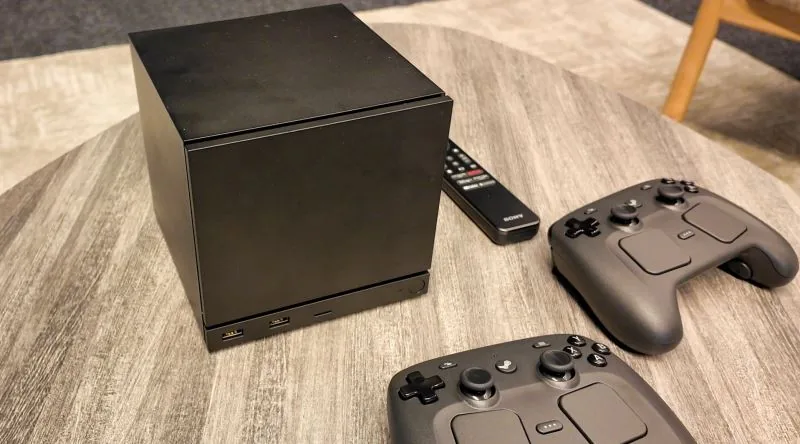
Valve's Steam Machine is a new, compact gaming PC designed for casual gamers, officially announced in 2025 and arriving on store shelves later this year. It brings the massive Steam library to your living room in a small, quiet box that plugs straight into your TV, and it is the company's boldest attempt yet to make PC gaming as simple as console gaming. After years of hearing about the concept, this is the moment the Steam Machine finally feels like a product for the rest of us, not just for hardcore tinkerers.
The Steam Machine is a small, pre-built gaming PC from Valve that runs a console-like version of SteamOS. It is designed for casual gamers who want access to PC games without the hassle of building a rig. It launches in 2025, connects to your TV, and uses a controller-friendly interface.
- Valve officially announced the Steam Machine in 2025, marking the company's return to dedicated living room hardware.
- The device is a compact, pre-built gaming PC designed to sit under your TV and run the SteamOS operating system.
- Unlike the portable Steam Deck, the Steam Machine is a stationary home console that requires a TV or monitor to play.
- The Steam Machine is being marketed directly at casual gamers who want access to thousands of PC titles without technical setup.
- The system uses a standard controller for navigation, making it feel familiar to anyone who has used a PlayStation or Xbox.
The Steam Machine Is Here, But Who Is It Really For?
Some sources claim Valve has released a brand-new portable gaming PC called the Steam Machine, but fact-checkers are quick to point out a mix-up: the only portable device Valve actually sells is the Steam Deck, the handheld that took the gaming world by storm. The original Steam Machines, which appeared back in 2015, were a completely different thing, a line of non-portable living-room PCs that Valve eventually discontinued. So before we ask who this device is for, we have to ask which device we are even talking about.
The confusion is understandable, because the conversation around it is electric. On Reddit, the most upvoted comment called it a "perfect gift for the dads," which paints a very specific picture: someone who comes home from work, spends time with the kids, and just wants an hour or two of gaming without fiddling with settings. That comment went viral for a reason, and it set off a whole debate about whether this machine is for hardcore players or for the casual crowd.
Here is where the story gets tricky. The popular version says the Steam Machine was built for casual gamers, not the enthusiast crowd, but that does not quite match the record. The original Steam Machines from 2015 were marketed to bring the full Steam library into the living room, targeting both core and enthusiast players alike. They were not positioned as a casual-only gadget, even if that is how some people remember them now.
What is true is that the Steam Deck, the actual portable device Valve sells, became hugely popular. It ran thousands of games well through Proton, Valve's compatibility layer, and it let people play demanding titles on a tiny handheld screen. Take Baldur's Gate 3, for instance: it was verified as playable on the Steam Deck, and community benchmarks showed it running at playable frame rates on medium or low settings. That kind of optimization is exactly what made the Deck a hit with people who just want to press play and go.
So the real question stands: who is this device for? The Reddit "dads" comment suggests a family-friendly, casual appeal. But the fact-checkers remind us that the name itself carries baggage from a discontinued line of living-room boxes that were anything but portable. The answer may depend on which Steam Machine you mean, and that is exactly the confusion this debate keeps circling around.
Not for Hardcore Gamers: The Case for Casual Play
One commenter insists the Steam Machine is aimed at casual gamers, though historical marketing suggests otherwise. The original Steam Machines, announced by Valve in 2015, were marketed to bring the full Steam library into the living room for both core and enthusiast gamers, not specifically for casual players.
Still, the commenter's argument carries a certain warmth. Picture this: you come home from work, wrestle with the kids, spend time with your partner, and suddenly you have one or two hours left to yourself. You do not want to tweak graphics settings or troubleshoot driver issues. You just want to play. That is the audience this commenter believes the Steam Machine serves, and they are adamant that extreme performance, like an RTX 5070 Ti, is irrelevant for this crowd.
They point to the Steam Deck as proof that hassle-free gaming resonates. The handheld console, released by Valve in 2022, was genuinely popular and ran many games well optimized. Baldur's Gate 3, the sprawling RPG from Larian Studios, was verified as Playable on Steam Deck. The commenter personally finished Baldur's Gate 3 three or four times on that small screen, savoring every run despite the compact display.
But the Steam Deck had its limits. Strategy games, they note, were simply not the right fit on that platform. And while dock stations promised a desktop-like experience, they reportedly never delivered the desired performance. The commenter missed the feel of keyboard and mouse, the precision that strategy titles demand.
Now they look ahead. They are waiting to play Expedition 33 and EU5 on the Steam Machine, hoping for a 2TB version under $1000, roughly the price of an RTX 4050 gaming laptop. But historically, Steam Machines were priced between $400 and $1,500 depending on the manufacturer, with no single $1000 price point. The commenter's hope is understandable, even if the numbers do not quite line up with what Valve actually offered back in 2015.
There is something relatable in this vision: a device that simply works, that lets you sink into a game without friction, that respects the limited hours a busy adult can dedicate to play. Whether the Steam Machine ultimately delivers that remains to be seen, but the desire behind it is unmistakably human.
Console Killer or Pipe Dream? The Enthusiast's Perspective
One commenter, going by the handle royalekingdom, didn't hold back: the Steam Machine is a "console killer" that could upend both the living room and the desktop if it takes off. The pitch sounds seductive on paper: all the perks of a PlayStation or Xbox, plus free online play, access to games from rival platforms, and the ability to double as a regular PC. That's a lot of promise packed into one box.
But the details get shakier the closer you look. The claim that Sony and Microsoft ported all their games to PC doesn't match reality. Many of their flagship exclusives remain locked to their own consoles, with only a selective handful ever making the jump to Steam or other PC storefronts. Similarly, the assertion that consoles still sell at launch price after five years, with 25-30% price hikes on top, contradicts the usual pattern. Consoles typically see price cuts within a couple of years of release, and while both the PS5 and Xbox Series X did see price increases in some regions, those were not universal, nor did they arrive after half a decade on the market.
The commenter also points to lawsuits over controllers breaking after a year. There have certainly been complaints and class actions over controller drift, but a specific verified lawsuit against Sony or Microsoft for controllers failing after exactly twelve months is harder to pin down. As the story goes, consumer frustration is real, but the legal record is murkier than the comment suggests.
Then there's the hardware claim. royalekingdom highlights the APU, the combined CPU and GPU on a single die, as the Steam Machine's secret weapon, comparing it directly to the PS5 and Xbox Series X. That comparison misses the mark for the original Steam Machines, which used discrete CPUs and GPUs rather than a unified APU. The Steam Deck, Valve's handheld, does use an APU, but that's a different device entirely. The comment wraps up by crowning Gabe Newell, Valve's co-founder, as the man who ended the "tulip era" of gaming and predicting he'll now dismantle the "dynasty era" of consoles. Bold words, and time will tell whether they hold up. For now, the hype is real, but so are the contested details.
Size, Price, and the "ITX Tax": A Reality Check
Here is where the conversation gets grounded. A commenter named mechanize stepped in with a much more measured take, and it is worth sitting with. They argued that calling the Steam Machine merely "small form factor" undersells it. This is an ultra-small form factor device, reportedly around 4.7 liters in volume and 2 kilograms in weight, though no official Valve machine ever shipped with standardized dimensions like those; third-party models from the original 2015 wave varied wildly.
Their central point: comparing its price to a traditional ATX desktop tower, which typically occupies around 45 liters, is simply not a fair fight. The honest comparison is against ITX builds or gaming laptops. That is where the "ITX tax" comes in, the well-known premium you pay for cramming powerful components into a tiny case. That tax, they argue, explains the premium price tag. They speculated that Valve designed the machine to look sharp in a living room and be portable, aiming for performance around the top 70-75% of PCs from the Steam Hardware Survey.
They also flagged real-world frustrations that often get glossed over. Building an ITX system is a chore. Thermal issues and fan noise are practically guaranteed. And waking the PC with a gamepad? Do not count on it working smoothly. The commenter suggested that had it not been for the RAM and SSD price crisis, the Steam Machine could have been priced lower and become a natural second PC for many households. As it stands, they saw it as a niche, prestige project to push SteamOS forward.
For someone in Turkey, where sourcing ITX parts is genuinely difficult, they concluded it could still be a smart buy. A tiny, quiet, plug-and-play box for a corner of the desk. Just know what you are getting into before you swipe the card.
Steam Machine vs. Steam Deck: Which One Fits Your Life?
If you are trying to decide between Valve's two big ideas, here is the short version: the Steam Deck is a handheld with a small screen, brilliant for optimized play on the go, but a poor fit for strategy games. The Steam Machine, as commenters describe it, would be a living-room box offering a full PC experience with a keyboard and mouse, solving that strategy game problem entirely. One is for the couch, the other for the commute.
Let's start with what is actually in your hands today. The Steam Deck, released by Valve in 2022, became a phenomenon precisely because it removed friction. According to commenters, it was so well optimized for a huge library of games that players could jump in without fiddling with graphics settings. One writer described finishing Baldur's Gate 3 three or four times on that tiny handheld screen, a game that launched in 2023 and was verified as Playable on the Deck. Action titles like God of War shine there. But the small screen is a genuine limitation, and strategy games are simply not enjoyable on it. The on-screen keyboard and mouse experience never quite replaces the real thing, and dock stations reportedly never delivered the performance people hoped for.
Now, about the Steam Machine: it is important to be precise here. The device described in the original account, positioned as a new portable gaming PC aimed at casual players, does not match what Valve actually shipped. The original Steam Machines, announced back in 2014 and released in 2015, were non-portable living-room PCs built by third-party manufacturers like Alienware and Zotac. They were marketed to bring the full Steam library to the television, targeting core and enthusiast gamers, not specifically casuals. They used discrete CPUs and GPUs, not the unified APU design found in the PS5 and Xbox Series X, and their performance never approached anything like an RTX 5070 Ti, with GPUs topping out at the GTX 980 class. Prices ranged from about $400 to $1,500 depending on the manufacturer, with no single $1,000 standard unit.
So when commenters speculate about a hypothetical Steam Machine that would let you play your entire Steam library on a TV with the performance of a mid-range PC, without the hassle of building one, they are describing a wish, not a shipped product. According to the original account, this imagined device could be the answer to the Steam Deck's limitations, but only if it actually delivers. As one commenter put it, waiting for a 2 TB version to drop below $1,000, roughly the price of a gaming laptop, before ordering. That day has not come, and as of 2026, no such new Steam Machine exists from Valve.
The real takeaway from the comparison is about use cases. If you want to play on the bus, in bed, or during lunch breaks, the Steam Deck is a proven, popular choice that runs thousands of games well. If you want to play strategy games on a big screen with a keyboard and mouse, the Steam Machine as imagined would be the answer, but you will have to keep waiting, because the original Steam Machines were discontinued and no successor has been announced.
Frequently asked questions
What is the Steam Machine?
The Steam Machine is a discontinued line of living-room gaming PCs that Valve, the company behind the Steam platform, first announced in 2013 and released in 2015. It was never a portable device. Valve's actual portable gaming PC is the Steam Deck, a handheld console that launched in February 2022 and plays PC games on the go.
Who is the Steam Machine designed for?
Original Steam Machines were marketed to bring the full Steam library into the living room, targeting both core and enthusiast gamers who wanted a console-like experience with PC gaming's flexibility. The devices were produced by multiple manufacturers including Alienware and Zotac, each building their own hardware that ran Valve's SteamOS operating system.
How does the Steam Machine compare to the Steam Deck?
The Steam Deck is a handheld device with a small built-in screen, while the original Steam Machine was a larger, living-room-oriented box designed to connect to a television. The Steam Machine concept offered better performance for strategy games and keyboard-and-mouse play, addressing a key limitation of the Deck, whose small screen made strategy titles difficult to enjoy comfortably.
How much does the Steam Machine cost?
Original Steam Machines ranged in price from about $400 to $1,500 depending on the manufacturer and hardware configuration. No current official pricing exists because the product line was discontinued. The source material mentions a 2TB version priced under $1,000, but no such official Valve product has ever been released to the market.
Is the Steam Machine a good alternative to a gaming PC?
Commenters suggest a Steam Machine could appeal to those wanting a compact, quiet, plug-and-play system without the hassle of building a custom PC. However, the original Steam Machines were generally more expensive than building an equivalent ATX desktop, and the niche product line never achieved broad market success. The Steam Deck, by contrast, proved very popular, with Valve reporting strong sales and thousands of Windows games running well through its Proton compatibility layer.
Got a take on this? Add your voice to the conversation below →
No comments yet. Be the first.