Squaring the Circle: The Impossible 2,500-Year Quest
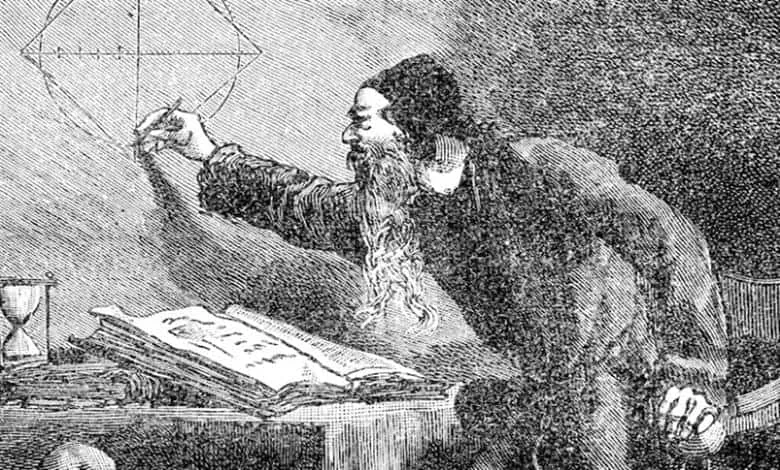
Squaring the circle, the ancient quest to construct a square with the exact same area as a given circle using only a compass and straightedge, was proven impossible in 1882 by Ferdinand von Lindemann, ending a 2,500-year mathematical hunt that began with Anaxagoras in a Greek prison around 450 BCE. But the story doesn't end there, it's a tale of brilliant minds, stubborn persistence, and even a modern twist that redefines what "solving" the problem really means. For anyone who has ever wondered why this seemingly simple puzzle refuses to yield, the answer lies in the very nature of numbers themselves.
Squaring the circle is impossible because the task requires constructing a line length equal to pi times the circle's radius, but pi is a transcendental number that cannot be created with the finite steps of compass-and-straightedge geometry. Ferdinand von Lindemann proved pi's transcendence in 1882, settling the 2,500-year-old problem that had occupied thinkers from ancient Greece onward.
- Anaxagoras worked on squaring the circle while imprisoned in Athens around 450 BCE, making it one of the oldest recorded mathematical problems.
- The ancient Greeks, including Hippocrates and Archimedes, made early progress but never produced a valid construction.
- Ferdinand von Lindemann proved in 1882 that pi is transcendental, which definitively shows that squaring the circle is impossible.
- The Banach-Tarski paradox, published in 1924, showed that a sphere can be decomposed and reassembled into two identical copies, a result that some have mistakenly linked to circle-squaring.
- A 2022 mathematical result expanded the definition of allowable tools, offering a new way to approach the problem without overturning the original impossibility.
Anaxagoras in Prison: The Birth of an Obsession
Around 450 BC, the Greek philosopher Anaxagoras of Clazomenae sat in a prison cell with nothing but time on his hands. His crime? Believing that "mind rules the world," a notion that rubbed the authorities the wrong way. Instead of stewing in frustration, he picked up a geometric problem that would haunt mathematicians for the next two and a half millennia.
The puzzle he turned to was squaring the circle: using only an unmarked straightedge and a compass, construct a square with exactly the same area as a given circle. It sounds simple enough on paper, but the difficulty is deceptive. Imagine a circular puzzle made of a thousand pieces. Now try rearranging those exact same pieces into a perfect square. The shapes simply refuse to cooperate. That frustration, that delicious impossibility, is precisely what grabbed Anaxagoras and never let go.
Ancient sources mention his work on the problem, though whether he was truly the first to attempt it remains an open question. What is certain is that his idle prison hours lit a fuse. The challenge would outlive him, outlast empires, and eventually consume some of the brightest minds in history, all chasing a square that seemed perpetually out of reach.
Why This Puzzle Was So Important
Squaring the circle was one of the three great problems of ancient Greek mathematics, a trio of challenges that kept the sharpest minds of antiquity busy for generations. The stakes were enormous: if you could build a square with the exact same area as a given circle, you could calculate the area of any circle precisely, and in doing so, pin down the true value of pi.
Think about why the square mattered so much. It was the simplest measuring tool people had. A square's area was trivial to compute, just one side multiplied by itself. Circles, by contrast, were maddeningly slippery. Ancient mathematicians knew that the ratio of a circle's circumference to its diameter was always the same constant number, but they could not nail down its exact value. The circle-squaring problem was, in effect, a hunt for that elusive number through geometry.
The square was the natural yardstick for area in the ancient world. Fields were surveyed in squares, plots divided into square units, and buildings laid out on square grids. If you could translate a circle into a square of equal area, you would have a universal method for measuring any round surface, from a grain storage pit to a city's defensive walls. That practical promise, combined with the pure intellectual thrill of the challenge, is why the problem endured for over two millennia.
Leonardo, Lambert, and the Impossible Proof
Leonardo da Vinci never cracked it. The legendary Renaissance polymath, who sketched and studied the problem of squaring the circle, could not produce a mathematical solution using only a compass and straightedge. What he did leave behind was a beautiful drawing, but it was not an answer.
That sketch is the Vitruvian Man, the iconic image of a nude male figure with arms and legs spread wide, inscribed within both a circle and a square. It is often mistaken for a proposed solution to the ancient puzzle, but it was actually a study of human proportions, an exploration of how the ideal body could be mapped onto geometric forms. The drawing, which belongs to the Gallerie dell'Accademia in Venice, Italy, is celebrated as one of the first pictorial depictions of a perfectly proportioned human body, not as a mathematical proof.
The real breakthrough came from a different corner of Europe. In 1768, Swiss mathematician Johann Heinrich Lambert (1728–1777) proved that pi is irrational. That means the number's decimal expansion never repeats and never terminates; it stretches into infinity without ever settling into a predictable pattern.
Lambert's proof was a major step, but it was not the final word. The question of squaring the circle remained open until 1882, when German mathematician Ferdinand von Lindemann delivered the decisive blow. Lindemann proved that pi is transcendental, meaning it cannot be the root of any polynomial equation with rational coefficients. This deceptively simple-sounding fact had a profound consequence: it made squaring the circle with a compass and straightedge mathematically impossible, once and for all.
So the answer to Anaxagoras's ancient question, first posed around 450 BC while he sat in prison in Klazomenai, turned out to be a definitive "no." The tools of classical geometry were simply not enough to construct a square with the exact same area as a given circle.
Changing the Rules: Banach-Tarski and Laczkovich
In 1924, Stefan Banach and Alfred Tarski proved something that sounded like magic dressed up as mathematics: a solid sphere can be sliced into finitely many pieces and, using only rotations and translations, reassembled into two spheres identical to the original. No stretching, no bending, no distortion. Just pure rearrangement, and somehow you end up with double the sphere. The result became known as the Banach-Tarski paradox, and it sent shockwaves through the mathematical community.
The trick, if you can call it that, depended entirely on changing the rules of the game. The old problem of squaring the circle demanded a compass and straightedge, nothing more. Those tools were sacred to the ancient Greeks, and for over two thousand years, mathematicians wrestled with the constraint. In 1768, Swiss mathematician Johann Heinrich Lambert proved that pi is irrational, meaning its decimal expansion never settles into a repeating pattern. Then, in 1882, German mathematician Ferdinand von Lindemann went further, proving that pi is transcendental. That single fact slammed the door shut: with only a compass and straightedge, squaring the circle was mathematically impossible. The ancient question, it seemed, was dead.
But Alfred Tarski refused to let it rest. He asked a different question: what if you could cut the circle into pieces and rearrange them, without any restriction on the shape of those pieces? What if the only rule was that the pieces themselves stayed intact? Banach and Tarski had already shown with their 1924 paradox that such dissections could produce astonishing results. Tarski suspected the same approach might crack the circle problem wide open.
The proof, however, proved elusive for decades. It finally arrived in 1990, when Hungarian mathematician Miklos Laczkovich demonstrated that a circle can indeed be squared by dissecting it into finitely many pieces and reassembling them. But Laczkovich did something unexpected: he never worked with shapes at all. Instead, he converted the geometry problem into a graph theory problem, translating the physical act of cutting and rearranging into the abstract language of connections between points. The pieces he used were so wildly irregular, so fragmented, that they could never be physically drawn or held. They existed only in the logical universe of mathematics, conjured into being by the axiom of choice.
For the purists, this was a victory with a caveat. The original compass-and-straightedge version of squaring the circle remains forever impossible, a fact sealed by Lindemann's 1882 proof. But in this new mathematical landscape, where the rules allow for unimaginably complex pieces, the ancient problem found a solution. The circle could finally be squared, just not in the way anyone had originally imagined. It took changing the very definition of what a solution could look like, and even then, the answer arrived with a wink and a nod to the axiom of choice, the controversial principle that allows mathematicians to select elements from infinitely many sets simultaneously.
Modern Advances and the 2022 Breakthrough
In January 2016, Łukasz Grabowski, András Máthé, and Oleg Pikhurko published a paper in the Journal of the European Mathematical Society that pushed the squaring the circle problem further than anyone had before. According to the original account, their construction used an astronomical number of pieces, at least 10²⁰⁰, yet even that staggering figure wasn't enough to complete the task. The pieces still left a tiny portion of the square uncovered, a gap so small it seemed almost insulting after such an enormous effort.
The story continues with a 2022 contribution from Máthé and Pikhurko, both at Warwick University, joined by Jonathan Noel from Victoria University in Canada. Reportedly, they found additional pieces designed to cover that stubborn missing portion. The work appeared in a paper titled "Circle Squaring with Pieces of Small Boundary and Low Borel Complexity," published that same year. It was, in a sense, a mop-up operation on a problem that had consumed mathematicians for over two millennia.
Here's where the story gets genuinely strange. The original challenge, as Anaxagoras posed it around 450 BC, remains impossible in Euclidean space. No compass and straightedge construction can ever produce a square with the exact area of a given circle, a truth cemented in 1882 when Ferdinand von Lindemann proved pi's transcendence. Yet by loosening the rules, allowing pieces to be rearranged rather than drawn, mathematicians have found workarounds. Miklos Laczkovich proved in 1990 that such a dissection was possible, and subsequent work has refined his approach. The original question stays forever unanswered, but its spirit lives on in these creative detours. There is something deeply human about that persistence, the refusal to let an impossibility stop the chase.
Frequently asked questions
What is the problem of squaring the circle?
Squaring the circle is the challenge of using only a compass and an unmarked straightedge to construct a square with exactly the same area as a given circle. It is a geometric construction problem that dates back to ancient Greece, and it occupied mathematicians for over two thousand years before being proven impossible in 1882.
Why is squaring the circle impossible?
Ferdinand von Lindemann, a German mathematician, proved in 1882 that pi is transcendental, meaning it cannot be the root of any polynomial equation with rational coefficients. Since compass-and-straightedge constructions can only produce lengths that are algebraic numbers, and the side of a square equal to a circle's area would require pi, the task is mathematically impossible.
Who proved that squaring the circle is impossible?
Ferdinand von Lindemann proved the impossibility in 1882 by demonstrating that pi is transcendental. Before his work, Johann Heinrich Lambert, a Swiss mathematician, had already shown in 1768 that pi is irrational, but irrationality alone was not enough to settle the ancient problem. Lindemann's transcendence proof closed the case for classical tools.
Who first tried to solve squaring the circle?
According to the original account, Anaxagoras of Clazomenae, a Greek philosopher, worked on squaring the circle around 450 BC while imprisoned for his unconventional beliefs about the cosmos. He reportedly used his time in jail to wrestle with the problem, making him one of the earliest recorded figures to attempt it, though the claim that he was the very first remains unverified.
What is the Banach-Tarski paradox?
In 1924, Stefan Banach and Alfred Tarski proved that a solid sphere can be decomposed into finitely many pieces and reassembled into two identical spheres of the same size. This counterintuitive result relies on the axiom of choice and shows that volume is not preserved under such dissections in three-dimensional space.
Was Leonardo da Vinci able to square the circle?
No, Leonardo da Vinci did not achieve a mathematical solution to squaring the circle. Contrary to what some believe, his famous Vitruvian Man drawing from around 1490 was not a proposed solution to the problem; it was a study of ideal human proportions. The sketch places a man inside both a circle and a square, but it was never meant as a geometric answer.
Did mathematicians find a modern solution to squaring the circle?
In 1990, Miklos Laczkovich proved that a circle can be squared by dissecting it into finitely many pieces and reassembling them, using the axiom of choice. This differs from the classical problem because it allows arbitrary pieces rather than compass-and-straightedge constructions. The result showed that the ancient problem has a solution under different rules.
Got a take on this? Add your voice to the conversation below →
No comments yet. Be the first.