Ostracism in Ancient Athens: 10-Year Exile Vote
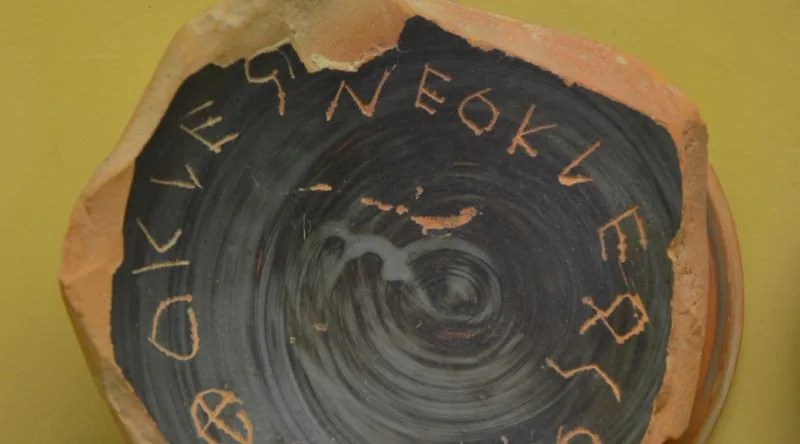
Ostracism in ancient Athens was a democratic vote that exiled a prominent citizen for 10 years, designed to protect the city from would-be tyrants, with the practice reaching its peak in the 5th century BCE. For the Athenians, this wasn't punishment for a crime but a safeguard against ambition itself, a ritual that turned the very fragility of democracy into a weapon. Imagine scratching a name onto a piece of broken pottery, dropping it into an urn, and knowing that your collective decision could send a powerful leader walking away from everything they knew. It is a strange, sobering, and utterly human chapter in the story of self-government.
Ostracism in ancient Athens was a yearly democratic procedure where citizens voted to exile one person for 10 years. It began in the early 5th century BCE as a guard against tyranny, used prominent figures as targets, and relied on pottery shards called ostraka for ballots.
- Ostracism was introduced in ancient Athens in the early 5th century BCE, traditionally credited to the reforms of Cleisthenes.
- The vote required a quorum of 6,000 citizens, with the person receiving the most votes being exiled for exactly 10 years.
- Citizens wrote the name of a candidate on a piece of broken pottery, or ostrakon, to cast their vote.
- The most famous ostracism was that of Aristides the Just in 482 BCE, who was exiled despite his reputation for fairness.
- The practice of ostracism was last used in ancient Athens around 417 BCE, after which it fell out of use.
Ostracism in Ancient Athens: The Vote That Sent Citizens Packing for 10 Years
In the late 6th century BC, the Athenians invented a strange kind of democracy that came with an equally strange safety valve: a yearly vote that could send a prominent citizen packing for ten years. This was ostracism ancient Athens style, a practice so distinctive that its name survives to this day. The word itself comes from ostraka, the broken pieces of pottery that citizens scratched names onto before dropping them into the voting area.
The institution is credited to Cleisthenes, the Athenian reformer who reshaped the city's democratic system in the years around 508 BC. The original account describes him as Pericles' uncle, though historians note he was actually the great-uncle of the famous statesman. Either way, Cleisthenes built ostracism into the machinery of his new democracy as a way to protect it from itself.
Here is how it worked. Once a year, the assembly of adult male citizens gathered to decide whether to hold an ostracism vote at all. If they approved, a second vote reportedly followed about two months later, though the exact timing of that second round is not clearly documented in the ancient sources. What is certain: if at least 6,000 citizens participated, the person with the most votes against them had to leave Attica, the territory surrounding Athens, within ten days. No crime needed to be committed. No property was confiscated, no fine imposed. The exile simply had to stay away for a decade unless formally invited back.
The motive behind this unusual institution was fear, pure and simple. The Athenians had lived through the tyranny of Peisistratos, who seized power in the 6th century BC, and they remembered the oppression vividly. They wanted insurance against anyone rising to become the next tyrant, and ostracism was their answer.
How the Ostracism Vote Worked: From Assembly to Ostraka
The mechanics of ostracism ancient Athens ran on a two-stage voting process that began each year in the assembly, the body of adult male citizens who gathered to debate and decide the city's business. Once a year, that assembly would vote on a simple question: should an ostracism be held at all this year?
If the answer came back yes, a second vote followed. According to the original account, that second ballot came roughly two months later, though the exact interval is not clearly documented in surviving sources. Either way, when the day arrived, citizens showed up carrying small pieces of broken pottery, fired red clay from discarded jugs and plates. These shards were called ostraka, and the word gave the whole practice its name. Each voter scratched onto his shard the name of the person he wanted sent away.
For the vote to count, at least 6,000 participants had to take part. With that quorum met, the person whose name appeared on the most ostraka was exiled. He had ten days to leave Attica, the territory surrounding Athens, and he could not return unless officially invited back. The exile lasted ten years, and it was not a punishment for any crime. The man kept his property, faced no financial penalty, and his family could stay on in their home undisturbed apart from his absence.
The assembly drew its members only from adult male citizens, which meant the decision to hold an ostracism, and the choice of who would go, rested entirely with that narrow slice of the population. The process was blunt, and it was designed that way. Anyone who seemed to be rising too high, gathering too much support, or threatening the democratic order could be removed by the very people who feared him.
Exile Without Punishment: What Happened to the Ostracized
Ostracism in ancient Athens was never a criminal sentence. The man sent away for ten years kept his property, paid no fine, and his family could remain in their home undisturbed, missing only their patriarch.
That last detail mattered more than the legal one. The exile had to make a brutal choice: uproot his wife and children and drag them to foreign soil, or leave them behind in Athens, dependent on relatives and friends for any help they might need over the next decade. Either way, the emotional toll landed hardest on those who had no say in the vote at all.
The woman left behind watched her household lose its head without losing its status. No official consequence touched her, yet she suddenly had to manage alone, explaining to neighbors why her husband was gone, waiting for letters that might take months. The children grew up with an absent father whose return date hung somewhere in the distant future, assuming he was ever formally invited back at all.
For the man himself, exile meant watching his political life die in slow motion. He could not campaign, could not speak in the assembly, could not remind anyone why he mattered. Ten years in Athenian politics is an eternity, and everyone knew it. That was rather the point.
What made it bearable, at least legally, was the absence of ruin. Unlike a conviction for a crime, ostracism carried no confiscation of goods and no financial penalty whatsoever. The exile remained a property owner in Athens, just a property owner who could not set foot in Attica. His wealth stayed intact, waiting for him, even if his reputation might not survive the wait.
Why Did Athenians Create Ostracism? The Fear of Tyranny
The Athenians created ostracism because they were terrified of tyranny, specifically the brutal reign of Peisistratos in the second half of the 6th century BC. They wanted a safeguard that would make it impossible for any ambitious leader to gather enough power to become a tyrant again. The solution was a ten-year exile for anyone who seemed too influential for comfort.
Peisistratos had seized control of Athens and ruled as a tyrant, and his final years in power were remembered as especially oppressive. When Cleisthenes rebuilt the Athenian democracy in the years that followed, that memory was still fresh in everyone's mind. He designed ostracism as part of his democratic reforms, a kind of political safety valve that would let the people remove a prominent figure before he could become dangerous.
The logic was simple. A ten-year absence would cut the exiled person off from their followers, destroy their prestige, and leave them politically powerless by the time they returned. Whatever support they had built up would evaporate while they were gone. It was a preventative measure, not a punishment, and that distinction mattered deeply to the Athenians.
According to the original account, the first people ostracized were suspected of wanting to become tyrants themselves, and they had ties to Peisistratos' family. The accusation carried a darker implication: that these men were willing to cooperate with the Persian king, the great enemy of Greek freedom, to rule Athens as his puppets. The threat felt real, especially since Peisistratos' son Hippias had accompanied the Persians to Marathon in 490 BC, expecting that a Persian victory would restore him to power in Athens.
The fear that drove ostracism was not abstract. It was born from lived experience, from watching a tyrant take control and remembering how hard it was to get freedom back once it was lost.
John Adams and the 'Tyranny of the Majority'
John Adams, the second president of the United States and one of the nation's Founding Fathers, saw something deeply unsettling in Athens' practice of ostracism ancient Athens had perfected. He accepted fear as the motive driving the institution and did not hesitate to say so in his writings, reportedly in his Defence of the Constitutions of Government rather than his memoirs as some accounts claim.
Adams' assessment cut to the bone: "No confession of the weakness of the people, or the insufficiency of the executive, or the imbalance of the legislative powers, has ever been so sincere as this institution." For Adams, ostracism laid bare democracy's rawest nerve. When a majority could exile a fellow citizen simply because he stood out, the system revealed its own fragility. The people admitted, through this very practice, that they could not trust their own leaders or their own judgment.
That blunt critique helped push Adams and his fellow Founders away from Athenian-style direct democracy. They chose a republic instead, with checks and balances designed to prevent what political thinkers would come to call the tyranny of the majority. Ostracism, in their eyes, was a prime example of that tyranny. It did not punish a crime. It punished prominence.
Yet the Athenians saw it differently. They had lived through the tyranny of Peisistratos and remembered the oppression vividly. To them, ostracism was not mob rule but protection. The fear that drove it was the fear of losing liberty entirely, and they judged that fear worth the cost of sending a fellow citizen into exile for ten years. Adams understood that fear too, even as he rejected the remedy.
The First Victims: Suspected Tyrants and the Shadow of Marathon
No citizen was ostracized before the Battle of Marathon in 490 BC, when the Athenians famously repelled the Persian invasion on the plain of Marathon. The evidence for ostracism in ancient Athens only picks up after that battle, which means the institution sat unused for its first decade or so. Aristotle's Constitution of the Athenians tells us why the first exiles were finally sent packing: they were suspected of wanting to become tyrants.
These early victims were men linked to the family of Peisistratos, the tyrant who had ruled Athens in the 6th century BC. The accusation against them carried a double edge. Not only were they suspected of harboring ambitions to seize power for themselves, but they were also believed willing to collaborate with the Persian king, to rule the city as his puppet. The fear was not abstract. Hippias, the son of Peisistratos and himself a former tyrant of Athens, had accompanied the Persians to Marathon in 490 BC, hoping that a Persian victory would restore him as the sole ruler of Athens. The shadow of that old tyranny, and the specter of its return under Persian protection, hung over every political rivalry in the years that followed.
Aristides the Just: The Man Who Wrote His Own Exile
Aristides, the Athenian statesman so renowned for fairness that he was called "the Just," found himself on the receiving end of ostracism ancient Athens in 482 BC. According to Plutarch's account, an illiterate citizen approached him during the vote and asked for help writing a name on a potsherd. When Aristides asked whose name to inscribe, the man replied, "Aristides."
Stunned, Aristides asked what Aristides had done to deserve exile. The man's answer cut to the heart of Athenian politics: "Nothing. I'm just tired of hearing everyone call him the Just."
The story captures something essential about ostracism ancient Athens. This wasn't a punishment for wrongdoing. The system, which could send a citizen away for ten years while letting him keep his property and wealth, was designed to neutralize political threats before they became tyrants. But human nature being what it is, the ballots often reflected something far messier than civic caution. Personal antipathy, envy, and sheer irritation could tip the scales.
Aristides had served honorably at the Battle of Marathon in 490 BC, the victory that laid the foundations of the Athenian Empire. His reputation for integrity was so sterling that it became, paradoxically, his undoing. The very quality that made him admirable made him intolerable to some of his fellow citizens.
The anecdote survives because it reveals how the system actually worked in practice. The quorum of 6,000 votes required for a valid ostracism meant that ordinary citizens, many of them barely literate, were casting judgment on the most powerful men in Athens. And sometimes they voted not out of fear for the democracy, but out of simple, human weariness with someone else's virtue.
Frequently asked questions
What was ostracism in ancient Athens?
Ostracism in ancient Athens was a democratic safeguard that let citizens exile a prominent fellow citizen for ten years. Introduced by the reformer Cleisthenes around 508 BC, it allowed the assembly to remove anyone who seemed dangerously powerful before that person could threaten the young democracy.
How did the ostracism voting process work?
The assembly voted once a year on whether to hold an ostracism. If approved, a second vote followed roughly two months later, according to the original account. Citizens scratched a name onto a broken piece of pottery called an ostrakon, and a minimum of 6,000 votes had to be cast for the result to count.
Why did Athenians use ostracism?
Athenians used ostracism to prevent tyranny, and they had a fresh memory of why that mattered. Peisistratos had seized control of the city in the 6th century BC, and his rule grew increasingly oppressive. The practice aimed to stop any ambitious leader from building the same kind of power.
Who was Aristides the Just and why was he ostracized?
Aristides the Just was an Athenian statesman known for unusual fairness in both private life and politics. In 482 BC, he was ostracized, and Plutarch records the famous anecdote: an illiterate citizen asked Aristides to write "Aristides" on his potsherd, explaining he was simply tired of hearing everyone call him "the Just."
What did John Adams think about ostracism?
John Adams, a founding father and the second president of the United States, criticized ostracism as a confession of the people's weakness. He reportedly saw it as an example of the tyranny of the majority, a cautionary lesson that helped shape his preference for a republic over direct democracy.
Did ostracism punish criminals?
No, ostracism did not punish criminals. It was purely a political measure, with no property confiscation and no financial penalty attached. The exiled citizen kept full ownership of their possessions in Athens, which made the practice less about punishment and more about removing a perceived threat from public life.
What happened to the family of an ostracized citizen?
The family of an ostracized citizen could remain in Athens undisturbed, facing no official consequences beyond the absence of their loved one. But the emotional and practical toll was heavy. The exiled man either had to uproot his wife and children to join him abroad or leave them behind, dependent on relatives and friends for support during his long absence.
Got a take on this? Add your voice to the conversation below →
No comments yet. Be the first.