Slippery When Wet: Bon Jovi's 1986 Album Story
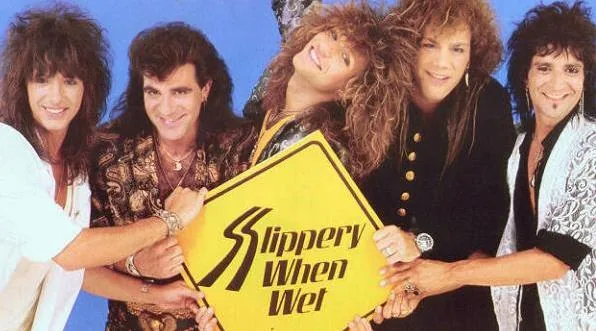
The story of Bon Jovi's 1986 breakthrough is a tale of a borrowed strip club slogan, a last minute cover art scramble, and a band terrified of flopping again after their second album fell flat. Recorded in Vancouver with producer Bruce Fairbairn and songwriter Desmond Child, Slippery When Wet turned the band into global superstars.
Bon Jovi recorded their third album in Vancouver in 1986, initially titling it after a local strip club's marquee slogan. That title, Slippery When Wet, stuck, but the original cover concept was scrapped at the last minute. The final album became a massive hit, launching two number one singles.
- The album was recorded in Vancouver, British Columbia, between January and July 1986 with producer Bruce Fairbairn.
- Songwriter Desmond Child collaborated with the band on key tracks, including "Livin' on a Prayer" and "You Give Love a Bad Name."
- The title came from the marquee of a Vancouver strip club called The No.5 Orange, which advertised "Slippery When Wet."
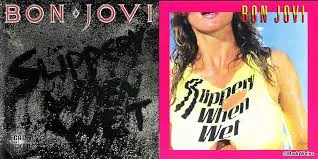
- The original cover photo, featuring a woman in a wet yellow t-shirt, was replaced with the iconic black trash bag and wet paint look before release.
- Released in August 1986, the album spent 8 weeks at number one on the Billboard 200 and produced three Top 10 singles, including two number one hits.
The Strip Club Sign That Named a Rock Classic
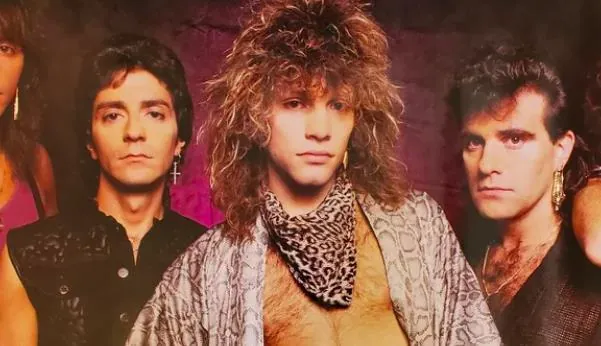
Bon Jovi's third studio album, Slippery When Wet, owes its title to a strip club called The No.5 Orange in Vancouver, where the band recorded from January to July 1986 at Little Mountain Sound Studios. Guitarist Richie Sambora described watching a woman slide down a pole, shower, and soap up, leaving the band tongue-tied. They reportedly said, "we're here every day now," and the name stuck. The title almost never happened. For a while, the band planned to call the record Wanted Dead or Alive, and they even posed for promotional photos in full cowboy outfits. Those images never made it to the album jacket. Instead, they ended up on the cover of the single of the same name, a small consolation prize for a title that got demoted. Sambora's retelling of that Vancouver night has the feel of a scene from a movie. A woman descended from a ceiling-mounted pole, stripped down, stepped into a shower, and began lathering up. The band stood there, completely unable to form words. Then someone broke the silence with that line about coming back every day, and the phrase slippery when wet lodged itself in their heads as the obvious choice. The energy in that club apparently carried straight into the studio. Sambora later said their testosterone was running high throughout the recording sessions, and that the strip club visits kept them motivated during the long months of work. Whether that enthusiasm translated into the album's polished sound is up for debate, but the band clearly believed the connection mattered. What's less debatable is how the album's title became part of the broader story that fans still talk about decades later. The strip club sign gave the record its identity, but the cowboy concept nearly stole the show. In the end, the cowboy photos survived only as single artwork, while the strip club name conquered the charts.Desmond Child, a Basement, and the Song That Almost Didn't Make It
By 1985, Bon Jovi had a problem. Their second album, 7800° Fahrenheit, had sold respectably but hadn't come close to launching them into the stratosphere they were aiming for. So for album number three, the band made a deliberate pivot: ditch the heavier sound of the first two records and chase something radio-friendly, something sticky, something that would stick in people's heads for decades.
The man they turned to was Desmond Child, a songwriter with a knack for hooks. But here's the thing about that first meeting: it didn't happen in some glossy LA studio. It happened in Richie Sambora's mother's basement in New Jersey. That's where the collaboration that would define the record began.
Jon Bon Jovi had actually envisioned something entirely different at first. He wanted to write a duet with someone "Tina Turner-level," the way Bryan Adams had done with Turner. But the A&R team steered him toward Child instead, and the plan shifted. Looking back, Jon put it simply: Child "didn't try to change what we were, he just helped us squeeze out the potential we had."
The trio of Jon, Richie, and Desmond went on to co-write four tracks for the album: "You Give Love a Bad Name," "Livin' on a Prayer," "Without Love," and "I'd Die for You." One song, "Wild in the Streets," remained solely Jon's. All told, the band wrote 30 songs and tested them on young audiences in New Jersey and New York. They even shaped the track order based on what these kids responded to. That's how seriously they were reading the room.
Now, about "Livin' on a Prayer." The song that would become one of the biggest rock anthems of all time almost never made the cut. Jon listened to the original demo and decided it wasn't good enough. Plain and simple. But Sambora wouldn't let it go. He insisted, the band re-recorded it, and that second version is the one that landed on the album. The original demo? It surfaced years later as a hidden track on the 100,000,000 Bon Jovi Fans Can't Be Wrong box set, a fascinating time capsule of what could have been.
Behind the boards, Jon made a key call after hearing what producer Bruce Fairbairn had done with Black 'n Blue's Without Love. The sound quality hooked him, and he decided Fairbairn was the man for the job. Bob Rock handled the mixing. Together, they shaped the polished, arena-ready sound that would dominate the charts.
The Last-Minute Cover Change That Saved the Album
Days before Slippery When Wet was set to hit stores on August 18, 1986, someone at the record label looked at the cover art and felt their stomach drop. The original design showed a woman in a soaking wet yellow t-shirt, her figure clearly outlined. It was provocative, sure, but it was also a retail nightmare waiting to happen.
The panic was real. Big chain stores like Walmart and Kmart had strict policies about suggestive imagery, and the label knew those shelves were where albums went to sell in bulk. If the big boxes refused to stock it, the commercial potential of the whole project would evaporate. Jon Bon Jovi had his own complaint too. He hated the bright pink border framing the photo. So with the release date looming, the entire cover concept got scrapped.
What replaced it became one of the most recognizable images in rock history. A plain black trash bag, photographed up close, with the words "Slippery When Wet" scrawled across it in water. That was it. No band photos, no glamour shots, just a garbage bag and some moisture. Richie Sambora himself later admitted the final result was "simple and not very impressive." He wasn't wrong, but it worked.
The irony is that the censorship didn't reach everywhere. In Japan, many pressings of the album kept the original wet t-shirt cover intact. So while American chain stores got a squeaky clean alternative, Japanese fans got the racy original. The story of the album took a strange turn there, one that collectors still chase after decades later.
The whole scramble happened so fast that there was no time for a polished concept. The band just needed something that wouldn't get banned, and someone suggested the trash bag idea. It was cheap, it was quick, and it perfectly matched the album's title in a way the wet t-shirt never quite did. Sometimes the best decisions are the ones made under pressure with no time to overthink.
Chart Conquest and the Critics Who Hated It
When Slippery When Wet hit stores on August 18, 1986, nobody predicted it would become the soundtrack of an entire generation. Released through Mercury Records across North America and Vertigo Records internationally, the album didn't just succeed. It detonated.
The numbers tell a story that still holds up decades later. "You Give Love a Bad Name" and "Livin' on a Prayer" both climbed to #1 on the Billboard Hot 100, while "Wanted Dead or Alive" peaked at #7. That trio of Top 10 singles made history: no glam metal album had ever pulled off that feat before. The record sat at #1 on the Billboard 200 for eight weeks and stayed inside the Top 5 for an astonishing 38 weeks. By the end of 1987, Billboard had crowned it the best-selling album of the year in America.
The RIAA eventually certified it 15x Platinum, meaning 15 million units sold in the US alone. That places it among the top 100 best-selling albums in American history. The international numbers were equally wild: 3x Platinum in the UK, Diamond certification in Canada, and 6x Platinum in Australia. Every continent seemed to fall for the same hairspray-soaked hooks.
But not everyone was swooning. Robert Christgau, the famously sharp critic at The Village Voice, wrote in 1987 with his usual mix of grudging respect and sarcasm. He acknowledged that seven million teenagers couldn't be wrong, then asked readers whether they were truly immune to "Livin' on a Prayer." It was a backhanded compliment, but a compliment nonetheless.
Rolling Stone's Jimmy Guterman took a much harsher stance three years later. In 1990, he dismissed the album as a "fourth-generation, blurry photocopy of Quiet Riot." Ouch. The comparison to the LA band suggested Bon Jovi were derivative copycats riding a trend rather than innovators. Critics could argue all they wanted, though. The fans had already voted with their wallets, and the verdict was unanimous.
As for the album's reported place on a Rock and Roll Hall of Fame "Definitive 200 Albums" list, that ranking has been mentioned over the years, though the specific list remains difficult to verify independently. What's beyond dispute is the cultural footprint. This was the record that made heavy metal radio-friendly, that introduced glam metal to the mainstream in a way nothing before it had managed. Spandex, leather pants, flag-patterned bandanas. This album was the sound of all of it.
Frequently asked questions
What is the story behind the title of Bon Jovi's Slippery When Wet?
The album takes its name from The No.5 Orange, a strip club in Vancouver where the band spent time while recording in 1986. Richie Sambora described watching a dancer slide down a pole, shower, and lather up with soap, leaving the band speechless. They declared they would visit every day, and the title stuck as their inside joke.
Why was the original cover art of Slippery When Wet changed?
Days before the August 18, 1986 release, the original cover featuring a woman in a wet yellow t-shirt was scrapped. Major retailers including Walmart and Kmart refused to stock the provocative image, and the record label panicked about sales. The band quickly replaced it with the now-famous black trash bag cover with the title written in water.
How did Desmond Child contribute to the Slippery When Wet album?
Desmond Child co-wrote four tracks on the album: "You Give Love a Bad Name," "Livin' on a Prayer," "Without Love," and "I'd Die for You." This marked the first collaboration between Child and the band, which began in the basement of Sambora's mother's house in New Jersey. Jon Bon Jovi said Child helped them squeeze out their potential without changing who they were.
Who produced Bon Jovi's Slippery When Wet album?
Bruce Fairbairn produced the album, with Bob Rock handling the mixing. Jon Bon Jovi chose Fairbairn after hearing his work on Black 'n Blue's "Without Love" and loving the sound quality. Recording took place between January and July 1986 at Little Mountain Sound Studios in Vancouver.
Was Livin' on a Prayer almost left off the album?
Yes, Jon Bon Jovi initially thought the song was not good enough and wanted to cut it. Richie Sambora insisted the track had potential and pushed for it to be re-recorded. The second version made the album and became one of the band's biggest hits, spending time at number one on the Billboard Hot 100.
How successful was Slippery When Wet on the Billboard charts?
The album spent 8 weeks at number one on the Billboard 200 and remained in the Top 5 for 38 weeks. Billboard named it the best-selling album of 1987 in the United States. The RIAA certified it 15x Platinum, and it became the first glam metal album to produce three Top 10 hits on the Billboard Hot 100.
Where was Slippery When Wet recorded?
The album was recorded at Little Mountain Sound Studios in Vancouver, Canada, between January and July 1986. The band wrote around 30 songs during the sessions and tested them on young audiences in New Jersey and New York. The tracklist was even shaped by feedback from those listeners. Editorial note: Any facts which remain unconfirmed are presented as such (hedged).
Got a take on this? Add your voice to the conversation below →
No comments yet. Be the first.