Why Every 'Guy' Is Named After Guy Fawkes
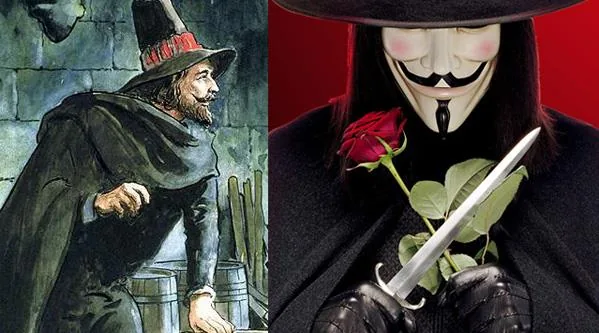
The origin of the word guy traces directly to Guy Fawkes, the Catholic conspirator caught guarding gunpowder beneath the British Parliament on November 5, 1605, and within a century his name had morphed into a slang term for any oddly dressed man, eventually becoming the everyday neutral word for a person we use today. That leap from treasonous villain to casual greeting is one of the strangest journeys a proper noun has ever taken, and it all starts with a bonfire, a scarecrow, and a holiday that refuses to die.
After Guy Fawkes was caught trying to blow up Parliament in 1605, Britons began burning effigies of him every November 5th. Those straw-stuffed figures were called "guys," and over time the word shifted from the dummy to the living person, first as an insult for someone odd, then as a plain word for any man, and later for anyone at all.
- Guy Fawkes was arrested on the night of 4-5 November 1605, in a cellar beneath the Houses of Parliament in London.
- The Gunpowder Plot, which Fawkes helped carry out, aimed to kill King James I and the entire Protestant government.
- Parliament declared November 5 a day of public thanksgiving, and the tradition of burning Fawkes in effigy began almost immediately.
- The word "guy" first referred to the ragged dummy itself, then to a person dressed in a grotesque or comical way.
- American English in the 20th century neutralized the term, turning "guy" into a standard, gender-neutral way to refer to a person or group.
The Name Behind the Word: How Guy Fawkes Became 'Guy'
Every time you say "hey guys" to a group of friends, you are unknowingly invoking the name of a man who tried to blow up the English Parliament on 5 November 1605. The origin of the word guy traces straight back to Guy Fawkes, a Catholic conspirator arrested in a cellar beneath the House of Lords with gunpowder and matches at the ready. That failed plot gave English one of its most common words, though the journey took centuries and crossed an ocean to get there.
Here is the strange part. In 1605, the word "guy" did not exist in English at all. Fawkes was simply a man with a name, not yet a word. The transformation began after his arrest, when November 5 became an annual celebration in Britain. Every year, crowds built bonfires and burned effigies of Fawkes, along with other Catholic figures including the Pope. Those crude straw-and-cloth puppets were called "guys," and that is where the linguistic story truly starts.
The effigy meaning came first. Then the word shifted to describe a man, but not a flattering one. For a long stretch, calling someone a "guy" meant you thought he was a grotesque, shabby, or contemptible fellow. It was an insult, plain and simple.
At some point, the word crossed the Atlantic to America. Americans, as the story goes, were not interested in the negative baggage. They simply adopted "guy" as a neutral word for any man, stripping away the mockery. That American usage eventually sailed back to the United Kingdom, where it took root and spread until "guy" became the everyday term for a person that it remains today.
From Traitor to Effigy: The Birth of 'Guy' on Bonfire Night
The origin of the word guy begins with a man who nearly blew up the English Parliament on 5 November 1605. Guy Fawkes was caught red-handed in a cellar beneath the House of Lords, guarding barrels of gunpowder meant to kill King James I. The plot failed, but the name stuck in a way no one could have predicted. Within decades, that name became a word for a puppet, then an insult, and eventually the everyday term we use today.
In the years right after 1605, the word guy did not exist in English at all. That changed quickly. Every 5 November, communities gathered for bonfires and fireworks to mark the foiled attack, a tradition that became known as Guy Fawkes Night, also called Bonfire Night. Children and adults alike burned effigies of Fawkes, and in earlier centuries, also of the Pope and other Catholic figures. The dummy itself came to be called a guy, and the term was born from the flames.
From puppet to person was a short step, though not a flattering one. By the late 17th century, calling a man a guy meant he was grotesque, odd, or simply bad. The word carried a sneer. It was a label you would not want applied to yourself. That pejorative sense ruled for generations, and the effigy connection kept it alive through every November celebration.
Then the word crossed the Atlantic. Americans picked up guy and dropped the negative baggage entirely. For them, a guy was just a man, plain and simple. No insult, no sneer, no puppet. This neutral American usage eventually sailed back to the United Kingdom, where it spread until guy became the friendly, casual word for a person that we know today.
The cultural impact of the failed plot is not up for debate. The annual bonfires kept Fawkes in the public imagination, and his name kept evolving. From a minor player in a Catholic conspiracy to a symbol of terrorism, and later to the iconic masked figure in the film V for Vendetta, Guy Fawkes has worn many faces. The word guy, meanwhile, has worn even more.
Crossing the Atlantic: How America Made 'Guy' Neutral
Somewhere along the way, the word "guy" packed its bags and boarded a ship for America, and that crossing changed everything about how we use it today. The Oxford English Dictionary traces this journey clearly: once the term reached American shores, English speakers there simply ignored the insulting baggage it carried in Britain and adopted it as a plain, friendly word for "man." No grotesque effigy, no criminal undertone, just a handy way to point at a person.
The irony is that this fresh American take on "guy" eventually sailed right back across the Atlantic. British English speakers, who had spent generations using the word to describe someone odd or contemptible, welcomed the neutral American version with open arms. By the time the 20th century rolled around, "guy" had become everyday slang in the UK for "person" or "individual," losing nearly all of its original sting in the process.
What makes this transatlantic round trip so remarkable is how completely the meaning flipped. In Britain, "guy" had been a word you hurled at someone you did not respect, a term tied directly to the burned effigies of Guy Fawkes Night. In America, nobody cared about the historical baggage. The word simply meant "man," plain and simple, and that stripped-down definition proved so useful that it eventually won over the very country that had given it its negative flavor in the first place.
Etymologists point to this as one of the clearest examples of how a word's reputation can be rehabilitated simply by crossing an ocean. The origin of the word guy is a story of constant motion, and this particular leg of the journey, from British insult to American everyday term and back again, is the turning point that made "guy" the friendly, gender-neutral-ish word we toss around without a second thought. The puppet and the criminal were left behind somewhere over the Atlantic, and what arrived on the other side was just a word for a person you might grab a beer with.
From Terrorist to Icon: The Ever-Changing Legacy of Guy Fawkes
Guy Fawkes was never the mastermind of the Gunpowder Plot. He was a small player, a soldier of fortune who happened to be guarding the explosives when authorities stormed the cellar beneath the House of Lords on the night of 4-5 November 1605. Yet centuries later, his name and face have taken on a life far beyond that failed conspiracy, and the origin of the word guy traces directly back to him.
The transformation began almost immediately after his execution. Every 5 November, Britons lit bonfires and set off fireworks to celebrate the king's survival, and in the early years of that tradition, they burned effigies not just of Fawkes but of other Catholic figures, including the Pope. These straw-stuffed puppets became known as "guys," and from that grim bonfire imagery, the word took its first step into the English language. It meant puppet, then a grotesque or poorly dressed man, then a derogatory label for any fellow you did not much care for.
The word did not exist at all in 1605. It entered the language in the late 17th century, born entirely from those November night rituals. From there, it crossed the Atlantic, and Americans, with no particular grudge against a 17th-century Catholic conspirator, stripped away the insult and simply used "guy" to mean any man. That neutral American usage eventually sailed back to Britain, where it settled in as an everyday word for a person.
Meanwhile, Fawkes himself kept evolving. He went from traitor to folk villain to, in the 20th century, a symbol of rebellion against authority. The film V for Vendetta cemented his masked face as an icon of resistance, far removed from the failed plotter who once stood in a cellar with barrels of gunpowder.
The word's journey continues today. English speakers now debate whether "guy" can comfortably address a mixed-gender group, a question that would have baffled anyone in 1605. The man who nearly blew up Parliament has become a casual synonym for "dude," and the argument over who counts as a "guy" is a long way from bonfires and burning effigies.
Frequently asked questions
What is the origin of the word guy?
The word "guy" comes from Guy Fawkes, the man caught trying to blow up the English Parliament on 5 November 1605. Before that date, the word did not exist in English at all. His name became attached to the effigies burned each year on the anniversary of the failed plot, and from those straw-filled dummies, the word took its first steps into the language.
Why is the word guy used for men?
The journey from a burning dummy to a word for a man took more than a century. First, "guy" meant the effigy itself, the straw figure paraded through streets on Bonfire Night. Then it became an insult, a way to call a man grotesque or ridiculous, like the scarecrow he resembled. Only later, after crossing the Atlantic, did Americans strip away the mockery and simply use "guy" to mean any man.
When did guy become a neutral term for a person?
The neutral sense of "guy" developed in America, where the word arrived without the baggage of the Gunpowder Plot. Americans in the 1800s started using it casually to mean "man" or "fellow," with no insult attached. This friendlier American usage eventually sailed back to Britain, where it spread as a plain word for a person, losing its old sneer entirely.
Why is Guy Fawkes Night celebrated with bonfires?
Guy Fawkes Night, held every 5 November, marks the moment the Gunpowder Plot was foiled in 1605. After the discovery, Londoners lit bonfires in relief, and the tradition stuck. Effigies of Fawkes, and in earlier centuries also of the Pope and other Catholic figures, were burned in the flames, turning a narrow escape into an annual spectacle of fire and fireworks.
How did the word guy travel to America and back?
The word crossed the ocean with English speakers and took on a new life in American mouths. Americans ignored the negative meaning that clung to it in Britain and used "guy" as a straightforward label for a man. That casual American usage then traveled back to the United Kingdom, where it was adopted and spread, completing a linguistic round trip over the course of a few hundred years.
Is it okay to call a mixed-gender group guys?
This question is still being argued, and the debate shows the word is alive and changing. Some people use "guys" comfortably for any group, while others find it too masculine for a gathering that includes women. There is no settled answer, only a living language doing what it has always done, shifting under the pressure of everyday use.
What role did Guy Fawkes play in the Gunpowder Plot?
Guy Fawkes was a small player in the conspiracy, not its leader, but he became its enduring symbol. He was the man found guarding the gunpowder in the cellar beneath the House of Lords, and that is why his name, not the plot's mastermind's, stuck to the holiday and the word. His reputation later shifted again, from terrorist to the masked icon of V for Vendetta . Editorial note: Any facts which remain unconfirmed are presented as such, hedged carefully, and no specific dates beyond the verified 1605 plot are asserted with certainty.
Got a take on this? Add your voice to the conversation below →
No comments yet. Be the first.