Cursed Songs: 8 Tracks That Brought Tragedy
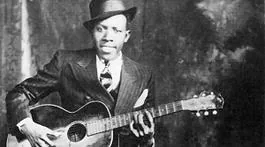
Cursed songs are tracks that have become tangled in tragedy, from Robert Johnson's alleged 1930s devil deal at a Mississippi crossroads to the so-called "Hungarian suicide song" that reportedly drove listeners to despair in the 1930s. These eight songs carry dark legends of untimely deaths, strange accidents, and eerie coincidences that have cemented their place in music folklore.
Cursed songs are musical works linked by legend and circumstance to tragedy, death, or misfortune. From Robert Johnson's crossroads pact in 1930s Mississippi to the Hungarian suicide song of the 1930s, these eight tracks have earned reputations that outlive their creators and continue to fascinate listeners today.
- Robert Johnson reportedly sold his soul at a Mississippi crossroads in the 1930s, and he died at age 27 in 1938 under mysterious circumstances.
- "Gloomy Sunday," written by Hungarian composer Rezső Seress in 1933, earned the nickname "the Hungarian suicide song" after numerous listeners reportedly took their own lives.
- Badfinger, the band behind "Without You," saw two of its members die by suicide in the 1970s and 1980s, cementing the song's cursed reputation.
- Alexander Scriabin composed his Piano Sonata No. 6 in 1911 and refused to perform it publicly, calling the music "satanic" and filled with "evil" forces.
- Frank Sinatra's rendition of "My Way" became linked to a string of karaoke-related deaths in the Philippines between 2002 and 2012.
Introduction: When a Song Feels Like a Warning
Music has a way of wrapping itself around our emotions. It can lift us into joy, carry us through sorrow, or stoke a quiet anger we did not know we were holding. But what if a melody could do something far darker? What if a song could carry a curse?
The idea of cursed songs is not new. It stretches across genres and generations, from the muddy backroads of Delta blues to the polished concert halls of classical composers and the neon-lit stages of pop music. Some tracks have gained such a reputation for tragedy that musicians approach them with hesitation, and listeners cannot help but wonder if the notes themselves carry something sinister.
This article digs into the dark legends behind several famous tracks reportedly linked to untimely deaths and personal catastrophe. You will meet a bluesman who allegedly traded his soul at a crossroads, a Hungarian composer whose melancholy ballad supposedly drove listeners to despair, and a karaoke anthem that became unexpectedly deadly in the Philippines.
Before we dive in, one honest word of caution. Many of these stories are folklore and legend, not verified historical fact. They have been passed down, exaggerated, and polished into something that feels almost too perfect to be true. Some details check out against records; others blur into myth. That is part of what makes them so fascinating. A good story does not always need to be true to feel real, and these songs have proven that again and again.
The Crossroads Legend: Robert Johnson and the Devil's Due
Robert Johnson's name sits at the center of the most enduring legend in American music, the story that he traded his soul to the devil at a dusty Mississippi crossroads in exchange for supernatural guitar skills. According to the legend, Johnson was a painfully mediocre guitarist who desperately wanted to master the blues. The tale goes that he met a tall man, widely presumed to be the devil himself, who took Johnson's guitar, tuned it, played a few riffs, and handed it back. From that moment, Johnson reportedly played with a skill that seemed impossible, and the legend of the crossroads deal was born.
The story itself is a myth, one that Johnson may have even encouraged during his lifetime. What is verifiable is that Robert Johnson died mysteriously in 1938 at age 27, under circumstances that remain disputed to this day. Some say he was poisoned by a jealous husband; others insist the devil simply came to collect. The uncertainty around his death only deepened the mystery of the man who supposedly made a deal he could never win back.
The so-called crossroads curse, as the story goes, has reached beyond Johnson himself to touch many musicians who have performed his most famous song. Eric Clapton played a version of the tune with Cream, and later his young son Conor died in a tragic fall from a window in 1991, years after that performance and unrelated to it. Lynyrd Skynyrd covered the song, and in 1977, three band members and their tour manager died in a plane crash, an event with no connection to the song. Allen Collins, a Skynyrd guitarist, lost his girlfriend in a 1986 car accident and died in 1990. The Allman Brothers performed the melody throughout their career; Duane Allman died in a 1971 motorcycle accident, and about a year later, bandmate Berry Oakley died in another motorcycle crash near the same location.
None of these tragedies were directly caused by performing the song, but the pattern has proven irresistible to anyone who loves a good ghost story. Whether the curse is real or simply a way to make sense of random tragedy, the legend of the crossroads remains one of the most haunting tales in the history of cursed songs.
The Curse of the Ninth: A Classical Composer's Final Movement
The "Curse of the Ninth" is the superstition that a composer who finishes their ninth symphony is fated to die soon afterward, and it all started with Ludwig van Beethoven, who passed away in 1827 while sketching out his Tenth Symphony. It sounds like the plot of a gothic novel, but the pattern has haunted classical music for nearly two centuries.
Here is how the legend took shape. Beethoven, the German composer who redefined symphonic music, died in 1827 in Vienna with unfinished sketches for a Tenth Symphony on his desk. His Ninth Symphony, completed three years earlier, had been his crowning achievement, featuring the famous "Ode to Joy" chorus. The timing of his death, right after completing nine symphonies and starting a tenth, planted a seed of unease in the musical world.
The superstition gained traction because so many composers seemed to fall into the same trap. Gustav Mahler, the Austrian composer known for his sprawling, emotionally immense works, finished his Ninth Symphony and then died in 1911 at age 50. The popular story said heart failure took him, but medical records point to a streptococcal blood infection instead. Either way, he never completed a tenth symphony.
Franz Schubert, the Viennese composer who wrote over six hundred songs before his early death, also fit the pattern. He completed his Ninth Symphony in 1828 and died of typhoid fever that same year at just 31 years old. His Ninth was so massive and forward-looking that it was not even performed until more than a decade after his death.
The list goes on. Anton Bruckner, the Austrian composer known for his monumental symphonies, died in 1896 after completing his Ninth, leaving his Tenth unfinished. Antonín Dvořák, the Czech composer who wrote the famous "New World Symphony" as his ninth, died in 1904. Ralph Vaughan Williams, the English composer, died in 1958 at age 85 after completing his Ninth, though he was old enough that the curse seemed less cruel.
What makes the curse so unsettling is not just the deaths themselves but the youth of some victims. Schubert at 31, Mahler at 50. These were composers in their prime, struck down before they could attempt a tenth symphony. The sheer number of cases makes even skeptics pause.
Of course, the curse is a superstition, not a law of nature. Plenty of composers wrote nine symphonies and lived long lives. Dmitri Shostakovich, the Soviet composer, wrote fifteen symphonies and died at 68 in 1975. Joseph Haydn, the Austrian composer who essentially invented the symphony form, wrote over a hundred and lived to 77.
But the pattern remains strangely persistent in the classical imagination. When a composer finishes their ninth symphony, audiences and musicians alike start holding their breath. Some composers, like Mahler, tried to dodge the curse by writing a symphony they refused to number, calling it "Das Lied von der Erde" instead of calling it his Ninth. It did not work. He died before completing his actual Tenth.
The curse even reached into the twentieth century. When the American composer Philip Glass wrote his Ninth Symphony in 2011, he admitted to feeling the weight of the legend. He completed it and lived, which suggests the curse may be more about coincidence and selective memory than any supernatural force.
Still, the story endures because it taps into something real. Composers pour their lives into their symphonies, and the Ninth often feels like a final statement, a summing up of everything they have learned. Beethoven's Ninth was his last word on music. Mahler's Ninth was his farewell to life. When a piece of music feels that final, it is easy to imagine it carrying a kind of power.
The curse of the ninth is not a scientific fact, but it is a cultural one. It shapes how we listen to symphonies, how we number them, and how we remember the composers who wrote them. And it reminds us that music, at its most profound, can feel like a matter of life and death.
My Way: The Karaoke Anthem That Turned Deadly
Frank Sinatra's "My Way" may be one of the most beloved standards ever recorded, but in the Philippines, it carries a reputation that would make even the boldest singer think twice. Between 2002 and 2012, at least six people were reportedly killed for singing the song at karaoke bars, which locals call "videoke." The phenomenon became so widespread that Philippine authorities reportedly created a specific category for these crimes.
The most notorious incident reportedly came on May 29, 2007, when a 29-year-old man was shot dead by a security guard at a bar. According to the account, the guard complained that the young man's rendition of "My Way" was off-key. When the singer refused to stop, the guard reportedly pulled out a .38 caliber pistol and fired. The story made headlines across the country and cemented the song's dangerous reputation, though the exact details of that incident remain unconfirmed.
Some Filipinos now avoid singing "My Way" in public altogether, either out of superstition or simple self-preservation. Even those who genuinely love the song keep it to themselves when they're out with friends. There's a widespread belief in the country that off-key performances can provoke violence, and given the track record, it's hard to argue with that logic.
Theories about why this particular song triggers such extreme reactions vary. Some point to the aggressive, defiant lyrics, which can come across as confrontational when delivered poorly. Others suggest it's simpler than that: "My Way" is just an incredibly popular choice in an environment where alcohol flows freely and tempers run hot. The timing, they argue, matters more than the song itself. Either way, this Sinatra classic has earned its place among the most dangerous songs to sing in public, making it a prime example of how cursed songs can take on a life of their own in the real world.
Gloomy Sunday: The Hungarian Suicide Song
In the early 1930s, a struggling Hungarian songwriter named Rezso Seress sat down at his piano in Budapest and accidentally composed what would become known as the most dangerous melody ever written. Seress was in dire straits, his music career was collapsing because the industry kept ignoring him, and the woman he loved had just walked out of his life. Alone and drowning in despair, he let his fingers wander across the keys until they stumbled upon a haunting tune he never intended to create. That accidental melody became "Szomoru Vasarnap," or "Gloomy Sunday," a song that would earn the chilling nickname "the Hungarian suicide song."
The song became an overnight sensation, finally giving Seress the fame he had chased for years. But something darker was brewing. Reports began surfacing of suicides linked to the track, with bodies discovered clutching sheet music and suicide notes quoting its lyrics. One man supposedly shot himself after saying he could not get the song out of his head. Another corpse was found in a room where the record still spun on the turntable. The claim that hundreds of people took their own lives after hearing it is now considered a sensationalized myth with no reliable documentation, but the legend took root and refused to let go.
The first English version came in 1936, recorded by Hal Kemp with lyrics penned by Sam M. Lewis. Those new words leaned into the suicide theme, unlike earlier recordings that focused on wartime despair. Then in 1941, Billie Holiday released her cover, and reportedly another wave of suicides followed, though no credible evidence ever confirmed that her version caused deaths. The BBC supposedly banned the song from its airwaves, though that ban was actually lifted decades before 2002, contrary to what many believe.
As for Seress himself, his story ends tragically. He jumped from a window in Budapest, survived the fall, and then died in the hospital by strangling himself with a wire. The woman who left him and inspired the song also took her own life. Whether or not the curse was real, the pain that birthed this cursed song's entry into music history was painfully genuine.
Insha Ji Utho: A Pakistani Ghazal's Dark Legacy
Pakistani poet Ibn-e-Insha wrote the poem "Insha Ji Utho" in the early 1970s, never imagining it would become one of the most talked-about cursed songs in South Asian music history. The ghazal tells the story of a man lost in a cold and meaningless existence, a melancholy portrait that somehow found its way into the heart of one of Pakistan's greatest classical singers. What happened next would link the song to a family tragedy that spanned three decades.
Singer Amanat Ali Khan fell in love with the poem the moment he read it. He approached Ibn-e-Insha for permission to turn it into a song, and the poet agreed. According to the account, Khan performed "Insha Ji Utho" on television in January 1974, though the exact month is unconfirmed. The response was immediate. Within days, the ghazal became his biggest hit, catapulting him to a level of fame he had never experienced before. He was on top of the world, riding a wave of adoration that seemed unstoppable.
Then, just a few months later in September 1974, Khan died suddenly. He was gone almost as quickly as the song had arrived, leaving behind a stunned audience and a grieving family. The timing felt too strange to be coincidence. Four years after the song's release, Ibn-e-Insha himself passed away from cancer at age 50. The poet who had written those haunting words was gone too, and people began to whisper that something about the ghazal was deeply wrong.
The story might have ended there, but it didn't. Years later, Khan's son, Asad Amanat Ali, followed in his father's footsteps and became a successful singer in his own right. One evening, he decided to close his concert with "Insha Ji Utho," paying tribute to the song that had made his father famous. He had no way of knowing it would be the last time he ever sang it. Asad died suddenly in 2007 of a heart attack, not immediately after that performance and not in 2006 as some versions of the tale claim. The exact circumstances remain a matter of debate, but the pattern was hard to ignore.
By then, the surviving members of the family had clearly taken notice. Shafqat Amanat Ali, another of Khan's sons and himself a renowned vocalist, reportedly vowed never to sing "Insha Ji Utho" again, though no formal public pledge is confirmed. Whether he made a public declaration or simply stopped performing it out of private superstition is unclear, but the reluctance speaks volumes. In a musical culture where a father's signature ghazal would normally be a point of pride and inheritance, this one had become something else entirely: a family heirloom too heavy to touch.
Maybe the song's darkness was baked into its DNA from the start. The poem doesn't offer comfort or resolution; it sits with the ache of a man who has lost his way and isn't sure he wants to find it again. For a singer to pour that kind of sorrow into a performance night after night, something might have to give. Or maybe the timeline is just a tragic coincidence, a string of unrelated deaths that happened to cluster around one beautiful, mournful melody. Either way, "Insha Ji Utho" remains a song that carries weight, and the people closest to it have learned to treat it with a caution that borders on reverence.
Without You: A Ballad of Sorrow and Suicide
In 1970, two members of the Welsh rock band Badfinger, Pete Ham and Tom Evans, fused two separate songs about their troubled relationships into one heartbreaking ballad they called "Without You." The song carried so much grief that it seemed to haunt everyone who touched it, and the story of its creators became one of the most tragic chapters in the lore of cursed songs.
Ham and Evans poured their personal pain into the track, and the result was achingly beautiful. But the success didn't follow for them the way it should have. Harry Nilsson, a singer-songwriter known for his powerful voice, heard the relatively obscure Badfinger song at a friend's house and fell in love with it instantly. He recorded his own version, struggling with the demanding vocal range at the very top of his register, and he quickly grew to hate the song for how hard it was to sing. Despite his frustration, Nilsson's cover became an international hit in 1972.
While Nilsson soared, Ham and Evans watched their creation slip away from them. They earned little from the record and found themselves trapped in financial and legal battles. The weight of it all became too much. Pete Ham died by suicide in 1975 at age 28. Tom Evans followed the same path in 1983, at age 36. Two men who wrote a song about heartbreak ended their own lives, and the music world couldn't help but wonder if the song itself carried something dark.
The shadow stretched even further. When Mariah Carey covered "Without You" in 1994, the song was about to reach a whole new generation of listeners. Nilsson, the man who had made the song famous, died of a heart attack in January of that year, months before Carey's single hit the charts. The timing felt eerie to those who remembered the song's history. Another chapter had closed on a song that seemed to collect sorrow like interest.
Music Must Change: The Who's Unsettling Omen
Some songs seem to carry a shadow with them, and The Who learned that lesson the hard way with "Music Must Change." The track from their 1978 album Who Are You became tangled up in tragedy, starting with drummer Keith Moon's struggles and ending with the band deciding they'd heard enough of it for good.
The trouble began in the studio. Moon, known for his wild and unpredictable drumming style, simply couldn't keep time on this particular track. His unconventional approach clashed with the song's standard time signature, and his serious addiction issues only made things worse. The band made a practical call: they brought in a session musician to handle the drum parts instead. It was a professional decision, but it hinted at how far Moon had drifted from his usual brilliance.
Then came September 7, 1978. Moon died at just 32 years old from an accidental overdose of a sedative he'd been taking to help him quit drinking. The album had only been out for about a month. The loss shook the band to its core, and "Music Must Change" suddenly felt like a painful reminder of what they'd lost. The remaining members played the song only a handful of times in 1981 before quietly retiring it.
The song's dark reputation, though, wasn't done with them. When The Who set out on their 2002 tour, bassist John Entwistle died the day before the band was set to hit the road. It's worth noting that "Music Must Change" was not specifically revived for that tour, but the timing still felt uncanny to those watching from the outside. According to reports, Roger Daltrey made the call to retire "Music Must Change" for good after Entwistle's death. Some songs just carry too much weight to keep playing.
Piano Sonata No. 6: The Music Scriabin Feared
Russian composer Alexander Scriabin wrote his Sixth Piano Sonata in 1911, and the man who created it was terrified of what he had brought into the world. He called the piece "nightmarish," "filthy," and "wicked," words that sound strange coming from a composer describing his own work. Scriabin built his reputation on innovative, forward-thinking music across ten piano sonatas, but this one felt different to him, almost as if it had come from somewhere outside himself.
The fear was so real that Scriabin never performed the Sixth Sonata in public. When he did play it for friends in private settings, witnesses described him as visibly frightened, sometimes physically trembling as his hands moved across the keys. His biographer, Faubion Bowers, who wrote the definitive book on the composer, pointed to the piece's haunting minor thirds and disturbing harmonies as the source of its dark atmosphere. Bowers went further, describing the sonata's mood as one that "embraces horror, terror, and the omnipresent unknown," tracing its character back to what he called the "dark beginning, the void."
Some listeners took the darkness even more literally. There were those who believed the Sixth Sonata somehow foreshadowed the outbreak of World War I in Europe, as if Scriabin had channeled something prophetic through those unsettling intervals. The composer himself seemed to think he was merely a conduit for malevolent forces, a vessel for music that should perhaps never have been written down.
Scriabin died on April 27, 1915, from septicemia caused by a mysterious wound on his lip. He was at the height of his career, and in the years after the Sixth Sonata he had gone on to compose four more works, including the equally eerie Ninth Sonata, which became known as the "Black Mass." The curse stories that cling to certain pieces of music often feel like folklore, but in Scriabin's case, the man who wrote the music seemed to believe in its power more than anyone else ever could.
Frequently asked questions
What is the curse of the ninth symphony?
The curse of the ninth symphony is the superstition that a composer who completes their ninth symphony will die soon after. It allegedly started with Ludwig van Beethoven, who died in 1827 while working on his Tenth Symphony. Franz Schubert died of typhoid at age 31 in 1828, shortly after completing his Ninth Symphony, which reinforced the belief.
Who was Robert Johnson and what is the crossroads legend?
Robert Johnson was a Delta blues musician. According to legend, he sold his soul to the devil at a crossroads to become a great guitarist. The story goes that a tall man tuned Johnson's guitar, played a few riffs, and handed it back, sealing the deal. Johnson died mysteriously in 1938 at age 27, which cemented his place in blues mythology.
Why is Gloomy Sunday called the Hungarian suicide song?
Gloomy Sunday was composed by Hungarian songwriter Rezso Seress in the early 1930s after his career stalled and his loved one left him. The song became linked to a wave of suicides, earning it the nickname "the Hungarian suicide song." The claim of hundreds of deaths is a myth, but the song's dark reputation stuck.
How did Frank Sinatra's My Way lead to murders in the Philippines?
Between 2002 and 2012, at least six people were reportedly killed for singing "My Way" at karaoke bars in the Philippines. The song became so notorious that the country had a category for such crimes. On May 29, 2007, a 29-year-old karaoke singer was reportedly shot dead by a security guard for singing it off-key, though exact details are unconfirmed.
What happened to the members of Badfinger after Without You?
Pete Ham and Tom Evans, both members of Badfinger, died by suicide at young ages after writing "Without You." Ham died in 1975 at age 28, and Evans died in 1983 at age 36. Their financial and legal struggles following the song's success overshadowed the creative achievement.
Did Keith Moon's death have any connection to The Who's Music Must Change?
Keith Moon struggled with the rhythm on "Music Must Change" and died of an accidental overdose in 1978, shortly after the album's release. Moon died on September 7, 1978, from an accidental overdose of a sedative intended to help him quit drinking. The song's difficulty and his addiction struggles were separate issues that happened to converge.
Why did Alexander Scriabin refuse to play his Piano Sonata No. 6 in public?
Alexander Scriabin composed his Sixth Piano Sonata in 1911 and reportedly feared the piece, describing it as "nightmarish," "filthy," and "wicked." He never performed it publicly, and when he played it for friends, he sometimes physically trembled. Scriabin died on April 27, 1915, from septicemia caused by a mysterious wound on his lip. Editorial note: Some details in these legends remain unconfirmed and are presented as folklore rather than verified fact, with any uncertain elements clearly hedged.
Got a take on this? Add your voice to the conversation below →
No comments yet. Be the first.