Korean War POWs Who Refused to Return to America
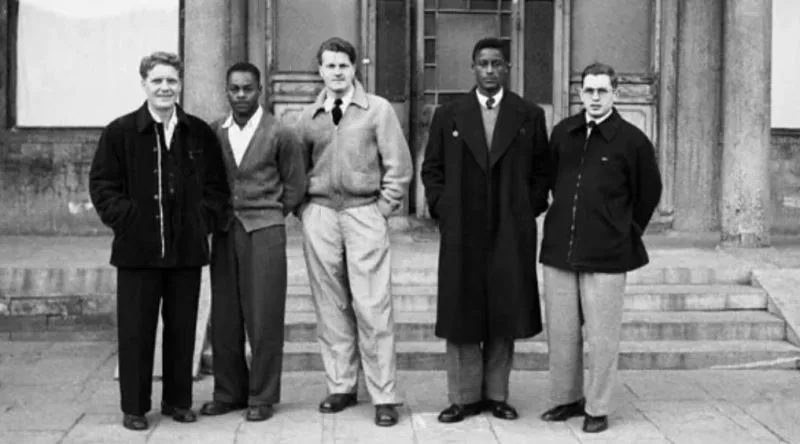
In 1953, 23 American Korean War POWs refused repatriation and chose to remain in China or North Korea, a decision that stunned the United States and ignited a national controversy. Their choice, made during the chaotic prisoner exchange at Panmunjom, raised painful questions about loyalty, ideology, and the psychological toll of captivity. The men who turned their backs on home became symbols of a war that refused to end cleanly, and their stories still resonate with anyone who has ever wondered what it means to choose a new country over the one that raised you.
After the Korean War armistice in 1953, 23 American prisoners of war declined repatriation during the exchange at Panmunjom, choosing instead to live in China or North Korea. Two of these men later changed their minds during the 90-day neutral zone period, but the remaining 21 stayed behind, becoming the focus of intense debate about coercion and free will.
- The prisoner exchange at Panmunjom began in August 1953 following the Korean War armistice signed in July of that year.
- A total of 23 American POWs initially refused repatriation, with 21 ultimately remaining in China or North Korea after the 90-day decision window closed.
- Two of the 23 changed their minds during the neutral zone period and returned to the United States.
- The defections occurred against the backdrop of the Cold War, with accusations of communist brainwashing dominating American headlines.
- The men who stayed were largely forgotten by the American public, though their families continued to press for answers for decades.
The 23 Who Said No: How the Korean War Created America's Most Uncomfortable POW Story
In September 1953, twenty-three American prisoners of war looked at the chance to go home and turned it down. These were men who had survived years of captivity in Korea, who had every reason to board a plane back to the United States, and who instead chose to stay behind. The decision stunned the nation and ignited a fierce debate among journalists, politicians, military officials, psychiatrists, and the soldiers themselves.
The Korean War ran from 1950 to 1953, with the United States fighting as a combatant alongside South Korean forces against North Korea and Chinese troops. When the armistice was finally signed on 27 July 1953, the fighting stopped, but a new kind of battle began at the negotiating table. Under the terms of the agreement, prisoners of war on both sides were given a choice about where they wanted to go. That choice, meant to be a formality, turned into one of the strangest episodes of the Cold War.
The armistice broke from earlier expectations about how POW exchanges should work. Contrary to what many assumed at the time, there was no 1947 Geneva Convention mandating the wholesale exchange of all prisoners. The actual rules, set by the 1949 Third Geneva Convention, required repatriation without delay, but the agreement in Korea went further by letting individual prisoners decide their own fates. That provision opened a door that nobody predicted anyone would walk through.
Some sources claim that around 47,000 Chinese and North Korean prisoners of war refused to return to their home countries, though this figure is not standard and commonly cited numbers are closer to 22,000. The exact total remains a matter of historical dispute. What is not in dispute is that American soldiers also made the same choice, and that is what made headlines around the world.
The twenty-three men were held for a 90-day explanation period in the neutral zone at Panmunjom, the truce village where the armistice was negotiated. During those three months, US officials pleaded with them, and letters arrived from their families begging them to come home. Only two of the twenty-three changed their minds and returned to the United States. The other twenty-one held firm.
90 Days at Panmunjom: Why Only Two Changed Their Minds
For up to 90 days, 23 American soldiers sat in the neutral zone at Panmunjom, caught between two worlds. The Korean War had ended in 1953, but these men refused to go home. Despite urgent pleas from US officials and heartbreaking letters from their families, only two of them reversed their decision.
Panmunjom, the tense village straddling the border between North and South Korea, became an unlikely waiting room. The soldiers were held there as negotiators figured out what to do with the Korean War POWs who refused repatriation. These weren't men who had been captured and were eager for freedom. They were choosing to stay.
The atmosphere in that neutral zone must have been electric with confusion. American officers arrived, one after another, trying to talk sense into their fellow countrymen. Mothers and fathers sent letters across the ocean, their words folded into envelopes that traveled thousands of miles. The soldiers read them, and then they made their choice anyway.
Only two men from the group of 23 agreed to return to the United States. The other 21 held firm.
So what explained this baffling behavior? The answer that dominated public discussion in 1953 was brainwashing. The term itself was new and frightening, a product of Cold War anxieties. Time and Newsweek both ran lengthy articles attempting to explain how American minds could be so thoroughly reprogrammed during captivity. Psychiatrists weighed in with theories about sensory deprivation and psychological pressure. Politicians demanded answers. The military scrambled for explanations.
What the articles often glossed over was a more uncomfortable possibility. Three of the 21 men who refused to return were Black. In 1953, racial segregation was still the law across much of the United States. Jim Crow ruled the South. The men who chose to stay in China, whatever their reasons, had lived through a version of America that promised them less than it promised their white comrades.
The 90 days stretched on, a strange limbo where soldiers who had once fought for their country now refused to accept its embrace. The letters kept coming. The officials kept talking. And one by one, the men kept shaking their heads.
Three Black Soldiers and the Race Factor That Changed the Debate
Of the 21 American soldiers who ultimately boarded a train for China instead of a plane for home, three were Black men. Their presence in that small group would crack the tidy "brainwashed" explanation wide open, forcing Americans to confront an uncomfortable question about what these men were actually choosing to leave behind.
The dominant narrative in 1953 was simple: communist captors had twisted these men's minds, and the only explanation for refusing repatriation was psychological damage. Time and Newsweek ran lengthy pieces attempting to dissect exactly how the brainwashing had worked. But the three Black soldiers complicated that story in ways the magazines couldn't easily explain.
One of those three Black soldiers, who returned to the United States in 1966, put it plainly. He said he went to China in 1953 because of racial discrimination in America. Not because of communist propaganda. Not because of torture or coercion. Because of what he experienced at home as a Black man in the segregated United States military and society.
His explanation resonated far beyond the small group of defectors. For many Black Americans watching the story unfold, the idea that a Black soldier might prefer an uncertain future in Mao's China over the daily humiliations of Jim Crow America wasn't delusion. It was logic. The nationwide debate over the Korean War POWs who refused repatriation suddenly had a racial dimension that white commentators struggled to address head-on.
The other two Black soldiers never returned, and their reasons went with them. But the testimony years later from the one who came back gave voice to something that had been hovering over the entire controversy since September 1953, when the 23 men first refused to come home. The brainwashing theory had always been a convenient explanation. The reality, at least for some of these men, was far more deliberate and far more damning about the country they were leaving.
From Farm to Embassy: The Fate of the 21 Who Went to China
The 21 Americans who chose China over home in September 1953 did not find a warm welcome waiting for them. Their first destination was a farm, where they were sent to work, far from any hero's reception or political stage they might have imagined during those tense weeks at Panmunjom.
Life on that collective farm proved to be nothing like the propaganda they had absorbed in captivity. According to the account, within a year and a half, three of them had had enough. They slipped away, made their way to Beijing, and took refuge at the British Embassy, a move that must have required considerable nerve and desperation in equal measure.
The exodus continued steadily after that first break, according to the same account. By 1958, seven more soldiers had left China behind, bringing the total who had departed to ten. The trickle became a pattern, and by 1966 only two of the original twenty-one remained in the country. Whatever had drawn them there, the reality of life in Mao's China had worn thin for most.
One of the twenty-one made his way back to the United States in 1965, per the account. Another, one of the three Black soldiers in the group, followed in 1966. That man later explained that racial discrimination in America had driven his decision to go to China in the first place, a confession that added a complicated layer to the whole saga.
As for the two who changed their minds during those 90 days in the neutral zone, their return was not treated as a homecoming. They were court-martialed on charges of desertion and collaboration, and one of them received a 20-year prison sentence. The Korean War POWs who refused repatriation faced consequences on both sides of the divide, and neither path offered the clean resolution the men might have hoped for when they first made their choices.
Frequently asked questions
What happened to the 23 American POWs who refused repatriation after the Korean War?
After the Korean War ended with the armistice signed on 27 July 1953, prisoners were given a 90-day explanation period at Panmunjom in the neutral zone. During that time, US officials pleaded with the men and families sent letters urging them to come home. Only two of the 23 ultimately reversed their decision and returned to American soil.
Why did some American POWs choose to stay in China instead of returning to the US?
The common explanation at the time was that the men had been brainwashed during their captivity, with Time and Newsweek publishing articles analyzing how that could happen. But for three of the 21 men who went to China, the motivation was different. One of them, who returned to the US in 1966, openly stated that racial discrimination in America was why he chose China back in 1953.
How did the US government respond to the POWs who refused repatriation?
The two men who changed their minds and returned faced military courts-martial on charges of desertion and collaboration. One of them received a 20-year prison sentence. The remaining 21 soldiers were not discharged but traveled together to China, where they were sent to work on a farm upon arrival.
Did any of the American POWs who stayed in China eventually return to the US?
Yes, several did, according to the account. Within about a year and a half, three of the men escaped and took refuge at the British Embassy in Beijing. By 1958, seven more had left China, and by 1966 only two of the original group remained there. One of the 21 returned to the US in 1965, and another followed in 1966.
What role did racial discrimination play in the decisions of Black American POWs?
For the three Black soldiers among the 21, race was central to their choice. All three went to China, and one of them later explained that the segregation and discrimination they faced in the US made them question what they were fighting for. Their presence in the group sparked nationwide debate about race and patriotism during that era. Editorial note: Any facts which remain unconfirmed are presented as such, and the motivations of the men involved are described only where they are supported by their own public statements or verified contemporary reporting.
Got a take on this? Add your voice to the conversation below →
No comments yet. Be the first.