Rilke's Love Life: Nietzsche, Lou Salomé and a Name Change
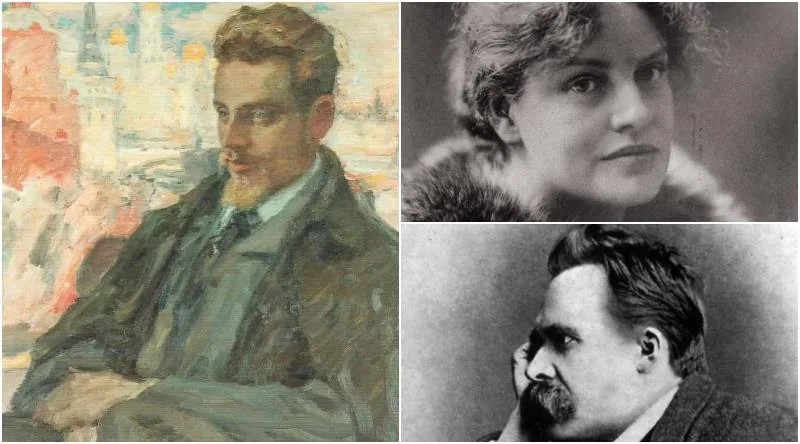
Rainer Maria Rilke's love life was reshaped when he met Lou Andreas-Salomé, the woman who had already turned down Friedrich Nietzsche. She renamed him, redirected his poetry, and set the pattern for a life in which intimacy and distance were never separate for long.
Rilke met Lou Andreas-Salomé, who became his lover, editor and lifelong confidante, and she persuaded him to adopt the name Rainer. Later came a sexless marriage to sculptor Clara Westhoff, a daughter, and a restlessness that shaped his work.
- Rilke grew up in Prague, and his mother raised him as a replacement for a daughter she had lost, giving him the feminine name René Maria.
- Lou Andreas-Salomé was a writer and psychoanalyst who had drawn Friedrich Nietzsche into her orbit in the 1880s.
- Rilke and Andreas-Salomé met in Munich and later traveled together to Russia, where they met Leo Tolstoy.
- She persuaded Rilke to change his first name from René to the more German-sounding Rainer, a change he kept for the rest of his life.
- Rilke married the sculptor Clara Westhoff; their daughter Ruth was born, and the marriage soon became largely a companionship.
A Boy Raised as a Replacement for a Dead Sister
Before Rainer Maria Rilke was born, his mother had already buried a daughter. The grief never lifted. It settled into the household like weather, and when the son arrived, she folded him into the space the girl had left behind.
She kept him close and gave him a name meant for a daughter: René Maria. Not Rainer. Not yet. The boy grew up carrying someone else's outline, a substitute for a child who no longer existed. Ralph Freedman's 1996 biography, Life of a Poet: Rainer Maria Rilke, lays out the details plainly, and they are as strange as they sound.
That split identity followed him to school, where it made him miserable. Children are merciless about difference, and Rilke had plenty of it. A boy raised as a girl's replacement, answering to a soft French name, learning early that his mother's love came with conditions he could never meet.
This is the wound at the center of Rainer Maria Rilke's love life. Not the poetry, not the letters, not the famous women. The wound. Everything that came after, the intense attachments, the retreats, the way he needed women to hold him together and then fled when they got too close, traces back to a nursery in Prague where a mother could not stop mourning.
Rilke spent his adult years searching for something he had never actually received: to be wanted as himself, not as a stand-in. It is a pattern that shows up again and again in the relationships that defined him, and it starts here, with a little boy named for a ghost.
Lou Andreas-Salomé: The Woman Nietzsche and Rilke Both Loved
Lou Andreas-Salomé was born in 1861. Rainer Maria Rilke was born in 1875. That gap of fourteen years matters, because the most dramatic claim about her and Rilke, that she juggled him and Friedrich Nietzsche at the same time, simply does not survive a look at the calendar.
The popular version goes like this: Salomé was involved with both men at once, both of them knew it, and the arrangement formed a "holy trinity" that collapsed when Nietzsche's jealousy got the better of him. It is a great story. It is also wrong. Salomé's entanglement with Nietzsche belongs to around 1882. Her involvement with Rilke falls roughly between 1897 and 1900. Fifteen years sit between those two chapters, and no version of her life has the philosopher and the poet sharing her at the same moment.
The phrase "holy trinity" was real, but it pointed somewhere else entirely. It described Salomé, Nietzsche, and Paul Rée, the trio that formed in 1882 and broke apart under exactly the jealous strain the legend describes. Rilke was seven years old when that happened.
So the contested triangle is a case of two separate love stories fused into one by retelling. What is not contested is the strange pull Salomé held over Rilke. He fell for the same woman who had once fascinated Nietzsche, and he never really climbed out of it.
By the late 1890s Rilke was a young poet hungry for a mentor, and Salomé was in her mid-thirties, married since 1887 to the philologist Carl Andreas. That marriage came with two unusual conditions: it would be sexless and childless, and both partners were free to take other lovers. Rilke walked straight into that freedom. Their years together were passionate, and they reshaped him. She even talked him out of "René," which she found too French and too soft, and into "Rainer," a name with a harder German ring. Around 1897, he took it.
A Marriage With Two Conditions: No Sex, No Children
Lou Andreas-Salomé did not marry Rainer Maria Rilke. In 1887 she married the philologist Carl Andreas, and their union came with two conditions attached: it would be sexless and childless, and both partners were free to take other lovers. Biographers Angela Livingstone and H.F. Peters both document the arrangement, which sounds like a thought experiment until you remember a real woman signed it.
She signed it, and then she kept seeing Rilke. Their affair burned on through the late 1890s, passionate and unapologetic, all of it technically permitted by the terms of her marriage. Whatever Carl Andreas thought of the poet who trailed his wife across Europe, the contract said he had no standing to object.
Then came the small intervention that outlived everything else. Salomé told Rilke that "René" sounded too French, too soft, too feminine for the poet she believed he could become. She proposed "Rainer" instead: harder, more German, more like a man who intended to matter. He accepted. Around 1897 he began publishing as Rainer Maria Rilke, and the name stuck so completely that the boy his mother had named René Maria effectively vanished from the record.
It is worth pausing on the irony. His mother had chosen that feminine name for him in the first place, as a replacement for the daughter she had lost. Now a lover handed him a new one, and this time he took it on purpose.
That is the shape of the Rainer Maria Rilke love life in its defining years: a man who entered adulthood as someone else's replacement, and who let a married woman with a very unusual contract tell him who he was going to be.
The Tolstoy Dream That Went Wrong
Of all the things Rainer Maria Rilke and Lou Andreas-Salomé chased together, meeting Leo Tolstoy was the one they wanted most. By the time they traveled through Russia, the author of War and Peace was in his seventies and carried a reputation for being surly, short-tempered, and not especially fond of visitors. None of that cooled their ambition. If anything, it sharpened it.
Salomé pushed hardest. She leaned on her well-placed Russian friends to arrange an invitation, and eventually the great man agreed to have them over for tea. What followed, according to the original account, was not the warm audience of their imagination. The story goes that Tolstoy scolded Salomé, and that his son threw the pair out of the house. Treat that scene as reported rather than settled history, since the surviving record does not firmly confirm the scolding or the ejection. What we do know is that Rilke and Salomé genuinely met Tolstoy in Russia, and that the encounters were awkward.
They got another chance later. Poetry came up in the conversation, and Tolstoy reportedly dismissed it as a barren art form. For Rilke, who had staked his whole existence on verse, that remark was reportedly a deep disappointment. Again, the exact words are the stuff of anecdote, not documented fact.
So the idol meeting failed. The man they had crossed a continent to sit with turned out to be exactly as difficult as everyone warned. And yet Rilke kept the trip, and the woman who dragged him there, close for the rest of his life.
Clara Westhoff, a Daughter, and a Lifelong Dependence
Rainer Maria Rilke married the sculptor Clara Westhoff, a woman whose intelligence and talent he admired before anything else. What he never gave her, by the account that has come down to us, was love. The two had a daughter, Ruth, and Rilke proved to be a father in name only: absent, emotionally distant, wrapped up in his own interior weather while his child grew up elsewhere. Biographers stop short of calling him loveless, but the record of his fatherhood is thin and cold.
His heart, meanwhile, stayed where it had been for years. Lou Andreas-Salomé was fourteen years his senior, born in 1861 to his 1875, and he loved her for the rest of his life. When the writing stalled, when he sank into the fear that his own inner emptiness would simply swallow him whole, he called on Lou. Every time. And she came, sat with him, took his hand, and walked him back toward the light.
It is not a model anyone would approve of. A wife, a child, and a lifelong pull toward another woman who had already refused to be his alone. Yet the article closes on something worth conceding: these two nourished each other. They expanded each other's minds, pushed each other toward work that neither might have reached alone. Whatever it was, it fed them both.
"I am still soft, I could be like wax in your hands. Take me, shape me, and complete me."
Frequently asked questions
Who was Lou Andreas-Salomé, and why was she so important to Rilke?
Lou Andreas-Salomé was born in 1861, fourteen years before Rainer Maria Rilke, and became the great confidante of his adult life. She was a writer and thinker who drew some of the sharpest minds of her era. For Rilke, she was a rescuer: whenever he fell into creative silence or feared his own inner emptiness, he called on her, and she came.
Why did Rilke's mother raise him as a girl named René Maria?
Before Rilke was born, his mother lost a daughter and mourned her for a long time. Biographies confirm she treated her new son as a replacement for that lost girl, giving him the feminine name René Maria and keeping him close. He grew up inside that fractured identity, and it hurt him badly at school.
Was there really a "holy trinity" between Nietzsche, Rilke and Salomé?
No. The popular version of the story is wrong. Salomé's involvement with Friedrich Nietzsche dates to 1882, and her affair with Rilke ran from roughly 1897 to 1900, about fifteen years apart and never simultaneous. The actual "holy trinity" was Salomé, Nietzsche and the philosopher Paul Rée.
Why did Salomé marry Carl Andreas in a sexless, childless marriage?
In 1887 Salomé married the philologist Carl Andreas on two firm conditions: the marriage would stay sexless and produce no children, and both partners kept the freedom to take other lovers. Biographers treat this arrangement as settled fact. She continued her passionate relationship with Rilke within it.
How did Salomé persuade Rilke to change his name to Rainer?
She told him that "René" sounded too French and too soft, and suggested the stronger, more German-sounding "Rainer" instead. He agreed, adopting the name around 1897. A friend later wrote to him that his name, Rainer Maria Rilke, was itself a poem.
What happened when Rilke and Salomé tried to meet Tolstoy?
They did meet Leo Tolstoy in Russia, and the encounters were awkward. As the original account has it, Salomé pushed hard for the introduction and used influential Russian friends to arrange it, but Tolstoy reportedly scolded her and his son threw the pair out of the house. The specific details of that scolding and ejection cannot be reliably confirmed.
Did Rilke love his wife Clara Westhoff and their daughter?
Rilke married the sculptor Clara Westhoff, drawn to her intelligence and talent, and they had a daughter named Ruth. He was largely absent from both their lives and emotionally distant as a father, a pattern his biographers document plainly. His enduring attachment stayed with Salomé, not with the family he left behind. Editorial note: Details that remain unconfirmed by reliable accounts are presented here as such, and any point of dispute is flagged rather than settled.
Got a take on this? Add your voice to the conversation below →
No comments yet. Be the first.