Ramon Llull's Ars Magna: The Medieval Truth Machine
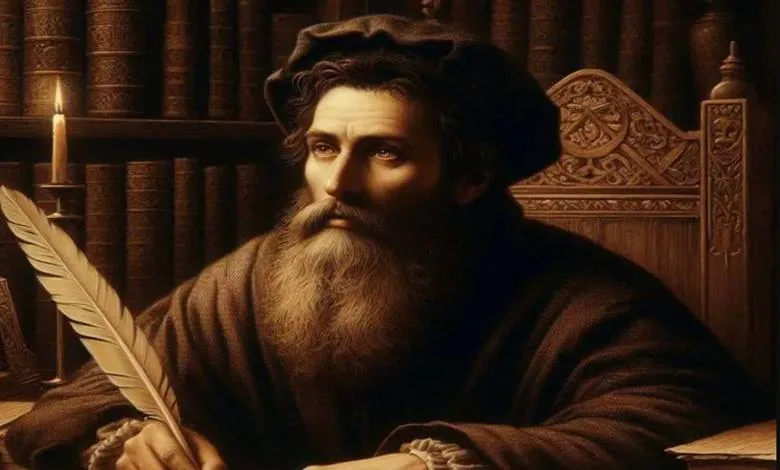
Ramon Llull built his Ars Magna in the late 1200s on the island of Majorca, a system of rotating discs meant to generate every true statement a person could ever need. He wanted a machine for truth, one that would not argue or plead but simply produce undeniable conclusions. The discs turned, the letters lined up, and Llull believed the result was not just a tool for debate but a way to demonstrate religious truth through reason. It never quite worked the way he hoped, yet the idea refused to die.
Ramon Llull, working in Majorca in the 13th century, devised the Ars Magna, using rotating figures of letters to generate combinations of concepts. He claimed it could demonstrate religious truth mechanically. The system did not achieve that goal, but it helped inspire later work on logic, computation, and a universal language of reason.
- Ramon Llull lived from 1232 to 1315 and spent most of his life on Majorca, today Palma, Spain.
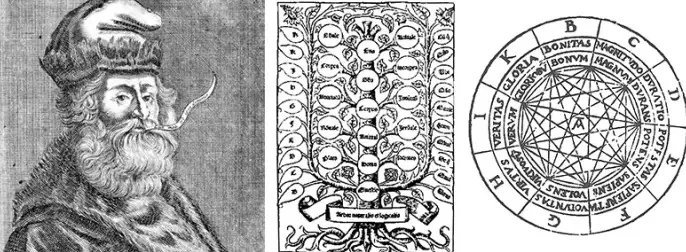
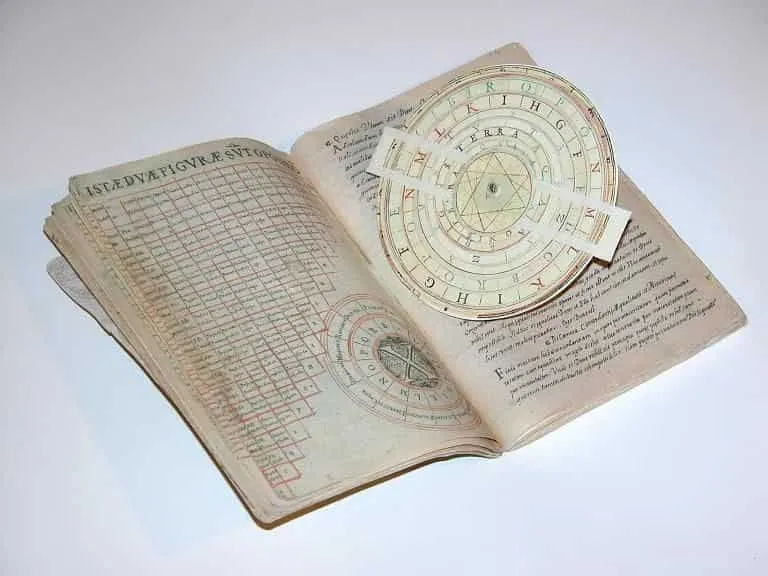
- The Ars Magna used rotating concentric figures marked with letters representing divine attributes, and the user turned them to produce combinations.
- Llull presented the system as a way to persuade non-Christians through rational demonstration.
- His work influenced later thinkers, including Gottfried Wilhelm Leibniz, who admired the combinatorial method.
- The quest for a mechanical truth machine continued through George Boole's algebra in 1854 and Claude Shannon's circuit design.
The Dream of a Language That Could Settle Arguments
For centuries, people have chased a stubborn hope: build a better language, and truth itself will become easier to see. Get the words right, the thinking goes, and we would no longer have to leave disagreements to personal opinion. We could simply show which conclusion is correct.
One of the oldest attempts at this came from Aristotle, in a work known as the Prior Analytics. He built a system of reasoning that draws necessary conclusions from premises accepted as true. If you accept that Socrates is a man, and that all men are mortal, then Socrates is mortal. That is the textbook illustration, and it is a later teaching example rather than Aristotle's own wording, but it captures the machinery perfectly.
Logicians call this a syllogism. Strip away the jargon and it is something you already do. If it rains, I need an umbrella. It is raining. Therefore I need an umbrella. Two pieces of information, one inescapable result.
Here is the catch, and it is the catch that drives everything that follows. Syllogistic reasoning is powerful in simple cases, but it is not rich or flexible enough to express the whole of human thought. Some ideas demand richer symbols, looser rules, a stronger language. So the hunt continued.
That hunt is where Ramon Llull enters the story.
Ramon Llull's Ars Magna: A Medieval Truth Machine
Ramon Llull was born on Majorca around 1232 and died in 1315, and the island where he spent most of his life is today Palma, Spain. He was not content to write another treatise on logic. Llull wanted a machine for truth, a system that could demonstrate correct conclusions mechanically instead of leaving them to human intuition. He built that ambition into a body of work known as the Ars Magna, the Great Art.
Picture what he was actually reaching for. In a sense, Llull imagined an early chatbot: a mechanical missionary that could be shipped to the farthest corners of the world and set down in front of people who did not share his faith. It would not argue or plead. It would simply produce undeniable truths about the universe, one combination at a time, until no honest mind could refuse them.
But here is where the story gets tricky. According to one traditional account, Llull identified sixteen fundamental divine attributes, among them competence, justice, power and wisdom. He then gave each attribute a letter and arranged those letters around rotating concentric figures, often described as three discs, so that turning them brought fresh letter-and-attribute pairings side by side. It is a lovely picture, and it is also up for debate. Llull's systems typically work with sets of nine attributes, and a canonical list of sixteen cannot be reliably confirmed. That neat three-disc setup probably came later; we cannot say for sure Llull built it that way.
What we do know is the world of ideas he lived in. Llull's Majorca sat at a crossroads of Christian, Jewish and Muslim thought, and scholars have long debated whether his combinatorial wheels owe something to the zairja, a device Muslim astrologers used in divination. The zairja worked much the way Llull's art did: letters were placed around a wheel and recombined by rule to answer questions or generate new ideas. Whether Llull borrowed the technique directly, absorbed it secondhand, or arrived at something similar on his own remains an open question rather than a settled fact.
So the Ars Magna was not a strange medieval one-off that appeared from nowhere. It belongs to a much older, much wider human habit of trying to organize thought itself into symbols and then manipulate those symbols by rule. Llull's version did not turn into a mass persuasion machine in his own lifetime. But the idea behind it would not die. Break thought into symbols, combine them by rules, and read the results, and that is exactly what later European thinkers kept doing, with far better tools.
Leibniz: "Let Us Calculate, Let Us See Who Is Right"
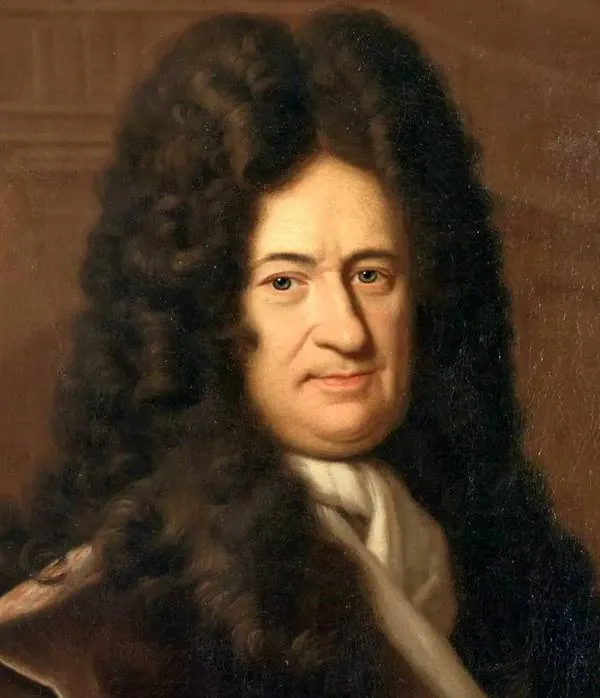
Gottfried Wilhelm Leibniz, born in 1646 and dead in 1716, read the Ramon Llull Ars Magna and felt the tug of a kindred project. He loved the ambition. The execution? Not so much. To Leibniz, Llull's system was incomplete, and its starting concepts felt arbitrary, like one man's guess about where thought begins.
So Leibniz pushed the question back a step. Before any machine could run logic, he argued, someone had to find the alphabet of human thought: the simplest units from which every complex idea is assembled. Find those units, put them into a universal language that mirrors how our thoughts connect, and everything else becomes mechanical. His dream went beyond math, into philosophy, politics, medicine, physics. He believed reasoning about anything could become as clear and concrete as a mathematician's work.
Imagine the payoff. Two people locked in a dispute would not argue endlessly. They would feed the question to the logic machine and settle it with his famous phrase: "Let us calculate, let us see who is right."
That confidence had roots. Leibniz shared the rationalist conviction of René Descartes, whose Discourse on Method appeared in 1637 and held that clear and distinct ideas grasped by reason yield certain truth. Not everyone took Leibniz seriously. Criticism did not stop the desire to make thought calculable.
Boole's 1854 Laws of Thought: Logic Becomes Algebra
George Boole was an English mathematician, and from the time he was a young man he kept circling one stubborn question: how does the human mind actually gather knowledge? That curiosity put him in a very old line of thinkers. Like Ramon Llull with his Ars Magna, and like Gottfried Wilhelm Leibniz after him, Boole wanted a language sharp enough to settle arguments, a language that could compute truth with the certainty of arithmetic.
In 1854 he published An Investigation of the Laws of Thought, and inside it he built something genuinely new. The foundation was almost embarrassingly plain. Every proposition came down to a simple criterion: yes or no, true or false. Two values, nothing in between.
What Boole then did with that plain idea is the part that still feels like a magic trick. He showed that the logical propositions people had been using since Aristotle could be rewritten as mathematical equations. Take "All men are mortal." Under Boole's treatment it stops being a sentence you nod along to and becomes a structure you can express in symbols, manipulate, and combine with other structures. Reasoning turned into algebra.
And then, for years, almost nothing happened.
Boolean logic found no practical use. It sat in philosophy departments like an abstract idea gathering dust, admired by a few, used by fewer. The man who wanted to compute truth had handed the world a tool nobody could yet plug into anything.
Boole's 1854 book gave logic a binary skeleton: true or false, one or zero. For decades that skeleton had no body to move.
Shannon's Master's Thesis: Boolean Logic Becomes Circuits
In the 1930s, George Boole's strange algebra of true and false was sitting mostly untouched in philosophy departments, an abstract curiosity with no obvious job. Then a young man who loved puzzles picked it up. Claude Shannon, an undergraduate at the University of Michigan, was drawn to symbolic logic the way other students were drawn to chess. He sensed there was real power buried in it. He would prove that at MIT.
Shannon's master's thesis did something no one had quite done before: it showed that Boolean logic could make the routing of switches in telephone exchanges more efficient. The relays in those exchanges were physical things, opening and closing, and Shannon saw that their open-or-closed states mapped perfectly onto Boole's true-or-false values. That single insight handed engineers a way to design electrical circuits capable of computation and control.
Think about what changed in that moment. Boole's binary logic, the yes-or-no, one-or-zero scheme, stopped being a philosopher's game and became the digital language of machines. The structure underneath today's computers, the internet, and the whole digital world traces back to this thesis. It is one of the most consequential pieces of student work ever written.
Shannon lived from 1916 to 2001. He went on to found information theory, and the title father of information theory stuck. The boy who loved puzzles had wired an old abstract logic into the machines we now carry in our pockets.
What the Long Quest Actually Teaches
In the 13th century, Ramon Llull wanted a machine that would end human uncertainty. Seven hundred years later, we have built something stranger: systems that automate uncertainty rather than certainty. Machines generate answers by the billion, yet the question of whether any given answer is actually true still lands on a human desk.
That reversal is the real lesson hiding inside the Ramon Llull Ars Magna story. The certain truth about the universe was probably never tucked inside his rotating wheels, or Leibniz's universal language, or Boole's true/false algebra. Each of those men thought he was closing in on a final key. Each one handed the next generation a better tool and a longer list of open questions.
What the centuries actually produced was not a truth machine but a sharper understanding of what a machine can and cannot do. A working mechanism is never enough on its own. We also have to know how we built it, which assumptions feed it, and why its results deserve our trust. Skip any of those three steps and the output looks authoritative while being hollow.
Science, read honestly, is strong for exactly this reason. It does not claim absolute certainty. It works by reducing errors and testing knowledge again and again, which is a far humbler and far more durable promise than any wheel of letters ever made. Llull asked for a device that would settle arguments. What we got instead was a method that keeps arguments alive, and that turns out to be the better gift.
Frequently asked questions
What was Ramon Llull's Ars Magna and how did it work?
Ramon Llull (1232, 1315), working in Majorca in the 13th century, built the Ars Magna: a combinatorial system that assigned letters to fundamental concepts and arranged them on rotating concentric figures. As the figures turned, letters and the ideas they stood for fell into new combinations, generating fresh statements and conclusions.
Why did Ramon Llull build rotating discs to prove religious truth?
Llull wanted a mechanical missionary. His aim was a device that could be sent anywhere in the world and persuade non-believers with undeniable truths, not human intuition. The rotating figures were meant to work like a machine for producing correct answers about God and faith, which is why he trusted a regular logical mechanism over personal insight.
Was Ramon Llull's Ars Magna inspired by the Islamic zairja?
As the story goes, Llull may have been influenced by the zairja, a combinatorial device used by Muslim astrologers who placed letters around a wheel and recombined them to answer questions. Scholars have debated this possible link for a long time. It is a reported influence, not an established fact.
How did George Boole's Laws of Thought change logic in 1854?
In 1854 the English mathematician George Boole published The Laws of Thought , where he turned logical propositions into mathematical equations operating on a simple binary basis: yes or no, true or false. Statements that had been the property of philosophers for centuries suddenly became structures you could express and manipulate with symbols.
How did Claude Shannon connect Boolean logic to electrical circuits?
Claude Shannon (1916, 2001), known as the father of information theory, first met Boolean algebra as an undergraduate at the University of Michigan. In his master's thesis at MIT he showed how Boolean logic could streamline the routing of switches in telephone exchanges, proving that electrical circuits could compute and control. That insight became the foundation of modern computers.
What did Leibniz mean by "let us calculate" to settle disputes?
Gottfried Wilhelm Leibniz (1646, 1716) admired Llull's Ars Magna but found its basic concepts too arbitrary. He dreamed of a universal language of human thought, one where reasoning would be as clear and concrete as a mathematician's operations. When people disagreed, they would simply calculate and see who was right.
Why is science better at reducing errors than proving absolute certainty?
Science is strong not because it claims certainty but because it is a method of continuous testing, one that keeps checking and correcting knowledge. The old dream was a machine that would hand us final truth. The lesson of that long quest is that a working mechanism is never enough on its own.
Who first tried to turn reasoning into a mechanical system?
Aristotle was first, building a system of reasoning that derives necessary conclusions from premises accepted as true, the syllogism. Ramon Llull came much later, in the 13th century, with his Ars Magna, an early attempt at a mechanical device for reasoning. Leibniz, Boole and Shannon carried the same ambition forward. Editorial note: Details about Llull's life and the exact mechanics of his discs vary across accounts, and any points that remain unconfirmed are presented here as such.
Got a take on this? Add your voice to the conversation below →
No comments yet. Be the first.