Loki Season 2: The Yggdrasil Finale Explained
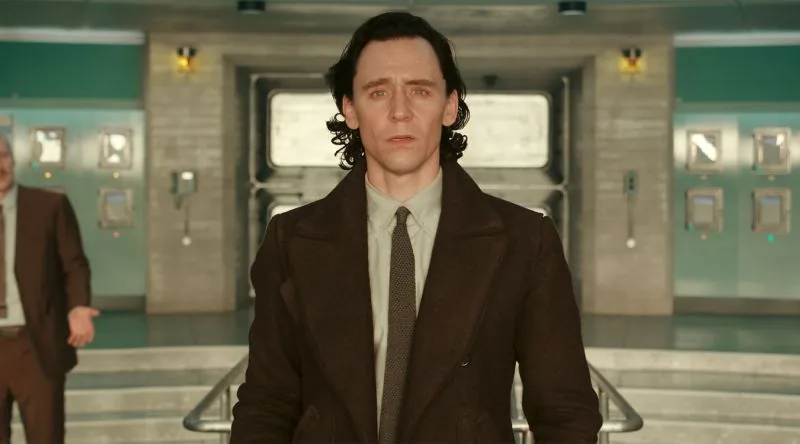
Loki season 2 wrapped its six-episode run on Disney+ in late 2023, ending with Loki sacrificing his freedom to hold the branching timelines together at the center of a Yggdrasil-like tree. The finale closed the loop on a character who spent over a decade as Marvel's god of mischief and turned him into something closer to a god of stories. It is a quiet, dialogue-heavy ending, and that is exactly what makes it land.
In the Loki season 2 finale, Loki takes the place of He Who Remains by grasping the dying branches of the multiverse and weaving them into a tree at the end of time. He sits alone at its center, holding every timeline in place, as his friends carry on without him.
- Loki season 2 ran for six episodes, concluding with a finale that closed the character's journey.
- The season followed Loki and the TVA as they tried to manage the branching timelines spinning out of control.
- Ke Huy Quan joined the cast as Ouroboros, the TVA's repair specialist, working alongside Tom Hiddleston and Owen Wilson.
- In the finale, Loki takes his place at the center of the multiverse, replacing He Who Remains.
- The closing image shows the branched timelines as a tree, with Loki seated alone at its heart, holding them together.
Loki Season 2: The Marvel Finale That Finally Felt Like Marvel Again
Tom Hiddleston first stepped into Loki's boots in 2011's Thor, and fourteen years later that same actor carried a six-episode second season across the finish line. Loki season 2 arrived after a two-year hiatus, following a first season that debuted in 2021, and for a lot of longtime fans it did something the surrounding Marvel output had stopped doing: it felt worth the wait.
Think about the stretch after Avengers: Endgame. A handful of shows and films landed, sure, but most of them left viewers shrugging. The post-Endgame era has been a slog more often than a thrill, and that is exactly the context that makes this season stand out. When the finale dropped, the reaction among fans was less "that was fine" and more "there it is again." The quality we had been missing showed up in six episodes and then closed the door behind it.
The season picks up precisely where season 1 left off. If you need the refresher: Sylvie kills He Who Remains in that first-season finale, and the moment she does, the alternate timelines break loose. That single act is the engine under everything that follows.
What nobody expected was the show's response to its own cliffhanger. With more timelines to manage, the obvious move would have been more punching, more set pieces, more noise. Instead, Loki season 2 slows down and talks. The dialogue carries the weight, and for a character still serving time for old crimes, that choice lands. Every exchange means something. You watch the transformation happen in conversation rather than in combat, and after fourteen years of knowing this character, that intimacy hits harder than any fight could.
That quality spills over onto the people around him. Owen Wilson's Mobius gets a scene with Loki that stops you cold, where he admits he does not want to know what kind of life he had, because what if it was a good one? The fear in that line, the way it sits with him as the finale approaches, tells you exactly how much is at stake for a man who has spent his whole existence processing other people's time.
Where Season 1 Left Off: Sylvie, He Who Remains, and the Broken Timeline
Loki season 2 opens on a mess that one woman made with a single blade. At the end of the 2021 first season, Loki and Sylvie stepped past the Void to find out who was really running the Time Variance Authority. The answer was not the Time-Keepers, those three robed figures the TVA had been selling as gods. The answer was a man.
He Who Remains was sitting at the end of time, and he was a Kang variant. He had already fought and beaten the other Kangs scattered across the multiverse. He warned that letting the branches grow would fill the multiverse with worse versions of himself, and that the ones who came after him would not be interested in a quiet retirement.
Sylvie killed him anyway.
She had spent her whole life running from the TVA, and she wanted the man behind it gone. The moment the blade went in, the timeline split open. Branches poured out in every direction, uncounted and unmanaged, and the Sacred Timeline stopped being sacred. Every one of those branches is a Kang waiting to happen, and that is the problem Loki season 2 has to solve.
The finale of season 1 left the TVA in chaos. Nobody inside the building knew that a variant had killed the man in charge, and nobody knew the branches were loose. Loki came back to a headquarters that looked familiar and belonged to someone else.
So when the second season picks up, it does not reboot or jump ahead. It continues from that exact fracture. Loki has to explain to a room full of bureaucrats what really happened, while his own body keeps slipping through time against his will, and somewhere out past the branches, the Kangs he just helped unleash are already waking up.
Time Slipping, Ouroboros, and a Season Built on Dialogue
Loki season 2 opens exactly where the first season stopped, and within minutes Tom Hiddleston's Loki is yanked backward and forward through time without warning. He calls it time slipping. To everyone standing in the TVA, it looks like their suspect is glitching out of existence mid-sentence.
Picture the scene. He keeps trying to explain what happened at the End of Time, and the room keeps resetting around him. One moment he is mid-accusation, the next he is somewhere else entirely, watching a conversation he already had play out again. Explaining your own crisis to people who keep forgetting you are in the room is a special kind of nightmare, and the show leans into it.
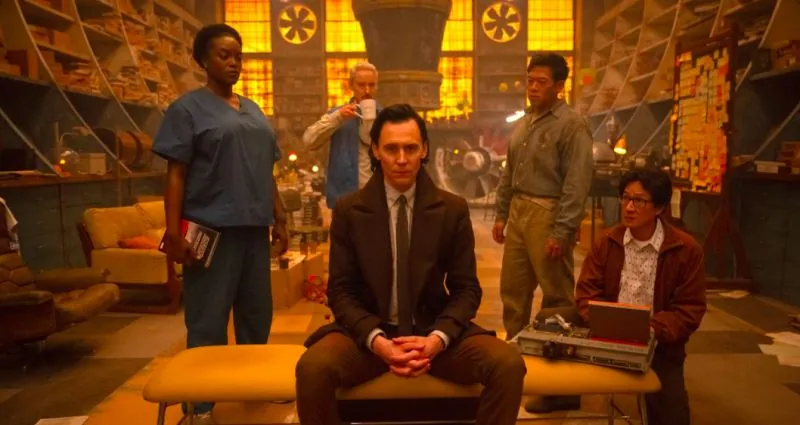
His rescue arrives in the form of Ouroboros, played by Ke Huy Quan. If the name rings a bell, it should: Quan is an Oscar-winning actor, and here he swaps the multiverse goggles of Everything Everywhere All at Once for a TVA jumpsuit. His character, usually just called O.B., has been at the TVA since the day it was founded. He does not chase variants. He fixes the machinery. Every broken door, every jammed temporal device, every problem inside the TVA's walls eventually lands on his workbench.
Why the season talks more than it fights
Here is the choice that surprised people. Going into season 2, most viewers expected the action dial to crank upward. Instead it went the other way. Fewer punch-ups, longer conversations, and scenes that live or die on what two characters say to each other across a desk.
For a character still serving time, metaphorically, for the crimes of his past, that was the right call. Empty banter would have wasted him. What we get instead is dialogue where every word carries weight, and you can feel Loki changing in real time. Fourteen years after his debut in 2011's Thor, that accumulation of small moments is what finally makes him feel like someone worth rooting for.
And the good writing does not stop at Loki. Owen Wilson's Mobius gets his own mirror held up to him. In one exchange with Loki, he admits he does not want to know whether he had a good life, because what if it turns out he did? That single line tells you everything about the man's fear, and it makes his path toward the finale genuinely uncertain.
The snake that eats itself
The season's theme is a loop, and the show wears it openly. Victor Timely and Ouroboros build their work on each other without ever having met. Loki lives the same moments over and over, chasing a different result each pass. The name Ouroboros itself means "a snake eating its own tail," an ancient symbol of a thing that endlessly consumes and renews itself. Once you know that, the whole season reads differently.
Season 2 runs six episodes, and it premiered after roughly a two-year hiatus from the 2021 first season. That gap gave the writers room to slow down. The result is a season that trusts its audience to sit still and listen.
Victor Timely, Sylvie's Rage, and the One Character Who Doesn't Grow
Picture a Chicago street at the turn of the century, and a man in a rumpled suit who has no idea he's the most wanted person in the multiverse. That's Victor Timely, a Kang variant, and he becomes the season's tug-of-war prize. Miss Minutes and Ravonna Renslayer reach him. Loki and Mobius are racing to reach him too. Then Sylvie crashes in, and the whole thing turns into a fight.
Sylvie's position is blunt: she'll kill every Kang there is, and she says so while going straight for Timely. Loki plants himself between them to protect the man. For a reviewer who spent the season praising the show's writing, this was one of the few genuinely frustrating stretches. She says she will kill every Kang there is, and that single line is the whole character. It never really moves past that.
Here's the thing that nags. Every other character in Loki season 2 bends and changes. Loki does. Mobius does. Even Ouroboros, who has been at the TVA since its founding, carries weight the plot didn't have before. Sylvie stays exactly where season 1 left her. She doesn't grow past her old self. She keeps her selfish streak intact, and in her scenes with Loki she dumps the whole burden of what happened onto his shoulders. That's the part that gets under a viewer's skin.
And yet the season's real theme is a loop, so maybe that stasis is the point. Victor Timely and Ouroboros inspire each other's work without ever meeting face to face. Loki keeps living the same moments over and over, trying for a different result each time. The name Ouroboros means "a snake eating its own tail," and that image pretty much summarizes everything the season is doing.
The Finale: Loki Becomes the New He Who Remains at the Center of Yggdrasil
As Loki season 2 moves through its last episodes, something shifts in the air. Every conversation Tom Hiddleston's Loki has starts to feel like a goodbye, like the show is quietly telling us the story is closing. And then the finale does something remarkable: it turns the god of mischief into the god of stories, seated at the center of everything.
Watch what he does with Kang. In scene after scene, Loki runs the same conversation again and again, hundreds of times, maybe thousands, and nothing changes. He tries every angle he can think of, and the result stays the same. There is no clever trick left, no shortcut, no lie that saves him. That is the trap the season built for him from the start.
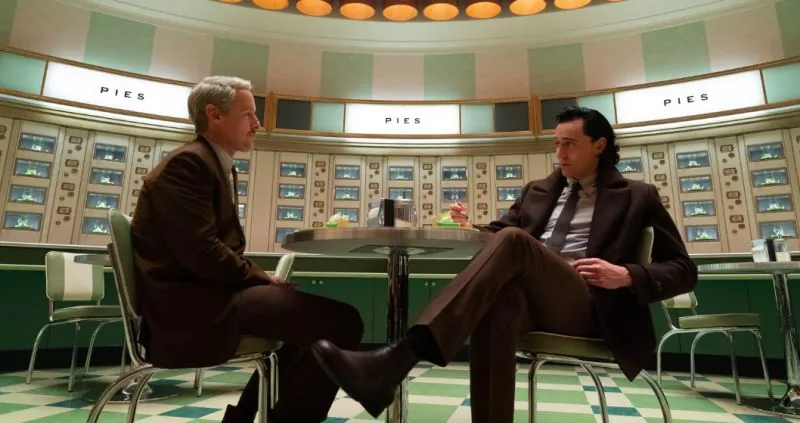
So he does the one thing he has never done before. He travels back to the moment he first met Mobius, to Owen Wilson's tired TVA agent, and sits with him for what amounts to a farewell. It is not a strategy session. It is two friends, one of them already gone in his heart. And it is Mobius who hands him the key. Purpose, Mobius tells him, is a burden more than a glory, and you do not want to be the man who runs from that weight just because he cannot carry it.
That line lands like a hammer, because Loki has spent his whole existence chasing "glorious purpose" as a boast. Now he understands it as a job. He even repeats words from a conversation with Odin in the first Thor film, and the echo is unmistakable for anyone who has followed this character since 2011.
Then comes the image the whole season was building toward. Yggdrasil, the tree that Norse myth says connects the nine realms, becomes the metaphor made literal. The timeline branches are splitting apart, dying, and Loki gathers them in his hands and binds them together, then walks to the center and takes his place. The god of mischief is gone. In his seat stands the new He Who Remains, holding the broken pieces of time the way a trunk holds its limbs.
It is a quiet ending for a loud character, and it earns every second of it.
Performances, Craft, and the Question of What Comes Next
Tom Hiddleston has carried this character since 2011, when he first played Loki in Thor, and his work in Loki season 2 is the highest point of that long run. The performance grows season by season, and here it finally blooms. Watching him sit inside the quiet, dialogue-heavy scenes is what makes the finale land the way it does.
Owen Wilson deserves the same praise for Mobius. A senior official who keeps the flow of time in order could have been a boring desk job of a role, but Wilson never misses a beat, and even in the character's biggest moments he stays fused with the man he is playing. One line in particular, a confession that he doesn't want to know what kind of life he had in case it turns out to be a good one, shows the dilemma and the fear underneath the bureaucratic calm.
Visually and technically the show holds the line it set in season 1. No obvious flaws, no wobble in the effects or the art design, and the music chosen for each scene lifts the moment without ever puncturing its seriousness. In a season that leans so hard on conversation, that restraint matters.
The talk around a continuation is where things get murky. Some reports have suggested the writers floated the idea of a spin-off, though nothing reliable confirms it. If such a project ever happens, a side story led by Mobius is one possibility worth imagining. What is not settled at all is whether this is officially the last season; no confirmation has come from Marvel or Disney, even though the story itself closes like an ending.
Rumors keep circulating that Loki will have an important role in Secret Wars, a claim reported widely in entertainment media but never confirmed. My honest hope is that it doesn't happen. A journey that finished this cleanly is better left at its own taste, and sometimes walking away at the right moment is the best choice there is.
Frequently asked questions
What happens to Loki at the end of season 2?
In the Loki season 2 finale, Tom Hiddleston's Loki walks out into the collapsing branches of time and takes the throne at the center of existence, holding the splintering timelines together with his own hands. The trickster god becomes the one who remains, and his old title gives way to a new one: god of stories.
Who is Ouroboros in Loki season 2?
Ouroboros is the TVA's longtime repairman, played by Oscar-winning actor Ke Huy Quan, who joined the cast for the second season. He has worked inside the TVA since its founding, and his job is fixing whatever breaks under its roof, from malfunctioning devices to problems no one else can name.
Why does Loki become the new He Who Remains?
After Sylvie kills He Who Remains in the season 1 finale, the branches of time run loose and threaten to destroy each other. In the finale, Loki chooses to bind those branches together himself, taking the place once held by He Who Remains so the timelines can survive.
How does Loki season 2 connect to the Yggdrasil tree?
The finale uses the image of Yggdrasil, the world tree that Norse mythology describes as connecting the nine realms. Loki gathers the broken branches of time and sits at their center, turning the dying timelines into a single living tree with himself as its heart.
Was Loki season 2 the final season of the series?
Marvel and Disney have not officially confirmed whether this is the final season, even though the story closes like an ending. Talk of a possible spin-off has circulated, and a side story led by Mobius has been floated as one idea.
What is time slipping in Loki season 2?
Time slipping is the condition that pulls Loki uncontrollably between moments in time, a problem he spends the early episodes trying to solve. It drags him backward and forward through the TVA's history and sets the season's central mystery in motion.
Did Loki season 2 set up Secret Wars?
Rumors have circulated that Loki will play an important role in the Secret Wars film, though nothing has been confirmed. Within the story itself, the finale closes Loki's journey on its own terms, leaving his future in the wider MCU open to speculation. Editorial note: Any details that remain unconfirmed, including future Marvel appearances tied to this ending, are presented here as speculation rather than fact.
Got a take on this? Add your voice to the conversation below →
No comments yet. Be the first.