Prime Numbers: 20,000 Years to a 41-Million-Digit Record
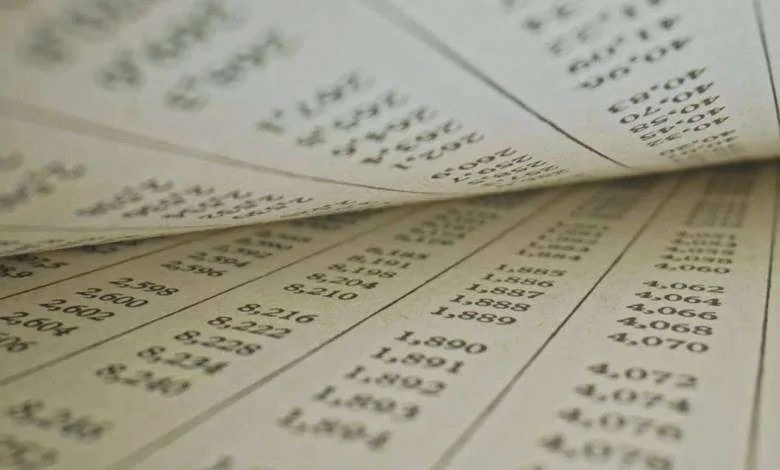
Prime numbers, those whole numbers greater than 1 that divide evenly only by 1 and themselves, have fascinated humans for roughly 20,000 years. In October 2024 a volunteer computing project announced the largest known one yet, a Mersenne prime with more than 41 million digits. The story starts with a baboon bone carved in central Africa long before writing existed. It runs through Euclid in ancient Greece, who proved the primes never end. Today the same numbers quietly guard your bank login and your private messages.
Prime numbers are whole numbers greater than 1 that divide evenly only by 1 and themselves. People have tracked them for about 20,000 years, from the Ishango bone in central Africa to Euclid's proof that they never end. In October 2024, a volunteer project called GIMPS announced a 41-million-digit prime, the largest known.
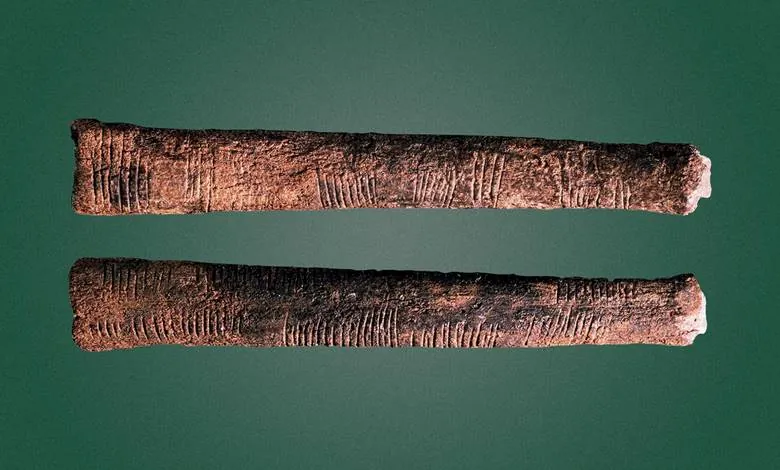
- The Ishango bone, found near Lake Edward in central Africa and dated to roughly 20,000 years ago, carries tally marks that some researchers read as early prime number work.
- Around 300 BCE, the Greek mathematician Euclid proved that the list of prime numbers never ends, no matter how far you count.
- In October 2024, the Great Internet Mersenne Prime Search (GIMPS) announced a new largest known prime, a number with more than 41 million digits.
- Prime numbers underpin RSA and similar encryption schemes, which is why large primes matter far beyond pure mathematics.
- GIMPS relies on thousands of volunteers who donate idle computer time to hunt for Mersenne primes, numbers of the form 2 to the power of p minus 1.
A 20,000-Year-Old Bone That May Already Count Primes
Somewhere in Central Africa, roughly 20,000 years ago, someone picked up a baboon's fibula and carved it with a knife. The result, about 10 cm long, is the Ishango Bone, and some researchers think it may be the oldest surviving mathematical object on Earth. Its status as the oldest is contested, but the notches themselves are real, and they are strange.
The marks are grouped in clusters, and when you look closely at the numbers, something jumps out. The counts in some groups are odd numbers that sit right in the middle of the prime range. The reading is debated, but it raises a question that will not go away: did someone 20,000 years ago already know something about prime numbers, the numbers that cannot be divided by anything but themselves and one?
Here is where the popular story takes a wrong turn. You will sometimes read that a Babylonian clay tablet from around 1800 BC described a number system built on prime numbers. That is not right. Babylonian mathematics ran on a base-60 sexagesimal system, a completely different beast. What the tablet actually shows is that the Babylonians were doing sophisticated arithmetic, not that they had a theory of primes.
Still, the arc is real. From the Ishango Bone to the Plimpton 322 tablet, the archaeological record shows a long human fascination with numbers that refuse to break apart. Mathematicians today call prime numbers the "atoms of mathematics," because every counting number is built from them. Multiply the right primes together and you get 12, or 100, or 41,024,320. There is no other way to get there.
That is the hook. A bone, a tablet, and a question that has been nagging at us for twenty millennia.
Who Really Understood Prime Numbers First?
Peter S. Rudman, a historian of mathematics, reportedly argued that the Greek mathematicians were likely the first people to truly grasp the concept of prime numbers. That is a striking claim, and it is far from settled. The Greeks gave us the first surviving written proofs about primes, but whether they were the first to hold the idea in their heads is another question entirely.
Look at what came before them. A smooth bone roughly 20,000 years old, carved with a row of notches, sat in museum drawers for decades before anyone noticed something odd about the marks. The Ishango Bone, about 10 cm long, is possibly the oldest extant mathematical artifact, and many researchers believe it was used for counting. Some readings of those notches suggest they may have represented prime numbers. That interpretation is contested, and it stays contested. The bone refuses to explain itself.
Then there is the Babylonian tablet from around 1800 BC, written in Babylonian numerals. The popular version of this story says it described a number system built on primes, but the evidence points the other way. Babylonian mathematics ran on a base-60 sexagesimal system, not a prime-based one. So the bone is a maybe, and the tablet is a no.
What is not a maybe is what happened in Greece. Around 300 BC, Euclid proved that there are infinitely many prime numbers, and he did it with a contradiction argument that still stops people in their tracks. He assumed the list of primes was finite, then produced a new prime that could not possibly belong to it. The logic holds, and it has held for over two thousand years.
Prime numbers and their special properties are still studied intensively today, in a branch of mathematics called number theory. Nearly twenty centuries after Euclid, that question of who understood primes first still has no clean answer, only a bone, a tablet, and a proof that outlasted everyone who argued about it.
Euclid's 300 BC Proof That Primes Never End
Around 300 BC, the Greek mathematician and logician Euclid proved that there is no largest prime number, that the list simply never stops. He did it without a computer, without a calculator, and without ever writing down a single enormous prime. The argument he left behind in the Elements, Book IX, Proposition 20, was still impressing mathematicians 2,000 years later. That is the thing about a good proof: it does not age.
Here is how the trick works. Start by assuming the opposite of what you want to prove. Imagine the primes are finite, that somewhere out there sits a final one, and that you could gather every prime into one tidy list. Now multiply all of them together and add 1. Call that new number N.
N is bigger than every prime on your list. So either N is itself prime, or it is built from primes. Either way, something is off. Dividing N by any prime on your list always leaves a remainder of 1, which means none of those primes divides it. So N must be divisible by a prime that was never on the list to begin with. Your "complete" list just grew. Contradiction.
Since the assumption that the primes run out leads straight into a wall, it has to be false. The primes go on forever. Euclid noticed this before anyone else, and the method he used is the part that still feels almost unfair in its elegance.
One honest footnote, because the story is often told a little too neatly. Mathematicians today like to point out that Euclid's argument is really constructive rather than a pure proof by contradiction. You do not strictly need to assume a finite list at all. Take any finite collection of primes, run the same multiply-and-add-1 move, and you have manufactured a prime outside it. Repeat forever. Same conclusion, slightly cleaner packaging.
What the proof does not give you is a shopping list. It proves the supply of primes is endless, but it offers no efficient way to march through them in increasing order and tick them off one by one. Knowing that infinitely many exist and being able to find them are two very different jobs. That gap between "there are infinitely many" and "here is the next one" is where the next couple of thousand years of prime hunting would happen.
From Medieval Baghdad to Fibonacci's 2p − 1
Medieval Islamic mathematicians carried prime theory far beyond where the Greeks left it. Working in the Persian tradition, Kamal al-Din al-Farisi formulated what we now call the fundamental theorem of arithmetic. The idea is simple to state: take any positive integer bigger than one, and it can be written as a product of primes in exactly one way, no matter how you shuffle the pieces. That single statement is the backbone of the entire subject. It tells you that prime numbers really are the atoms of arithmetic, and that no number can be assembled from them in two different ways.
Then came a new shape of question. In 1202, Leonardo Fibonacci discussed numbers of the form 2p − 1 in his book Liber Abaci. According to the original account, Fibonacci introduced primes that fit this pattern, though historians treat the word "introduced" as a simplification of a longer story.
Today those numbers carry a different name. Primes of the form 2p − 1 are called Mersenne primes, after Marin Mersenne, the French Minim friar who studied them. In his 1644 work Cogitata Physico-Mathematica, Mersenne made a bold claim: among all values of p up to 257, only p = 2, 3, 5, 7, 13, 17, 19, 31, 67, 127 and 257 would produce a prime. That list is famous precisely because it is partly wrong. Some entries failed later tests, and some exponents he left out turned out to work. Still, the guess gave number theorists a target to chase for centuries.
How Modern Computers Hunt the Biggest Primes
Édouard Lucas, a French mathematician working in the 1870s, built the tool that made the modern hunt possible. In 1878 he developed a method for testing whether numbers of the form 2p − 1 are prime, and in 1930 Derrick Henry Lehmer refined and proved it, giving the world the efficient Lucas, Lehmer test. Before that test existed, checking a single candidate meant grinding through arithmetic by hand.
Lucas knew that grind better than anyone. In 1876, working entirely by hand, he showed that 2^127 − 1 is prime. That 39-digit number, known as M127, still holds a title no machine has taken from it: the largest prime ever verified by hand. It also stood as the largest known prime for 75 years, until electronic computers finally pushed past it.
Then came the twist that turned prime hunting into a hobby anyone could join. In 1996, computer scientist George Woltman started the Great Internet Mersenne Prime Search, better known as GIMPS. The idea was simple and a little audacious: download free software, let it run on your own personal computer, and you might be the one who finds a record-breaking prime. Thousands of ordinary machines, each chewing through a small slice of the search, add up to serious computing power.
By the project's own accounting, GIMPS has discovered around 18 Mersenne primes since it began, often described as running mostly on Intel-based personal computers and turning up a new discovery about every one to two years. Those figures and characterizations are imprecise, so treat them as the project's own rough tally rather than a precise record. What is not in doubt is the scale of what the search has produced.
In October 2024, a retired programmer named Luke Durant found the largest known prime, a number called M136279841. It runs 41,024,320 digits long and ranks as the 52nd Mersenne prime. Durant did not sit at a single desk waiting for an answer. He ran GIMPS software across a cloud-based computing network built on Nvidia chips spread over 17 countries and 24 data centers, letting thousands of operations run at once instead of one after another.
The payoff shows up in the record books. Mersenne primes dominate the list of the largest known primes, which tells you how thoroughly this one family of numbers rules the search. It also explains why cloud computing and GIMPS now sit at the front of the race. Big primes are not just a curiosity for enthusiasts either. They sit at the heart of cybersecurity, so every new discovery nudges digital communication and the protection of sensitive data a little further forward.
October 2024: The 41-Million-Digit Record
No chalkboard, no university office, no mainframe humming in a basement lab. Luke Durant's record came out of the same GIMPS software that anyone with a laptop can download, and it landed in the middle of a race that mathematicians have been running for decades. He was a retired programmer, and in October 2024 his name went next to the largest prime anyone had ever seen.
What made this one different was the hardware. The 52nd Mersenne prime turned up on a cloud-based computing network running Nvidia chips, a setup spread across 17 countries and 24 data centers. Those advanced chips ran thousands of operations at once, which matters enormously when you are testing a number the size of a small novel for primality. The intensive tests that once took weeks on a single personal computer now move through the cloud in a fraction of the time.
Look at the leaderboard and a pattern jumps out: Mersenne primes fill most of the top spots among the largest known primes. The form 2p − 1 keeps delivering the giants, which is why GIMPS and cloud computing have become the front line of this record chase. And the chase is not just about bragging rights. Large prime numbers sit at the heart of cybersecurity, so every new discovery directly strengthens digital communication and the protection of sensitive information.
Why Prime Numbers Still Guard Your Digital Life
In 2000, the Electronic Frontier Foundation awarded a cash prize for the first verified prime number with one million digits. Nine years later, in 2009, the same foundation paid out again for the first ten-million-digit prime. Those payouts are not trivia. They are the clearest sign that prime numbers stopped being a pure puzzle long ago and became infrastructure.
The money on the table right now is bigger. The EFF is offering $150,000 for the first prime with 100 million digits, and $250,000 for the first one with a billion digits. Nobody has claimed either yet.
| Milestone | Prize | Status |
|---|---|---|
| First 1-million-digit prime | Cash prize | Awarded in 2000 |
| First 10-million-digit prime | Cash prize | Awarded in 2009 |
| First 100-million-digit prime | $150,000 | Still open |
| First 1-billion-digit prime | $250,000 | Still open |
Here is the part that matters more than the checks. Large primes sit at the heart of cybersecurity. The same mathematics that lets a mathematician hunt for a 41-million-digit number also lets a bank, a hospital or a messaging app scramble your data so that only the intended reader can unscramble it. Every new discovery sharpens the tools behind that protection.
Prime number research is not a hobby sitting off to the side of real security work. It is the same field, wearing two hats: one curious, one defensive.
When the 52nd Mersenne prime turned up in October 2024, it was found with GIMPS software running across a cloud network of Nvidia chips spread over 17 countries and 24 data centers. That scale tells you something. The search for big primes has become a stress test for the kind of heavy computation that modern encryption quietly depends on.
Mersenne primes crowd the top of the list of largest known primes, a dominance that keeps GIMPS and cloud computing at the front of the record race. And that race is not just about bragging rights. Sensitive information, digital communication, the whole chain of trust that lets you log in and pay a bill online, all of it leans on prime numbers. Each new one found is a small reinforcement of the wall.
Frequently asked questions
What are prime numbers and why are they called the atoms of mathematics?
Prime numbers are the counting numbers greater than one that divide evenly only by one and themselves. Mathematicians call them the atoms of mathematics because every other counting number is built by multiplying primes together, the way every molecule is built from atoms. That single property makes them the foundation of number theory.
Who first discovered prime numbers?
According to the account given by mathematics historian Peter S. Rudman, the Greek mathematicians were likely the first to truly grasp the concept of prime numbers. Earlier artifacts such as the Ishango Bone hint that people were already paying attention to these numbers long before anyone wrote the idea down.
How did Euclid prove there are infinitely many prime numbers?
Around 300 BC, the Greek mathematician Euclid proved in his Elements that there are infinitely many prime numbers. He began by assuming the opposite, that the list of primes was finite, then used that list to generate a new prime that could not have been on it. The contradiction settled the question for good.
What is a Mersenne prime and why are they important?
A Mersenne prime is a prime of the form 2 p − 1, named after the French monk Marin Mersenne, whose 1644 work Cogitata Physica-Mathematica listed the exponents he believed produced primes up to 257. They matter because many of the largest known primes fall into this family, which makes them the favorite target of record hunters.
How do modern computers find the largest prime numbers?
Modern hunters lean on the Great Internet Mersenne Prime Search, the GIMPS software that computer scientist George Woltman launched in 1996, and on the Lucas, Lehmer test that Édouard Lucas developed in 1878 and Derrick Henry Lehmer refined and proved in 1930. Volunteers run GIMPS on their own machines, while recent record attempts have spread across cloud computing networks.
What is the largest known prime as of 2024?
In October 2024, retired programmer Luke Durant found the largest known prime, M136279841, which runs 41,024,320 digits long and ranks as the 52nd Mersenne prime. He located it using GIMPS software on cloud-based Nvidia chips spread across 17 countries and 24 data centers. Mersenne primes dominate the record books.
Why do large prime numbers matter for cryptography and digital security?
Large primes sit at the heart of cybersecurity. The same numbers that mathematicians chase for the thrill of a record also protect sensitive digital information, which is why each new discovery quietly strengthens the systems that guard our communications and private data.
What is the Ishango Bone and what does it have to do with prime numbers?
The Ishango Bone is a roughly 20,000-year-old bone about 10 cm long, carved with a series of notches that may represent prime numbers. As the story goes, it could be the oldest surviving mathematical artifact, though that status is contested among researchers. Editorial note: Details that remain unconfirmed, such as the exact interpretation of the Ishango bone markings, are presented here as claims rather than settled fact.
Got a take on this? Add your voice to the conversation below →
No comments yet. Be the first.