Plato: The Wrestler Who Became Philosophy's Giant
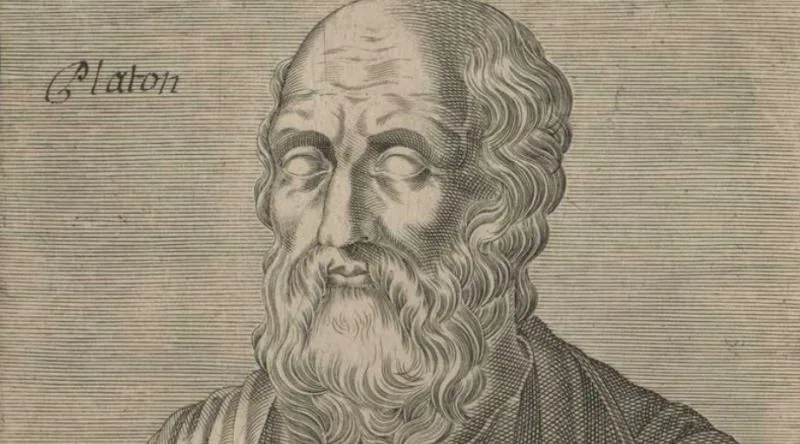
Plato was born in Athens around 428 BCE into one of the city's most prominent aristocratic families, and he grew up to become the single most influential philosopher in Western history. His real name was Aristocles, and the nickname Plato, meaning "broad," is said to have stuck because of his wide build or his wrestling style. As a young man he seemed bound for politics, the expected path for someone of his class and connections. Then he met Socrates, and everything changed. That encounter set him on a course that would produce the Academy, the first institution of higher learning in the Western world, and a body of dialogues still read today.
Plato was an Athenian philosopher born around 428 BCE to an aristocratic family. He became a devoted follower of Socrates, founded the Academy in Athens around 387 BCE, and wrote dialogues that shaped Western philosophy for over two thousand years. He died in Athens around 348 BCE.
- Plato was born in Athens around 428 BCE into an aristocratic family with ties to the city's political elite.
- His birth name was Aristocles, and the name Plato is thought to have been a nickname referring to his broad physique or wrestling ability.
- He became a follower of Socrates and was deeply affected by Socrates' execution in 399 BCE.
- Around 387 BCE he founded the Academy in Athens, widely considered the first institution of higher learning in the Western world.
- He wrote numerous philosophical dialogues and died in Athens around 348 BCE.
The Wrestler's Nickname: How Aristocles Became Plato
The boy born in Athens in 428 or 427 BC was not called Plato. His given name was Aristocles, as the ancient biographer Diogenes Laertius records, and the name the world remembers came later, from the wrestling ground rather than the classroom.
Young Aristocles trained hard in gymnastics and wrestling, and he was good at both. One account says his physical education teacher started calling him Platon, the word for "broad," on account of his wide forehead and chest. That attribution is not settled. Ancient writers handed down several competing explanations for the nickname, so treat the wrestling coach as the best-known version rather than the final word.
Whatever the true origin, the name stuck so completely that the original vanished. It is a strange fate for a man whose family had no shortage of grand names to live up to.
Alfred North Whitehead, the English mathematician and philosopher, put the stakes of that life in one line: the safest general description of the European philosophical tradition is that it consists of a series of footnotes to Plato. One nickname from a wrestling school, and twenty-three centuries of thinkers writing in the margins.
Blue Blood and a Family Split Between Democracy and Oligarchy
Plato was born into one of the bluest bloodlines in Athens, a family whose roots reached back to kings and lawgivers. His father, Ariston, was said to descend from Codrus, the legendary king of Athens, and from Melanthus of Messenia. His mother, Perictione, belonged to a line that traced itself to Solon, the lawgiver whose reforms had reshaped the city centuries before. In a place like Athens, that kind of pedigree was not decoration. It was a map of your future.
The household was crowded with names that would echo through his later writing. Plato had two brothers, Adeimantus and Glaucon, and a sister named Potone. When his father died, his mother remarried, and that second marriage gave him a half-brother, Antiphon. The new husband was Pyrilampes, a politician who had served as an envoy to the Persian court more than once and counted Pericles among his close friends. If you picture the family dinner table, you can almost hear the democratic talk.
Then you walk to the other side of the house. Plato's uncle Charmides and his mother's cousin Critias were leading figures in the oligarchic faction that seized power after the Peloponnesian War, the men remembered as the Thirty Tyrants. One family, two political worlds. For a young man with ambition, that meant options, connections, and a path into public life almost anywhere he looked.
It also meant something harder. Both factions, the democrats and the oligarchs, turned against Socrates, the teacher Plato admired above anyone. The democracy that followed the Thirty eventually put Socrates on trial and condemned him to death, a blow that left a permanent mark on his student. The oligarchs had their own quarrel with the philosopher's relentless questioning. Watching both camps reject the man he loved, Plato cooled on politics as a career. The family had given him every door. Socrates, in the end, showed him which ones to walk away from.
Cratylus, Socrates, and the Swan Dream
Plato's boyhood followed a predictable Athenian groove for a young man of his class: grammar first, then music, then long hours in the wrestling yard. Only after that groundwork did philosophy enter the picture, and it arrived through Cratylus, a thinker in the tradition of Heraclitus. From Cratylus he picked up a taste for hard questions about language and change, and through him he ran into the Sophists, whose books and arguments he would later quote again and again in his own dialogues.
Then came Socrates, and everything bent toward him.
The meeting itself has more than one version, though the best-known one comes down through Diogenes Laertius. As the tale is told, Socrates once dreamed he was holding a cygnet in his lap. The little bird gave a soft cry, its wings suddenly grew, and it flew off. The next day, when Plato was brought before him, Socrates said the young man was the swan from his dream. Plato told it differently. He said he already knew Socrates through his relatives on his mother's side, Charmides and Critias, long before any formal introduction. How old each of them was at that first encounter is not firmly fixed; the usual reconstruction puts Socrates near 60 and Plato in his early twenties, but that is an approximation, not a date stamped in stone.
The city around them was loud with trouble. Athens was still nursing the wounds of the Sicilian Expedition, and the oligarchic coup of the Four Hundred had shaken the democracy between 415 and 411 BC. The Sophist Protagoras, founder of the relativist school, was reportedly past 70 by then. Socrates' own students were already peeling off to start schools of their own: Euclid, and Antisthenes, later tied to the Cynic tradition. Pericles had been dead about 20 years, yet the glow of the Greek golden age had not entirely faded. Into that unsettled air, Socrates kept insisting that real wisdom had to rest on absolute ethical values, not on the slippery rhetoric the Sophists taught.
When Athens Killed His Teacher: Plato Turns Away From Politics
Socrates died in 399 BC, condemned to death by a restored democratic Athens in one of the most talked-about trials in history. That single verdict broke something in Plato, who was then in his late twenties. He stopped preparing for the political career his aristocratic family had groomed him for, and he turned his whole life toward philosophy instead.
Before Socrates, the young Plato had his eye on a very different stage. One tradition holds that he had already written a tetralogy of tragedies, four plays meant to be performed as a set, and he was close to publishing them. Then Socrates happened. According to that account, Plato shelved the tetralogy entirely and handed his gift for language over to philosophy rather than the theater. The specific claim about the four-part tragedy collection is not firmly established, so treat it as tradition rather than settled fact, but the direction of the turn is not in doubt: the man who could have been a playwright became a philosopher.
One correction matters here, because the popular version gets the date wrong. Socrates was not sentenced in 403 BC. The trial and execution took place in 399 BC, four years later, after the oligarchic Thirty had fallen and the democracy had been rebuilt. Plato's own Letters return to this trauma more than once. He writes of a man he admired above all others being put to death by the very city he had served, and he describes stepping back from public affairs as a result. Whatever political ambitions his family had arranged for him, the execution of Socrates closed that door.
What he did next was not withdrawal so much as redirection. Plato took what he had learned at Socrates' side, the relentless questioning, the refusal to accept a comfortable answer, and spent the rest of his life developing it into something systematic. The teacher left no writings. The student would spend decades writing dialogues in which the teacher almost always speaks.
Megara, the Grand Tour, and Being Sold Into Slavery
When Socrates drank the hemlock in 399 BC, Plato did not stay in Athens. He walked out of the city that had just killed his teacher and headed for Megara, a town just over the mountains to the west, to stay with Euclid, the philosopher who had founded his own school there. He remained roughly a year. Then he packed for the road.
The years that follow are the strangest chapter of his life, part study trip and part legend. He traveled to Egypt, to Italy, and to Cyrene in what is now Libya. The Italian and Cyrenean legs are reasonably attested. The Egyptian journey is doubted by many historians, so treat it as the story goes rather than settled record. And the old tales that he studied Zoroaster in Phoenicia or Moses in Babylon? Those are late fantastical inventions with no reliable basis, best left out of any serious account of his life.
Italy is where the trip paid off. In Taranto, a city where the Pythagoreans held sway, Plato met Archytas, a mathematician who also ran the place. Through him Plato worked through Orphic belief and Pythagorean doctrine, and the encounter left a permanent mark. From then on his dialogues reach for mathematics and geometry the way other writers reach for metaphor. Numbers became part of his argument.
From Taranto he sailed for Syracuse, in Sicily, and visited Dionysius, the tyrant of the city, a ruler known for fighting Carthage and for casting himself as the defender of Hellenic culture in the west. There Plato grew close to Dion, the tyrant's brother-in-law, a man who wanted a real hand in governing Syracuse. That friendship may be exactly why Plato had to leave.
The voyage home nearly ended everything. His ship put in at Aegina, an island at war with Athens, and slave traders seized him. He was ransomed by Anniceris, a wealthy merchant from Cyrene who recognized him. The details of the capture vary from source to source, but the core of it holds: the man who would build the Academy was, for a stretch of that journey, someone else's property.
The Academy: "Let No One Ignorant of Geometry Enter"
The Academy opened its doors in 387 BC, the same year the King's Peace, also called the Peace of Antalcidas, was signed. That timing matters, because it tells you Plato came home from his travels with money in his pocket and a plan in his head. He did not buy the land himself. His friends did.
Here is how that happened. On his way back from Sicily, Plato's ship put in at Aegina, an island then at war with Athens. He was seized by slave traders and put up for sale. A wealthy merchant from Cyrene named Anniceris recognized him and paid the ransom. When Plato returned to Athens, his friends collected the ransom money among themselves and tried to hand it back to Anniceris. He refused it. So the money sat there, and someone had to decide what to do with it. The friends took the sum and bought a plot of land northwest of Athens, near the shrine of the hero Academus, in the district we now call Kolonos. Then they gave it to Plato.
What grew on that plot became one of the longest-lasting higher education institutions in the Western world. The Academy was not a single lecture hall. It was a large complex: gymnasiums for physical training, classrooms, dining halls, and dormitories added later for students who lived on site. Pupils came from every corner of Greece and from neighboring countries. Plato himself taught there, alongside the most capable scientists of the age, and the curriculum ran wide: philosophy, political science, mathematics, astronomy, biology, physics, geography, and art.
Over the entrance hung a single line: ageometritos medeis eisito, "Let no one ignorant of geometry enter." Read that as a statement about method, not just about math. Geometry was how you learned to prove a claim rather than assert it, and proof was the whole point of the place.
Graduates of the Academy went on to hold serious political office in their home cities, or to stand out in philosophy. And women were admitted as students, a practice linked to Socrates' teaching that men and women are ethically equal.
Syracuse Twice, Then a Lifetime of Writing
In 367 BC the tyrant Dionysius of Syracuse died, and his son Dionysius II took the throne. Dion, Plato's old friend and a former student at the Academy, was suddenly the most influential man in the city, and he sent word to Athens: come now, teach the young ruler, build the state we have only ever talked about. Plato was around sixty by then. He went.
What he found in Syracuse was not a philosopher-king in waiting. He tried to mentor Dionysius II, to sketch a city government drawn from his own political ideas, and the experiment soured. He came home disillusioned. Six years later he tried once more, and failed once more. That was the end of the political dream, and the beginning of the long quiet stretch that gave us the later dialogues.
From then on Plato poured everything into the Academy and into his writing. He kept teaching and kept composing dialogues until his death in 348/347 BC. The school he left behind outlived him by a staggering margin. It carried on as one of the most important educational institutions of the ancient world until 529 AD, when it was closed under the Roman emperor Justinian.
Two trips to Sicily, two disappointments, and roughly twenty years of steady work at a desk in Athens. It is a strange shape for a life that reshaped how the West thinks.
The Dialogues: Most Survive, Almost All Are Conversations
Here is something rare for an author who died in 348 or 347 BC: almost everything Plato wrote is still with us. Most ancient writers survive in fragments, quoted secondhand or copied once and lost. Plato came down to us nearly whole, and the shape of that survival is what makes him unusual. Open any collection of his work and you will find the same form over and over: two or more people talking, pressing each other with questions, circling a problem until it cracks open.
The dialogue was not a literary fashion he borrowed. It is generally thought to grow out of how Socrates actually taught, which was not by lecturing but by asking. Socrates never wrote anything down, so the method lived only in the minds of the people he talked to. Plato turned it into text. And there is a rough arc most readers accept: the earlier dialogues carry Socrates' voice and concerns, while the later ones bear Plato's own signature, his own theories, his own architecture. The student stopped being a stenographer and started being a philosopher.
One common way of putting it is that every surviving work except the Apology and the Letters is a dialogue. That exception is looser than it sounds. The Apology is largely dialogue-like in its movement, Socrates speaking, questioning, defending himself before an audience, so the clean line between "dialogue" and "not dialogue" blurs at the edges. The Letters are the clearer exception, written as correspondence rather than staged conversation.
What we have is a substantial shelf, and the titles themselves tell you how wide the range runs. Among the works that have come down to us are Alcibiades 1 and Alcibiades 2, the Greater Hippias, the Theages, the Republic, the Statesman, the Euthydemus, the Parmenides, the Euthyphro, the Gorgias, the Hipparchus, the Clitophon, the Rivals, the Ion, the Cratylus, the Critias, the Charmides, the Crito, the Lesser Hippias, the Laches, the Lysis, the Letters, the Menexenus, and the Meno.
| Works transmitted under Plato's name |
|---|
| Alcibiades 1 and 2 |
| Greater Hippias, Theages |
| Republic, Statesman |
| Euthydemus, Parmenides |
| Euthyphro, Gorgias |
| Hipparchus, Clitophon, Rivals |
| Ion, Cratylus |
| Critias, Charmides |
| Crito, Lesser Hippias |
| Laches, Lysis |
| Letters, Menexenus, Meno |
A list like that invites a caveat. Not every title on it is comfortably Plato's. Several of these works are widely considered spurious or of disputed authenticity, which is a polite way of saying scholars have argued about them for a very long time and have not settled the matter. The Alcibiades dialogues, the Theages, the Hipparchus, the Clitophon, the Rivals: these are exactly the places where the debate burns hottest. So the corpus is both a gift and a puzzle. We have the words. What we keep fighting over is whose hand held the pen.
Frequently asked questions
What was Plato's real name?
Plato was born Aristocles in Athens around 428 or 427 BC, into one of the city's aristocratic families. The name "Platon" means "broad," and as the story goes, it came from his physical education teacher, a nod to his wide forehead and chest. Ancient sources give several explanations for the nickname, so the wrestling teacher detail is not firmly settled.
Who were Plato's first teachers?
Plato's first philosophy teacher was Cratylus, a follower of Heraclitus, who introduced him to the works of the sophists. Socrates was the transformative figure. According to Diogenes Laertius, Socrates dreamed of a swan in his lap and identified the young Plato as that swan the next day.
Why did Plato give up politics?
Plato came from a family steeped in politics, but he turned away from a political career after Socrates was executed in 399 BC, a trauma he later referenced in his Letters. Contrary to the popular version, which sometimes places the trial in 403 BC, the historical record points to 399 BC.
When was the Academy founded?
Plato founded the Academy around 387 BC, the year of the King's Peace. Friends had bought land near the shrine of the hero Academos in Athens and gave it to him. The school admitted women and reportedly required geometry of entrants, and it became one of the longest-lasting higher education institutions in the Western world.
Did Plato travel to Egypt and Italy?
Plato's travels to Italy and Cyrene are reasonably attested and shaped his use of mathematics. In Taranto he met Archytas, the mathematician and ruler, and in Syracuse he befriended Dion. The Egyptian journey is historically doubted, and the tales of him studying Zoroaster in Phoenicia or Moses in Babylon are late legends with no reliable basis.
What are Plato's most famous works?
Most of Plato's writings survive, and most are dialogues. The Republic, the Statesman, the Parmenides, the Gorgias, the Meno and the Apology rank among the best known. Several titles in the transmitted corpus, however, are widely considered spurious or of disputed authenticity.
How long did the Academy last?
The Academy continued for centuries after Plato's death in 348/347 BC. It lasted until 529 AD, when it was closed under the Roman emperor Justinian, making it one of the most enduring educational institutions of the ancient world. Editorial note: Details that remain unconfirmed, such as the exact origin of the nickname Plato and the precise dates of his birth and death, are presented as approximations rather than settled facts.
Got a take on this? Add your voice to the conversation below →
No comments yet. Be the first.