Table of Ranks: Peter the Great's 1722 Noble Ladder
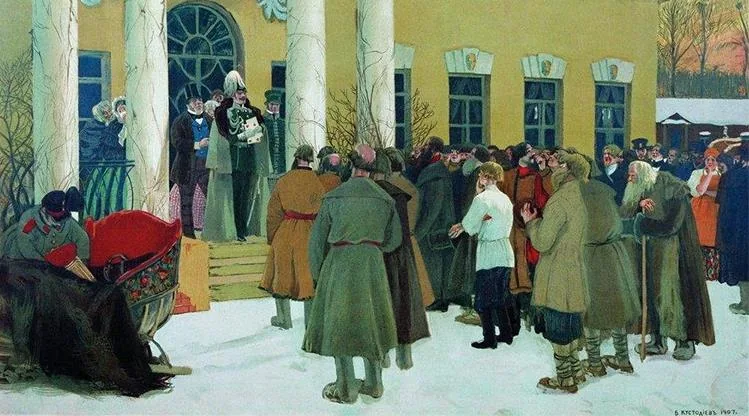
The Table of Ranks was a system of fourteen grades that Peter the Great introduced in Russia in 1722, tying noble status to service rather than birth. It turned the tsar's bureaucracy into a ladder that a commoner could climb, and it stayed in force for nearly two centuries. For Russians, a rank number was not a formality. It decided whether a man could own serfs, marry well, or be addressed as "Your Excellency," and it left a mark so deep that nineteenth-century writers built some of their most famous characters around it.
In 1722 Peter the Great established the Table of Ranks, fourteen grades covering military, civil, and court service. Advancement depended on service and merit rather than noble birth, and reaching certain grades granted personal or hereditary nobility. The system governed Russian status until the 1917 revolution.
- Peter the Great introduced the Table of Ranks on January 24, 1722, as part of his effort to modernize and centralize the Russian state.
- The table set out fourteen ranks in three parallel tracks: military, civil, and court service.
- A non-noble who reached a set grade earned personal nobility, and a higher grade brought hereditary nobility that passed to his children.
- Ranks carried concrete privileges, including forms of address, marriage eligibility, and in some cases the right to own serfs.
- The system remained in force until the fall of the Russian Empire in 1917.
Why Those "Ninth-Rank Clerk" Lines in Russian Novels Actually Matter
You're three hundred pages into a Dostoevsky novel when a character gets introduced as "a clerk of such-and-such rank," and your eyes slide right past it. Most readers do exactly that. But that throwaway phrase is a set of coordinates, and once you can read it, the whole social map of the novel snaps into focus.
Interest in Russian literature has been climbing steadily, and that's a genuinely good thing. What's missing is a decoder ring for the bureaucratic vocabulary that saturates these books. When a narrator tells you a man is a ninth-rank clerk, he isn't filing paperwork in your head. He's telling you exactly how much respect that man can expect at a dinner table, whether his daughter can marry a colonel, and how far he is from the bottom of a very tall ladder.
That ladder had a name: the Table of Ranks. Peter the Great introduced it in 1722, and it turned the Russian bureaucracy into a fourteen-rung climb. Peter wanted Russia to compete with the strong states of Western Europe, and he borrowed heavily from the administrative models of Sweden and Prussia when he built it. Fourteen parallel classes covered military, civil, and court service, and the whole architecture rested on a radical idea for its time: advancement through service and merit rather than through the accident of birth.
That last part mattered enormously. Before the reform, Russia was largely feudal. The old nobility, the boyars, held their status through inherited privilege and lineage, and a talented man born outside that circle had almost nowhere to climb. Peter's Table of Ranks cut a door into the wall. Reach the eighth rank in the civil service and you earned hereditary nobility. Reach the fourteenth, the lowest rung, and you earned personal nobility, which was less a grand title than a practical bureaucratic advantage. Educated, capable people who were not born noble could now rise through state service, and plenty of them did.
These ranks were never just trivia for historians. They were concrete indicators of the direction Russian rulers wanted society to move, and you can feel that intention pressing on every page of the novels written a century later. What started as a reformer's dream turned into a punching bag for critics, who saw a machine that bred corruption and crushed individuals. Writers and social thinkers both went after it hard, and the reason is simple. A hierarchy that defines a person entirely by his place in a machine, and strips him of everything else, is a machine that will eventually grind somebody down.
Which is precisely the kind of somebody Russian literature keeps handing you. Learn the ranks, and those flat little phrases stop being noise. They start telling you who is allowed to look whom in the eye.
What Was the Table of Ranks? Peter the Great's 1722 Reform
On 24 January 1722, Peter the Great signed a decree that rearranged the entire ladder of Russian service, military, civil and court alike, into fourteen parallel classes. That document became known as the Table of Ranks, and for nearly two centuries it decided who in the Russian Empire could order whom around. It is the single piece of paperwork that explains why a clerk in a Dostoevsky novel trembles at a visitor's calling card.
Peter did not invent the idea out of thin air. He wanted Russia to stand toe to toe with the strong states of Western Europe, and he was convinced that state administration at home had to be rebuilt from the ground up, with an effective bureaucracy instead of a court full of well-connected relatives. So he borrowed. The bureaucratic models of Sweden and Prussia, in particular, shaped what he put on paper. The ambition behind the reform was blunt: build a structure where talent and merit, not the family you were born into, decided how far you could climb.
That last point mattered enormously in a country that had been largely feudal. Before the reform, the old service nobility, the boyars, drew their status from hereditary privilege, from lineage and birth. A capable man with no famous surname had almost nowhere to go. Peter's answer was to tie advancement to service, and to let service, at certain rungs of the ladder, hand a person nobility in return.
The rules of that exchange were precise. Reaching the 8th rank in the civil service brought hereditary nobility, the kind that passed to your children. Reaching the 14th rank brought personal nobility, which carried real privileges but stayed with you alone; it functioned more as a bureaucratic advantage than a modern noble title. Suddenly an educated, ambitious man from outside the old elite had a road open to him, and the state got first pick of the talent that walked up it.
The system also split the bureaucracy into two main branches, military and civil, each with its own fourteen grades and its own defined duties. That hierarchy was meant to make the machinery of a vast, ethnically mixed empire run in a more systematic and orderly way, and to concentrate authority at the center.
None of this stayed tidy for long. The Table of Ranks began as a reformer's instrument, and it ended up a target: criticized for corruption, for the personal tragedies it produced, and for the social pressure of a hierarchy that treated people as cogs and cut them loose from their own worth. The writers noticed.
Breaking the Boyars: Why Peter Wanted a New Kind of Noble
Before Peter the Great touched a single decree, Russia ran on bloodlines. The boyars, the old landed elite, drew their standing from birth and lineage rather than from anything they had done. A talented clerk with a sharp mind could serve his whole life and still eat at the far end of the table, because the table had been set centuries before he was born.
That was the wall Peter decided to knock down. He wanted a state where personal achievement, not an inherited name, decided where a man stood. So the Table of Ranks, introduced in 1722, tied noble status to state service instead of family tree. Rise far enough through the ranks and nobility followed. Sit still and it did not.
The ladder itself was blunt and mechanical. It split the bureaucracy into two main branches, military and civil service, and gave each one 14 degrees with defined duties attached to every step. Rank was no longer a mood or a favor. It was a number, and the number told you exactly what you were worth to the empire.
The thresholds mattered most. Reach the 8th rank and you earned hereditary nobility, passed down to your children. Reach the 14th, the bottom rung, and you earned personal nobility, which was less a title out of a fairy tale than a bureaucratic advantage: privileges, standing, a foot in the door. The tightening of these rules over the years shows how jealously the old families guarded the gate.
What Peter got was a door that finally opened inward for outsiders. Men who were not born noble could now climb on talent and achievement, and that pulled the educated, ambitious bourgeois class straight into state service. The empire stopped recruiting only from the families that already owned everything.
From Chancellor to Gubernial Secretary: The Fourteen Rungs
At the very top of the Table of Ranks sat the Chancellor, the first rank and the highest civil office in the Russian Empire, a title so rare that only a handful of men ever held it. Think of a foreign minister, or a trusted envoy sent to negotiate with half of Europe. Below him came the Actual Privy Councillor, the second rank, again reserved for very few: the top ministers who shaped strategy rather than shuffling paper. Then the third rank, Privy Councillor, a senior grade whose exact duties are not reliably documented.
The middle of the ladder is where the machinery of empire actually ran. The fourth rank, Actual State Councillor, drew governors-general, administrators of large cities, and high court judges, even if governors-general often climbed higher. The fifth, State Councillor, gathered university rectors, senior embassy posts, and regional governors. The sixth, Collegiate Councillor, covered important administrative roles, and while academic leaders did hold it, scholarship was never the point of the rank. The seventh, Court Councillor, took in district directors and judges, though the idea that this rank brought the nobility title, the dvoryanstvo, is doubtful. Hereditary nobility was generally tied to the eighth rank, not the seventh.
Where the Numbers Go Wrong
Two labels in the popular version simply do not survive a check. The eighth rank was Collegiate Assessor, and Collegiate Secretary was the tenth. The tenth rank was never Collegiate Assessor handling technical office work and correspondence, because Collegiate Assessor sits at the eighth. The eleventh rank, State Assessor, is murkier still. A rank by that name existed in some periods, but its placement and its supposed duties in mid-level office work are not reliably confirmed, so treat it as an open question rather than a fact.
The Bottom of the Ladder
Down at the ninth rank sits the Titular Counsellor, and this is the rung that literature made immortal. Low-level officials, ordinary men with ordinary desks, lived here. Akaky Akakievich, the clerk of Gogol's "The Overcoat," is the famous example, and knowing his rank is knowing his whole cramped world. Then the twelfth rank, Collegiate Registrar, handled clerkship and secretarial duties. The thirteenth, Provincial Registrar, did the simplest office work of all. And at the very bottom, the fourteenth rank, Gubernial Secretary, carried official documents and wrote papers, the lowest position the system offered.
Fourteen rungs, and every Russian official you meet in a nineteenth-century novel is standing on one of them.
A Reform That Became a Target: Corruption and the Cog in the Machine
When Peter the Great introduced the Table of Ranks on 24 January 1722, it was not meant to become a villain. It was meant to be a ladder. Russia before the reform was still largely feudal, and the boyars, the old hereditary elite, held their status because of who their fathers were, not because of what they could do. Peter wanted a modern state, one that could stand beside the powers of Western Europe, and he borrowed heavily from Swedish and Prussian administrative models to build it. Talent, in theory, would matter more than bloodline.
For a while, that promise held. Non-noble men could climb. Educated and capable people entered state service and rose through the 14 tiers. The Table of Ranks gave the empire a spine: a hierarchy that told every official exactly where he stood and what he owed the state above him.
Then the ladder started to creak. Over the decades the system drew sharp criticism for corruption, for individual tragedies, and for the quiet, grinding pressure of its social hierarchy. The same structure that let a man rise could also break him. And the sharpest complaint was philosophical: the Table of Ranks treated people as a cog in the machine, measuring a human being by his slot and severing him from any personal worth that existed outside the ladder.
A rank could make a man. It could just as easily reduce him to the number printed beside his name.
That is why the 14-tier system became a target. It determined a person's place within the state, and in doing so it became the thing writers and sociologists attacked most fiercely. The reform that set out to free Russia from birth and privilege ended up creating a new kind of cage, one built out of paperwork and promotion.
Frequently asked questions
What was the Table of Ranks introduced by Peter the Great in 1722?
Peter the Great introduced the Table of Ranks by decree on 24 January 1722. It was a 14-tier hierarchy covering civil, military, and court service in the Russian Empire, designed to modernize the state and tie status to service rather than birth.
Who could achieve hereditary nobility under the Table of Ranks?
Reaching the 8th rank in the civil service conferred hereditary nobility. The 14th rank, the lowest rung, granted only personal nobility, which carried bureaucratic privileges but was not passed down to a man's children.
Why did Peter the Great create the Table of Ranks?
Peter wanted Russia to compete with the strong states of Western Europe, so he borrowed administrative models from Sweden and Prussia. He also aimed to break the hereditary power of the boyars and base advancement on merit and state service instead of lineage.
How did the Table of Ranks affect Russian literature?
It gave writers a precise social map. In Gogol's "The Overcoat," Akaky Akakievich is a 9th-rank Titular Counsellor, a low-level clerk. Knowing where a character sits in the 14 ranks helps readers grasp Dostoevsky and other classics far more clearly.
Was the Table of Ranks effective in breaking the power of the boyars?
It opened state service to non-hereditary nobles and the educated bourgeois class, letting talented men rise by merit. Still, hereditary nobility was conferred at the 8th rank, and the system was later criticized for corruption.
Did the Table of Ranks lead to corruption in the Russian Empire?
Yes. What began as a reformist project drew heavy criticism over time for corruption, individual tragedies, and the social pressures of a rigid hierarchy. Critics argued the structure reduced people to cogs in a machine, detached from their personal worth.
What rank was Akaky Akakievich in Gogol's The Overcoat?
He was a 9th-rank Titular Counsellor, a low-level clerk. That modest position, well below the 8th rank that brought hereditary nobility, defines his small place in the imperial hierarchy and shapes the whole tragedy of the story. Editorial note: Details that remain unconfirmed are presented as such, and no dates or figures beyond the confirmed record have been supplied.
Got a take on this? Add your voice to the conversation below →
No comments yet. Be the first.