Lord of the Rings Philosophy: Tolkien vs Sauron
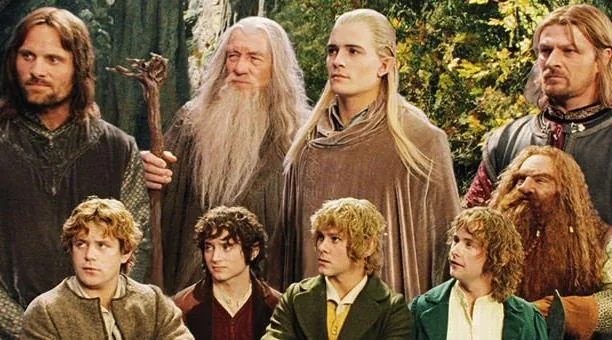
The Lord of the Rings philosophy is often mistaken for a simple warning against greed, but Tolkien's real target is totalitarian narcissism and the fantasy of absolute security. J.R.R. Tolkien published the trilogy between 1954 and 1955, and its moral architecture still shapes how readers think about power, technology, and desire. The One Ring is not a symbol of wanting things. It is a symbol of wanting to control everything, and the book treats that distinction as the difference between a healthy life and a hollow one.
Tolkien's Lord of the Rings presents a philosophy that condemns totalitarian control, not desire itself. The One Ring embodies the fantasy of absolute security and domination, while characters like Tom Bombadil and Samwise Gamgee model humility, restraint, and rootedness. The trilogy warns against industrial optimization and narcissistic power.
- J.R.R. Tolkien published The Lord of the Rings in three volumes between 1954 and 1955, set in the fictional Middle-earth.
- The One Ring grants power over other rings of power and corrupts nearly everyone who desires it, including Frodo, Boromir, and Gollum.
- Tom Bombadil is the one character in the story who is completely unaffected by the Ring's temptation, suggesting a life without the will to dominate.
- Sauron represents totalitarian narcissism, a will to order and control all of Middle-earth under a single vision.
- The Shire, by contrast, embodies pastoral rootedness and local community, which Tolkien presents as the alternative to industrial domination.
The Real Philosophy of The Lord of the Rings Isn't What You Think
J.R.R. Tolkien published The Lord of the Rings in three volumes between 1954 and 1955, and for seventy years readers have filed it under the wrong heading. The Lord of the Rings philosophy is not a sermon against wanting things. It is a warning about something stranger and harder to see: the fantasy that wanting can be finished.
Look at what the Ring actually promises. Not pleasure, not wealth, not even power in the ordinary sense. It offers an ending. Every problem solved, every rival silenced, every uncertainty closed off. Tolkien's target is not desire itself but the totalitarian narcissism that refuses to accept lack, difference, tragedy, or plain contingency. Sauron, the dark lord who wants to rule every living thing, is the face of that refusal, but the book keeps insisting he is less a person than a process, a function that can show up anywhere. Nobody is immune. The best characters are not exempt; if anything, their competence makes them a better host for the parasite.
There is one exception, and Tolkien makes him impossible to miss. Tom Bombadil picks up the Ring, slips it on, and nothing happens. No whispering, no hunger, no vanishing. He simply hands it back and goes on singing about his wife and the river. The Ring has nothing to grip because Bombadil wants nothing it can sell him.
Everyone else is marked. Gollum held the Ring for roughly five hundred years, and those centuries stretched his life while rotting everything else about him, leaving him hunched in caves beneath the Misty Mountains, talking to his "precious." Bilbo Baggins carried it for decades and walked away from it, yet he never fully recovered. Frodo meets a similar fate, and both of them eventually sail into the West from the Grey Havens, unable to settle back into ordinary life in the Shire. The Ring does not just test you. It keeps a piece of you.
So the only individual stance that works, Tolkien suggests, is a kind of Socratic humility. Say out loud that you are not wise enough to handle this thing. Admit you are ignorant. That confession, paradoxically, is the most clear-eyed position available, because it puts distance between you and the whisper.
And even that is not enough on its own. No single hero saves Middle-earth. It takes a fellowship, an alliance of peoples, every wise figure left in the age, and what amounts to divine intervention, an entire ecosystem assembled just to give the good side a fighting chance. Even Gollum, whom everyone wants to exile, turns out to be part of that ecosystem.
Sauron Is a Process, Not Just a Villain
Sauron wants one thing, and Tolkien never hides it: dominion over every living will in Middle-earth. Yet the most unsettling idea in the whole Lord of the Rings philosophy is that Sauron is less a person than a process, a function that can run through anyone. He is potentially everywhere. Nobody stands outside it.
That is why the Ring works the way it does. It does not tempt you with evil in the abstract. It finds the exact shape of your competence and grows there. Boromir wants to defend Gondor, so the Ring offers him the weapon. Gandalf knows what he could do with it, and that knowledge is precisely what makes him refuse to touch it. Even the best are parasitized through their strengths, not their weaknesses. The one clear exception is Tom Bombadil, who handles the Ring with total indifference in The Fellowship of the Ring, and it simply has no purchase on him.
So the honest move is distance: name the thing, confess you are not strong enough, and step back before it gets a grip. But personal humility alone does not save anyone. Tolkien builds an entire ecosystem against the threat, a fellowship, an alliance of peoples, the wise of every age, and something that looks a lot like divine intervention. Even Gollum, the creature everyone wants to expel, ends up inside that ecosystem. He is not the opposite of the fellowship. He is part of it.
One correction here, because a line gets quoted constantly and it is not in the book. Sauron never speaks in direct dialogue anywhere in The Lord of the Rings. There is no scene where he announces that you cannot stay, that only death waits here. That is an invention, not Tolkien.
Socratic Humility and the Alliance Against the Ring
If there is one individual posture that actually works against the Ring, it is Socratic humility: the plain admission, "I don't have the wisdom to handle this." Saying that out loud is, paradoxically, the wisest position a person can take. Sauron's whole project is domination of all life, but the Ring works less like a villain and more like a function that can parasitize anyone. Even the best are not exempt. J.R.R. Tolkien's The Lord of the Rings, published between 1954 and 1955, makes that clear again and again.
Tom Bombadil is the one exception, a figure who handles the Ring with total indifference. Everyone else, and especially the most capable, carries the risk of being quietly colonized by it. So the honest move is distance: name the thing, confess you are not strong enough, and step back before it gets a grip.
But personal humility alone does not save anyone. The Ring is not defeated by one clear-eyed individual. It takes an ecosystem: a brotherhood, an alliance of peoples, the wise of the age, and, in Tolkien's world, divine intervention. Friendship, loyalty, shared meals, the small decencies of the Shire, all of it matters. And the ecosystem has room for people we would rather not include. Gollum is the sharpest example. He lived roughly 500 years under a cave in the Misty Mountains with the Ring, and he is seen as an enemy, ostracized, despised. Yet he is part of the machinery that carries the Ring toward its end. The alliance that works is not a club of the worthy. It is a wider web, and it holds even the ones we would have written off.
The lesson is not that humility is enough on its own. It is that humility plus community plus a willingness to keep unlikely company is the only combination Tolkien gives any real hope to. Nobody carries the Ring alone. Not Frodo, not the Fellowship, not the wise. The story keeps insisting on that.
Pastoral Humanity vs. Industrial Optimization
J.R.R. Tolkien's The Lord of the Rings, published between 1954 and 1955, praises a pastoral, grounded humanity against industrial optimization and domination. Industry and science, the "magic" of the modern age, are cornerstones of our world, yet they are just as exposed to the totalitarian parasite function as anything else. Under its grip, they reveal themselves as optimization, domination, and hostility to life itself.
Here is where readers often get Tolkien wrong. His critique is not Luddite anti-industrialism. It is a warning about reason that has severed its footing from the ecosystem, from humanity, from life. A mind unmoored like that becomes as foolish and blinding as slipping on the Ring. Whether that prediction held up is not hard to see. As the story goes, a company literally named Palantir has drawn criticism for enabling mass surveillance and authoritarian uses, though this is a contested characterization rather than a settled fact.
The pastoral alternative is not retreat. It is the long meal shared with friends, tea drunk purely for pleasure, attention paid to the turning seasons, a greeting offered to the animals. Stand there and you stand relatively far from the parasitic, absolutist, optimization-driven narcissism. Stand in a cave instead, dreaming of your "precious" that will solve every problem, and you edge closer to the side of Sauron's servants.
Gollum's Cave: The Warning Against Total Security
J.R.R. Tolkien keeps dragging his heroes out of holes. In The Hobbit, published in 1937, Bilbo Baggins leaves his comfortable hobbit-hole at Bag End and walks into the wild, and Frodo ends up under the same sentence, marked by the Ring and finally sailing west from the Grey Havens. Caves, burrows, and the pocket of invisibility the Ring opens all point at one thing: the fantasy of walling yourself in until nothing can reach you.
That is the regressive pull the books keep warning about. Safety is good. Safety turned into a total system, a sealed room where difference and loss and plain bad luck are simply not allowed to exist, is something else entirely. Tolkien's target was never desire itself. It was the dream of a life where every want is already satisfied and nothing unpredictable is left.
Gollum is the cautionary exhibit. He held the Ring for roughly 500 years, stretched far past any normal span, rotting under the caves of the Misty Mountains with his "precious." The Ring gave him a bubble of absolute security. It also ate him.
One correction, because this line gets passed around online as if it came straight from the Dark Lord: Sauron never says "here you cannot stay, here there is only death." No such speech exists in Tolkien's text, and Sauron never speaks in direct dialogue in The Lord of the Rings at all. The idea behind the quote is real. The attribution is not.
And one more, since it shapes how we read the whole theme: contrary to the popular version, Bilbo does not leave a cave. He leaves Bag End, a hobbit-hole with a painted round door and a pantry full of seed cakes. The distinction matters, because Tolkien is not telling us to flee caves. He is telling us to flee the urge to make any home into a fortress.
The warning lands the same way whether you read it as Lord of the Rings philosophy or as a plain piece of life advice. A hole you never leave stops being a shelter and starts being a tomb.
Frequently asked questions
What is the real philosophy behind The Lord of the Rings?
The Lord of the Rings philosophy is not a war on desire. J.R.R. Tolkien's 1954 to 1955 epic attacks something narrower: the fantasy that every want can be fully satisfied, a totalitarian narcissism that refuses absence, difference and tragedy. The enemy is absolutism, not longing.
Why is Sauron described as a process rather than just a villain?
Sauron's stated goal is domination over all life, yet Tolkien treats him less as a single monster than as a function, a process that can appear anywhere. Because of that, nobody is automatically safe from his corrupting pull, and even the best characters carry the risk of being parasitized by it.
How does Gollum illustrate Tolkien's critique of total security?
Gollum possessed the Ring for roughly 500 years, hidden in caves beneath the Misty Mountains, and the long centuries left him decayed and hollow. He is the warning against trying to make safety absolute. The Ring opens an invisible pocket of total security, and it rots whoever stays inside.
Was Tolkien actually anti-technology or anti-industrial?
No. Tolkien was not a Luddite waging war on machines. His critique is moral and spiritual, aimed at domination, greed and the despoiling of nature rather than at tools themselves. Industry and science, which he often frames as a kind of magic, simply share the same vulnerability to the totalitarian parasite.
Why is Tom Bombadil immune to the Ring's corruption?
Tom Bombadil is the great exception. In The Fellowship of the Ring, published in 1954, he handles the Ring with complete indifference, and it has no effect on him at all. Where others are pulled toward power, he simply does not want it, and that indifference is his armor. Editorial note: Any details that remain unconfirmed or open to interpretation are presented as such, and readers are encouraged to consult the primary texts for their own reading.
Got a take on this? Add your voice to the conversation below →
No comments yet. Be the first.