Donnie Darko and Holden Caulfield: Two Mirrors of Teen Alienation
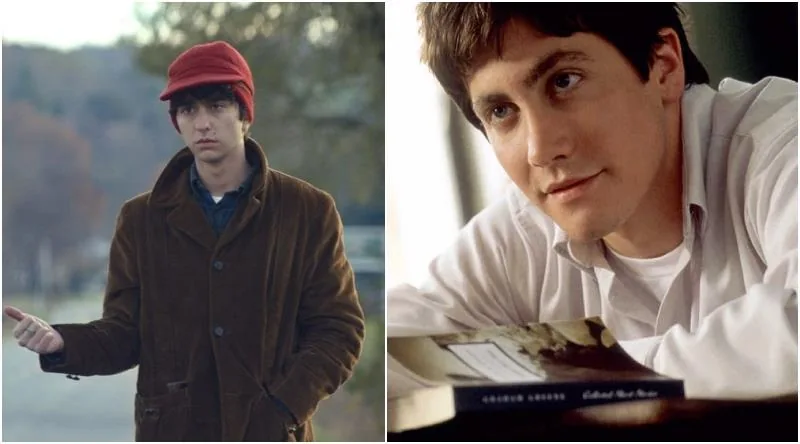
Donnie Darko and Holden Caulfield are two fictional teenagers separated by four decades, yet they mirror each other's alienation with uncanny precision. J.D. Salinger published The Catcher in the Rye in 1951, and Richard Kelly released Donnie Darko in 2001, but both stories follow a bright, troubled boy who cannot stomach the phoniness around him. One wanders New York City after a breakdown, the other navigates a suburban timeline on the edge of apocalypse. Their shared ache, the feeling of being profoundly out of step with everyone else, is why readers and viewers keep returning to them.
Donnie Darko, the teenage protagonist of the 2001 film, and Holden Caulfield, the narrator of J.D. Salinger's 1951 novel The Catcher in the Rye, are both alienated adolescents who question the adults and institutions surrounding them. Each struggles with mental health and searches for meaning, making their parallel journeys a lasting touchstone for teenage nonconformity.
- J.D. Salinger published The Catcher in the Rye in 1951, introducing Holden Caulfield as a teenager recounting his breakdown in New York City.
- Richard Kelly's Donnie Darko premiered in 2001, following a suburban teenager who survives a jet engine crash and confronts a looming apocalypse.
- Both protagonists are bright, sensitive boys who reject the phoniness and conformity they see in the adult world around them.
- Each character's story is shaped by mental health struggles, with Holden narrating from a sanatorium and Donnie seeing a therapist while taking medication.
Donnie Darko and Holden Caulfield: Two Teenagers Who Refuse to Fit In
Donnie Darko is the teenager at the center of the 2001 film that carries his name, played by Jake Gyllenhaal. Holden Caulfield is the narrator of J.D. Salinger's 1951 novel The Catcher in the Rye. Put them side by side and the surface difference is obvious: one lives on celluloid, the other on the page. Look closer, though, and the resemblance gets uncomfortable.
Donnie announces himself early, and he does it like a boy who has appointed himself the savior of everyone smaller than him. Frank says a storm is coming, he writes, a storm that will swallow the children. Donnie's answer is a promise. He will pull them out of the kingdom of pain, walk them home, and drive the monsters underground, to a place no one but him can see. The last line is the tell: because I am Donnie Darko.
That self-image is why so many readers and viewers land on the same comparison. Donnie Darko and Holden Caulfield both carry minds that make ordinary life harder than it should be, and the strain spills into everything, including family. Neither boy fits the shape his world has cut for him, and neither family is thrilled about it. Holden's family packs him off to boarding school, while Donnie's family tries a therapist instead. That parallel is a loose one, and it is worth saying so plainly.
Where they stand in their own stories is what makes the pairing stick. Holden narrates from inside his own head, rambling, circling, contradicting himself. Donnie gets a whole film built around parallel universes instead. Different machinery, same engine underneath: a kid convinced the world is fake and that he is the only one who can see it clearly.
Two Families, Two Fixes: A Therapist and a Boarding School
Holden Caulfield, the teenage narrator of J.D. Salinger's 1951 novel The Catcher in the Rye, and Donnie Darko, the title character Jake Gyllenhaal played in the 2001 film, both carry mental-health struggles that bleed straight into the people around them. At home, each one reads as difficult, off-key, a kid who will not fall in line. And in each story, the adults respond in a different way.
As the comparison is usually drawn, Holden's family settles on a boarding school, packing him off to Pencey Prep and the string of institutions before it, while Donnie's family turns to a therapist instead. That parallel is a loose one, and it is worth saying so plainly. Holden is expelled rather than freshly sent in the action of the novel, so the neat symmetry of "one school, one couch" makes the match seem cleaner than it really is.
What Donnie's therapist puts on the table is heavier than a bad report card. Dr. Thurman ties his aggression to the way he has pulled away from reality, describing a boy worn down by his own powerlessness against forces he reads as dangerous. Then she asks the question that lands hardest: has he ever mentioned his imaginary friend Frank? The giant rabbit. She describes his daytime visions as a hallucination of the kind seen in paranoid schizophrenics, though the exact diagnosis is implied rather than spelled out on screen. Donnie's mother answers with the only thing a parent can: if it will help him heal, they will do anything.
Two families, two fixes, and neither one quite reaches the kid.
Phoebe and Gretchen: The Innocents Who Listen
Phoebe Caulfield is Holden's younger sister in J.D. Salinger's 1951 novel The Catcher in the Rye, and readers have long treated her as the book's clearest emblem of childhood innocence. Gretchen Ross, the girl Donnie falls for in the 2001 film Donnie Darko, gets read the same way by plenty of viewers, though that is an interpretation rather than something the movie states outright. What both girls actually do is simpler and more human: they sit with a boy whose head is exhausted and they listen.
Holden says as much himself. He admits he isn't sure Phoebe really understands what he's talking about, because she's just a kid. Then he lands on the part that matters to him. She was listening. If somebody at least listens, he decides, it's not too bad. That single line is the whole case for Phoebe. She doesn't fix him, doesn't diagnose him, doesn't hand him a pamphlet. She hears him.
Gretchen works the same way for Donnie. The film never labels her a symbol of innocence, so treat that as a reading, not a fact. But watch what she offers him across the story: attention, company, a person in the room who isn't measuring him against a checklist. For a teenager convinced the world is performing at him, that quiet presence is enormous.
It's worth sitting with how modest this comfort is. Neither girl arrives with answers. Phoebe is too young to fully grasp her brother's spiral, and Gretchen is a new girlfriend inside a countdown she can't see. The relief they provide isn't a cure. It's the smaller, stranger thing Holden names out loud: being heard by one person, even a person who doesn't quite follow, takes some of the weight off.
Sexual Confusion, Jane and Sally, and a Hypnosis Session
Holden Caulfield's tangled feelings about sex run through his memories of Jane Gallagher and his date with Sally Hayes, and Donnie Darko has his own version of that adolescent fog. In J.D. Salinger's 1951 novel, Holden's confusion surfaces again and again, in the way he thinks about Jane, in the way he handles Sally, in the way he recoils from anything that feels transactional. Donnie, for his part, sits in a chair across from Dr. Thurman and says the quiet parts out loud.
According to the original account, Donnie's disclosures to Dr. Thurman come during what is described as his first hypnosis session. The scene is often framed that way, and it is worth flagging that the timing of that first session is contested, so treat the framing as reported rather than settled. What Donnie actually says is the memorable part. He tells the doctor he met a girl named Gretchen, that they are dating now, that he thinks about girls constantly, that at school his mind keeps drifting toward kissing. He mentions muting Married... with Children and fantasizing about Christina Applegate. Then he slams the door shut: no, he does not think about kissing his own family, and he calls the idea disgusting.
That last line is the one that lands. It's a teenager drawing a hard line in the middle of a sentence that had no line, insisting on the normal and the taboo in the same breath. Christina Applegate played Kelly Bundy on Married... with Children, which ran on Fox from 1987 to 1997, so the reference is specific and the joke is deliberate.
Set Donnie's monologue beside Holden's Jane and Sally stories and the shape is the same. Neither boy can talk about desire without immediately talking about what desire is not allowed to touch. Both are caught between wanting to be wanted and being terrified of what wanting means.
Nonconformists in the Classroom and the War on "Phonies"
Imagine Donnie Darko and Holden Caulfield in the same classroom. Neither one makes it to the end of the period without an argument. Donnie Darko, the teenager Jake Gyllenhaal played in the 2001 film, and Holden Caulfield, the narrator of J.D. Salinger's The Catcher in the Rye from 1951, share a stubborn refusal to accept what a teacher tells them simply because a teacher said it. Both are nonconformists by instinct, and both end up squared off against the adults paid to instruct them.
The clearest example comes from Donnie's own mouth. When Mrs. Farmer tries to reduce a story to a tidy pair of opposites, he pushes back hard: you cannot sort everything into two categories, he tells her, it is not that simple. There are other things to weigh, he says, like the entire spectrum of human emotion. You do not get to split the world in half and pretend the rest is not there.
That same allergy to fakery runs through Holden. His favorite word is probably "phony." He can't stand the fake cheerfulness and the performed sincerity of the adults around him, and unlike his classmates, he doesn't swallow it, smile, and move on. He picks the fight.
Who Represents the Fakeness?
Here the two stories diverge, and it is worth being careful. The source reading behind this comparison points to Mr. Cunningham, the slick self-help guru in Donnie Darko, as the film's embodiment of phoniness. That is a contested reading, not an established one. Phoniness is a central theme of The Catcher in the Rye, and treating Mr. Cunningham as a recognized symbol of it in the film goes further than the film itself supports. Take it as one reader's argument, not as canon.
What holds up is the shared posture. Holden's contempt for the fakers who manufacture the fakeness is constant, and Donnie greets Cunningham's platitudes with open hostility rather than applause. Neither boy flinches from the confrontation. Their peers sit quietly. They do not.
Still Hoping: Writing, Painting, and Being Understood
For all the fakery they can't stand, neither Donnie Darko nor Holden Caulfield ever fully gives up on the idea that something real is still findable. They are not hopeless kids. They want to change something, and more than anything, they want to be understood.
Donnie says it out loud in the 2001 film, and it lands like a small confession. He paints and writes. He wants to be a writer, maybe a painter, maybe both. His plan is almost childlike in its clarity: write a book, draw the pictures inside it, and then maybe people will understand him. Maybe something will change.
That is the whole wish, stripped down. Not fame, not escape, not revenge on the phonies. Just a book with his own drawings in it, and a reader on the other end who finally gets it. Holden carries the same ache, only he buries it under complaints and a red hunting hat. Both of them keep reaching for a language that might carry them across the gap to another person, and both of them keep finding that the language isn't quite enough yet.
So the hope stays, worn thin but unbroken. As the story goes, that stubborn wish to be seen is what keeps Donnie Darko and Holden Caulfield from tipping all the way into despair, even when everything around them feels fake.
Dying for a Cause vs. Living for One
As that hope runs down, Donnie Darko and Holden Caulfield each set out on a fresh search for meaning, and they land on two answers that sit remarkably close together. This is the point where they finally split. One is ready to die for what he finds. The other learns from Mr. Antolini the harder virtue of living for it.
In Salinger's 1951 novel, Mr. Antolini, a former teacher Holden trusts, hands him a line he attributes to Wilhelm Stekel: the immature man wants to die nobly for a cause, while the mature man wants to live humbly for one. That attribution appears in the book, but here the trail gets muddy. Stekel was a real Austrian psychoanalyst, yet the sentence is disputed and may be Salinger's own invention dressed up in a borrowed name. So take it as the novel's claim, not as verified Stekel.
Holden hears it and, in his own way, starts to hold on. Donnie never gets the same lesson handed to him. His arc runs the other direction, toward sacrifice, toward the noble death the quote warns against.
Two teenagers, one cause, two endings. Same question, opposite answers.
The Cliff, the Rye Field, and Two Mirrors
Both of them live right at the edge of a cliff. Donnie Darko, the teenager Jake Gyllenhaal played in the 2001 film, and Holden Caulfield, the narrator of J.D. Salinger's 1951 novel The Catcher in the Rye, are young enough to be shoved around by almost anything the world throws at them. That vulnerability is the whole point. It is also what slowly pushes each of them away from a culture built on fakery, shallowness and noise.
And seeing all that clearly comes at a brutal cost. They notice the phoniness that everyone else has gone numb to, which means they feel an ache that keeps getting sharper. To quiet it, both of them reach for social usefulness and hand over their individuality in the bargain. Holden wants to spend his life catching kids before they run off a cliff. Donnie wants to carry children out of a coming storm. Same instinct, different costume.
"I keep picturing all these little kids playing some game in this big field of rye and all. Thousands of little kids, and nobody's around. And I'm standing on the edge of some crazy cliff. I'd just be the catcher in the rye and all. I know it's crazy, but that's the only thing I'd really like to be."
That is Holden talking to his little sister Phoebe, his younger sister and the character most often read as his symbol of innocence. Donnie has Gretchen, his girlfriend, and she does something similar for him, though reading her strictly as innocence is an interpretation rather than a settled fact.
Here is where the two stories split open in completely different ways. The film tells its trouble through parallel universes, folding time back on itself. The novel tells its trouble through the monologues of a maladjusted teenager wandering New York. Different machinery entirely. But put Donnie's poem next to Holden's dream for Phoebe and the gap closes. They are reflections of each other, two mirrors angled so that each one catches the other's face.
One more thing worth sitting with. Mr. Antolini, Holden's old teacher, passes along a line he credits to Wilhelm Stekel: the immature man wants to die nobly for a cause, while the mature man wants to live humbly for one. The attribution is disputed and may be Salinger's own invention, but the idea lands either way. Holden hears it and learns to live. Donnie, by the end, is willing to die for the thing he believes in.
Frequently asked questions
What do Donnie Darko and Holden Caulfield have in common?
Both are adolescents carrying heavy mental-health burdens who reject the phoniness around them, feel alienated from their worlds, hunt for meaning, and fear the loss of innocence. Donnie Darko arrives in the 2001 film; Holden Caulfield narrates Salinger's 1951 novel. Their shared nonconformity, loneliness, and hunger to be understood tie the two together.
Why are they considered alienated?
Each stands at the cliff's edge, seeing society's fakery more clearly than the people around them, and each slowly withdraws from that world. As the story goes, that clarity sharpens their pain and pushes them further inward, until the very world they read so well becomes a place they can no longer belong to.
Who represents innocence?
For Holden, it is his younger sister Phoebe, widely read as a symbol of childhood innocence. For Donnie, the parallel figure is Gretchen, his girlfriend, though calling her a representation of innocence is an interpretive reading rather than established fact. Both characters cling to these figures as anchors.
Was Holden's view of phoniness similar to Donnie's?
Yes. Holden's most frequent word may be "phony," and he measures nearly everyone against it. In the film, the source points to Mr. Cunningham as the embodiment of that fakery, though that reading is contested. The parallel is thematic rather than literal, and the two characters voice their disgust in very different ways.
Did both struggle with mental health?
Yes. Holden's family sends him to a boarding school, while Donnie's family seeks a therapist for him. Dr. Thurman describes Donnie's visions as hallucination of the kind seen in paranoid schizophrenics, though the exact diagnosis wording is contested. Both families are uneasy about their sons' nonconformity.
What is the significance of the cliff?
In Holden's rye-field dream, he stands at the edge of a crazy cliff and catches children before they fall. Both characters are described as standing at that cliff's edge, vulnerable to outside manipulation. The image captures their fear of losing innocence and their urge to protect it.
How do they search for meaning?
Donnie paints and writes, hoping people will finally understand him. Holden learns from Mr. Antolini, who quotes Wilhelm Stekel, that the mature man lives humbly for a cause rather than dying nobly for one. That contrast, one willing to die for meaning and the other learning to live for it, may be the sharpest difference between them. Editorial note: Any facts that remain unconfirmed are presented as such and hedged accordingly.
Got a take on this? Add your voice to the conversation below →
No comments yet. Be the first.