A Real Pain Ending: Why It's Not a Holocaust Film
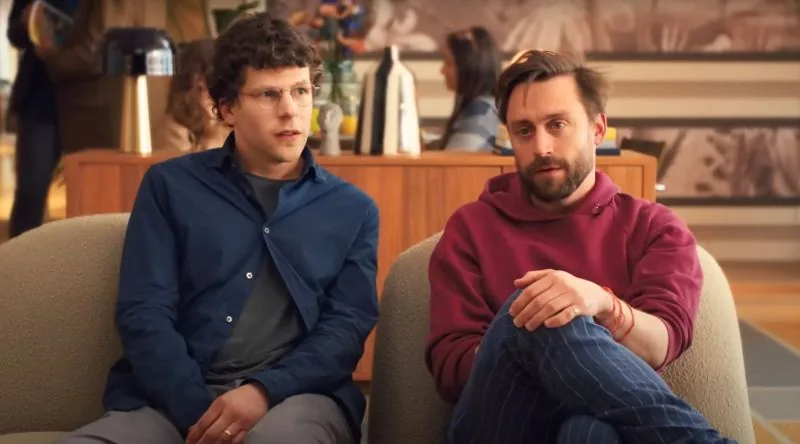
A Real Pain film ending explained: Jesse Eisenberg's movie follows cousins David and Benji on a Holocaust tour through Poland, and it ends not with a grand revelation but with a quiet airport goodbye. The film uses that journey to explore inherited trauma and personal grief without ever becoming a conventional Holocaust drama. What stays with viewers is the tension between two men who love each other but cannot quite reach each other, and the strange comfort of a shared history that neither can fully carry alone.
A Real Pain, written by and starring Jesse Eisenberg alongside Kieran Culkin, follows two cousins on a Holocaust tour through Poland after their grandmother's death. The ending finds them at the airport, their bond strained but intact, as the film argues that personal pain deserves its own place alongside historical tragedy.
- A Real Pain was written and directed by Jesse Eisenberg, who also stars as David Kaplan.
- Kieran Culkin plays Benji Kaplan, David's cousin, and their dynamic drives the film's emotional core.
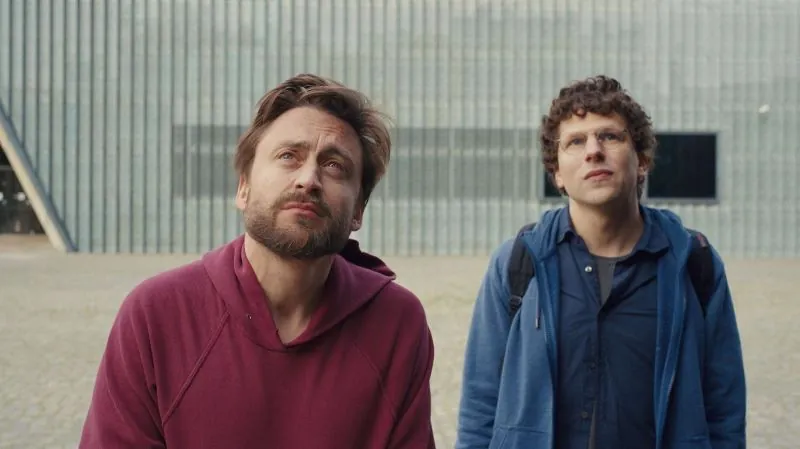
- The plot follows the cousins on a Holocaust tour through Poland, including a visit to the Lublin house where their grandmother once lived.
- The film's ending takes place at an airport, where the cousins part ways after their journey.
- The source singles out Culkin's performance as a highlight of the film.
Why A Real Pain Looks Like a Holocaust Film (And Why It Isn't One)
A A Real Pain film ending explained piece usually starts with the same warning: this is not the movie the trailer sold you. Jesse Eisenberg wrote, directed, and stars in A Real Pain opposite Kieran Culkin, a setup that sounds like every Holocaust drama you have ever sat through. Two cousins. A grandmother who survived. A trip back to Poland. Yet the film keeps slipping out of that mold, and the ending is where it finally breaks free.
The premise runs like this. David and Benji are grandsons of a Polish Jewish grandmother who escaped the Nazi Holocaust, and when she dies, the two of them fly to Poland to stand in the house she lived in before she fled. They do not travel alone. They sign onto a guided Holocaust heritage tour, the kind that moves a group through memorials and former camps, and much of the film unfolds inside that tour bus and along those stops.
So far, so familiar. Here is the turn. Eisenberg, who also wrote the screenplay, uses the tour as scaffolding rather than subject. The genocide is present in every frame of the itinerary, in the photographs and the monuments and the collective memory the group walks through, but the camera keeps drifting back to the two men sitting in the back row. The question the film actually asks is not what happened in Poland. It is what David and Benji are still carrying, and whether either of them can put it down.
That is why the label "Holocaust film" starts to feel like a costume the movie wears for a while and then quietly takes off. The setup earns it. The ending refuses it.
Two Cousins, Two Kinds of Pain
David and Benji are cousins who share a grandmother, a heritage, and almost nothing else. One built a quiet, ordered life and keeps the world at arm's length. The other burns bright and loud and cannot stop feeling everything at once. They get on a plane together anyway, because that is what family asks of you sometimes.
Their grandmother was a Polish Jewish woman who survived the Holocaust, and after she dies the cousins travel to Poland to see the house she lived in before she escaped. They go as part of a Holocaust heritage tour, alongside strangers who have their own reasons for being there. The source describes Benji as "manic" and David as having OCD, though those labels read more like interpretation than any confirmed clinical diagnosis. What the film actually shows is two people in pain, handling it in opposite ways.
The dinner table in Lublin is where it cracks open. David looks at his grandmother's survival and sees proof that resilience is a choice, that you can endure anything and still build a life. So when he thinks about Benji's suicide attempt, he cannot help reading it as ingratitude, as a kind of spoiled refusal of a gift that cost their grandmother everything. Benji does not argue the point. He just keeps holding his pain out in the open, where everyone can see it, because that is the only way he has found to stay alive.
David envies him for it. That is the part that stings. Benji exhausts him, embarrasses him, derails every plan, and yet David cannot stop noticing that his cousin actually feels things, while David has spent years staying busy enough not to. His withdrawal is its own survival mechanism, a way of keeping the noise at a manageable distance. It works. It also makes him, by his own admission, a somewhat boring man who does not really let anyone in.
Neither strategy is a cure. David's distance keeps him safe and lonely. Benji's openness keeps him honest and barely holding on. At the end, when David hugs his cousin goodbye, you can see the fear underneath it, the knowledge that this might be the last time. He knows he cannot fix Benji. He knows he cannot even really help. And Benji, unfortunately, knows it too.
The Ending: One Goes Home, One Goes Back to the Airport
For anyone chasing an A Real Pain film ending explained reading, the parting of the two cousins is where the whole thing lands. David, played by Jesse Eisenberg, who also wrote and directed, goes back to his wife, his son and his warm apartment. Benji, played by Kieran Culkin, heads back to the airport. According to the account that shaped this reading, that return echoes the film's opening, though the source treats the exact symmetry as a suggestion rather than a confirmed detail.
Think about how the movie starts. David calls Benji again and again, fires off messages, gives him updates about his own life and keeps asking where his cousin actually is. When they finally meet at the airport, we learn Benji has been sitting there for hours already. That airport is where David finds him. It is also, as the story goes, where David leaves him.
Here is the quiet slap Eisenberg delivers. On the tour, everyone fills up with grief, with sorrow, with the weight of the camps and the persecution of Jewish families across Poland. Then the tour ends and everyone goes home to ordinary life. David does exactly that. He returns to the warm house, to his family, to the version of himself that functions.
But the pain does not vanish just because the tour bus parks. It survives somewhere, in memorials, in photographs, in documentaries, in paintings and statues, in collective memory, in the back of a mind. Benji's pain survives the same way, lodged in his own chest. That is the ache the film keeps pointing at with such a gentle camera and such a soft voice.
Watch the hug. When David embraces Benji, the fear is right there on his face. Later he keeps running the thought of a future without Benji through his head, and he knows he cannot step in, cannot fix it, cannot help. The source reads this as the film's real emotional punch, an interpretive claim rather than a stated fact. Benji, tragically, knows it too.
Why the Tour Is the Whole Point, and Not the Point
Think about what actually happens on that Holocaust tour in A Real Pain. A bus full of people moves through Poland, and for a few days everyone is soaked in grief. They stand in the camps. They look at the photographs. Then the trip ends, and every single one of them goes home to ordinary life, exactly the way David does when he walks back to his wife and his family. That return is the whole engine of the movie.
Here is the comparison the film keeps quietly handing you. The pain of the Holocaust does not vanish when the tourists board their flights. It survives somewhere: in the camps themselves, in photographs, in monuments, in documentaries, in paintings and statues, and in our minds and our collective memory. We turn our heads back to our own routines, and still none of it disappears. Benji works the same way. His pain does not get a monument or a museum. It just stays lodged inside him while everyone around him, David included, turns back toward the warm, ordinary life waiting at home.
That is the reading behind so much of the A Real Pain film ending explained conversation online. The film points at this with a remarkably gentle touch, and much of the credit goes to Jesse Eisenberg's soft-spoken language and his cinematography, which lets the meaning land without ever raising its voice. It is worth saying plainly: none of this is a judgment of David for going home. He is not the villain of the frame. He is just the person who gets to leave.
Personal Pain, Not Genocide, Is the Film's Real Subject
One reading of A Real Pain, written and directed by Jesse Eisenberg, insists the movie is not a Holocaust film at all. Its true weight, this reading argues, sits somewhere closer to home. Eisenberg, who also plays David, and Kieran Culkin, who plays his cousin Benji, spend the film walking through Poland on a Holocaust heritage tour, yet the ache that lands hardest has nothing to do with the camps.
Where does that ache show up? In the parting. According to the original account, David goes back to his family and his warm house, while Benji drifts back to the airport, the same place the film opened on. The mirroring is the point, or so the reading goes. Early on, David calls and messages Benji over and over, trying to pin down where his cousin is, only to find him at the airport hours ahead of schedule. The ending reportedly repeats that image, David leaving Benji behind at the same threshold.
The source draws a comparison to the tour itself. Everyone on that bus fills up with grief and sorrow, then returns to ordinary life by evening, just as David does. But the pain of the Holocaust does not vanish when the tour ends. It survives in the camps, the photographs, the monuments, the documentaries, the paintings, the sculptures, and in collective memory. Benji's pain works the same way, the argument goes. It stays lodged in his heart even when the world looks away. That, the critic suggests, is what Eisenberg was pointing at with such a gentle camera and such a soft voice.
Two Cousins, Two Ways of Enduring
The film's central conflict, in this reading, is not genocide versus memory but two cousins trying to survive their own existence. David and Benji live very different lives and still keep reaching for each other. At a dinner table in Lublin, the fault lines start to show. David believes their grandmother built a life out of the ashes, and he lays his own existence on that same foundation. He sees Benji's reported suicide attempt as something closer to ingratitude. His own method of coping is to keep his mind busy with everyone else's problems, which leaves him bored with himself and envious of Benji's freedom. Benji, by contrast, can only make his own existence bearable this way. The alternative, the reading warns, is darker.
In the final embrace, David's fear becomes visible. In later meetings, he keeps turning over the possibility of a world without Benji, knowing he cannot intervene and cannot help. Benji knows it too. The source is careful to say none of this is a judgment on David.
So the verdict from this corner: A Real Pain is not simply a genocide film. Look from this side, and the real pain sits right there. Benji and David show how depression and existence get carried, day by day, on this earth. The source also points readers toward the film's Rotten Tomatoes page as a place to weigh that reading against wider reception. Treat it all as one critic's interpretation, not a settled conclusion.
Frequently asked questions
What is the ending of A Real Pain explained?
In the closing stretch, David goes back to his warm home and his family, while Benji heads back to the airport, the same place the two cousins met at the start. According to the original account, that parting is the film's real emotional core, not the tour itself.
Why is A Real Pain not considered a Holocaust film?
The guided Holocaust heritage tour through Poland is the setting, not the subject. The original account argues the film's true focus is Benji's personal pain, carried inside one man, rather than the genocide itself. The camps and the persecution are context; Benji's private ache is the point.
Who are the main characters and what conditions do they have?
David and Benji are cousins, played by Jesse Eisenberg and Kieran Culkin. The source describes Benji as manic and David as OCD, but those are interpretive labels rather than confirmed diagnoses. What the film shows plainly is that Benji is volatile and David is tightly wound.
Was A Real Pain filmed in Poland and does it show real Holocaust sites?
The narrative follows a Holocaust heritage tour through Poland, including Lublin, where the cousins sit down to a meal that cracks open their differences. The trip is tied to their late grandmother, a Polish Jewish Holocaust survivor, and the house she lived in before she escaped.
What does the title A Real Pain refer to?
Per the source, the title points to personal pain carried by an individual, not the historical pain of the Holocaust. The ache lives in Benji's own heart, the way the memory of the genocide survives in camps, photographs, monuments and collective memory even as daily life goes on. Editorial note: Any details that remain unconfirmed are presented as such, and readers should treat speculative interpretations accordingly.
Got a take on this? Add your voice to the conversation below →
No comments yet. Be the first.