Percy Spencer: The Melted Chocolate Bar That Invented the Microwave
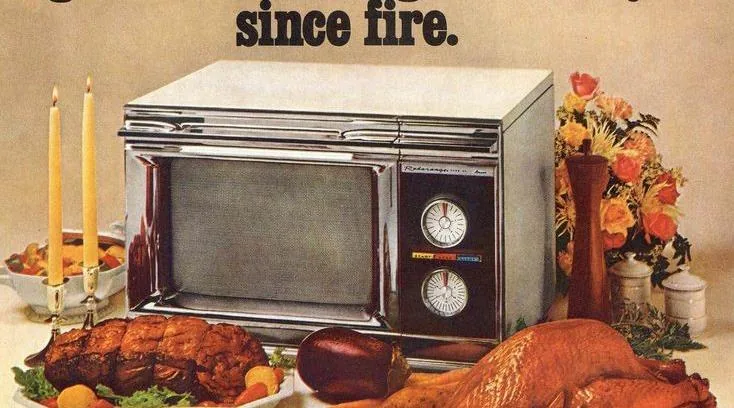
Percy Spencer microwave oven invention began one day in the 1940s, when the Raytheon engineer noticed a chocolate bar melting in his pocket while he stood near active radar equipment. He had spent the war years helping build radar technology for the American defense effort. Now a candy bar was telling him something strange about the energy around him. What happened next turned a battlefield technology into the appliance sitting in nearly every American kitchen today.
In the 1940s, Raytheon engineer Percy Spencer noticed a chocolate bar melting in his pocket while working near radar equipment. He tested the effect with popcorn and an egg, and the first commercial microwave oven, the Radarange, was released in 1947. Early units were large and expensive.
- Percy Spencer was an American engineer at Raytheon who worked on radar devices during the 1940s.
- The melting chocolate bar incident happened while he was working near active radar equipment.
- Spencer tested the effect on food, and the first commercial Radarange was released in 1947.
- Early microwave ovens were bulky and costly, which kept them out of most homes for decades.
- The appliance reached widespread American kitchen adoption only in the 1970s.
The Chocolate Bar That Changed the Kitchen
Percy Spencer was an American engineer working on radar devices during the 1940s, and the Percy Spencer microwave oven invention started with something he never planned: a candy bar melting in his pocket. While he stood near active radar equipment, the chocolate turned soft against his leg. He had no explanation at first. Then it clicked. The magnetron he was helping develop for wartime radar was emitting microwaves, and those waves were cooking him through his own trousers.
This was the 1940s, and the American defense industry was pouring everything into radar. Radar waves bounced off aircraft and objects to detect them, a technology that mattered enormously during World War II. Spencer's job was building the magnetrons that made those radar sets work. He was not trying to cook anything. He was trying to win a war.
The melted chocolate was a puzzle, not a product. Spencer did not immediately announce that microwaves should heat food. He tested the idea first. One of his early experiments involved popcorn kernels, which popped. In a follow-up test, he exposed an egg to the waves. The egg heated so fast it exploded. Those two messy experiments told Spencer and his team something important: microwave energy could be aimed at food, and food would respond.
When the war ended, that energy found a quieter purpose. Kitchens.
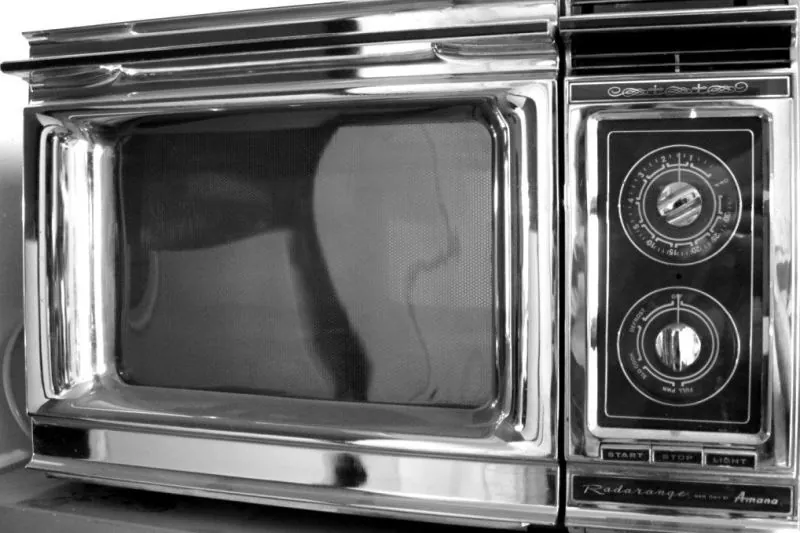
The first commercial microwave oven arrived in 1947 under the name Radarange. It was not the sleek box sitting on a modern countertop. It was refrigerator-sized, and it cost about as much as a small car. At that price and that bulk, only restaurants and large businesses could justify owning one. A home cook in 1947 had no realistic path to a Radarange.
That changed over the following decades, as the technology shrank and the price dropped. By the 1960s, microwave ovens had become cheaper, smaller, and more reliable, and ordinary people could finally buy them. By the 1970s, they had become a staple in American kitchens. What began as a defense project and a melted chocolate bar turned into a fixture of daily life, one that sped up dinner for working people and shifted from luxury to necessity.
Popcorn, an Exploding Egg, and a New Idea
Percy Spencer did not rush to the kitchen after the chocolate bar melted in his pocket. The engineer, already deep into radar work during the 1940s, did what any curious scientist would do: he started running tests. Popcorn kernels came first, and they popped. Then came an egg, which heated up fast and exploded. That messy little burst told Spencer and his team something important: microwave energy could actually cook food.
Notice what did not happen. There was no sudden leap from a melted candy bar to reheating last night's dinner. Spencer approached the whole thing as a controlled experiment. He wanted to know how these waves behaved when they hit something edible, and he found out the loud way.
The popcorn proved the concept worked. The egg proved it worked a little too well. Together, the two tests handed Spencer and his colleagues a real idea instead of a lucky accident, and that idea is what put the Percy Spencer microwave oven invention on the path from a radar lab toward something you could actually use.
Two small tests, one big conclusion
- Popcorn kernels went in, and they popped.
- An egg went in, heated rapidly, and burst.
- The results convinced Spencer and his team that microwave energy had a future with food.
It was methodical work, not a eureka moment in a single breath. Spencer kept testing because the melting chocolate had raised a question, and the popcorn and the egg answered it. Only after that did the bigger possibility open up: if waves could heat food this reliably, maybe they belonged somewhere beyond the laboratory.
From Battlefield Radar to the 1947 Radarange
When the fighting stopped, the magnetron did not retire. The same tube that had helped radar spot aircraft in the 1940s was suddenly free of its wartime job, and the people who understood it best started asking a very different question: what else can this thing heat? For Percy Spencer and his team at Raytheon, the answer pointed straight at food. The technology that had once served the battlefield now headed for the kitchen.
Raytheon moved fast. In 1947 the company put the first commercial microwave oven on the market and gave it a name that said exactly what it did: the Radarange, a mashup of "radar" and "range." It was a genuine first, and it worked. It was also nothing like the box sitting on a counter today.
The 1947 Radarange by the Numbers
| Year released | 1947 |
|---|---|
| Manufacturer | Raytheon |
| Size | About the size of a refrigerator |
| Price | Roughly $2,000 to $3,000 |
| Price comparison | Comparable to a small car |
| First buyers | Restaurants, hotels, large institutions |
Picture a refrigerator standing in a commercial kitchen, humming and heavy, and you have the 1947 Radarange. It took up serious floor space and it cost roughly $2,000 to $3,000, which was comparable to buying a small car. That single price tag explains almost everything about who owned one. Ordinary families did not. Restaurants, hotels, and large institutions did, because they could justify the expense and had the room to spare.
So the first microwave oven was not a household convenience at all. It was industrial equipment with a kitchen job, a piece of radar hardware that had traded the sky for a countertop. The leap from that refrigerator-sized machine to something a person could actually afford and fit at home was still ahead, and it would take another decade of engineering before the door opened.
How Microwaves Finally Reached American Kitchens
By the 1960s, the machine that had once been a refrigerator-sized curiosity was shrinking. Engineers kept refining the magnetron, the same component Percy Spencer had worked with during his radar years, and competition between manufacturers pushed prices down while reliability climbed. What had been an industrial tool started to look like something a family could actually buy.
That shift mattered because the early Radarange was never a home appliance. When Raytheon released it in 1947, it stood as tall as a refrigerator and carried a price tag comparable to a small car, so restaurants, hotels and large institutions were the only customers who could justify one. Ordinary households were locked out for more than a decade.
The 1960s broke that lock. Cheaper components, smaller cabinets and better safety engineering turned the microwave into a product that sat on a counter rather than dominated a room. Then the 1970s arrived and sales surged. By the end of that decade the microwave oven had become a common fixture in American homes, no longer a novelty for the wealthy but a standard piece of kitchen equipment.
Why the microwave went from luxury to necessity
For working people, the appeal was simple: dinner could be ready in a fraction of the time. A device that once seemed like a gadget for restaurants became the thing that made a fast meal possible after a long shift. Convenience turned into dependence, and the microwave stopped being optional.
So the arc that began with a melted chocolate bar in a radar lab ended on millions of kitchen counters. Percy Spencer's microwave oven invention did not arrive as a home product, but the decades of refinement that followed carried it there anyway.
Frequently asked questions
Who invented the microwave oven, and how did he discover it?
Percy Spencer, an American engineer working on radar during World War II, invented the microwave oven after noticing that a chocolate bar in his pocket melted near active radar equipment in the 1940s. He realized the device's microwaves caused the melting, a discovery that launched the Percy Spencer microwave oven invention.
What was the first food Percy Spencer cooked with microwaves?
Popcorn kernels, which popped when Spencer exposed them to microwave energy. It was one of his first deliberate food experiments after the chocolate bar melted in his pocket, and it proved that microwaves could actually cook something rather than just warm it.
What happened when Percy Spencer put an egg in front of the radar equipment?
It heated rapidly and then exploded. The egg simply could not withstand the microwave energy. That messy result gave Spencer and his team the crucial insight that microwave energy could be applied directly to food, pointing the way toward a kitchen appliance.
Why did the first commercial microwave oven cost as much as a car?
The 1947 Radarange, released by Raytheon, was refrigerator-sized and priced at roughly $2,000 to $3,000, comparable to a small car. At that cost and bulk, only restaurants and large businesses could afford one, so the early microwave oven stayed out of ordinary homes.
When did microwave ovens become common in American homes?
In the 1970s. After 1960s improvements made the technology smaller, cheaper, and more reliable, sales surged, and microwave ovens became a staple of American kitchens, shifting from a luxury item into an everyday necessity for busy households.
How did radar technology during World War II lead to the microwave oven?
Radar work in the 1940s relied on magnetrons that emitted microwaves. When Spencer observed that these waves melted a chocolate bar in his pocket, he moved from radar engineering to food experiments, and that accidental observation eventually carried the technology into kitchens.
Was the invention of the microwave oven an accident?
Yes, the initial discovery was accidental. Spencer did not set out to build a cooking device. He noticed the melted chocolate by chance, then deliberately experimented with food, which is how the Percy Spencer microwave oven invention moved from a curious observation to a working concept.
Did Percy Spencer get a patent for the microwave oven?
The available account does not say whether Spencer personally received a patent. What it confirms is that Raytheon released the first commercial microwave oven, the Radarange, in 1947, turning his wartime observation into a product. Editorial note: Details that remain unconfirmed, including the exact sequence of Spencer's early experiments, are presented as reported rather than as settled fact.
Got a take on this? Add your voice to the conversation below →
No comments yet. Be the first.