Buran: The Soviet Space Shuttle That Flew Once
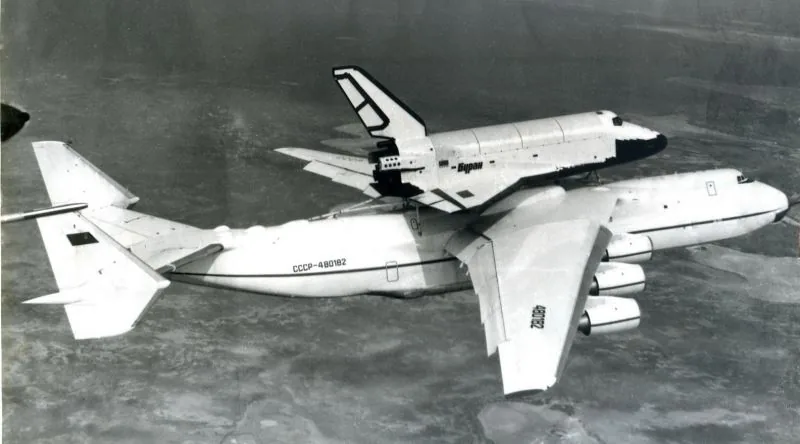
The Buran space shuttle launched from Baikonur Cosmodrome on November 15, 1988, flew two orbits around Earth without a single person aboard, and landed itself on a runway. It was the Soviet Union's answer to America's Space Shuttle, and it worked on the first try. Then it never flew again. Within three years the country that built it no longer existed, and the ship that had just made history was left to rot in a hangar.
Buran was the Soviet Union's reusable orbiter, launched once on November 15, 1988, by the Energia rocket. It completed an unmanned flight and an automatic landing. The program was halted after the Soviet Union dissolved, and the flown orbiter was destroyed in 2002 when its hangar roof collapsed.
- Buran lifted off from Baikonur Cosmodrome on November 15, 1988, carried by the Energia heavy-lift rocket.
- The orbiter landed automatically on a runway near the launch site, with no crew aboard at any point.
- Valentin Glushko headed NPO Energia from 1974, and the Buran program was formally initiated in 1976.
- The program was halted after the Soviet Union dissolved and funding disappeared.
- The orbiter that flew the 1988 mission was destroyed in 2002 when the hangar housing it collapsed.
The Morning the Sky Split Open at Baikonur
On the morning of 15 November 1988, the steppe around Baikonur Cosmodrome in Kazakhstan was cold and windy, and the place was packed with an unusual, electric kind of tension. The Buran space shuttle sat on the pad, ten seconds from its first unmanned orbital flight. It would also be its last.
Valentin Glushko, who ran the design bureau behind the machine, stood with his engineers, holding their breath. A voice crackled over the loudspeakers: "9, 8, 7, 6." The crowd on the steppe was about to hear a sound that people still describe as one of the loudest non-nuclear blasts human hands have ever made. "5, 4, 3." The boosters began venting fuel before ignition, the sky starting to pale. "3, 2, 1..." Then the Energia rocket lit, and the machine rose.
Some accounts say the blast was so violent that distant seismographs picked up the vibration. That detail has never been independently confirmed, but it tells you what the moment felt like to the people standing there. This was not just a launch. It was the Soviet Union's final technological gamble, the last big card it had to play in a space race it was already losing.
What makes the morning strange in hindsight is the shape of the thing. Buran carried no main engines of its own. All the thrust came from Energia, and the orbiter rode to orbit as a passenger, using only smaller maneuvering engines to settle into place and steer. The launch was a beginning and an ending at the same time, and almost nobody watching knew which one they were really seeing.
Why the Soviets Built Their Own Space Shuttle
Imagine the Cold War as a room where two people are shouting past each other, each convinced the other is reaching for a weapon. That was the atmosphere in which the Buran space shuttle was born. When the United States announced its Space Shuttle program, Soviet planners did not see a science project. They saw an orbital cargo plane, a machine that could dive out of the sky and drop bombs on Soviet cities. So Moscow decided it needed an answer, and the answer was Buran.
The fear ran in both directions, and it ran deep. Every rocket the other side launched looked like a military move, and each government sold that reading to its own public. To the Soviets, the capitalists were the devil. To the Americans, the communists were. Facts barely entered the conversation.
Here is where the popular version of the story drifts off course. Valentin Glushko did take over as head of NPO Energia in 1974, but he was not placed in charge of Buran that year. The program was formally initiated in 1976. That two-year gap matters, because it shows the shuttle decision came after Glushko was already running the design bureau, not as his personal project handed to him on day one.
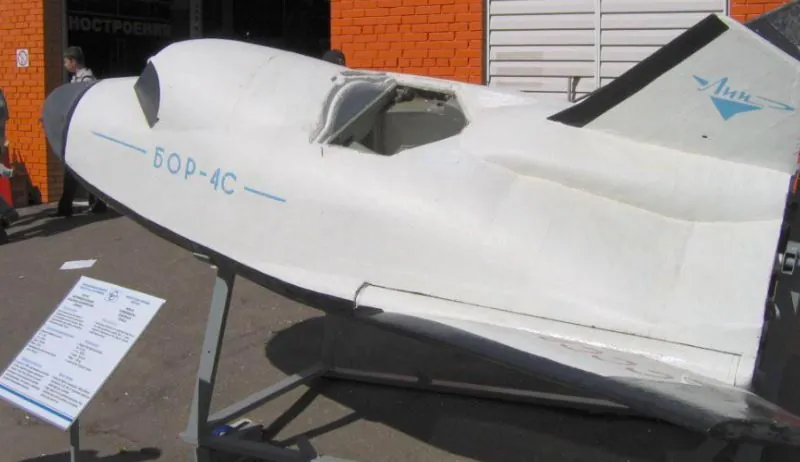
Another thing worth untangling: the Soviets were not simply reacting. They already had their own spaceplane efforts underway, including the Spiral project and a lifting-body vehicle called BOR-4. High-altitude BOR-4 flights in the 1960s produced data that later fed directly into Buran's heat shield and its aerodynamics. When the American orbiter became the priority in Washington, Soviet engineers reweighted their own plans to match.
Even the name carried a certain poetry. Buran's official designation was VKK, short for Vozdushno-Kosmicheskiy Korabl, which translates as "air-space ship." Not a missile, not a bomber. A ship.
Buran vs. the American Space Shuttle: The Real Differences
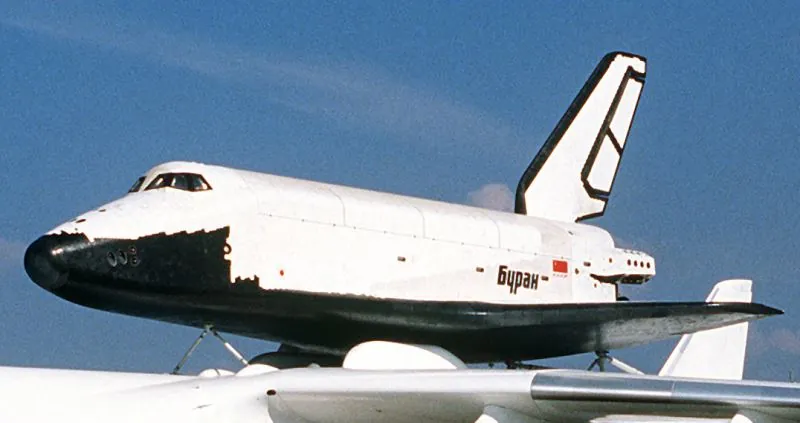
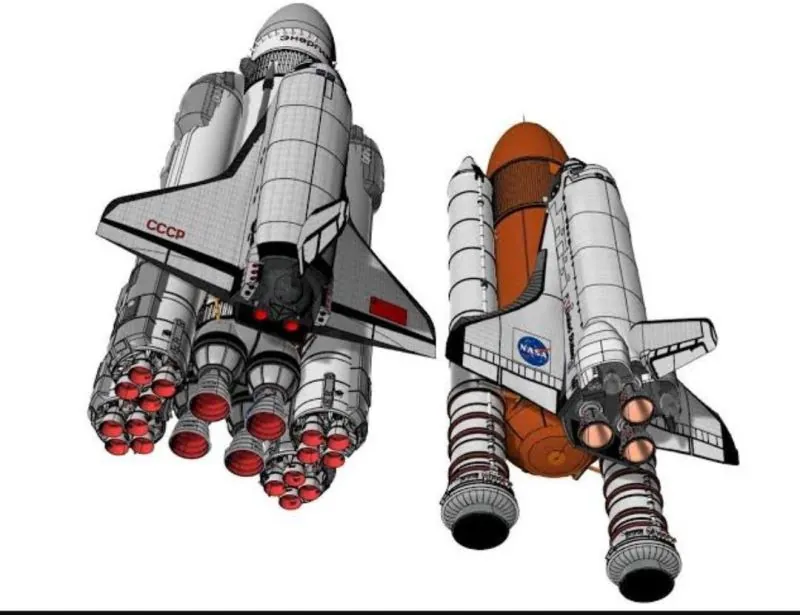
Stand a Buran next to an American orbiter on the pad and you would swear they came from the same drawing board. The resemblance is real, but it stops at the paint. Underneath that familiar delta wing, the two machines solved the same problem in completely opposite ways.
Start with the engines, because that is where the philosophies split hardest. The US shuttle bolted its three main engines directly onto the orbiter's tail. Those engines rode the whole mission, up and back. Buran carried no ascent main engines at all. Every ounce of liftoff thrust came from the Energia rocket, and once that rocket did its job, the whole stack of propulsion hardware fell away. The orbiter kept only a small set of maneuvering engines for orbital insertion and small course corrections. Some accounts call this group "DOM," though that designation is hard to pin down, and the engines are more reliably placed in the 17D11/17D12 family.
The boosters tell the same story from a different angle. America's solid rocket boosters were simple and brutal: once you lit them, they burned until the fuel ran out, no throttle, no do-over. Energia's side boosters ran on liquid fuel, which meant engineers could throttle them, shut them down, and restart them. That flexibility mattered. It also meant Energia could fly on its own as a heavy-lift rocket, without Buran riding on top at all.
Payload capacity is where the numbers get slippery. The commonly repeated comparison puts Buran at 30 tons and the American shuttle at 28, but those figures shift depending on the source and the mission profile, so treat the exact gap with some caution. What is certain is the arrangement behind it: the Soviets believed shedding their main engines at staging would buy them more cargo room, and the real-world difference turned out far less dramatic than that logic promised.
One popular claim deserves a correction. You will sometimes hear that Energia out-muscled the Saturn V. That is not true in raw thrust. Energia was a remarkable machine, but sheer power was not where it beat the Saturn.
Then there is the brain of the thing. American orbiters flew largely on pilot command. Buran ran on four independent flight computers, each with its own subsystems. If one started giving bad data, the system voted it out and the others carried on. That redundancy is exactly what let Buran fly its entire mission unmanned, a fully automated orbital flight no crew ever needed to touch.
The Unmanned Triumph and the End of the Program
On 15 November 1988, the Buran space shuttle lifted off from Baikonur Cosmodrome in Kazakhstan, flew an entire orbital mission without a single person aboard, and landed itself automatically. No cosmonaut touched a control. No crew sat in the seats. It was a machine flying itself through space and back, and it worked perfectly. That flight remains the only orbital mission the Buran space shuttle ever made.
Think about what that means. The orbiter's four independent flight computers, each running its own subsystems, cross-checked one another in flight. If one failed, the system simply voted it out and kept going. That redundancy is what allowed a fully automated launch, orbit, and runway landing with no human intervention at any stage.
The plan was never for just one. Five Buran shuttles were planned or begun, but only OK-1K1 was ever completed for orbital flight. The others sat in various stages of assembly when the project was halted, and they were later scrapped. One orbiter went to space. The rest went to the cutting torch.
The Test Prototype That Flew on Jet Engines
Before OK-1K1 ever reached orbit, engineers needed to learn how the airframe handled in the atmosphere. They built a test version called OK-GLI and fitted it with four AL-31 jet engines so it could take off under its own power, like a conventional aircraft. Between 1984 and 1989, OK-GLI performed atmospheric test flights, commonly cited as about 25 in total, though the exact count is hard to pin down. Those flights fed directly into the design that made the 1988 orbital mission possible.
Today OK-GLI is displayed at the Technik Museum Speyer in Germany. It is 36 meters long, 16 meters tall, and weighs roughly 80 tons, a full-size orbiter sitting indoors for visitors to walk around.
What Happened to the Rest
The orbiter that actually flew in space, OK-1K1, was destroyed in 2002 when the hangar housing it at Baikonur collapsed. The one machine that had carried Soviet ambitions into orbit was crushed by a failing roof, not by any rival program.
And then there is the Buran in Gorky Park. Yes, it is real, but it is not a single vehicle. It is an assembled mockup, built from parts taken from different shuttles, one wing here, another fuselage there. A test article pieced together rather than a flown spacecraft.
One launch. One landing. One orbiter that survived long enough to be photographed in a museum, and one that did not survive its own hangar.
Ejection Seats and the Human Question
The Buran space shuttle was drawn up for a crew of up to about ten people, yet the only orbiter that ever reached orbit flew with nobody aboard at all. That gap between the blueprint and the actual mission is where the strangest engineering question of the whole program lives: if ten cosmonauts had been strapped into that cabin, how exactly were they supposed to get out in an emergency?
Some accounts claim the ejection seats were built only for a two-person test crew. Honestly, that version makes more sense to me than the alternative. Ask anyone who has spent time around aircraft and they will tell you that an ejection is a violent, technically brutal event even when there is a single person in the seat. The rockets, the timing, the clearances, the spine. Getting one pilot out cleanly is already a small miracle of engineering. So when I try to picture eight or ten crew members firing out of a shuttle in sequence, my skepticism kicks in hard.
Then I went digging through buran.ru, and the diagrams there made me pause. The images show a rail system mounted just behind the crew seats. According to what those drawings suggest, the upper seats would fire first, and then the lower seats would slide along the rail to exit through the same line the upper seats had just cleared. A staggered escape, one tier at a time, all funneling through a single path out of the hull. Whether that system was ever actually tested, I have no idea. That part remains an open question, and anyone curious enough to comb through the site might be the one to settle it.
It is worth remembering what was riding on all of this. Multiple Buran orbiters were planned or begun, but only OK-1K1 was ever completed for orbital flight, and it launched unmanned on 15 November 1988. So the machine could fly itself. The harder problem was always the humans who might one day sit inside it.
Frequently asked questions
What was the Buran space shuttle and why was it built?
Buran was the Soviet Union's reusable orbital vehicle, officially designated VKK, meaning "air-space ship." It was built as a direct response to the American Space Shuttle, which Soviet leaders interpreted as a military threat capable of dropping bombs from orbit. The program was formally initiated in 1976, and Buran made its only spaceflight in 1988.
How did the Buran space shuttle differ from the American Space Shuttle?
Unlike the American orbiter, Buran carried no main engines of its own. All ascent thrust came from the Energia rocket, which used liquid-fuel boosters rather than solid-fuel ones. Buran also had four independent flight computers capable of isolating a faulty unit, enabling fully automated flight. The American shuttle relied on pilot control.
Why did the Buran space shuttle only fly once?
Buran made a single unmanned orbital flight on 15 November 1988. After that, the Soviet Union began to collapse, budgets were slashed, and the program was halted. No second launch ever took place. The spacecraft that had flown was later destroyed when its hangar at Baikonur collapsed in 2002.
What happened to the Buran space shuttle after the Soviet Union collapsed?
The program was cancelled outright. Unfinished orbiters were scrapped while still under construction. The one orbiter that had flown in space, OK-1K1, was destroyed in 2002 when its hangar roof caved in. The OK-GLI atmospheric test prototype survives and is displayed at the Technik Museum Speyer in Germany.
Was the Buran space shuttle ever manned?
No. Buran flew only once, and that mission carried no crew. It was designed to accommodate a crew of up to about 10, but it never flew with people aboard. The single 1988 flight was fully automated from launch through landing, controlled entirely by its onboard computer systems.
What was the Energia rocket and how did it launch Buran?
Energia was a heavy-lift liquid-fuel rocket developed by Soviet engineers to carry Buran to orbit. Because its boosters burned liquid fuel, they offered flexibility that solid-fuel rockets could not match, and Energia could also fly independently as a cargo launcher. Contrary to a popular claim, Energia was not more powerful than the Saturn V in raw thrust.
Where can you see a Buran space shuttle today?
The OK-GLI test prototype, fitted with four jet engines for atmospheric flights, is on display at the Technik Museum Speyer in Germany. A Buran mockup also stands in Gorky Park in Moscow, though it is an industrial assembly pieced together from parts of different vehicles rather than a single original orbiter.
How did the Buran space shuttle land automatically without a pilot?
Buran's flight control system used four independent computers, each with its own subsystems. If one failed, the system isolated it and the others continued. This redundancy allowed the spacecraft to fly its entire 1988 mission, from liftoff through orbital insertion and final landing, without any human input. Editorial note: Details that remain unconfirmed, including some figures surrounding the program's costs and internal disputes, are presented here as reported rather than as settled fact.
Got a take on this? Add your voice to the conversation below →
No comments yet. Be the first.