One Ring Origins: The Myths Behind Tolkien's Creation
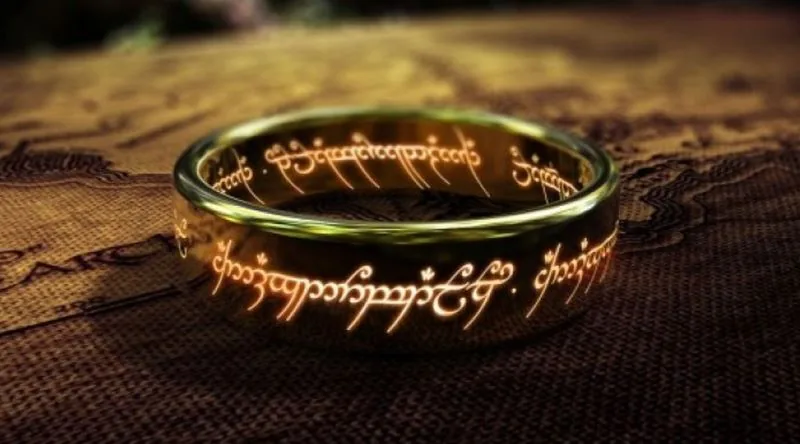
The One Ring mythology origins trace directly to J.R.R. Tolkien's deep study of ancient European legends, blending the Ring of Gyges from Plato's Republic with the cursed Norse ring Andvaranaut from the Völsunga saga, all reimagined in Oxford during the 1930s and 1940s. Tolkien transformed these scattered mythical fragments into something far more personal and terrifying, crafting a ring that wasn't just a tool of invisibility but a sentient, corrupting force that mirrored his own experiences in a world torn apart by industrial war.
Tolkien drew the One Ring from two primary ancient sources: Plato's Ring of Gyges, a simple invisibility device from Greek philosophy, and the Norse Andvaranaut, a gold ring cursed by a dwarf in the Völsunga saga. He merged these with his original invention of a ring that actively corrupts its wearer, creating a uniquely modern myth about addiction and power that was fully developed by the time The Lord of the Rings was published in 1954.
- Plato's Ring of Gyges, written around 380 BCE in Athens, tells of a shepherd who finds a gold ring that grants invisibility and uses it to commit murder and seize a kingdom.
- The Norse Andvaranaut appears in the Völsunga saga, composed in thirteenth-century Iceland, where the dwarf Andvari curses his golden ring after it is stolen by the god Loki.
- Tolkien, a professor at Oxford University from 1925 to 1959, began writing The Lord of the Rings in 1937 as a sequel to The Hobbit, completing the novel in 1949.
- Unlike the Greek and Norse rings, Tolkien's One Ring possesses its own will, actively seeking to return to its master Sauron and enslaving whoever wears it.
- The One Ring was destroyed in the fires of Mount Doom in the fictional year 3019 of the Third Age, as told in the novel published in 1954 and 1955.
The One Ring's Hidden Ancestors: A Journey Through Myth
The One Ring in J.R.R. Tolkien's The Lord of the Rings grants invisibility, but it does far more than that: it corrupts whoever wears it and actively seeks to return to its creator, the Dark Lord Sauron. Before it became the centerpiece of Middle-earth's greatest conflict, though, this golden band had ancestors stretching back thousands of years. The One Ring mythology origins trace to two legendary rings: the Ring of Gyges from ancient Greece and Andvaranaut from Norse legend.
When readers first meet the Ring in The Hobbit, published in 1937, it seems like a simple trinket that helps Bilbo Baggins escape a few tight spots. But by the time The Lord of the Rings arrived in 1954, that same ring had transformed into something terrifying: an object with what appears to be its own will, dragging its bearer toward evil and always pulling back toward Sauron in Mordor. The journey from lucky find to world-ending weapon is one of fantasy literature's greatest arcs.
Here is where the story gets fascinating. Tolkien did not invent the concept of a magic ring from nothing. He drew from deep wells of folklore and mythology, and two specific rings stand out as his most significant inspirations. The first comes from Plato's Republic, written in the 4th century BC. The second belongs to an Old Norse saga that Tolkien knew intimately and even retold himself.
Both of these ancient rings share DNA with Tolkien's creation, yet each differs in crucial ways. Understanding those differences reveals just how cleverly Tolkien borrowed, transformed, and ultimately surpassed his sources. The One Ring mythology origins are not a simple copy of one story, but a rich blend of several traditions, stirred together in what Tolkien himself called the Cauldron of Story.
Plato's Ring of Gyges: The Ancient Greek Invisibility Ring
Long before Sauron forged his master ring in the fires of Mordor, the philosopher Plato was already spinning a tale about a golden band that could make its wearer vanish. In Book II of The Republic, written in the 4th century BC, Plato tells the story of Gyges, a humble shepherd in ancient Lydia who stumbles upon a magical ring that changes everything. It is the earliest known invisibility ring in Western literature, and its shadow falls directly across Middle-earth.
The story begins with an earthquake splitting the earth open in Lydia, revealing a long-forgotten cave. Inside, the shepherd Gyges finds a corpse wearing a golden ring. When he twists the ring's bezel toward himself, he disappears. Turn it back, and he reappears. It is a simple, seductive power, and Gyges wastes no time exploiting it.
Using his newfound invisibility, Gyges works his way into the royal palace, seduces the queen, murders the king, and seizes the Lydian throne for himself. Plato uses this fable to ask a pointed question: if you could commit any crime without consequence, would you still choose to be just? Gyges, left to his own devices with no fear of punishment, abandons morality entirely.
Here is where the historical record gets interesting. Gyges was a real Lydian king who did come to power through a coup, as recorded by the historian Herodotus in his Histories. But the magic ring? That is pure Platonic invention, a thought experiment dressed up as myth.
The parallels between Gyges's ring and the One Ring are striking. Both are golden. Both grant invisibility. Both are discovered in caves. And both drive their bearers toward terrible acts. But the differences cut deeper than the similarities.
Gyges's ring is morally neutral. It does not corrupt; it reveals. The darkness it exposes was already lurking inside the shepherd, waiting for the right moment to surface. The One Ring, by contrast, actively corrupts. It carries a piece of Sauron's own spirit, and it bends even the purest hearts toward evil. Boromir, a noble warrior, succumbs to its lure within moments of being near it. Frodo, the hobbit who endures its burden longest, is permanently scarred by the journey.
There is another crucial difference in power. Gyges's ring only makes him invisible. The One Ring, when worn by someone strong enough to master it, grants dominion over the wills of others. Sauron does not just want to hide; he wants to rule all of Middle-earth. Gyges merely took a kingdom.
Tolkien never directly commented on whether Plato's fable influenced him. According to Ralph C. Wood's book The Gospel According to Tolkien: Visions of the Kingdom in Middle-earth, the Oxford professor was likely familiar with the ancient story, though this remains a matter of scholarly inference rather than confirmed fact. What is certain is that the Ring of Gyges belongs to a much older tradition of magical jewelry, one that Tolkien drew from deeply as he built his own mythology.
Andvaranaut: The Cursed Norse Ring That Inspired Tolkien
Before Frodo ever set foot in Mordor, another ring was already destroying everyone who touched it. The Völsunga saga, an Old Norse epic chronicling the rise and fall of a warrior clan, features a golden ring called Andvaranaut that carries a fatal curse. Unlike the One Ring, it does not grant invisibility; it helps its bearer find gold and treasure. But like Tolkien's creation, it brings death to whoever possesses it.
The trouble begins with Loki, the trickster god of Norse mythology. He steals Andvaranaut from the dwarf Andvari, who forged it. Enraged, Andvari places a curse upon the ring: its possessor will meet death. Loki, eager to escape the curse's weight, hands the ring to the dwarf king Hreidmar to settle a debt. The payment does not bring peace. Hreidmar's son Fafnir becomes consumed by greed, murders his own father, and seizes the ring for himself. Over time, his avarice transforms him into a terrifying dragon, a fate that echoes the "dragon sickness" that afflicts Thorin in Tolkien's The Hobbit.
Sigurd, a hero raised by the dwarf Regin rather than Hreidmar, eventually slays Fafnir. Yet the curse does not end with the dragon's death. The cycle of violence and betrayal continues, dragging every new owner of the ring into ruin. This pattern feels deeply familiar to anyone who has read The Lord of the Rings. Sméagol strangles Déagol on the banks of the Gladden River for the One Ring. Boromir attacks Frodo at Amon Hen. Gollum bites off Frodo's finger on the slopes of Mount Doom. In both tales, the ring turns people against those they love.
Tolkien's admiration for the Völsunga saga is no secret. He wrote his own retelling, The Legend of Sigurd and Gudrún, a narrative poem published after his death. Richard Wagner also drew on the same Norse sources for his opera cycle Der Ring des Nibelungen. Some critics have suggested Wagner's work influenced Tolkien, but Tolkien firmly denied it. He insisted that any similarities between his story and Wagner's opera arise from their shared roots in Norse mythology, not from direct borrowing.
The saga's influence extends beyond the ring itself. Sigurd wields a legendary sword named Gram, which breaks and is later reforged. This directly inspired Aragorn's sword Andúril in The Lord of the Rings, a blade that is also broken and remade before its bearer claims his throne. The cursed ring and the reforged sword together show how deeply the Völsunga saga shaped Middle-earth, and why the One Ring mythology origins reach back far beyond Tolkien's own imagination.
What Made Tolkien's Ring Original?
Invisibility rings show up all over mythology, from Sir Yvain's magic ring in Arthurian legend to Plato's Ring of Gyges from the 4th century BC. But Tolkien's One Ring stands apart because of one crucial idea: a Dark Lord forging a master ring to control everyone else who wears a magic ring. That concept, along with the quest to destroy the ring in a volcanic forge, was entirely his own invention.
Invisibility rings were practically a dime a dozen in old stories. Sir Yvain, the knight from Chrétien de Troyes's 12th-century Arthurian romances, had one. Cursed treasures, meanwhile, were a tired old metaphor for greed long before Tolkien put pen to paper. So what made the One Ring different?
The answer lies in the ring's purpose. Gyges's ring simply made its wearer invisible. Andvaranaut, the cursed golden ring from the Völsunga saga, supposedly helped find gold and treasure. But Tolkien's ring did something no mythical ring had done before: it was created by Sauron specifically to dominate the wills of everyone who wore the other rings of power. That was a brand-new idea. The Dark Lord forging a controlling ring was Tolkien's original stroke, as was the plot device of carrying that ring across Middle-earth to hurl it into the fires of Mount Doom.
Tolkien himself explained his creative process in his 1947 essay "On Fairy-Stories" with a wonderful metaphor he called the Cauldron of Story. Think of it as a great communal pot that all storytellers toss ingredients into. Every writer who dips into that cauldron pulls out something that contains traces of everything thrown in before. Tolkien added plenty of his own spice, but the broth still tasted of the old tales.
So yes, the One Ring mythology origins stretch back to ancient Greece and Norse legend. But the story Tolkien built around it, the master ring that corrupts and controls, the desperate journey to destroy it, that was something the world had never seen before.
Frequently asked questions
What myths inspired the One Ring?
The One Ring mythology origins trace back to two ancient sources: the Ring of Gyges from Plato's Republic , written around 375 BC, and Andvaranaut from the Old Norse Völsunga saga . Plato's tale features a shepherd who finds a golden ring granting invisibility, while the Norse saga presents a cursed treasure ring that brings doom to its possessors.
How does the Ring of Gyges differ from the One Ring?
Gyges' ring only grants invisibility and reveals the wearer's existing inner darkness, while the One Ring actively corrupts its bearer and can dominate the wills of others. In Plato's account from the 4th century BC, Gyges uses the ring to murder the Lydian king and seize the throne, but the ring itself never pushes him toward evil. Sauron's Ring, by contrast, exerts its own corrupting influence even on characters with pure hearts.
Why did Tolkien deny Wagner's influence?
Tolkien insisted that similarities between The Lord of the Rings and Richard Wagner's opera Der Ring des Nibelungen arose from shared Norse sources, not from Wagner's work. Both drew from the Völsunga saga , including the cursed ring Andvaranaut, which Loki stole from the dwarf Andvari. Tolkien maintained this position firmly, pointing to their common mythological ancestry rather than any direct borrowing.
Did Tolkien invent the master ring concept?
Yes, the idea of a single ring controlling other rings was entirely Tolkien's original creation. While invisibility rings appear in Arthurian legend, including Sir Yvain's magical ring from Chrétien de Troyes' romance, no prior myth features a Dark Lord forging a master ring to dominate other ring-bearers. Tolkien's innovation lay in combining the invisibility trope with a hierarchical system of magical rings under one controlling artifact.
Got a take on this? Add your voice to the conversation below →
No comments yet. Be the first.