Lost Finale Explained: Parallel Universes, Not a Dream
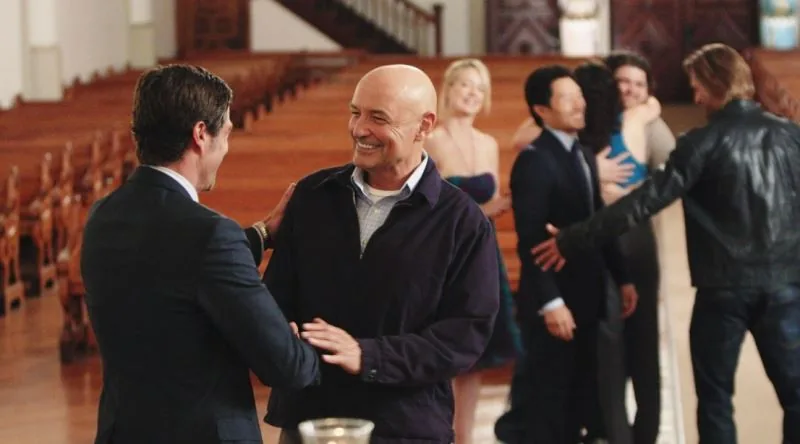
The Lost finale parallel universes reveal that the sideways timeline was never a dream or purgatory, it was a real afterlife construct where the survivors reunited after death, with the island acting as a source of immense electromagnetic energy throughout the series. When the final episode aired in 2010, millions watched Jack Shephard close his eye for the last time, many left confused or even angry. Yet the truth tucked inside that church scene is far more hopeful than the cynical take that "they were dead the whole time" suggests, and it recontextualizes every strange event from the crash to the Swan station.
The Lost finale reveals the characters were never dead during the island events. The sideways world shown in season six is a shared afterlife created by the survivors to find each other after their deaths, which occurred at different times. The island itself was a real, physical place with unique electromagnetic properties, and the Flight 815 crash was a real event with real consequences.
- The island in Lost is a real physical location with unique electromagnetic properties, not an afterlife or dream state.
- Flight 815 crashed in 2004 because Desmond failed to push the button in the Swan station, triggering a magnetic explosion that tore the plane apart midair.
- The sideways timeline in season six is a purgatory-like afterlife that the survivors built together, where they gathered after each of them died at different points in time.
- The church reunion in the finale shows the survivors acknowledging each other and moving on together, with Christian Shephard confirming that everything on the island really happened.
- Jacob and the Man in Black represent the island's dual forces of order and chaos, with the island serving as a cork holding back malevolent energy that would otherwise destroy the world.
The Lost Finale Isn't a Dream, Here's What Really Happened
No, the survivors of Oceanic Flight 815 were not dead the whole time, and the island was never purgatory. The real explanation, confirmed by the show's 2010 finale "The End," is that the island is a source of electromagnetic energy acting as a cork for malevolent forces, while the flash-sideways scenes revealed a shared afterlife where the characters reunite after their deaths.
When Lost wrapped up in May 2010 after six seasons on ABC, millions of viewers threw up their hands. The storytelling had twisted into such a knot that the loudest takeaway sounded like "it was all a dream." That reading misses the mark entirely, and the distinction matters.
The island itself is not a doorway between worlds. Official show material describes it as a concentrated pocket of electromagnetic energy, a cork sealing away something dark and dangerous. The Dharma Initiative built the Swan station in the 1970s to manage that energy scientifically, with Desmond Hume stuck pushing a button every 108 minutes to discharge the buildup. When Desmond failed to enter the code, the resulting electromagnetic discharge in 2004 pulled Flight 815 out of the sky. That crash was real, physical, and devastating, not a transition into another dimension.
Locke's legs working again after the crash? That's the island's miraculous healing property, a supernatural gift, not proof he'd slipped into an alternate timeline. Jack's dead father, Christian Shephard, appearing in the jungle? Those manifestations stem from the island's mysterious powers, not from a parallel version of him living another life elsewhere.
What the finale actually revealed is that the flash-sideways, those seemingly alternate reality scenes, were a shared afterlife. The characters lived their lives, died at their own times, and gathered together in that church to move on. The island was always real. The friendships were real. The losses were real.
Why Flight 815 Crashed: The Magnetic Explosion Explained
Flight 815 crashed because Desmond failed to enter a code into a computer at the Swan station, triggering an electromagnetic discharge that pulled the plane out of the sky. The show makes this explicitly clear, so it is a fact, not a fan theory. That magnetic explosion is the direct cause of Oceanic Flight 815 breaking apart over the Pacific.
Here is how it unfolded. The Swan station was built by the Dharma Initiative to contain a massive pocket of electromagnetic energy beneath the island. Every 108 minutes, someone had to type in a sequence of numbers and hit "execute." That ritual discharged the building energy safely, keeping it from reaching a critical point.
Desmond Hume, a Scottish man who had been living in the station for years, was on his way back from a run when the alarm started. He had been gone too long. He arrived, but he was too late. The energy surged, the sky turned purple, and the electromagnetic force reached up and tore Flight 815 apart mid-air. The survivors on the beach felt the island shake, but they had no idea their crash was caused by a missed deadline in a concrete bunker.
This is not about a gateway opening between parallel universes. The island is a source of electromagnetic energy, and the Swan was a pressure valve, not a door. The code kept the energy contained, and when Desmond missed the window, the result was a magnetic burst that brought the plane down on September 22, 2004.
The Island's True Role: Electromagnetic Energy, Not a Gateway
That image of the island as a swinging door between parallel universes? It never held up. The island in Lost functioned as a cork, plugging something dark and dangerous, not as a portal connecting different worlds. The real story, confirmed across the series, is about raw electromagnetic energy and the constant battle to keep it contained.
Desmond Hume, the Scotsman who washed up in the Swan station, spent years typing the numbers 4 8 15 16 23 42 into that dusty computer. That ritual had nothing to do with sealing a gateway. Every time he punched in the sequence, he discharged accumulated electromagnetic energy, preventing a catastrophic buildup that could tear the island apart. The show spelled this out plainly. When Desmond failed to enter the code on September 22, 2004, the resulting electromagnetic discharge pulled Oceanic Flight 815 out of the sky. That crash, which stranded our survivors, happened because the energy was never released, not because some interdimensional door swung open.
The two factions guarding the island took wildly different approaches. The Dharma Initiative, a scientific research group that set up shop in the 1970s, treated the problem like an engineering puzzle, building the Swan station to monitor and release the energy in controlled pulses. Jacob, the island's mysterious protector, and the Black Smoke, the entity that hunted through the jungle, operated on a more mythological plane, playing a long game of candidates and guardianship that spanned decades. According to the original account, both camps were managing the same volatile force, but neither was ever framed as protecting a gateway to other universes.
That confusion likely stems from the finale's flash-sideways, which viewers initially mistook for a parallel reality. In the end, all the main characters reunite in a church after their lives conclude, a shared afterlife that has nothing to do with the island's mechanics. The island itself never opened a door to another dimension. It just hummed with dangerous power, demanding constant attention.
Mysteries Explained: Jack's Father, Locke's Legs, and Memory Loss
No, Jack's dead father was not wandering the island because he was alive in some alternate reality, and Locke didn't suddenly regain the use of his legs because he'd slipped into a brand-new existence. The island's supernatural properties are responsible for both phenomena. The flash-sideways sequences you see throughout the final season are something else entirely, a shared space the characters inhabit after their lives have ended.
Christian Shephard, Jack's father, died long before Oceanic Flight 815 ever left Sydney. When Jack starts seeing him in the jungle during those early days on the island, it's easy to think the grief is playing tricks on him. But the island was never a gateway between parallel universes. It's a place where the rules of ordinary life simply don't apply, where the dead can appear, where wounds heal, and where a man who spent years in a wheelchair can stand up and walk the moment the plane wreckage settles. John Locke's story in the episode "Walkabout" makes this plain: he boards that plane paralyzed, and he steps off it with working legs. That's the island's miraculous healing at work, not a transfer to a parallel life.
The confusion about memory loss is where a lot of viewers got tangled up. The characters who left the island, whether they were part of the Oceanic Six or others who escaped later, remembered everything. Their time on the island stayed with them, clear and complete. The memory fog only descends in the flash-sideways, which the 2010 series finale reveals to be a kind of afterlife where the main characters eventually reunite in a church. In that space, they slowly rediscover one another and recall the lives they shared. The island itself, with its electromagnetic energy and its role as a cork for darker forces, is the source of the strange events, not a portal between worlds.
The Church Reunion: A Shared Afterlife, Not Parallel Universes
The finale of Lost ends with the main characters reuniting in a church, and the show's creators have confirmed this is a shared afterlife, not a parallel universe. The flash-sideways scenes throughout season six were never meant to be an alternate reality where different choices played out. They were a waiting room of sorts, a place where these souls gathered after their lives on Earth had run their course.
That final image, with Jack's father Christian opening the doors to a sunlit sanctuary, carries a quiet weight once you understand what you are actually seeing. Each character who walks through those doors has lived a full life after leaving the island. Some found happiness, some found peace, and some simply found each other again. The church becomes the last stop on a very long journey that began with a plane crash in 2004.
The confusion about parallel universes is understandable. The flash-sideways sequences looked like an alternate timeline, with characters living different versions of their lives. Desmond's strange visions and the way memories started bleeding through seemed to suggest the show was playing with multiple realities. But the reveal in "The End" recontextualizes everything. These characters were not living alternate lives; they were moving toward the moment when they could all be together again.
What makes the reunion so affecting is that it happens after everyone has had their own ending. Hurley and Ben stayed on the island as protectors. Sawyer and Kate made it home. Desmond and Penny raised their son. Jack, of course, gave his life to save his friends, closing his eye for the last time in the bamboo forest where he first opened it. The church scene honors all of that history without erasing it.
Christian's words to Jack in that final scene make the show's intention clear: everything that happened, happened, and there is no "now" here. The characters created this place together so they could find each other. It is a deeply human resolution, one that has nothing to do with parallel universes and everything to do with the bonds formed through shared struggle. The Lost finale parallel universes theory that so many viewers held onto for years turns out to be a misreading of what the show was actually doing all along.
Frequently asked questions
What is the real meaning of the Lost finale?
The Lost finale, which aired in 2010, reveals that the flash-sideways scenes are not parallel universes but a shared afterlife. The characters created this space to find each other after their deaths, allowing them to reunite and move on together. The island events were real, and the afterlife was their final gathering place.
Why did Flight 815 crash in Lost?
Oceanic Flight 815 crashed in 2004 because of an electromagnetic discharge from the Swan station on the island. Desmond Hume failed to enter the code into the computer at the precise moment, causing a catastrophic magnetic buildup that pulled the plane out of the sky. The show explicitly confirms this in its second season.
How does the island act as a gateway in Lost?
The island does not act as a gateway between parallel universes. Contrary to popular fan theories, the island is a source of electromagnetic energy and functions as a cork holding back malevolent forces. This distinction matters because the island's power is about containment and energy, not dimensional travel.
Who are Jacob and the Black Smoke in Lost?
Jacob and the Man in Black are mythological figures who guard the island's power. Jacob serves as the protector, while the Man in Black, who takes the form of the Smoke Monster, seeks to leave. They are not guarding a gateway, as some fans speculate, but rather overseeing the island's electromagnetic heart and its role in balancing good and evil.
What is the significance of the church scene in Lost?
The church scene in the series finale is the emotional centerpiece where the main characters reunite in the shared afterlife. Each character arrives after their own life ends, and together they acknowledge their bonds before moving on. Christian Shephard, Jack's father, explains that this space was created by them for this purpose.
Did the Lost characters die in the plane crash?
No, the main characters survived the plane crash. Their deaths occur at various points throughout and after the island events, sometimes decades later. The flash-sideways afterlife shows them reuniting after all their lives have concluded, which is why the church gathering feels timeless and peaceful.
How does Desmond's code entry prevent the magnetic explosion?
Desmond's code entry at the Swan station discharges built-up electromagnetic energy, preventing a catastrophic explosion. When he misses the window, the energy accumulates and releases violently, which is exactly what caused Flight 815's crash. The code does not prevent a gateway from opening, as some theories suggest, but rather manages the island's volatile electromagnetic field.
Got a take on this? Add your voice to the conversation below →
No comments yet. Be the first.