Moon Illusion: Why the Horizon Moon Looks Huge

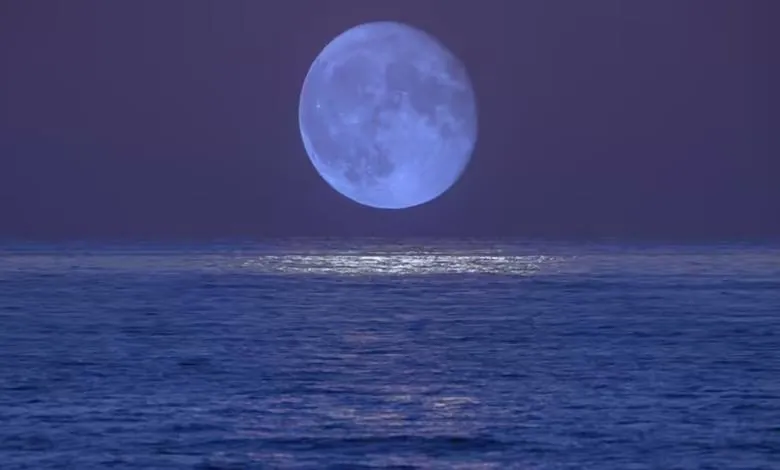
You're driving home on a clear evening, and there it is. A full Moon, huge and golden, sitting right on the horizon like it's about to roll into your car. It looks impossibly massive, maybe three times its normal size. Then hours later, you step outside again, and that same Moon has climbed high overhead. Suddenly it's small, almost ordinary. What happened? The Moon didn't shrink. Your brain just played a trick on you. This is the Moon Illusion, one of the oldest known perceptual puzzles in human experience, and the story of why it happens is as much about your mind as it is about the sky.
The moon looks bigger on the horizon because of a perceptual illusion, not because it is closer. Your brain compares the horizon moon to nearby objects like trees or buildings, making it seem larger. When the same moon sits high in an empty sky, it appears smaller. This effect has been documented and debated since antiquity.
- The moon illusion has been observed and recorded since ancient times, with Aristotle noting the effect in his writings.
- The actual angular size of the moon remains essentially constant as it travels across the sky, far too little change to explain the dramatic perceptual difference.
- The Persian scientist Ibn al-Haytham, writing in the 11th century, was among the first to argue that the effect is entirely psychological, not physical.
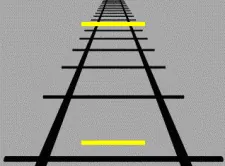
- The Ponzo illusion, where converging lines make identical objects appear different sizes, is often cited as a related visual mechanism for the moon illusion.
- The moon's distance from Earth varies slightly during its orbit, but this variation cannot account for the perceived size difference between horizon and zenith.
Why Does the Horizon Moon Look So Big?
The Moon near the horizon looks dramatically larger than the same Moon at the zenith, the point directly overhead. And here's the kicker: we know it's the same size. We can measure it. The Moon's angular size, the amount of sky it covers from our viewpoint, doesn't change as it travels across the sky. Yet no matter how many times we tell ourselves this, the horizon Moon still looks enormous.
The same trick works on the Sun. A setting Sun looks bloated and orange as it dips toward the horizon. But we notice it mostly with the Moon, and especially with a full Moon, because we can't actually stare at the Sun long enough to appreciate the effect. The Moon gives us the luxury of looking, wondering, and being fooled.
People have been fooled for a very long time. The puzzle itself is ancient, and so are the attempts to explain it, most of which have missed the mark.
Take Aristotle, for example. The Greek philosopher, writing in his work Meteorologica, blamed atmospheric haze. He thought the vapors near the horizon refracted the Moon's light and magnified it. That explanation held for centuries, but it's wrong. The illusion appears even on perfectly clear nights when the air is crisp and empty.
Another popular theory, one that still circulates today, says the Earth's atmosphere acts like a lens. It bends the Moon's light and magnifies it, the way a glass marble magnifies the print beneath it. Nice idea, but no. The atmosphere does refract light, but the effect actually compresses the Moon vertically, making it look slightly squashed, not bigger. The lens theory cannot be the source of the illusion.
So what's really going on? The answer, it turns out, lives in your brain, not in the sky. And it involves a few different perceptual mechanisms working together. One of them is a classic visual trick called the Ponzo illusion, and once you understand it, the Moon Illusion starts to make a strange kind of sense.
Why Old Explanations Miss the Mark
People have been scratching their heads over this trick of the eye for a very long time, and the explanations offered have been wonderfully confident and almost entirely wrong.
Aristotle, in his Meteorologica, pointed to atmospheric vapors as the culprit, arguing they bent the Moon's light and made it swell. It sounded reasonable enough, except for one stubborn problem: the illusion shows up just as vividly on a crystal-clear night when the air is perfectly dry and clean. No haze, no vapors, no bending light, and yet the Moon still looms enormous at the horizon. So much for that theory.
A more modern cousin of Aristotle's idea still circulates today. It claims Earth's atmosphere acts like a giant lens, magnifying the Moon's light and blowing it up to super-size. But this one fails on both counts. For starters, the Moon's angular size in the sky doesn't change whether it sits at the horizon or directly overhead. What's more, atmospheric refraction actually does the opposite of magnifying: it squashes the Moon's image horizontally, making it look slightly flattened, like a squashed ball, not inflated. The lens theory, however intuitive it sounds, simply cannot be the source of the Moon Illusion.
Then there's the comparison theory, the one that feels so obvious you almost want it to be true. When the Moon hangs low, we unconsciously measure it against trees, buildings, and other familiar objects, and those comparisons make it seem gigantic. But the illusion persists over empty oceans and flat plains where there is nothing to compare it to at all. And flip the scenario around: when the Moon climbs high among skyscrapers, surrounded by plenty of objects, it looks perfectly normal in size. If comparison were the driving force, the Moon should look huge up there too. It doesn't. The theory collapses under its own weight.
What Did Rock and Kaufman Discover?
The horizon Moon really does look bigger, and in the 1950s and 1960s, cognitive psychologists Irvin Rock and Lloyd Kaufman proved it with careful experiments. Their work in the early 1960s, published in the journal Science, confirmed what sky-watchers had claimed for centuries: people genuinely perceive the Moon as much larger when it sits near the horizon.
Rock and Kaufman didn't just ask people how big the Moon looked. They built apparatus that let observers match the size of the horizon Moon against a comparison disk in the sky. The results were striking. In some cases, test subjects perceived the Moon at the horizon as up to three times larger than when it sat directly overhead at the zenith. That is not a subtle effect. That is a dramatic, unmistakable difference in perception.
Here is where things get interesting. The researchers also found that the illusion depends entirely on context. When visual cues to the Moon's position were removed, the effect vanished completely. The simplest demonstration is a paper towel roll. Look at the horizon Moon through the tube, and suddenly it looks exactly the same size as the Moon overhead. No context, no illusion.
That single observation settles a crucial question. The Moon Illusion is not physical. The Moon's actual size in the sky does not change as it climbs from horizon to zenith; that has been measured with telescopes and cameras countless times. The atmosphere is not magnifying it, and no lens is at work. The change happens entirely inside our heads. When the brain loses its cues about where the Moon sits in space, it also loses its reason to inflate the Moon's size.
The experiments by Rock and Kaufman did more than confirm an old curiosity. They demonstrated that the Moon Illusion is a genuine perceptual phenomenon, one that operates reliably across observers and conditions. And they pointed toward the real explanation, one that involves how the brain judges distance and size together, a story that has its roots in work done a thousand years earlier.
How Does the Ponzo Illusion Explain the Moon Illusion?
Picture two identical horizontal lines drawn between a pair of converging vertical lines, like train tracks meeting at a distant point. The upper line will always look longer, even though both are exactly the same length. That is the Ponzo illusion, and it is one of the strongest tricks your visual system can play on you.
Your brain refuses to see those converging lines as what they are. Instead, it reads them as parallel lines receding into the distance, the way railroad tracks shrink toward the horizon. Once your brain decides the upper line sits farther away, it makes a quick calculation: if that line is farther and still takes up the same amount of space on your retina, it must be physically bigger. So your brain tells you the upper line is longer. You cannot switch this off. Even knowing the lines are identical, you will still see the difference.
Now take that same logic and point it at the sky. Experiments have repeatedly shown something curious about how we perceive the dome above us. We do not see the sky as a perfect hemisphere. We see it as a flattened bowl, a squashed dome where the point directly overhead, the zenith, feels closer than the horizon. On a cloudy day, this becomes obvious. The clouds directly above you might be a few kilometers up, while clouds near the horizon feel vastly farther away, even when they are at the same altitude.
Combine this flattened-sky perception with the Ponzo mechanism, and the Moon Illusion clicks into place. When the Moon sits at the horizon, your brain places it at the far edge of that flattened dome. It seems distant, so your brain compensates and inflates its apparent size to keep the world consistent. As the Moon climbs toward the zenith, your brain judges it closer, and the same object shrinks back to normal. The Moon itself never changes size. Your perception of distance does all the work.
The same size-distance mechanism powers the Ames room illusion, where two people of equal height appear wildly different in size depending on where they stand in a deliberately distorted room. The room tricks your brain into misjudging distance, and your brain adjusts perceived size to match. The Moon Illusion is the same story, just written across the sky.
One quick clarification before you search for more: the Ponzo illusion has nothing to do with the Ponzi scheme. That is a financial fraud named after Charles Ponzi. The Ponzo illusion is named for an Italian psychologist, and it is purely a visual trick. No money changes hands, only perception.
Ibn al-Haytham Got It Right a Thousand Years Ago
About a thousand years before modern psychologists set up their experiments, a medieval scholar named Ibn al-Haytham correctly cracked the core of the Moon Illusion. This pioneering scientist studied vision and optics in a way nobody had before. And when he turned his attention to why the Moon looks enormous at the horizon, he landed on an insight that still holds up today.
Ibn al-Haytham, known in the West as Alhazen, wrote the Kitab al-Manazir, or Book of Optics, a work that would influence scientists for centuries. In it, he made a simple but profound observation: a fixed-size object appears smaller when your brain judges it to be closer, and larger when your brain judges it to be farther away. That single principle, now called size-distance invariance theory, became the foundation for understanding the Moon Illusion.
Here is how he applied it. When the Moon sits at the horizon, something in our perception makes it seem farther off. Since the Moon's actual size has not changed, the brain compensates by deciding the Moon itself must be bigger. It is a clever bit of mental math, and Ibn al-Haytham nailed it roughly a millennium ago.
He did not get every detail right, though. The scholar also believed that nearby objects, like trees and buildings, made the Moon appear closer and therefore larger. Modern science has shown that idea is wrong. The illusion persists even over empty oceans and flat plains where no trees or buildings exist to compare against.
Still, his core insight was remarkably accurate, more accurate than many scientists who came after him. Centuries later, thinkers were still blaming atmospheric haze or claiming the sky itself magnified the Moon. Ibn al-Haytham had already found the real mechanism hiding in plain sight: the way our minds judge distance shapes the way we see size.
What makes this so striking is how long the puzzle had already been around by his time. People had been noticing the Moon Illusion for thousands of years before Ibn al-Haytham came along. And here was a medieval thinker, working without telescopes or lab equipment, who understood the fundamental principle better than many of his modern successors. Ibn al-Haytham had cracked the core of the Moon Illusion, even if the full explanation would take centuries more to complete.

Frequently asked questions
What is the Moon Illusion?
The Moon Illusion is the phenomenon where the Moon and Sun appear dramatically larger when they sit near the horizon than when they climb to the top of the sky, even though their actual angular size never changes. You have likely witnessed this yourself during a full moon rising over a city skyline or an open field. The effect is purely perceptual, a trick your brain plays on you, not something happening to the Moon itself.
Why does the moon look bigger on the horizon?
The horizon Moon looks bigger because of how your brain processes distance and size together. When the Moon sits near the horizon, your brain interprets it as being farther away than when it is overhead, so it compensates by making the Moon appear larger. Two perceptual effects drive this: the Ponzo illusion and the flattened-sky hypothesis, both of which fool your brain into miscalculating distance.
How does the Ponzo illusion explain the Moon Illusion?
The Ponzo illusion works by tricking your brain with perspective cues. When two identical horizontal lines sit between converging vertical lines, the upper line looks longer because your brain assumes it is farther away and therefore must be physically bigger. The same logic applies to the Moon: at the horizon, your brain thinks it is more distant, so it interprets the Moon as larger than it actually is.
Who correctly described the Moon Illusion a thousand years ago?
Ibn al-Haytham, the 11th-century Arab polymath known in the West as Alhazen, correctly described the core mechanism behind the Moon Illusion around a thousand years ago. In his comprehensive work on optics, he noted that a fixed-size object appears smaller when perceived as closer and larger when perceived as farther away. He applied this exact principle to the Moon, anticipating what modern psychologists would later confirm through rigorous experiments.
Did Aristotle's explanation of the Moon Illusion prove wrong?
Yes, Aristotle's explanation was incorrect. The ancient Greek philosopher attributed the Moon Illusion to atmospheric refraction, claiming that haze and vapors in the air magnified the Moon's image near the horizon. However, the illusion persists even in perfectly clear air, and atmospheric refraction actually compresses the Moon's image along the horizontal axis rather than magnifying it. The physical explanation simply does not hold up.
Why does the moon look smaller when viewed through a paper towel roll?
Looking at the Moon through a paper towel roll removes the visual cues your brain relies on to judge its position in the sky. Without the horizon, trees, buildings, or other reference points, your brain loses the context that triggers the illusion. As a result, the Moon appears the same size whether it is near the horizon or high overhead, because the perceptual trick has nothing to work with.
Does the moon actually change size near the horizon?
No, the Moon does not change size at all. Its angular diameter remains essentially constant whether it sits on the horizon or at the zenith, the point directly overhead. The entire effect happens inside your head, as your brain processes distance cues and adjusts perceived size accordingly. What you see is a perceptual outcome, not a physical change in the Moon itself. Editorial note: Any facts which remain unconfirmed are presented as such, and the perceptual explanations offered here reflect the leading scientific theories while acknowledging that the exact neural mechanism is still a subject of active research.
Got a take on this? Add your voice to the conversation below →
No comments yet. Be the first.