Largest Known Prime Number: 41-Million-Digit Discovery
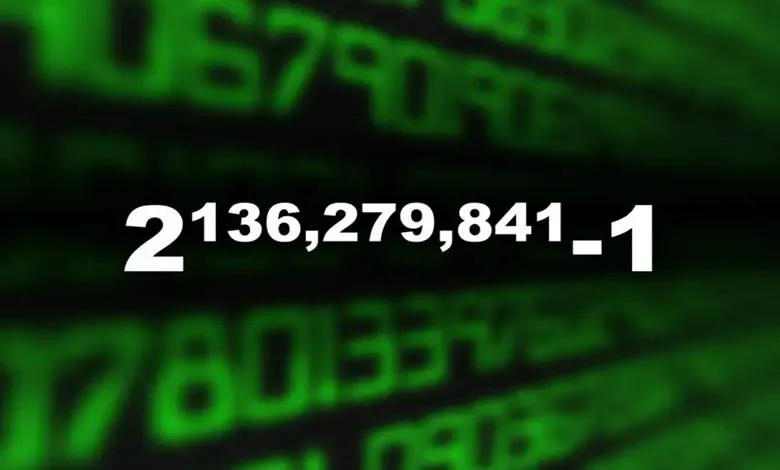
The largest known prime number, a 41-million-digit behemoth, was discovered in October 2024 by amateur researcher Luke Durant, a former NVIDIA employee, using free software from the GIMPS project. This 52nd Mersenne prime, found with cloud-based GPUs, marks a stunning milestone in a centuries-old mathematical quest that quietly underpins modern digital security.
In October 2024, Luke Durant, an amateur mathematician and former tech worker, found the largest known prime number, a 41-million-digit Mersenne prime designated M136279841. The discovery was made through the GIMPS distributed computing project, using cloud servers with graphics processing units, and it is the 52nd Mersenne prime ever identified.
- The new prime, written as 2^136,279,841 minus 1, contains 41,024,320 digits and is the 52nd Mersenne prime discovered.
- Luke Durant, a 36-year-old amateur researcher from San Jose, California, made the discovery on October 11, 2024, using a network of cloud-based GPUs.
- The discovery was verified by GIMPS, the Great Internet Mersenne Prime Search, a volunteer-driven distributed computing project running since 1996.
- This prime is roughly 16 million digits larger than the previous record holder, found in 2018, and it is the first Mersenne prime discovered since 2018.
- Durant is eligible for a $3,000 research prize from GIMPS, though a larger $100,000 prize for finding a 100-million-digit prime remains unclaimed.
A 41-Million-Digit Number Just Broke a Record, and It Took Six Years
After a six-year silence, the largest known prime number finally has a new champion: a 41,024,320-digit giant discovered by Luke Durant, an amateur mathematician who used free software and a network of graphics cards. The number is the 52nd Mersenne prime, and it dethrones the previous record holder by more than 16 million digits. Durant's find earned him a $3,000 prize from GIMPS, the Great Internet Mersenne Prime Search.
Durant, a former NVIDIA employee from San Jose, California, didn't stumble onto this by accident. He spent months assembling a cloud-computing setup, renting time on thousands of graphics processing units across 17 countries to run the calculations. The winning number, written as 2^136,279,841 minus 1, was finally confirmed in October 2024 after a volunteer in Greece ran the verification check.
The previous record, a 24,862,048-digit prime, had stood since December 2017, when electrical engineer Jonathan Pace found it using a computer donated to his church. According to the original account, that earlier discovery was itself a milestone, but the immediate predecessor to Durant's find was actually located by Patrick Laroche in 2018, a detail that often gets lost in the retelling.
What makes this particular hunt so remarkable is that anyone can join. GIMPS, founded by George Woltman in 1996, offers free software that lets volunteers across the globe contribute their idle computing power to the search. The project has been running for nearly three decades, and its participants have claimed every Mersenne prime discovered since its founding.
Why Do We Keep Hunting for Bigger Primes? Your Bank Account Depends on It
Prime numbers are the "atoms" of mathematics, and your online banking security literally depends on them. Cryptography, the science of encoding and decoding information, leans on the fact that multiplying two huge primes together is easy, but reversing that process is nearly impossible. That is why the largest known prime number matters far beyond pure math.
Think about it this way: every counting number is built from prime products. The number 12, for instance, is just 2 × 2 × 3. Small numbers like that are trivial to factor, but try doing it with a number containing tens of millions of digits. The difficulty ramps up so steeply that algorithms like RSA, which protect banking information and online shopping, rely on this exact problem to keep your data safe. Bigger primes mean stronger locks on your digital life.
Finding these giants takes clever work. The Sieve of Eratosthenes, a method dating back to ancient Greece, is the classic starting point: strike out the multiples of 2, then 3, then 5, then 7, and the numbers left standing are prime. Apply it up to 100 and only primes remain. Use the first 8 primes and you can sieve out all primes up to 400; use the first 168 and you cover a full million. Yet no known formula generates every prime, so mathematicians keep racing with algorithms to push further.
One powerful path comes from Marin Mersenne, a 17th-century French monk and mathematician. In his 1644 work Cogitata Physica-Mathematica, he claimed that for numbers of the form 2p − 1, only certain exponents p up to 257 yield primes. He was close but made five errors: p = 67 and 257 are composite, while p = 61, 89, and 107, which he omitted, do produce primes.
The record-breaking efforts accelerated with computers. In 1952, American mathematician Raphael Robinson wrote a program that found the next five Mersenne primes within ten months. Since 1996, the Great Internet Mersenne Prime Search (GIMPS) has let volunteers worldwide join the hunt using free software. In late 2020, GIMPS adopted the PRP test, a technique that nearly halved the computation time for identifying potential primes.
That is how Luke Durant, an amateur mathematician, discovered the current largest known prime number in October 2024. It is a Mersenne prime with 41,024,320 decimal digits, the 52nd known, and it beats the previous record by more than 16 million digits. The find earned Durant a $3,000 prize from GIMPS, with $150,000 and $250,000 waiting for whoever finds the first 100-million-digit and billion-digit primes respectively. The previous record before Durant's was found by Patrick Laroche in 2018, not the December 2017 discovery often cited. Either way, the search continues, because every new prime is another layer of security for all of us.
The Monk Who Started It All: Marin Mersenne's 1644 List
Marin Mersenne, a French friar who lived from 1588 to 1648, published a list in 1644 that would shape prime number hunting for centuries. In his work Cogitata Physica-Mathematica, he claimed that for values of p up to 257, only p = 2, 3, 5, 7, 13, 17, 19, 31, 67, 127, and 257 produce primes of the form 2p − 1. The man was a philosopher, a mathematician, and a monk who corresponded with everyone who mattered in science. His name now belongs to these very numbers.
Numbers of the form 2p − 1 are called Mersenne numbers, and the prime ones are Mersenne primes. But not every such number is prime. Take 24 − 1, which equals 15. That is clearly not prime. If 2p − 1 is prime, then p itself must be prime. The reverse, however, does not hold. Consider p = 11, which is prime. Yet 211 − 1 = 2047, and 2047 equals 23 × 89. So 11 being prime guarantees nothing.
Mersenne's list was brilliant but flawed. In 1750, the Swiss mathematician Leonhard Euler confirmed that 231 − 1 is prime. Then in 1876, French mathematician Édouard Lucas verified that 2127 − 1 is prime. Today we know Mersenne made five errors. The numbers for p = 67 and p = 257 are actually composite. And he omitted p = 61, 89, and 107, all of which are genuine Mersenne primes. For a man working without computers in the 1600s, that is a remarkably good batting average.
The computer age changed everything. In 1952, American mathematician Raphael Robinson wrote a program for the SWAC computer and found the next five Mersenne primes within ten months. For the following fifty years, every new discovery came through computing. The search for the largest known prime number had become a race between machines and the mathematicians who programmed them.
How GIMPS Finds These Giants, and How You Could Join
The Great Internet Mersenne Prime Search, better known as GIMPS, has been quietly crowdsourcing the hunt for enormous primes since 1996, and it's the reason we now know about the largest known prime number. Founded by George Woltman in January of that year, GIMPS turned what was once a solitary mathematician's obsession into a global project anyone can plug into. All you need is a decent computer, an internet connection, and a bit of patience.
In late 2020, the project adopted a game-changing tool called the PRP test. The name sounds technical, but the payoff is simple: because it has a low error rate and is easy to run, it cut the computation time needed to identify potential primes by nearly half. That speed boost matters when you're testing numbers with tens of millions of digits. The free software lives right on the GIMPS website, and there's no barrier to entry beyond downloading it and letting your machine chew on the math while you sleep.
Luke Durant, the amateur mathematician behind the October 2024 discovery of the largest known prime number, didn't have special clearance or a supercomputer in a lab. He had the same free software available to anyone, plus the clever idea to harness a cluster of graphics cards. When his system flagged a number with 41,024,320 decimal digits as a likely prime, the verification process kicked in, and the 52nd known Mersenne prime was confirmed.
There's even a little treasure at the end of the rainbow. Durant's find earned him a $3,000 cash prize from GIMPS, the standard reward for each new Mersenne prime. But the bigger jackpots are still on the table: the first person to find a prime with 100 million digits will collect $150,000, and the first to crack a billion digits takes home $250,000. Those prizes come from the Electronic Frontier Foundation's Cooperative Computing Awards, set up decades ago to encourage exactly this kind of distributed effort.
So the next time your computer idles during a coffee break, consider this: the record-breaking number that made headlines was found by someone who simply said yes to joining the search. The software is free, the instructions are clear, and somewhere out there, the next giant is waiting for its discoverer.
Perfect Numbers: The Ancient Mystery Hiding Inside Mersenne Primes
A perfect number is one where all its positive divisors, excluding itself, add up to exactly that number. The smallest is 6, because 1 + 2 + 3 = 6, and the second is 28, since 1 + 2 + 4 + 7 + 14 = 28. These deceptively simple numbers have fascinated people for over two thousand years, and they turn out to be intimately connected to the search for the largest known prime number.
Around the 4th century BC, the Greek mathematician Euclid made a striking observation in his Elements. He proposed that if 2p − 1 is prime, then the product 2(p−1) × (2p − 1) is always a perfect number. Try it with p = 2: you get 21 × (22 − 1) = 2 × 3 = 6. With p = 3, the formula gives 22 × (23 − 1) = 4 × 7 = 28. Euclid had found a reliable recipe for baking perfect numbers, but he never proved it was the only recipe in town.
Marin Mersenne, the 17th-century French friar whose name now adorns these special primes, studied perfect numbers extensively. In his 1644 work Cogitata Physica-Mathematica, he published a list of exponents he believed produced primes of the form 2p − 1: p = 2, 3, 5, 7, 13, 17, 19, 31, 67, 127, and 257. The first seven of those exponents correspond to perfect numbers, and mathematicians hunting for perfect numbers leaned heavily on Mersenne's list. It was solid work, though not flawless: he made five errors, wrongly including 67 and 257 while missing 61, 89, and 107.
Here is where the mystery deepens. Euclid showed that every Mersenne prime generates a perfect number, but the reverse question remains unanswered. Could there be a perfect number that is odd? No one has ever found one, and no one has ever proven none exists. This question of whether odd perfect numbers exist is roughly two thousand years old, making it one of the oldest unsolved problems in all of mathematics.
Every new Mersenne prime discovered, including the one found by Luke Durant in October 2024 that now holds the title of largest known prime number, automatically yields a new even perfect number through Euclid's ancient formula. The connection is so tight that the two quests have become one and the same. Each breakthrough in the search for Mersenne primes quietly adds another perfect number to humanity's collection, even as the odd perfect number question continues to resist every effort to crack it.
What's Next? Bigger Primes, Bigger Prizes
Luke Durant's October 2024 discovery of the largest known prime number came with a $3,000 cash prize from GIMPS, the Great Internet Mersenne Prime Search. But that's pocket change compared to what's waiting for the next record-breakers. The Electronic Frontier Foundation has posted two much larger bounties: $150,000 for the first person to find a prime with 100 million digits, and $250,000 for the first billion-digit prime.
Those targets might sound impossibly distant when you consider that Durant's number stretches across 41,024,320 decimal digits. Write it out by hand and you'd fill roughly 8,000 pages. Yet the mathematical truth is humbling: as staggering as this number is, it's just one tiny step on an infinite staircase. Euclid proved more than two thousand years ago that primes never run out, which means no matter how many digits the next record holds, there will always be another prime waiting just beyond it.
The hunt for those bigger primes continues through GIMPS, the distributed computing project that has been scanning for Mersenne primes since 1996. Anyone with a decent computer and an internet connection can join the search, downloading free software from the GIMPS website to lend their processor to the cause. In late 2020, the project adopted a new technique called the PRP test, which cut the computation time for identifying potential primes by nearly half.
There's something almost poetic about the pursuit, and the story of astronomer Ellie Arroway in Carl Sagan's novel Contact captures it perfectly. When Arroway scans the heavens with her radio telescopes, it's a sequence of prime numbers that arrives as the cosmic greeting from extraterrestrial intelligence. Primes, it turns out, are the universe's universal language, a signal that any advanced civilization would recognize. Like Arroway, the mathematicians and hobbyists running GIMPS software around the world are simply looking, trusting that the next great prime is out there waiting to be found.
Got a take on this? Add your voice to the conversation below →
No comments yet. Be the first.