How Microwave Ovens Work: The 2.45 GHz Science
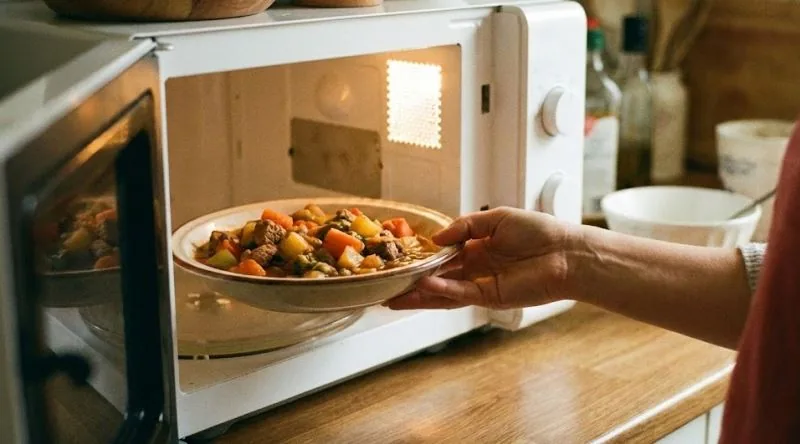
The microwave oven working principle comes down to a simple, elegant trick: a device called a magnetron generates 2.45 GHz electromagnetic waves that agitate water molecules inside food, creating heat through dielectric loss. This technology, born from radar research during World War II, was first commercialized in 1947 and has since become a staple in nearly every American kitchen. Understanding the science behind that humming box on your counter doesn't just satisfy curiosity, it also puts to rest the nagging fears about radiation and safety that have followed microwaves for decades.
A microwave oven uses a magnetron to produce 2.45 GHz electromagnetic waves that penetrate food and cause water molecules to vibrate rapidly. This vibration generates heat through dielectric loss, cooking the food from within. The oven's metal cavity and mesh door contain the waves, making the appliance safe for everyday household use.
- The magnetron tube, originally developed for military radar systems in the 1940s, is the core component that generates the microwaves used for cooking.
- Microwave ovens operate at a frequency of 2.45 GHz, chosen as a compromise for penetration depth and to avoid communication interference, without ionizing atoms or damaging DNA.
- Uneven heating is mainly caused by standing wave patterns inside the cavity and the geometry of the food itself, not just by limited penetration depth.
- Microwaved food does not become radioactive, as the electromagnetic waves simply transfer energy and do not alter the atomic structure of the food.
- The perforated metal mesh on the oven door reflects microwaves while allowing visible light through, acting as a safety barrier against radiation leakage.
The Microwave Myth: Why Your Food Isn't Radioactive
No, your leftovers are not secretly radioactive, and your microwave oven is not zapping your dinner with dangerous rays. The fear that microwaves emit harmful radiation or somehow contaminate food with radioactivity is one of the most persistent kitchen myths out there. The truth is simpler and far less scary: microwave ovens use non-ionizing waves, the same gentle category of energy as radio signals, which lack the power to damage DNA or alter your food at a molecular level.
Here is what actually happens inside that humming box on your counter. The magnetron, the heart of the appliance, generates electromagnetic waves at a frequency of 2.45 GHz with a wavelength of about 12.24 centimeters. These waves cause polar molecules, mainly water, to rapidly align and realign with the alternating electric field. That molecular agitation produces heat through a process called dielectric loss. It is not about molecules physically colliding like billiard balls, despite what you might have heard. The energy transfer is electric, not mechanical.
That distinction matters because it explains why the "radiation" label scares people unnecessarily. Ionizing radiation, the kind from X-rays or nuclear materials, carries enough energy to knock electrons out of atoms and break chemical bonds, which is how DNA damage occurs. Microwaves operate at a far lower energy level. They simply cannot do that kind of damage. Your food comes out hot, but chemically unchanged and perfectly safe to eat.
The only real hazard from a microwave oven is thermal, meaning the burn risk from pulling out a steaming bowl or biting into a potato that is molten on the inside while cool on the outside. And because the human body is mostly water, those same 2.45 GHz waves would heat your tissues if you were exposed to them directly. That is why standing pressed against the door while it runs for a long stretch is not a great idea. The appliance is designed to contain the waves, but common sense says give it a little space.
As for the claim that objects without water never heat up, that is only partially accurate. Dry materials with their own dielectric properties or conductivity can warm up too, though water is certainly the main driver in everyday cooking. The myth that uneven heating comes solely from water density variations also misses the mark. Standing wave patterns inside the cavity and the geometry of the food itself play a bigger role in those cold spots.
So the next time someone warns you about standing near the microwave while it runs, you can smile and explain the difference between ionizing and non-ionizing waves. Your food is hot, your DNA is intact, and the only thing you really need to worry about is burning your tongue.
The Real Science: How Microwave Ovens Actually Heat Food
Most people assume a microwave oven works by spinning water molecules around until they crash into each other, creating heat through friction, the same way rubbing your hands together warms them on a cold morning. That explanation gets repeated a lot, but it misses what is really happening inside the appliance. The actual mechanism is more subtle, and it has nothing to do with molecules physically colliding like billiard balls.
What really happens is that the alternating electric field inside the oven makes polar molecules, especially water, try to align themselves with the field as it flips direction millions of times per second. This rapid reorientation causes the molecules to jostle and interact with neighboring molecules, generating heat through a process called dielectric loss. Think of it less like friction between two surfaces and more like a crowd of compass needles being forced to spin around in unison every time the magnetic field changes. The energy from that constant reordering becomes thermal energy.
This distinction matters because it explains why dry objects can still heat up in a microwave, even though the popular version insists water is the only thing that gets warm. Ceramic plates, certain glass dishes, and even some dry foods absorb microwave energy because they contain polar molecules or conductive materials that respond to the field. The original account that claims water is the sole heating element simply does not hold up under scrutiny.
Similarly, the explanation for uneven heating gets oversimplified. The source suggests that colder spots in your leftovers are places with less water density, so fewer molecules are available to generate heat. In reality, uneven heating has more to do with how the microwaves form standing wave patterns inside the cavity, creating hot and cold zones based on the geometry of the food and the oven itself. Water content plays a role, but it is not the whole story.
The good news is that the safety claims in that original account are actually correct. Microwave ovens use non-ionizing waves, which means they do not have enough energy to strip electrons from atoms or damage DNA. Your food does not become radioactive, and the waves do not linger in what you eat. The only real hazard is thermal, which is why standing too close to a running oven for long stretches is not a great idea, since your body is mostly water and would absorb that energy as heat.
As for the technical specs, domestic microwave ovens operate at a frequency of 2.45 GHz with a wavelength of roughly 12.24 cm. The original account claims this frequency was chosen because water molecules vibrate most efficiently at this rate, but that is not quite accurate. The real reason is a compromise: 2.45 GHz offers good penetration depth for heating while avoiding the frequencies used for communication, like Wi-Fi and Bluetooth. Water actually absorbs microwaves more strongly at other frequencies, but those would heat only the surface of food rather than the interior.
So the next time you warm up a cup of coffee, you can appreciate that the appliance is doing something far more elegant than simply rattling water molecules together. It is using electromagnetic fields to make polar molecules dance, and that dance is what puts the heat in your meal.
Why Some Spots Are Hot and Others Cold
You pull a bowl of soup out of the microwave, give it a stir, and find a pocket of scalding liquid hiding next to a patch that is still lukewarm. This uneven heating is the most universal complaint about microwave ovens, and it happens to everyone. The older explanation you might have heard, that it comes down to water density varying through the food, is only part of the picture.
The original account suggested that cold spots contain less water, so fewer water molecules are around to collide and generate friction, while hot spots hold more water and therefore heat up faster. It sounds logical, and it does describe what you observe: dry bread heats unevenly, while a watery stew heats more consistently. But food scientists have since shown this is not the real mechanism. The actual culprit is the standing wave pattern inside the cavity. A microwave oven working principle relies on waves that bounce off the metal walls and interfere with each other, creating fixed points where energy concentrates and other points where it barely reaches. Your food's shape, thickness, and density all influence how those waves interact with it, which is why a round dish of mashed potatoes heats differently than a rectangular casserole.
That is why the turntable exists. It rotates the food through the hot and cold zones so that no single spot absorbs all the energy. The next time you notice a cold center, you can blame the wave pattern, not the water content alone.
The Empty Plate Test: What Happens When There's No Water?
If you put a completely dry object in the microwave, it may not heat up the way food does, and the reason comes down to how the microwave oven working principle relies on moisture. The popular explanation says water is the essential ingredient for generating heat inside that metal box, and without it, you are essentially running an empty stage. You might feel a faint trace of warmth on the surface, though, and that comes from something you cannot even see: the humidity already floating in the air around you.
Here is the scene. You place a ceramic plate, bone dry, onto the turntable. You close the door, press the button, and listen to the familiar hum. When you pull it out thirty seconds later, the plate feels room temperature. Maybe, just maybe, your fingertips catch a whisper of heat. According to the original account, that slight sensation happens because moisture from the air clings to the object's surface, and those tiny water particles do the work that the plate itself cannot.
But here is where the story gets interesting, and a little more complicated than the tidy version suggests. The claim that water is the sole heating element does not hold up under scrutiny. Dry materials with something called dielectric loss can warm up too. That means certain ceramics, glass, and even some plastics can absorb microwave energy directly, without a single drop of water in sight. So while the empty plate test often plays out as described, the science behind it has more nuance than "no water, no heat."
Think of it this way. The microwave oven working principle is not just about spinning water molecules around. It is about how the alternating electric field at 2.45 GHz interacts with any material that can respond to it. Water happens to be excellent at this, which is why your soup heats beautifully while the bowl around it stays cool. But water is not the only player in the game. Some dry substances simply do not respond strongly enough to show obvious heating in a short burst, which is why the empty plate test can fool you into thinking nothing happened at all.
So the practical takeaway? If you want to test your microwave, go ahead and try the dry plate. Just know that the result tells you more about that specific object than it does about the fundamental physics. The real story is about how different materials respond to electromagnetic waves, and water just happens to be the most dramatic responder we put in there on a daily basis.
The 2.45 GHz Frequency: Why That Specific Number?
Home microwave ovens emit waves with a maximum wavelength of about 12.24 cm and a frequency of 2.45 GHz. That much is confirmed fact, and it's the same frequency your Wi-Fi router uses, though at far lower power. But the story of why that particular number was locked in is more complicated than the tidy explanation you'll often hear.
The popular version goes like this: 2.45 GHz was chosen because water molecules vibrate most efficiently at that frequency, and it conveniently avoids clashing with communication frequencies. The second half of that claim holds up. The first half? Not so much.
Here's what the physics actually shows. Water's peak absorption of microwave energy sits closer to 10 GHz, not 2.45 GHz. So why didn't manufacturers pick the absolute sweet spot? Because a higher frequency means shallower penetration. At 10 GHz, the waves would cook the outer millimeter of your food while leaving the center cold. The 2.45 GHz choice is a compromise, a balancing act between heating depth and heating speed that also happens to sit in an unlicensed industrial, scientific, and medical band. That's the ISM band, carved out specifically so devices like microwave ovens don't interfere with radar, cell towers, or broadcast signals.
Think about what that means for the microwave oven working principle. The magnetron inside your appliance generates these 12.24 cm waves, and they bounce around the metal cavity, penetrating food to a depth of a couple of centimeters. The energy then excites polar molecules, mostly water, causing them to flip back and forth billions of times per second. That rapid oscillation generates heat throughout the outer layers, and the heat then conducts inward.
So the next time someone tells you the frequency was chosen because water loves it most, you can gently correct them. Water responds well at 2.45 GHz, yes, but the real genius is in the trade-off. Deep enough to heat a bowl of soup, shallow enough to be efficient, and safely tucked away from your phone calls. That's engineering, not magic.
Frequently asked questions
How does a microwave oven heat food?
A microwave oven heats food through a process called dielectric loss, where polar molecules like water align and re-align with a rapidly alternating electromagnetic field, converting that field energy into heat. This is not mechanical friction from molecules physically colliding, as is sometimes described. The real mechanism is the molecular agitation caused by the oscillating field, and it works because water is such an effective absorber of microwave energy.
Is microwave radiation harmful to humans?
No, microwave radiation is not harmful in the way many people fear. Microwave ovens use non-ionizing waves, which means they lack the energy to damage DNA or strip electrons from atoms. The only real hazard is thermal: your body is mostly water, so prolonged, very close exposure to a running microwave could cause heat-related tissue damage. That is why you should not press your face against the door while it runs.
Why does my microwave heat food unevenly?
Uneven heating comes down to standing wave patterns inside the oven cavity and the geometry of the food itself. The microwaves bounce around and create zones of high and low energy, so some spots get hit harder than others. The turntable helps, but it cannot fully solve the problem. Food shape and density matter too; thicker or denser areas simply take longer to heat through.
Do microwaves make food radioactive?
No, microwaves cannot make food radioactive. The non-ionizing waves they produce do not have enough energy to alter atomic nuclei or induce radioactivity. The waves simply excite water molecules to generate heat, and once the oven stops, the food holds no residual radiation. Eating food heated in a microwave is completely safe in this regard.
What frequency do home microwave ovens use?
Home microwave ovens operate at a frequency of 2.45 GHz, which corresponds to a wavelength of about 12.24 cm. This frequency was chosen as a compromise; it penetrates food well enough to cook evenly while avoiding the frequencies used for communication. Interestingly, 2.45 GHz is not actually the peak absorption frequency for water, but it works well enough for everyday cooking.
Why doesn't a microwave heat an empty plate?
An empty plate does not heat up much because it contains little to no water, and water is the primary driver of microwave heating. However, dry materials can still warm slightly if they have dielectric properties or conductivity. The faint warmth you feel on a plate often comes from surface moisture in the air clinging to it, not from the plate itself absorbing significant microwave energy. Editorial note: Any facts which remain unconfirmed are presented as such, hedged appropriately to reflect the current state of scientific understanding.
Got a take on this? Add your voice to the conversation below →
No comments yet. Be the first.