Blue Eyes Brown Eyes Experiment: Jane Elliott's 1968 Lesson
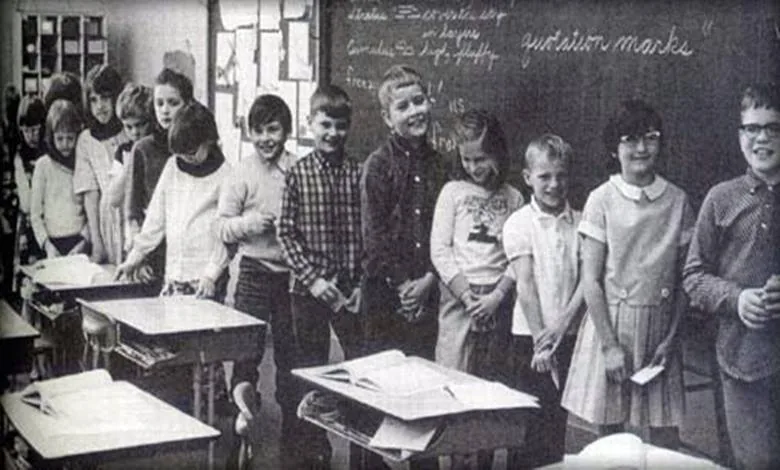
In 1968, third-grade teacher Jane Elliott conducted the Blue Eyes Brown Eyes experiment in Riceville, Iowa, dividing her all-white class by eye color to teach them about discrimination. The exercise, held the day after Martin Luther King Jr.'s assassination, shocked the small town and eventually the entire nation. What began as a single classroom lesson became one of the most famous and controversial social experiments in American education, and its emotional impact on those nine-year-olds would last a lifetime.
In April 1968, Jane Elliott, a third-grade teacher in Riceville, Iowa, divided her students into blue-eyed and brown-eyed groups to demonstrate the effects of discrimination. She gave one group superior treatment and privileges, while the other group was labeled inferior. The experiment showed how quickly children adopted discriminatory behavior, and it became a landmark lesson still discussed today.
- The Blue Eyes Brown Eyes experiment took place in Jane Elliott's third-grade classroom in Riceville, Iowa, the day after Martin Luther King Jr. was assassinated.
- Elliott divided her students by eye color, telling the blue-eyed children they were superior and giving them extra privileges, while the brown-eyed children were treated as inferior.
- The exercise produced immediate and dramatic changes in student behavior, with the favored group becoming arrogant and the disadvantaged group showing signs of distress and lowered performance.
- One student openly resisted the experiment's hierarchy, insisting that the ranking was not right and not fair, a defiance that stayed with Elliott over the years.
- The experiment gained national attention after Elliott appeared on The Tonight Show in 1968, and she continued to conduct variations of the exercise for decades.
The Morning After a Nation Changed
On the morning of April 5, 1968, a third-grade teacher in Riceville, Iowa walked into her classroom knowing she could not teach her usual lesson. The day before, Martin Luther King Jr. had been assassinated in Memphis, Tennessee, and the grief was still raw across America. Jane Elliott, a teacher in the small town, faced twenty-eight white children who had never met a Black person in their community, yet the news had shaken them deeply.
She asked them a simple question: what do you know about Black people? The answers that came back stopped her cold. Her students, all just eight and nine years old, recited stereotypes they had absorbed from somewhere. Their words were not their own. They were echoes of things heard at dinner tables, on television, in the casual comments of adults who should have known better.
Elliott realized that talking about discrimination would not be enough. These children already had their beliefs formed, and no lecture could undo what they had learned. She decided to make them feel discrimination instead, to let them experience it in their own bodies, in a single day inside their own classroom. That decision would become the Blue Eyes Brown Eyes experiment, a lesson that would follow her for the rest of her life.
She divided her class into two groups: blue-eyed children and brown-eyed children. On that first morning, she told the blue-eyed students they were genetically inferior to their brown-eyed classmates. She gave the brown-eyed children armbands to wear, a visible marker of their supposed superiority.
The rules came fast. Blue-eyed children could not play on the swings or the playground equipment. They could not get seconds at lunch. When they drank water, they had to use paper cups instead of drinking from the fountain. Every restriction was small on its own, but together they built a wall between the two groups.
What happened next surprised even Elliott. The brown-eyed children, who had been told they were better, began to act like it. Their confidence grew. Their reading improved. They finished their math problems faster and with fewer mistakes. The blue-eyed children, meanwhile, started to stumble. Kids who knew their multiplication tables cold suddenly could not remember them. Children who read aloud without hesitation began to stammer.
The change was not subtle. It happened within hours, visible in posture, in voice, in the way the children moved around each other. They stopped playing together at recess. The brown-eyed children became dismissive, even cruel. The blue-eyed children shrank into themselves.
On the second day, Elliott reversed everything. She told the class she had made a mistake, that she had the science wrong. Actually, she said, blue-eyed people were the superior ones. The armbands moved. The rules flipped. And the children, who had been on the bottom the day before, now wore the mantle of privilege with unsettling ease. They became the ones who sneered, who excluded, who believed the lie that had been handed to them.
The Blue Eyes Brown Eyes Experiment Unfolds
The morning after Martin Luther King Jr. was assassinated, Jane Elliott walked into her third-grade classroom in Riceville, Iowa, and asked her all-white students what they knew about Black people. Their answers shocked her. The children, just eight and nine years old, repeated stereotypes they had absorbed from the world around them. Elliott decided they needed to feel discrimination themselves, not just hear about it. So she split her class into two groups by eye color: blue-eyed children and brown-eyed children. The Blue Eyes Brown Eyes experiment had begun.
Elliott gave the blue-eyed kids armbands to wear and announced that they were genetically inferior to brown-eyed children. The rules came fast. Blue-eyed students could not play on the playground or use the swings. At lunch, they were denied second helpings. When they wanted water, they had to use paper cups instead of drinking from the fountain like everyone else. Brown-eyed children, meanwhile, were praised constantly and told they were smarter, cleaner, and better behaved.
The transformation came quickly, and it was unsettling to watch. Brown-eyed students grew arrogant and condescending toward their blue-eyed classmates. They started calling them names and excluding them. Their confidence soared, and their academic performance improved noticeably. The blue-eyed children, in contrast, began making more mistakes in their schoolwork. They became withdrawn, lost their motivation, and their grades dropped. The two groups stopped playing together at recess, segregating themselves without being told to do so.
On the second day, Elliott reversed the experiment. She told the class she had made a mistake the day before. In fact, she said, blue-eyed children were the superior ones, and the armbands were switched. The results mirrored the first day almost exactly. The newly superior blue-eyed students internalized their role quickly, adopting the same arrogance and condescension their brown-eyed classmates had shown just twenty-four hours earlier. One blue-eyed girl who had known her multiplication tables perfectly the day before suddenly stumbled over them. Brown-eyed children who had struggled with reading the previous day now read fluently without a single mistake.
The change was so dramatic that Elliott herself was shaken. These were the same children, the same classroom, the same teacher. Only the labels had changed. In a single day, a fabricated hierarchy had reshaped how these kids saw themselves and each other, and it had measurably altered their ability to learn.
From a Small Town to the National Stage
A local newspaper in Iowa ran a story about what Jane Elliott had done in her third-grade classroom, and that single article changed everything. The Blue Eyes Brown Eyes experiment, which had started as an impromptu lesson on the day after Martin Luther King Jr.'s assassination, suddenly had an audience far beyond Riceville.
The story caught the attention of television producers in New York. According to the original account, Elliott received an invitation to appear on The Tonight Show in 1968, though the exact date has never been reliably confirmed. What is certain is that she did travel to New York and sat down on national television to explain what happened when she told blue-eyed children they were superior to their brown-eyed classmates, and then reversed the roles the next day.
The appearance catapulted Elliott into a level of recognition that few teachers ever experience. She became one of the most recognized educators in America, sought after for interviews and speaking engagements. The experiment itself earned a permanent place in the history of social psychology, studied and debated in classrooms and academic journals for decades. A lesson designed for twenty-odd children in a small Iowa school had become a national conversation about prejudice, discrimination, and how quickly ordinary people absorb the roles they are assigned.
The Experiment Goes Global
Jane Elliott did not stop with one third-grade class in 1968. The Blue Eyes Brown Eyes experiment soon left the small town of Riceville, Iowa, and began traveling the world, carried by a teacher who refused to let the lesson stay in one room.
She ran the same exercise in workshop settings across Europe, the Middle East, and Australia, working with tens of thousands of participants over the years. The demand for her approach was real and sustained.
Back in the United States, thousands of educators folded the exercise into their own curricula. They wanted their students to feel what Elliott's students had felt: the sudden sting of being judged by something as arbitrary as eye color. She also became a fixture on college campuses, speaking at hundreds of universities and colleges, each appearance a chance to walk a new audience through the same uncomfortable, revealing process.
The academic world took notice too. Researchers have spent years studying whether the exercise actually reduces racial prejudice in participants, and whether it carries psychological risks for the people who go through it. The results remain inconclusive. Some studies point toward measurable shifts in attitude; others raise questions about the emotional toll of the experience. Neither side has delivered a definitive verdict.
What started as a response to a single classroom's hurtful answers, given the day after Martin Luther King Jr. was assassinated, had become a global teaching tool. The experiment outgrew its creator, spreading into schools, lecture halls, and research papers, and it keeps appearing in new places even now.
The Student Who Said No
One child in that Riceville, Iowa classroom refused to play along. While the rest of the third graders accepted the strange new rules about eye color, a boy pushed back with a simple, stubborn sentence: "This is not right!"
The documented student who openly resisted the Blue Eyes Brown Eyes experiment is Steven Armstrong, whose name appears in PBS's "A Class Divided" documentary and in Elliott's own recollections. According to that record, Armstrong stood his ground every single time Elliott announced that one group was better than the other. Elliott tried to win him over by saying, "You should be happy! You have the right-colored eyes!" But the boy shot back, "This is not right, and no matter what you say, it's not fair!"
What makes the detail worth holding onto is what it represents. Here was a seven or eight year old who could see through the whole performance. While his classmates internalized the lesson so completely that their reading fluency and math scores shifted within a single day, this one child kept insisting that the hierarchy was a lie. He didn't care that he was on the favored side. He didn't care that the teacher was the one making the rules. He just kept saying the same thing, over and over: not right, not fair.
Elliott has often pointed to that resistance as the moment she knew the exercise was working. If everyone had simply accepted the arbitrary ranking, the lesson might have been lost. But that one voice of protest proved that at least one child understood, even before the roles were reversed, that the whole setup was artificial.
The name attached to that voice is part of the record now, and the defiance itself is part of what made the experiment memorable. It's the small crack in the performance that reminds us children are not blank slates. Some of them arrive already knowing, in their bones, when something is unjust.
Frequently asked questions
What was the Blue Eyes Brown Eyes experiment?
The Blue Eyes Brown Eyes experiment was a classroom exercise created by Jane Elliott, a third-grade teacher in Riceville, Iowa, in 1968. She divided her all-white students into two groups based on eye color, declaring one group superior to the other. The exercise was designed to teach children what discrimination feels like by making them experience it directly rather than just hearing about it.
Why did Jane Elliott create the Blue Eyes Brown Eyes experiment?
Jane Elliott created the exercise on the day after Martin Luther King Jr. was assassinated. When she asked her third-grade students in Riceville, Iowa what they knew about Black people, their answers were full of stereotypes. Elliott wanted her students to understand discrimination firsthand, so she designed the eye-color exercise to let them feel what it was like to be judged unfairly.
How did the Blue Eyes Brown Eyes experiment affect the students?
The effects were dramatic and immediate. The group told they were inferior made more mistakes, became withdrawn, and their academic performance dropped. The favored group grew arrogant and actually performed better. When Elliott reversed the roles the next day, the results flipped just as quickly. A girl who knew her multiplication tables cold suddenly stumbled, while a struggling reader became fluent overnight.
Did Jane Elliott appear on The Tonight Show?
Yes, Jane Elliott did appear on The Tonight Show after a local newspaper covered her experiment. According to the original account, she was invited to New York in 1968, though the exact date has not been reliably confirmed. The appearance made her one of the most recognized educators in America at the time.
How is the Blue Eyes Brown Eyes experiment used today?
Elliott has conducted the exercise in workshops across Europe, the Middle East, and Australia, working with tens of thousands of participants. Thousands of educators in the United States have incorporated the exercise into their curricula, and she has spoken at hundreds of colleges and universities. Teachers still use the method today to help young people grasp what racism and discrimination actually feel like.
Was the Blue Eyes Brown Eyes experiment controversial?
Yes, the experiment has sparked ongoing debate among researchers. Scientists have studied whether the exercise actually reduces racial prejudice in participants and whether it poses psychological risks. The results of these studies have been inconclusive, leaving the question of the experiment's long-term effectiveness unresolved. Even with the controversy, the exercise remains a landmark in social psychology. Editorial note: Any facts which remain unconfirmed are presented as such, hedged appropriately in the text.
Got a take on this? Add your voice to the conversation below →
No comments yet. Be the first.