How Electric Cars Work: The Motor That Powers Them
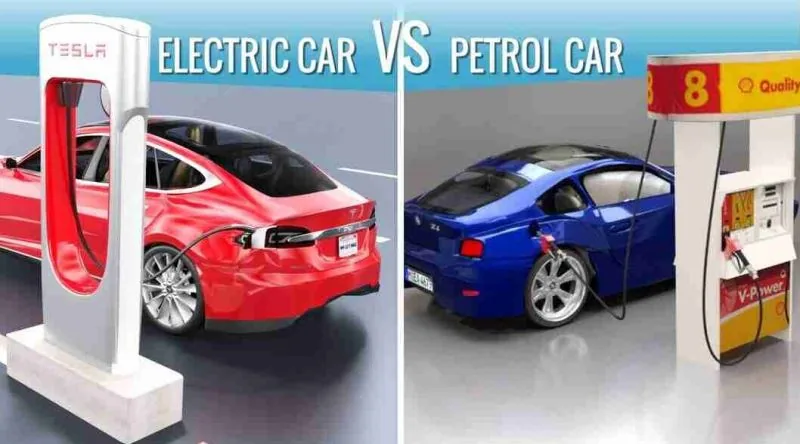
How electric cars work comes down to one core difference: a gasoline engine moves you with thousands of tiny controlled explosions, while an electric car moves you with a rotating magnetic field. Both push the same metal box down the same road, yet almost nothing inside them is shared. Once you see the two side by side, the quirks of EV ownership, from instant torque to charging waits, stop feeling strange and start making sense.
A gasoline car burns fuel to create expanding gases that shove pistons, which a transmission converts into wheel motion. An electric car uses a battery to send current through an inverter into a motor, where magnetic fields spin the shaft directly. Fewer moving parts, instant torque, and no exhaust, but charging and battery cost remain the trade-offs.
- A combustion engine turns fuel into heat and expanding gas, then converts that pressure into rotating motion through pistons, a crankshaft, and a multi-speed transmission.
- An electric motor runs in reverse of a generator: current in the windings creates a magnetic field that drags the rotor around, producing torque from a standstill.
- The inverter is the translator between battery and motor, switching direct current into alternating current and controlling frequency to set motor speed.
- Regenerative braking lets the motor act as a generator, recovering energy that would otherwise become brake heat and enabling one-pedal driving in many EVs.
- Lithium-ion packs are managed by cooling, heating, and charge-limit software, which together shape both real-world range and how long the battery lasts.
Two Cars, Two Completely Different Ideas of Motion
Pop the hood of a gasoline car and you find a machine built on controlled violence. Pop the hood of an electric car and you find something closer to a quiet electrical field. That single fork in the road explains almost everything about how electric cars work, and it starts with what happens when fuel meets air.
Inside a classic internal combustion engine, fuel mixes with air and ignites. Each tiny explosion pushes a piston, and those pistons fire in a steady rhythm, thousands of times a minute. The pistons themselves only move back and forth in a straight line, which is useless for turning a wheel. That is where the crankshaft earns its keep. Through connecting rods, it catches all that linear shoving and converts it into rotation. The rotation travels out through the drivetrain, and the wheels turn. Explosions in, spinning out.
An electric car skips the explosions entirely. Its lithium-ion battery pack produces direct current and sends it straight to an inverter, the component that sits at the center of the whole system. Here is a detail that surprises people: a single pack can hold several thousand individual cells. That sounds like overkill, but the count serves two jobs at once. More cells deliver the energy the car actually needs, and packing the pack with many small cells spreads out the surface area, which gives heat somewhere to go. Batteries run hot, so a radiator steps in as the cooler.
The result is a car with no pistons, no spark plugs, and no rhythmic bang under your feet. Just current moving through a chain of components, waiting for the moment you press the pedal.
Inside the Induction Motor: How Electric Cars Actually Move
An electric car's inverter takes the direct current stored in its lithium-ion battery pack and turns it into alternating current, and that conversion is the whole trick behind how electric cars work. The battery pack is where the story starts, and it holds a lot of cells. The count reaches several thousand, and that crowd of small cells exists for two reasons: together they deliver the energy the car needs, and their combined surface area gives heat somewhere to escape. Packs run hot, so a radiator steps in as the cooler.
From there the inverter hands three-phase alternating current to an induction motor, a unit built from just two main pieces. The stator sits still. The rotor is the part that moves. Current flowing through the motor's coils creates a rotating magnetic field, and how many poles that field has depends on how the motor was designed. The field drags the rotor around its own axis, and here is the detail that makes the whole thing controllable: while the car is cruising, the rotor spins slower than the field itself.
Speed comes down to two dials. Change the amplitude and the frequency of the alternating current and the rotor speeds up or slows down, and that is what your right foot is really adjusting. Flip the phase of the current and the rotor turns the other way, which is how reverse works without a reverse gear.
From the motor, power usually reaches the wheels through a differential and a transmission. Not every electric car uses a conventional transmission, though, and the idea that an open differential is chosen specifically to withstand the torque of rotation is not the standard explanation. The drivetrain is real; that particular rationale is shaky.
One Pedal, and the Claim That Doesn't Hold Up
Many electric cars do support one-pedal driving, and they have no clutch. One-pedal driving is a mode, though, not the removal of a pedal. The brake pedal stays right where it is. The idea that a button simply reduces the pedals to one oversells what is really happening.
What the mode does is real, and it is genuinely satisfying once you feel it. Lift your foot off the accelerator and the car begins to slow, gradually at first, then all the way down to a stop. No drama, no lurch. Just a smooth, deliberate deceleration that feels like the car is reading your intent. Some drivers still prefer using both pedals, arguing that in a sudden braking situation one pedal cannot deliver the quickness you need and you might hit something. That is an opinion, not a settled fact, and it is worth noting that even in one-pedal mode the brake pedal is still there for exactly that moment.
Now for the part that falls apart. The rotor is not the component that runs the one-pedal system. What makes regenerative braking work is the motor and generator, the inverter, and the control software coordinating them. The rotor is a moving piece inside the motor, not the system's brain.
One related detail is accurate, though. While the car is cruising, the rotor spins slower than the rotating magnetic field around it. That is how an induction motor produces torque in the first place.
The explanation of what happens when you lift off is where things go wrong. The inverter does not speed the rotor beyond the magnetic field to generate extra energy. It is the car's own momentum that drives the rotor faster than the synchronous field. The energy recovery is real. The mechanism as often described is not.
Why Charging Still Holds Electric Cars Back
Ask anyone who has hesitated at an electric car dealership and you will hear the same three worries. The biggest obstacles to widespread electric car adoption are the number of charging stations, the amount of energy the batteries can provide, and how long charging takes. Those three concerns are real, and they explain why how electric cars work matters less to most buyers than whether the thing will get them home.
Start with the plug. In fast charging mode, a session can take up to an hour. That is the good version. A vehicle without fast charging capability can sit there for 10 hours or longer, which is fine if you are asleep in your own garage and miserable if you are halfway through a road trip. The numbers are approximations and vary widely by car and charger, but the shape of the problem is honest: charging simply takes longer than filling a gas tank.
Then there is the idea that a charge generally cannot last for trips longer than a few hours. That one does not hold up. Many modern EVs cover 200 to 300 miles or more on a single charge, which is more than a few hours of driving by any reasonable measure. The bottleneck is not the distance between charges so much as where the chargers are and how long you have to stand next to one.
Battery lifespan gets stretched in the retelling too. A lithium-ion pack can serve a vehicle for up to 20 years in the most optimistic telling, but treat that as a ceiling rather than a promise. A more common expectation is 10 to 15 years or more, with the outcome depending heavily on how the pack is charged, cooled, and cycled. The cells that feed the inverter are the same cells that decide whether the car is still worth driving a decade from now.
Frequently asked questions
How does an electric motor actually move an electric car?
A lithium-ion battery pack sends direct current to an inverter, which converts it into three-phase alternating current. That AC flows into an induction motor made of a stator and a rotor, and the stator's coils create a rotating magnetic field that spins the rotor and drives the wheels. Gasoline cars work differently: burning fuel pushes pistons, and a crankshaft turns that motion into rotation.
What does the inverter do in an electric car?
The inverter is the translator between battery and motor. Lithium-ion packs output direct current, but an AC induction motor needs alternating current, so the inverter converts DC into three-phase AC. It also changes the amplitude and frequency of that current, which is exactly how the car controls motor speed and therefore road speed.
Why do electric cars use induction motors instead of brushed motors?
Induction motors have no brushes, so there is nothing to wear down through friction. Speed is managed simply by varying the amplitude and frequency of the alternating current, and reversing the phase sequence makes the rotor spin the other way, which handles reverse without a mechanical reverse gear.
What happens when you lift your foot off the accelerator?
The car slows gradually and can come to a stop. In one-pedal driving, lifting off engages regenerative braking, and energy is returned to the battery pack. The car's own momentum is what drives the rotor faster than the rotating magnetic field during this process, and that spinning generates the energy that flows back to the pack.
Do electric cars really have only one pedal?
Not literally. One-pedal driving is a mode rather than the removal of a pedal. The brake pedal stays in place for sudden stops, and the argument that one pedal cannot deliver quick enough braking is an opinion rather than a settled fact. Many drivers love the mode anyway, and it is easy to see why once you try it.
How are electric car batteries cooled?
Many packs contain several thousand individual cells. Spreading the energy across that many cells widens the total surface area, which helps heat dissipate, and a radiator often serves as the cooler because the pack generates substantial heat.
How long does charging take, and how long do the batteries last?
Fast charging can take up to one hour, while a car without fast charging may need ten hours or more. On lifespan, lithium-ion packs are often expected to last ten to fifteen years or more, with some approaching twenty years under careful management. Editorial note: Figures and specifications that vary by model or have not been independently confirmed are described in general terms rather than as exact numbers.
Got a take on this? Add your voice to the conversation below →
No comments yet. Be the first.