Benedict Cumberbatch: From Sherlock to Doctor Strange
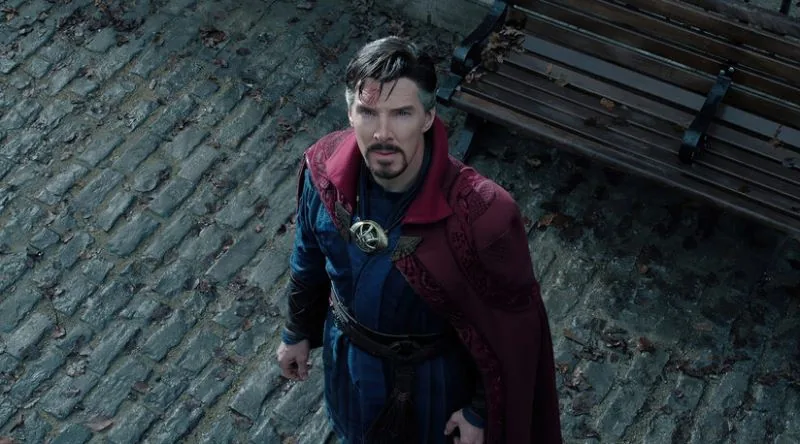
Benedict Cumberbatch is a British actor whose career runs from London theater stages to the Marvel Cinematic Universe, and he became a household name in 2010 when he first played Sherlock Holmes for the BBC. That modern-day detective series turned him into a global star almost overnight, but it was never the whole story. He followed it with an Oscar-nominated turn as Alan Turing in The Imitation Game and a long run as Doctor Strange, proving he could carry both prestige drama and blockbuster spectacle. For fans who met him as the world's most famous consulting detective, the range that came next has been the real surprise.
Benedict Cumberbatch is a British actor born in London in 1976 who broke through worldwide as Sherlock Holmes in the BBC series Sherlock, which premiered in 2010. He went on to earn an Academy Award nomination for The Imitation Game and to play Doctor Strange across multiple Marvel films.
- Benedict Cumberbatch was born in London in 1976 and trained as an actor in Britain before building a career on stage and screen.
- He first played Sherlock Holmes in the BBC series Sherlock, which debuted in 2010 and made him an international star.
- His performance as Alan Turing in The Imitation Game, released in 2014, brought him an Academy Award nomination for Best Actor.
- He joined the Marvel Cinematic Universe as Doctor Strange, a role he has returned to across several films.
- Alongside his screen work, he has maintained a steady presence in theater, including a celebrated run as Hamlet in London.
The Boy Who Would Be Sherlock: Benedict Cumberbatch's Early Life and Education
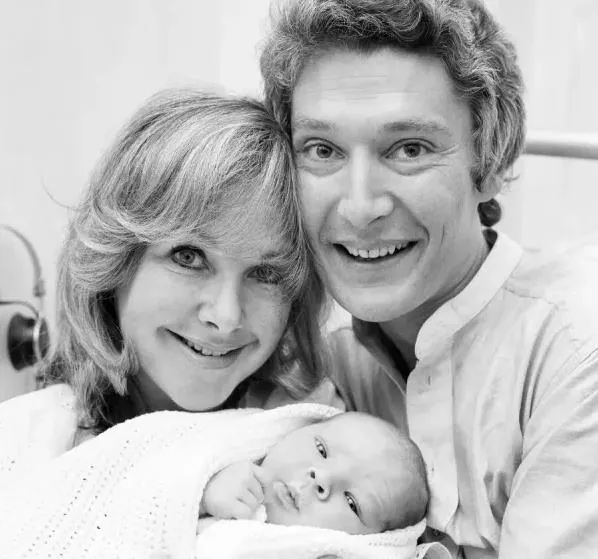
Benedict Timothy Carlton Cumberbatch was born on July 19, 1976, in London, the son of two working actors: Timothy Carlton and Wanda Ventham. That single sentence tells you almost everything about the world he walked into. Not a stage-struck outsider crashing the gates, but a boy who grew up inside the profession, watching it from the wings.
His schooling took him to Brambletye School in West Sussex, then on to Harrow School. When he wasn't in a classroom, he was on a stage. He played Titania, the queen of the fairies, in a school production of Shakespeare's A Midsummer Night's Dream, and he also appeared in As You Like It. Picture that for a second: the future Sherlock Holmes, in costume, delivering fairy-queen lines to a school audience.
Then came a pause that sounds almost too strange to be true. Between school and university, Cumberbatch took a gap year and spent it in Tibet, in India, teaching English to Buddhist monks. Think about the contrast. A Harrow-educated London teenager, raised in a household of actors, standing in front of robed monks with a grammar lesson. Whatever he learned there, he never traded it for a soundstage.
Back in Britain, he studied drama at the University of Manchester, then trained further at the London Academy of Music and Dramatic Art, where he earned a master's degree in classical acting. That is the formal spine of the story: Manchester for the degree, LAMDA for the craft.
One detail from those years is easy to miss and hard to forget. Early in his career, Cumberbatch performed under the name "Carlton," borrowed from his father's stage name. A colleague nudged him to try something else, and he began appearing under the family's original, far stranger surname. The name that would eventually be shouted by fans outside stage doors was, at first, a risk he had to be talked into taking.
So before the deerstalker, before the cape, there was a boy in West Sussex, a fairy queen, a year among monks, and a name he almost didn't use.
From Regent's Park to the BBC: The Stage and Early Screen Years
Benedict Cumberbatch's first paid theatre job came in 2001, under the open sky of Regent's Park in London, with the New Shakespeare Company. He returned for a second repertory season in 2002. Two summers of mostly Shakespeare, and the unusual surname he had only recently started using again, were doing quiet work: they were turning a drama-school graduate into a working actor.
He kept choosing the hard stuff. In 2005 he took on Henrik Ibsen's Hedda Gabler on the London stage, and some accounts link that performance to a Laurence Olivier Award nomination, though the details are remembered with real uncertainty and should be treated as unconfirmed. Two years later, in 2007, he appeared in Eugène Ionesco's Rhinoceros. Neither role made him famous. Both made him better.
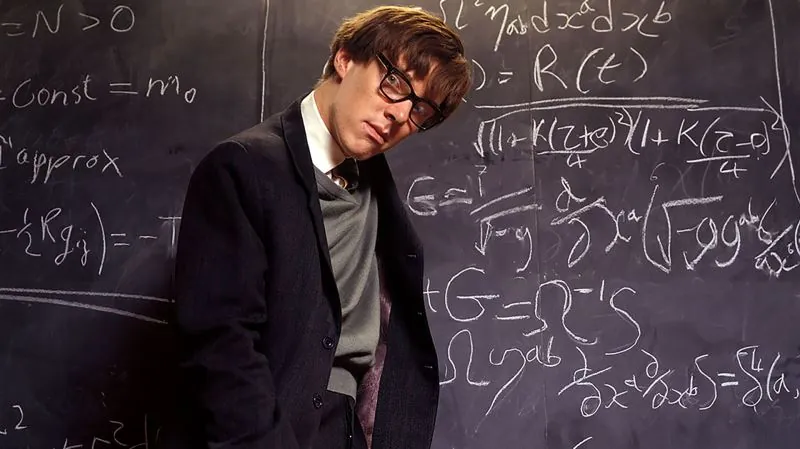
Television found him around the same time. In 2002 he had supporting parts in Tipping the Velvet and Silent Witness, followed by Fortysomething in 2003 and To the Ends of the Earth in 2005. Then came the role that changed the temperature of his career. In the 2004 BBC film Hawking, he played the physicist Stephen Hawking, and the performance brought him a BAFTA TV Award nomination for Best Actor. Critics who had watched him in Regent's Park now watched him on the small screen, playing a living legend with a stillness that felt almost unnerving.
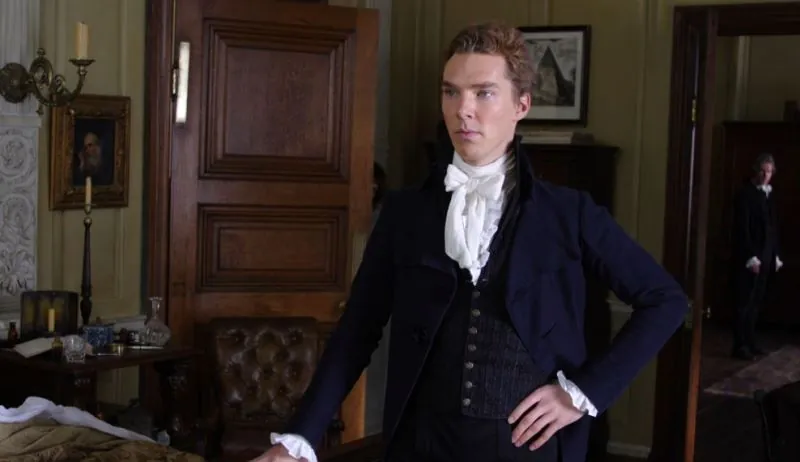
His first major film role arrived in 2006: William Pitt in Amazing Grace, the historical drama about politician William Wilberforce's campaign against slavery. A young actor who had spent years in repertory seasons and television guest spots was suddenly standing in a period film with a name above the title. He had not yet become Sherlock Holmes. He was already, unmistakably, on his way.
The Role That Changed Everything: Sherlock Holmes and Global Fame
In 2010, Benedict Cumberbatch stepped into 221B Baker Street and walked out a global star. The BBC series Sherlock took Sir Arthur Conan Doyle's Victorian detective and dropped him into 21st-century London, and audiences could not look away. This was the part that turned a respected British stage and screen actor into a household name on both sides of the Atlantic.
The update was clever in the details. This Holmes swapped the famous pipe for nicotine patches, a wink at Conan Doyle's original smoker. He also described himself, in his own words, as a "high-functioning sociopath." That mix of arrogance and brilliance became the show's signature, and Cumberbatch's face became the one people pictured when they heard the name Sherlock Holmes.
The role kept paying off. For his work in one episode of the show's third season, Cumberbatch won the 2014 Emmy Award for Outstanding Lead Actor in a Miniseries or a Movie. A detective series from Britain had carried him to American television's biggest stage.
But 2011, the year between those Sherlock seasons, might have been his busiest. He starred in the National Theatre's adaptation of Mary Shelley's Frankenstein, and he did it the hard way: he and Jonny Lee Miller alternated the roles of Victor Frankenstein and the Creature, night after night. The gamble paid off. In 2012 he won the Olivier Award for his work in the production, sharing the honor with Miller. That same year he also appeared in two high-profile films, Steven Spielberg's War Horse and the big-screen version of John le Carré's Tinker Tailor Soldier Spy.
Stage prestige, a hit series, and Hollywood calling, all at once. The quiet years of repertory Shakespeare and guest spots on British television were suddenly very far behind him.
Khan, Assange, and Smaug: A Breakout Year in Hollywood
Then came 2013, the year Benedict Cumberbatch seemed to be everywhere at once. He stepped into J.J. Abrams's Star Trek Into Darkness as the villain Khan Noonien Singh, and the performance pushed him into a new tier of blockbuster fame. The same year, he played WikiLeaks founder Julian Assange in The Fifth Estate, slipped into the antebellum South for 12 Years a Slave as a well-intentioned slave owner, and took a turn as an unfortunate young man in the film adaptation of Tracy Letts's play August: Osage County.
He also gave voice to a dragon. In Peter Jackson's The Hobbit: The Desolation of Smaug (2013), the second film of the trilogy drawn from Tolkien's novel, Cumberbatch supplied the computer-animated Smaug's showy growls.
The following year brought the role that many consider his defining film part. In The Imitation Game (2014), Cumberbatch played the mathematician and logician Alan Turing, and the performance earned him an Academy Award nomination for Best Actor. That same year he voiced a wolf in the animated comedy Penguins of Madagascar and returned as Smaug in The Hobbit: The Battle of the Five Armies.
Hamlet, CBE, and the Marvel Universe: Doctor Strange and Beyond
In 2015, Benedict Cumberbatch stepped onto the Barbican Centre stage in London as the Prince of Denmark. Every ticket for that Hamlet run was gone a full year before the first curtain rose. Think about that: a Shakespeare tragedy selling out twelve months ahead of opening night, and the demand came down to one name on the poster.
That same year he slipped into a very different costume for Black Mass, playing a state senator and the brother of the gangster Whitey Bulger. And in the 2015 Queen's Birthday Honours, he was appointed Commander of the Order of the British Empire. A CBE, a sold-out Hamlet, and a Hollywood crime drama, all inside twelve months.
Then came the cape. In 2016 Cumberbatch took on a Marvel Comics superhero for the first time, playing Doctor Strange, and the role stuck. He returned to it in Thor: Ragnarok (2017), Avengers: Infinity War (2018), Avengers: Endgame (2019), Spider-Man: No Way Home (2021), and Doctor Strange in the Multiverse of Madness (2022). Six films, one sorcerer, and a fan base that only grew with each appearance.
Television pulled him back too. In 2017 he led A Child in Time, adapted from Ian McEwan's novel about a father whose child disappears. A year later came Patrick Melrose, a miniseries built from Edward St. Aubyn's five novels, with Cumberbatch as an English gentleman reckoning with his past while doing real damage to himself, body and mind. Both 2018 voice roles, The Grinch and Mowgli: Legend of the Jungle, showed a lighter register entirely.
The pace did not slow. 2019 brought Brexit, a TV film following the 2016 campaign to pull Britain out of the European Union, plus The Current War, and Sam Mendes's First World War drama 1917. In 2020 he played a Cold War spy in The Courier.
Then 2021 arrived like a headline. The Mauritanian drew on the memoir of a man held at Guantanamo Bay for 14 years. The Electrical Life of Louis Wain painted the life of a British artist. And in Jane Campion's western The Power of the Dog, Cumberbatch played a farmer whose cruelty, especially toward his brother and his brother's wife, hides an inner turmoil. That performance earned him an Academy Award nomination for Best Actor.
Sherlock Holmes had made him famous. Doctor Strange made him a fixture of the biggest franchise on earth. But the range between a Montana farmer, a Cold War courier, and a prince of Denmark is where the real story sits.
Frequently asked questions
What is Benedict Cumberbatch most famous for?
Benedict Cumberbatch is best known for playing Sherlock Holmes in the BBC series Sherlock, which began in 2010, and for portraying Doctor Strange in the Marvel Cinematic Universe starting with the 2016 film. He also earned an Academy Award nomination for playing Alan Turing in The Imitation Game (2014).
How did Benedict Cumberbatch become Sherlock Holmes?
In 2010, the BBC cast him as Sherlock Holmes in a modern retelling of Arthur Conan Doyle's stories, set in 21st-century London. His version used nicotine patches instead of a pipe and called himself a "high-functioning sociopath." The role brought him fame in Britain and abroad.
What awards has Benedict Cumberbatch won?
He won the 2014 Emmy Award for Outstanding Lead Actor in a Miniseries or a Movie for Sherlock, and the 2012 Olivier Award for his work in the National Theatre's Frankenstein, an honor he shared with Jonny Lee Miller. He also received a BAFTA TV Award nomination for playing Stephen Hawking in the 2004 BBC film Hawking.
Was Benedict Cumberbatch nominated for an Oscar for The Imitation Game?
Yes. In 2014, Cumberbatch played mathematician and logician Alan Turing in The Imitation Game, a drama that also starred Keira Knightley. His performance earned him an Academy Award nomination for Best Actor. He later received a second Oscar nomination for The Power of the Dog (2021).
What role does Benedict Cumberbatch play in the Marvel Cinematic Universe?
He plays Doctor Strange, a Marvel Comics superhero he first portrayed in the 2016 film Doctor Strange. He reprised the role in Thor: Ragnarok (2017), Avengers: Infinity War (2018), Avengers: Endgame (2019), Spider-Man: No Way Home (2021), and Doctor Strange in the Multiverse of Madness (2022).
Where was Benedict Cumberbatch born and raised?
Benedict Timothy Carlton Cumberbatch was born on July 19, 1976, in London, the son of actors Timothy Carlton and Wanda Ventham. He was educated at Brambletye School in West Sussex and at Harrow School, where he appeared in school plays by William Shakespeare.
Did Benedict Cumberbatch perform in Shakespeare plays?
Yes. As a student he took part in school productions of A Midsummer Night's Dream, playing the fairy queen Titania, and As You Like It. His first professional theatre work came in 2001 and 2002, with two repertory seasons at London's Regent's Park with the New Shakespeare Company.
What is Benedict Cumberbatch's education background?
After taking a gap year between school and university, during which he taught English to Buddhist monks in Tibet, India, he studied drama at the University of Manchester. He then earned a master's degree in classical acting from the London Academy of Music and Dramatic Art. Editorial note: Any details that remain unconfirmed are presented here as such, and readers should treat unverified specifics with appropriate caution.
Got a take on this? Add your voice to the conversation below →
No comments yet. Be the first.