Grigori Perelman: The Genius Who Refused $1 Million
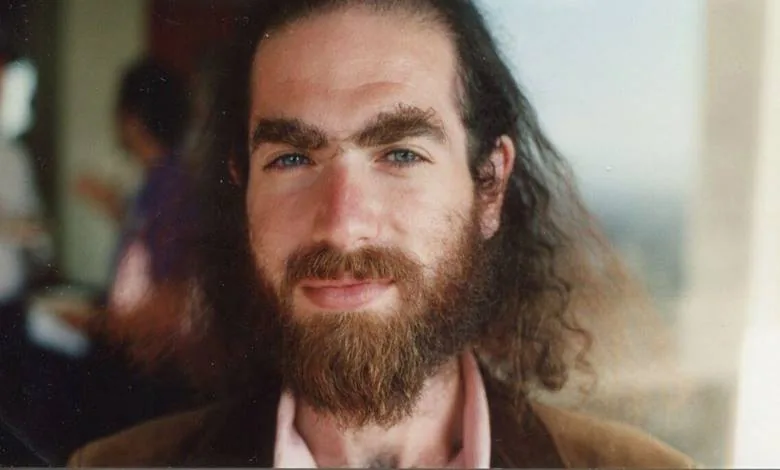
Grigori Perelman is the Russian mathematician who posted his proof of the Poincaré conjecture in 2002, then stunned the world by refusing the Fields Medal and the $1 million Clay Millennium Prize. His proof reshaped modern geometry, yet he walked away from fame, money, and the mathematical establishment entirely. The story of his quiet brilliance and radical withdrawal continues to fascinate people who wonder what drives a person to reject the highest honors in science.
Grigori Perelman, a reclusive Russian mathematician, posted his proof of the Poincaré conjecture in 2002 using Richard Hamilton's Ricci flow techniques. He shared his proof online, skipped peer review, and later declined the Fields Medal in 2006 and the $1 million Clay Millennium Prize, choosing to leave mathematics and live quietly in Saint Petersburg.
- In 2002 and 2003, Grigori Perelman posted three papers on arXiv that outlined a proof of the Poincaré conjecture, a problem unsolved for a century.
- Perelman's proof built on the Ricci flow program developed by Richard Hamilton, and it was later verified by independent teams of mathematicians.
- In 2006, Perelman was selected to receive the Fields Medal, the highest honor in mathematics, and he publicly declined it.
- The Clay Mathematics Institute prepared to award Perelman the $1 million Millennium Prize for solving the Poincaré conjecture, and he also refused this prize.
- Perelman resigned from the Steklov Institute in December 2005 and has since lived a reclusive life in Saint Petersburg, largely withdrawing from the mathematical community.
The Mathematician Who Turned Down a Million Dollars
Grigori Perelman solved one of mathematics' most stubborn puzzles in 2002, then walked away from a $1 million prize and the field's highest honor. The Russian mathematician cracked the Poincaré conjecture, a problem that had frustrated experts for nearly half a century, and promptly disappeared from public life. His refusal became as legendary as his proof.
It started in 2000, when the Clay Mathematics Institute in the USA announced seven Millennium Prize Problems, each carrying a $1 million reward. The institute wanted to celebrate the new millennium by spotlighting the toughest open questions in math. The Poincaré conjecture sat right there on that list, taunting the brightest minds of the era.
Henri Poincaré had first posed the question back in 1904, and for roughly fifty years nobody could crack it. The problem asks something deceptively simple: if a three-dimensional space has no distinguishing features, no holes, no twists, no handles, must it be a three-dimensional sphere? What sounds like a riddle from a party game turned out to be one of the most maddening challenges in topology.
Then came Perelman. Born on June 13, 1966, in Leningrad in the Soviet Union, he had been a mathematical prodigy from childhood. At sixteen, he won a gold medal with a perfect score at the International Mathematical Olympiad in Budapest in 1982. But his true masterpiece arrived two decades later, when he posted his first paper on the Poincaré conjecture to a public scientific archive in November 2002, followed by two more papers in 2003.
The mathematics community spent years verifying his work. By 2006, independent researchers had confirmed the proof, and the Clay Institute stood ready to hand over that million dollars. The Fields Medal, often called the Nobel Prize of mathematics, was also offered to him that same year.
Perelman said no to all of it.
He reportedly told the world, "I don't want to be famous. I just solved a question, and it's interesting that it's being made so much of. If my proof is correct, that's enough for me." The man who had achieved what thousands could not simply walked away, leaving behind a mystery far more human than any theorem.
A Rare Breed: Perelman and Bobby Fischer
Bobby Fischer won the World Chess Championship in Reykjavik, Iceland, in 1972, cementing his place as one of the greatest chess players who ever lived. Then, in 1975, Fischer refused to defend his title. He withdrew from competitive chess and from public life entirely, vanishing from the spotlight that had so eagerly embraced him just a few years earlier.
That pattern, the sudden disappearance after a monumental achievement, is extraordinarily rare. Most people who reach the absolute pinnacle of their field cling to the recognition, the money, and the continued competition. Fischer did the opposite. He walked away and never looked back.
Grigori Perelman represents another example of this rare phenomenon, a kind of king without a crown in the world of mathematics. Where Fischer abandoned chess, Perelman abandoned mathematics itself, and he did so at the exact moment the world was ready to celebrate him. The comparison helps frame what happened next in Perelman's life as part of a known, if extreme, pattern of genius. These are not people who simply retire. They are people who reject the very framework of fame and reward that others spend their lives chasing.
Perelman did not just solve a difficult problem. He solved what many considered an impossible one, the Poincaré conjecture, a question that had stumped mathematicians for nearly a century. And then, like Fischer before him, he turned his back on every prize, every honor, and every invitation to step into the spotlight. The world wanted to crown him. He wanted none of it.
Who Is Grigori Perelman?
Grigori "Grisha" Perelman was born on June 13, 1966, in Leningrad, Soviet Union, the city now known as Saint Petersburg, Russia. He grew up in a household where mathematics was part of daily life, and that early exposure shaped everything that came later.
His father worked as an electrical engineer, while his mother was a mathematician who chose to set aside her own graduate studies to raise Grigori and his younger sister. Perelman has always been quick to credit his mother for sparking his love of mathematics. She was the one who taught him, who showed him that numbers and shapes could be beautiful, and who gave him the intellectual foundation he would build upon for the rest of his life.
The talent showed itself early. At just 16 years old, in 1982, Perelman traveled to Budapest, Hungary, for the International Mathematical Olympiad. He walked away with a gold medal and a perfect score, a feat that announced to the mathematical world that this quiet Soviet teenager was someone to watch.
From there, he enrolled at Leningrad State University, where he studied mathematics and mechanics. He later completed his doctorate at the Steklov Institute of Mathematics in Saint Petersburg, a distinguished research institution. The path seemed set for a conventional academic career, and for a while, that is exactly what he pursued.
Perelman accepted a position at the State University of New York and crossed the Atlantic. But something about the American academic scene did not sit right with him. He found himself unsatisfied, and even when offers came in from top-tier universities, he turned them all down. In 1995, he packed up and returned to the Steklov Institute in Saint Petersburg.
During his time in the United States, Perelman spent about two years at Stony Brook and NYU, where he was influenced by the ideas of the American mathematician Richard Hamilton, the man who had introduced a key technique called the Ricci flow in 1982. Hamilton's work left a deep impression on Perelman, and those ideas would eventually prove crucial.
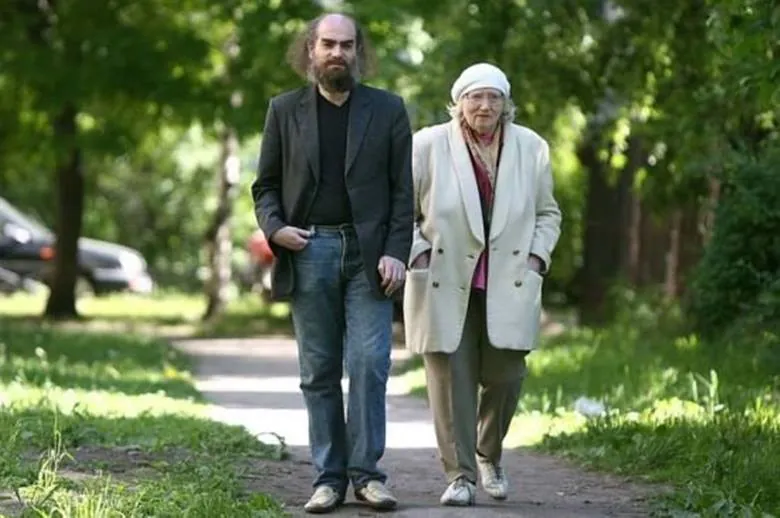
Today, Perelman lives a reclusive life in Saint Petersburg with his mother. Whether he still works on mathematics is unclear. He has largely vanished from public view, and the man who once solved one of the most famous problems in mathematics seems content to let the world wonder.
The Poincaré Conjecture and the Ricci Flow
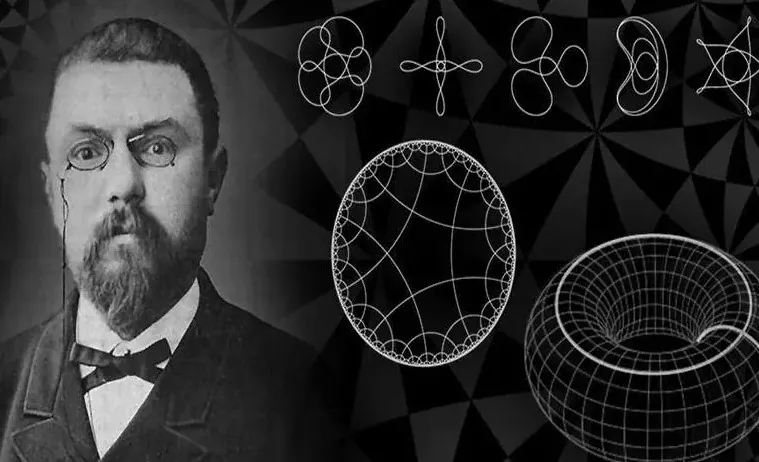
Henri Poincaré, the leading light of Paris mathematics in the late 19th century, posed a deceptively simple question in 1904 that would torment mathematicians for nearly a century. His creative period began with his doctoral thesis in 1878 and only ended with his death, and in that time he produced around five hundred works. The question he asked was this: if you have a three-dimensional space with no distinguishing features, no holes, no handles, no twists, must it necessarily be a three-dimensional sphere?
That question became the Poincaré conjecture, and it sat unsolved for decades. In 1982, Richard Hamilton introduced a technique called the Ricci flow, a method designed to smooth out the geometry of a space much like heat spreads through a metal rod. Hamilton was actually interested in heat flow, but he reasoned that a similar process could work for the shape of space itself. The Ricci flow and related methods grew into a major research area with applications in moving interfaces, fluid mechanics, and even computer graphics.
Hamilton worked intensely to understand how the Ricci flow would reshape pieces of a space until they revealed the geometric structure that Bill Thurston had predicted in the late 1970s. But completing that program proved elusive. That is where Grigori Perelman entered the story.
Perelman had already produced some brilliant results at a young age and was working as a researcher at the famous Steklov Institute in Saint Petersburg. In the early 1990s he won the Miller Fellowship to spend three years at UC Berkeley. Then he disappeared from view. Years later he resurfaced to announce that he had finished Hamilton's work on the Ricci flow.
In 2002, Perelman posted a 39-page paper online in an unusual move, placing it on a public scientific archive website rather than submitting it to a traditional journal. The following year he posted two more sections. By 2006, the mathematical community had fully accepted his proof.
Why Did Perelman Refuse the Prize?
Grigori Perelman turned down both the $1 million Clay Mathematics Institute prize and the Fields Medal because he wanted nothing more than verification of his work. "I don't want to be famous," he said. "I just solved a question, and it's interesting that it's being made so much of. If my proof is correct, then that is enough for me, and it is satisfying."
The refusal made no sense to the outside world. In 2006, when the mathematical community officially confirmed his proof of the Poincaré conjecture, the Clay Mathematics Institute in the USA prepared to hand over the $1 million reward it had promised in 2000 for solving one of its seven Millennium Prize Problems. The Fields Medal, often called the Nobel Prize of mathematics, was also offered to him. Perelman said no to both.
His rebellion had roots that went deeper than modesty. Before the 2006 confirmation, he had already resigned from the Steklov Institute in Saint Petersburg and announced he was done. To anyone who asked, he said he had retired from the mathematical community and no longer considered himself a professional mathematician.
The disappointment that fueled this decision involved Richard Hamilton, the American mathematician who introduced the Ricci flow technique in 1982. Perelman had reached out to Hamilton hoping to collaborate. He received no response. According to the original account, that silence left him feeling excluded from the mathematical world he had tried to enter.
What he wanted, he made clear, was simple: to be tested, discussed, and if his proof held up, verified. Nothing more. The prize money, the medal, the fame, none of it mattered. The proof itself was the reward.

Frequently asked questions
Who is Grigori Perelman?
Grigori Perelman is the Russian mathematician who solved the Poincaré conjecture, a problem that stumped the world's best minds for nearly a century. Born on June 13, 1966, in Leningrad, Soviet Union (now Saint Petersburg, Russia), he became famous not just for solving the problem, but for walking away from every prize that came with it. His mathematical brilliance showed early. At age 16, he won a gold medal with a perfect score at the International Mathematical Olympiad in Budapest in 1982. He studied at Leningrad State University and later completed his doctorate at the Steklov Institute of Mathematics in Saint Petersburg, where he eventually worked as a researcher.
What is the Poincaré conjecture?
The Poincaré conjecture is a question about the shape of three-dimensional space, posed by French mathematician Henri Poincaré in 1904. It asks whether a three-dimensional space with no holes or distinguishing features must necessarily be a three-dimensional sphere. Think of it as asking if a balloon that has been twisted, stretched, or deformed in any way can always be smoothed back into a perfect sphere without tearing it. For decades, mathematicians chased this problem. Richard Hamilton introduced a technique called Ricci flow in 1982, which became a crucial tool for attacking the conjecture. But the full solution remained out of reach until Perelman came along.
Why did Grigori Perelman refuse the $1 million prize?
Perelman refused the $1 million prize from the Clay Mathematics Institute because he felt his work was being undervalued and he was being excluded from the mathematical community. He reportedly said he had no interest in fame or money, stating that if his proof was correct, that was enough for him. He also expressed disappointment that Richard Hamilton, whose Ricci flow work was foundational to the solution, did not receive proper recognition. The Clay Mathematics Institute had announced the prize in 2000 as part of its seven Millennium Prize Problems, each carrying a $1 million reward. When Perelman's solution was confirmed in 2006, the institute was ready to pay. He simply said no.
How did Grigori Perelman prove the Poincaré conjecture?
Perelman proved the Poincaré conjecture by completing Richard Hamilton's Ricci flow program. In November 2002, he posted a 39-page paper on a public scientific archive website, with two more installments following in 2003. The papers outlined how Ricci flow could be used to smooth out the geometry of three-dimensional spaces, with a procedure for handling singularities that Hamilton had not resolved. The mathematical community spent years verifying his work. By 2006, independent verification by mathematicians Bruce Kleiner and John Lott confirmed the proof was correct, leading to official recognition.
Did Grigori Perelman win the Fields Medal?
Perelman was selected to receive the Fields Medal in 2006, often described as the Nobel Prize of mathematics. However, he publicly declined it, so he was never formally awarded the medal in a ceremony. The International Mathematical Union had chosen him for this honor, but Perelman refused to accept it, consistent with his rejection of other accolades and his withdrawal from professional mathematics.
Where is Grigori Perelman now?
Perelman lives in Saint Petersburg, Russia, with his mother, largely out of the public eye. He resigned from the Steklov Institute in December 2005 and told people he had retired from mathematics before the 2006 Fields Medal announcement. He has stated that he no longer considers himself a professional mathematician, and while media occasionally tries to catch a glimpse of him, he rarely leaves his home and gives almost no interviews.
Was Grigori Perelman compared to Bobby Fischer?
Yes, Perelman has often been compared to Bobby Fischer, the American chess prodigy who won the World Chess Championship in Reykjavik, Iceland, in 1972. Fischer famously refused to defend his title in 1975 and withdrew from both chess and public life entirely. Like Fischer, Perelman achieved something extraordinary and then walked away, rejecting the fame and rewards that came with his success. The comparison highlights how rare it is for someone to reach the pinnacle of their field and then disappear. Both men seemed to value the purity of their work over the recognition it brought, even when that recognition included life-changing sums of money. Editorial note: Any facts which remain unconfirmed are presented as such, with the details of Perelman's personal life and motivations drawn from his limited public statements and the accounts of colleagues.
Got a take on this? Add your voice to the conversation below →
No comments yet. Be the first.