Gabriel's Horn Paradox: The Shape With Infinite Surface
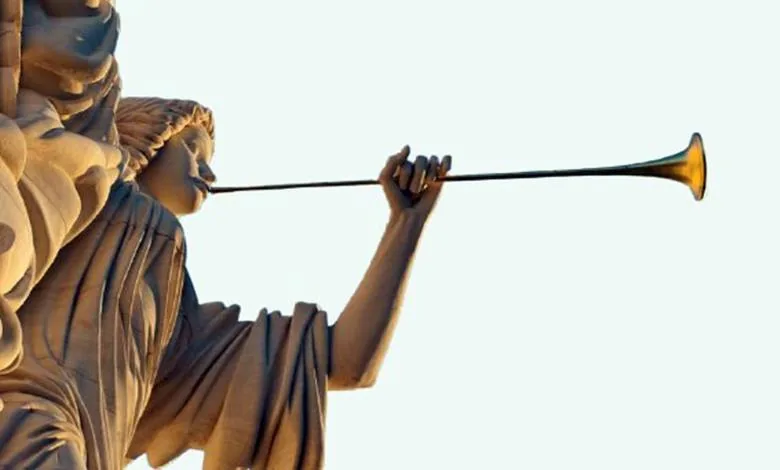
Gabriel's horn paradox is the famous mathematical object with finite volume but infinite surface area, first studied by Evangelista Torricelli in the 17th century. This seemingly impossible shape, also called Torricelli's trumpet, has puzzled thinkers for centuries and leads directly to the painter's paradox, which asks how you can fill a shape but never paint its outside. The story of this horn is a tale of mathematical discovery that challenged the very foundations of geometry and infinity.
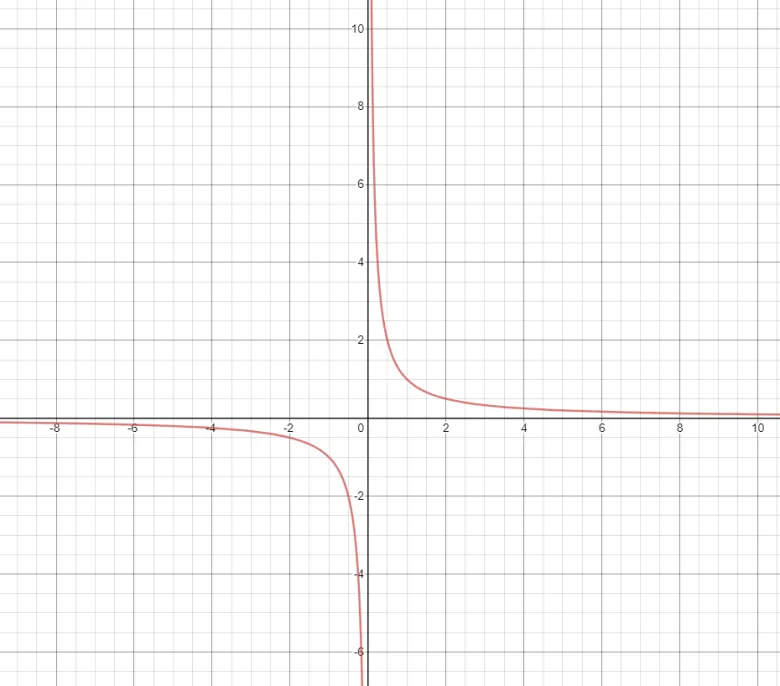
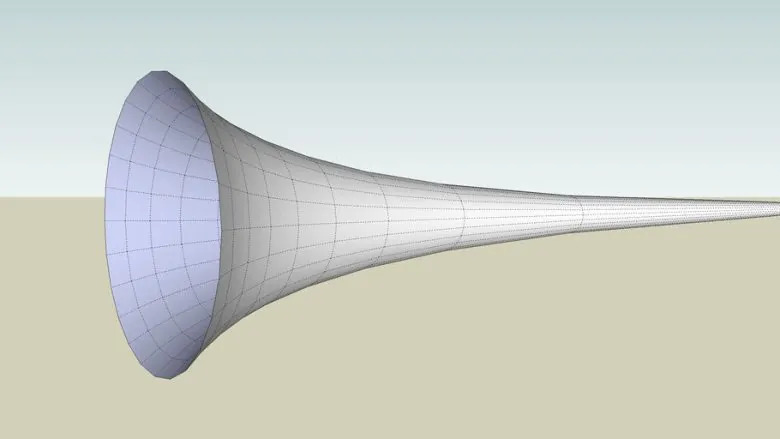
Gabriel's horn is a shape created by rotating the curve y equals one over x around the x-axis, starting at x equals one. Torricelli proved in the 17th century that this horn holds a finite amount of volume but has an infinite surface area, a result that stunned mathematicians and remains a classic paradox today.
- Evangelista Torricelli, the Italian physicist and mathematician, discovered the paradox in the 17th century.
- The horn is formed by rotating the graph of y equals one over x for x greater than or equal to one around the x-axis.
- Its volume converges to the finite value of pi, while its surface area diverges to infinity.
- The painter's paradox arises because you can fill the horn with a finite amount of paint, yet painting its surface would require an infinite amount.
- The resolution lies in the distinction between mathematical idealization and physical reality, as a real horn cannot be infinitely thin.
The 17th-Century Shape That Broke Everyone's Brain
In 1643, an Italian physicist and mathematician named Evangelista Torricelli built the first mercury barometer, the device that lets us measure air pressure. But that invention was only the beginning of his legacy. Around the same time, he described a shape so strange that it made some of the brightest minds of the 1600s argue for decades. Today we call it Torricelli's trumpet, though you might know it better as Gabriel's horn.
The horn comes from taking the curve y = 1/x and spinning it around the x-axis, starting at x = 1 and stretching out to infinity. What you get looks like an endless trumpet, wider at the mouth and tapering forever into nothing. As x grows, the curve gets closer and closer to zero, so the trumpet's opening shrinks and shrinks, but never quite closes.
Here is where things get genuinely weird. The volume of this infinite horn turns out to be exactly π, a perfectly finite number. You could fill the whole thing with about three cubic units of paint, roughly 3,000 units. But the surface area? It is infinite. No matter how much paint you own, you could never coat the outside completely.
That contradiction, the Gabriel's horn paradox, sent shockwaves through the mathematical community. Thomas Hobbes, the English philosopher, was among those who wrestled with the result. John Wallis also participated in the debates. Even Galileo Galilei, the great astronomer and physicist, was drawn into discussions about what infinity really means. The horn refused to behave the way common sense said it should.
The shape exists only in the mathematical world, not the physical one. But that does not make it any less real to the people who study it. It forces a simple question: how can something go on forever in one direction and still hold a limited amount of stuff? The answer, it turns out, has everything to do with how quickly the trumpet narrows. The curve drops fast enough that the volume piles up to a stop, but the surface keeps stretching, thinner and thinner, forever.
What Is Gabriel's Horn, Anyway?
Gabriel's horn is a mathematical shape with a shocking secret: it holds a finite amount of space, yet its surface stretches on forever. This impossible object comes from taking the curve y=1/x and spinning it around the x-axis, starting at x=1 and continuing without end. The result looks like an infinitely long trumpet, one that gets thinner and thinner the farther it goes.
The Italian mathematician and physicist Evangelista Torricelli first described this shape in the 17th century, not long after he invented the barometer in 1643. He was exploring ideas about infinity and continuity, and he stumbled onto something that seemed to break all the rules. Today we call it Gabriel's horn, and it remains one of the most mind-bending examples in all of calculus.
Here is how the shape comes to life. Picture the graph of y=1/x. At x=1, the curve sits at height 1. At x=10, it has dropped to 0.1. At x=100, it is down to 0.01. The curve never touches the x-axis, but it keeps getting closer and closer to it forever. Now rotate that entire curve 360 degrees around the x-axis. The space swept out is the horn, a tube that narrows without ever closing completely.
As x grows, the opening of the horn shrinks. At x=10, the radius is 0.1. At x=100, it is 0.01. There is no end to this shrinking. The horn just keeps tapering, thinner and thinner, into infinity. No physical object could exist this way. A real trumpet has to end somewhere. But in the purely mathematical world, this shape is perfectly well-defined, and standard mathematical methods can analyze it completely.
Here is where things get strange. Using integral calculus, you can compute the volume of the horn, and the answer turns out to be exactly π, roughly 3.14159 cubic units. That is a perfectly finite number. But when you compute the surface area, the calculation diverges. It grows without bound. The surface area is infinite.
So you have a shape that could be filled with about three cubic units of material, yet its outer skin would require an endless supply of paint to cover. That contradiction is the heart of the Gabriel's horn paradox, and it is exactly what made Torricelli's discovery so controversial in his own time. Mathematicians including Thomas Hobbes, John Wallis, and Galileo Galilei all weighed in on the debate about what this shape meant for the nature of infinity.
The Mind-Bending Proof: Finite Volume, Infinite Surface
Here is where the Gabriel's horn paradox really sinks its teeth in. The volume of Torricelli's trumpet, the shape created by rotating the curve y=1/x around the x-axis for all values of x from 1 upward, turns out to be exactly π. That is a finite, measurable, almost cozy amount of space. Yet the surface area of that same object stretches into infinity. Let's walk through how that can possibly be true.
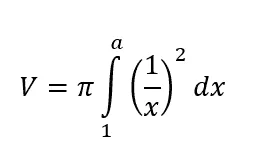
To find the volume, you slice the trumpet into infinitely many thin circular disks. Each disk, sitting at some position x along the axis, has a radius of 1/x, so its area is π times (1/x)². Adding up all those disk areas from x=1 out to some large number a gives you an integral: π∫₁^a 1/x² dx. When you evaluate that integral, you get π(1 - 1/a). Now take the limit as a heads toward infinity. That 1/a term shrinks to nothing, and you are left with a clean, simple V = π.
The surface area tells a completely different story. Imagine the trumpet as a stack of unit-height cylinders, each one slightly narrower than the last. The curved surface area of each cylinder is its circumference times its height, which works out to 2π times 1/x. Summing those up across all the cylinders gives you 2π times the series 1 + 1/2 + 1/3 + 1/4 and so on. That is the harmonic series, and it is a notorious diverter. It grows without bound, albeit painfully slowly. Multiply by 2π and the surface area still blows up to infinity.
So there it is. A shape you could fill with a finite amount of material, roughly three cubic units of space, yet you could never paint its outside. Every time you think you have covered the surface, the trumpet keeps narrowing, keeps extending, and keeps demanding more paint. The mathematics is airtight, and the intuition is left sputtering. That tension, that refusal of the universe to make things tidy, is exactly what makes this paradox so delicious.
The Painter's Paradox: Filling It vs. Painting It
Here is where the Gabriel's horn paradox really digs its claws in. The volume of the horn comes out to roughly 3 cubic units, which in everyday terms means about 3,000 units of paint could fill it completely. Yet the surface area is infinite. So you can fill the thing, but you can never paint it.
Picture yourself as a painter standing in front of this impossible object. You pour your 3,000 units of paint into the wide opening, and it slides down, down, down the narrowing tunnel. The paint settles, and the horn is full. Job done, right?
Not so fast. The paint inside the horn does touch the inner surface, but mathematically speaking, that contact does not cover the entire surface. Here is the strange truth: the horn narrows forever, getting thinner and thinner as it stretches toward infinity, but it never actually ends. The walls keep going with no final edge to stop at.
So the inside gets filled with a finite amount of paint, while the outside would demand an endless supply. That is the paradox in its rawest form, and it rattled some of the sharpest minds of the 17th century, including Thomas Hobbes, John Wallis, and Galileo Galilei, all of whom wrestled with what infinity really meant when it showed up in geometry.
The resolution comes from a clever bit of rearranging. Imagine the horn turned on its side like a birthday cake with endless layers, each one a cylinder stacked on the last. Add up the volumes of all those cylinders, and you land right back at the same finite number. The curved surface areas, though, add up to a harmonic series, and that is a sum that refuses to converge, which is why the surface never runs out.
Now stand that cake upright, and something delightful happens. The layers nest inside one another like stacked cups, collapsing down to a single cylinder with a volume of exactly pi. The apparent impossibility dissolves. The horn holds finite paint, always has, and the infinite surface is just what happens when a shape keeps shrinking without ever calling it quits.
How the Paradox Gets Resolved (and the Basel Problem's Surprise Cameo)
The trick to dissolving the Gabriel's horn paradox lies in a simple realization: a finite volume can absolutely cover an infinite area when you rearrange it cleverly. The horn itself never breaks any rules, it just bends our intuition about how space and surface relate to each other. Once you see the geometry from the right angle, the impossibility evaporates.
Picture a row of squares sitting side by side, stretching off to infinity. The first square has area 1, the next has area 1/4, then 1/9, then 1/16, and so on, each one smaller than the last. Add up all those areas and you get a sum that looks like it should blow up to infinity, but it doesn't. It settles at a specific, finite number.
That sum has a famous name: the Basel problem. Pietro Mengoli, an Italian mathematician, first posed the question in 1644, asking what the infinite sum of reciprocal squares actually equals. It took nine decades for anyone to crack it. In 1734, Leonhard Euler delivered the answer: the sum equals π²/6, which works out to approximately 1.644934. An infinite number of terms, yet a perfectly finite total.
Now here's where the connection to our horn gets beautiful. The idea of "Gabriel's wedding cake," attributed to Fleron, offers a way of slicing the horn into stacked cylinders that makes everything click. Imagine the horn tipped on its side like a layer cake, each layer a cylinder with unit height and a radius that shrinks as you move along. The volumes of those cylinders follow the same pattern as the squares: 1, 1/4, 1/9, 1/16, and so on. Sum them all up and you get exactly π, the same finite volume as the horn itself.
But the surface areas of those same cylinders? They form the harmonic series, 1 + 1/2 + 1/3 + 1/4 and onward, which diverges to infinity. So the cake has finite volume but infinite surface area, just like the horn it represents.
Here is the twist that resolves everything. Take that layered cake and stand it upright instead of laying it flat. Each cylinder now nests inside the one below it, like a set of stacking cups. All those infinite layers collapse into a single solid cylinder with volume π. The infinite stack was never really infinite in any physical sense, it was just one ordinary cylinder wearing a disguise.
That is the resolution in a nutshell. The horn's volume is finite because the integral of 1/x² converges to a limit. Its surface, however, stretches out forever because the material of the horn keeps going without ever ending. No contradiction, just two different measurements behaving differently as the horn extends toward infinity. The paradox only felt impossible because we expected volume and surface area to grow or shrink together. They don't have to.
So the painter's dilemma dissolves. You can fill the horn with a finite amount of paint because its interior holds exactly π cubic units. You cannot paint its exterior because the surface runs on forever. Both statements are true, and neither one cancels the other. The horn is not a trick or a flaw in mathematics, it is a reminder that infinity behaves differently from anything we encounter in everyday life.
Frequently asked questions
What is Gabriel's horn and why is it paradoxical?
Gabriel's horn is a three-dimensional shape created by rotating the curve y=1/x around the x-axis, starting at x=1 and continuing forever. Its paradox lies in having a finite volume of exactly π cubic units while possessing an infinite surface area. This shape, discovered in the 17th century, defies everyday intuition about how objects should behave. Think of a trumpet that gets narrower and narrower, never quite closing off. As x grows larger, the value of 1/x shrinks toward zero, so the horn's opening keeps getting smaller. At x=10 the radius is 0.1; at x=100 it drops to 0.01. Yet no matter how far you travel along the horn, it never completely disappears. That endless tapering is what creates the strange mix of a contained interior and an unbounded exterior.
How can Gabriel's horn have finite volume but infinite surface area?
The mathematics behind this seeming impossibility comes down to two different integrals. The volume is calculated as π∫₁^∞ 1/x² dx, which converges to π. The surface area, however, involves summing the curved surfaces of stacked cylinders, which produces the harmonic series, a sum that grows without bound. Picture the horn as an infinite stack of paper-thin cylindrical rings, each one unit tall. Their radii shrink as 1/x, so their curved surface areas are 2π/x each. Adding these gives 2π times the harmonic series, which diverges to infinity. Meanwhile, the volumes of those same rings, each π/x², shrink fast enough that their total converges to a neat, finite number. The difference between how quickly these two quantities shrink is the entire secret.
Who discovered Gabriel's horn and when?
Evangelista Torricelli, an Italian physicist and mathematician, discovered this shape in the 17th century. The same man who invented the mercury barometer in 1643 also created a mathematical object that would puzzle thinkers for generations. Torricelli was working on questions about infinity and continuity, ideas that were deeply unsettling to mathematicians of his era. His trumpet became a flashpoint in debates about whether infinity could be tamed by mathematics at all. The shape was later named Gabriel's horn, possibly a nod to the biblical archangel, though the exact origin of the name is not documented in the source.
What is the painter's paradox?
The painter's paradox asks a deceptively simple question: if you have a container with finite volume, can you paint its entire surface? For Gabriel's horn, the answer seems to be no. You could fill the horn with about 3,000 units of paint, since its volume is finite, but you could never coat its outside because the surface area stretches to infinity. The strangest part is that the paint you pour inside touches the inner surface. Mathematically, though, that contact never covers the whole area. As you move toward the horn's tip, the surface narrows but never ends, so the area keeps accumulating without limit. The interior holds a fixed amount of liquid while the walls demand an endless supply of pigment.
How is the painter's paradox resolved?
The resolution comes from realizing that a finite volume can indeed cover an infinite area if you rearrange it cleverly. The wedding cake example demonstrates this: imagine Gabriel's horn as a stack of cylinders with shrinking radii. When laid on its side, the curved surfaces sum to infinity, but stand the cake upright and each layer nests inside the previous one, collapsing into a single cylinder with volume π. This insight, attributed to Fleron, shows the paradox dissolves under closer inspection. The infinite surface area exists only in the mathematical idealization. Real paint has thickness, so a physical horn would clog long before you reached infinity. The paradox lives purely in the realm of abstract geometry, where it reveals how our intuitions about space can mislead us.
What is the Basel problem and how does it relate to Gabriel's horn?
The Basel problem asks for the sum of the reciprocals of the squares of positive integers: 1 + 1/4 + 1/9 + 1/16 and so on forever. Pietro Mengoli posed this question in 1644, and Leonhard Euler solved it in 1734, proving the sum equals π²/6, approximately 1.644934. This same series appears when computing the horn's volume through stacked cylinders. Each cylindrical slice of the horn has volume π/x², so the total volume becomes π times the Basel sum. Since Euler showed that sum converges to π²/6, the horn's volume works out to exactly π. The connection between an ancient puzzle about infinite series and a paradoxical geometric shape is a notable example of how different areas of mathematics can illuminate each other.
Why did Thomas Hobbes and Galileo Galilei debate Gabriel's horn?
Thomas Hobbes and Galileo Galilei, along with John Wallis, found themselves drawn into arguments about Torricelli's trumpet because it challenged their understanding of infinity and continuity. In the 17th century, the idea that something could have an infinite surface yet a finite volume seemed to violate the very order of the universe. Hobbes, a philosopher, was among those who reportedly struggled to accept the result. Galileo had his own views on infinity, which shaped his approach to the question. Torricelli's horn forced these thinkers to confront the possibility that mathematics could describe objects that could never exist in the physical world, a notion that reshaped how scientists thought about the relationship between abstraction and reality. Editorial note: Any facts which remain unconfirmed are presented as such, hedged for accuracy.
Got a take on this? Add your voice to the conversation below →
No comments yet. Be the first.