Fiction Word Count Categories: Flash to Novel Guide
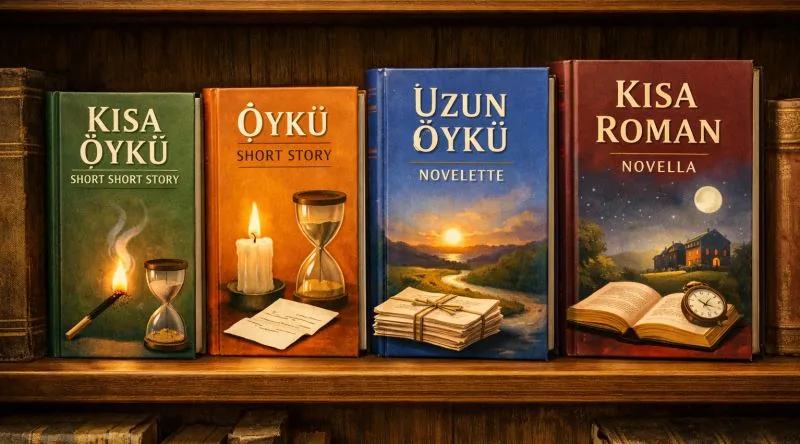
Fiction word count categories are the publishing industry's way of sorting stories by length, from flash fiction's single page to a novel's sprawling epic, and the standards set by the Science Fiction and Fantasy Writers Association (SFWA) provide the clearest yardstick for where each category begins and ends. Whether you are drafting a quick vignette or a 100,000-word manuscript, knowing these boundaries helps you target the right market and manage reader expectations. The moment you understand where your work falls, you can stop guessing and start submitting with confidence.
Fiction word count categories run from flash fiction at under 1,000 words, through short stories, novelettes, and novellas, up to novels at 40,000 words or more. The SFWA defines these ranges for award eligibility, and most publishers follow similar guidelines, though exact thresholds can vary slightly by genre.
- Flash fiction is typically defined as any story under 1,000 words, with some markets accepting pieces as short as six words.
- A short story generally falls between 1,000 and 7,500 words, making it the most common category for literary magazines.
- A novelette spans 7,500 to 17,500 words, a length that allows for more complex plots than a short story.
- A novella runs from 17,500 to 40,000 words, offering a compact arc that fits between short fiction and full novels.
- A novel begins at 40,000 words, though most commercial fiction lands between 70,000 and 100,000 words.
What Exactly Are Fiction Word Count Categories?
Fiction word count categories are the labels we slap on stories based on how long they run, and those labels actually change how a story gets built. A flash piece can't sprawl, a novella can't rush, and a novel has room to wander. The most widely accepted authority on these boundaries is the Science Fiction and Fantasy Writers Association, better known as SFWA, which the Nebula and Hugo awards both follow.
Here's the thing though. These aren't laws carved in stone. They're industry standards, and publishers tweak them all the time. SFWA is just the most respected voice in the room, the one everyone checks first when they need a shared language for talking about length.
One quirk worth knowing: SFWA is strict about these boundaries. The organization reportedly applies a conversion factor when Chinese character counts come up, treating them as roughly equivalent to 1.6 times the English word count. That conversion factor is an industry convention rather than a verified rule, but it shows how seriously these folks take precision.
Outside SFWA, very few organizations set hard worldwide boundaries. That's part of why their numbers carry so much weight in contests, submissions, and award categories. When you hear someone call a story a novelette or a novella, odds are they're working from the SFWA scale, whether they know it or not.
Flash Fiction and Short Short Stories: Under 1,000 Words
Before we get to the longer forms, let's talk about the tiny ones. In most literary circles, anything under 1,000 words gets the label flash fiction or short short story, even though the Science Fiction and Fantasy Writers Association (SFWA), the worldwide authority for Nebula and Hugo awards, simply lumps everything below 7,500 words into the "short story" bucket. The upper limit for flash fiction shifts depending on who you ask. Some editors cap it at 700 words; others stretch it to 1,500.
The science journal Nature runs a section called "Futures" that publishes science fiction stories between 850 and 950 words, a tight window that forces writers to cut every ounce of fat. Below that, you find even more specific subcategories. There are 6-word stories, 280-character twitterature pieces, 50-word dribbles or minisagas, 100-word drabbles, 300 to 400-word micro fiction, and 500 to 750-word sudden fiction. These pieces skip exposition entirely. They drop you straight into the moment, relying on metaphor, surprise, and a sudden flash of insight, what writers call an epiphany.
The famous examples read like party tricks. "For sale: baby shoes, never worn" is often attributed to Ernest Hemingway, though that attribution is widely disputed and likely apocryphal. Franz Kafka's "Kleine Fabel" packs an entire philosophical parable into a single paragraph. Jorge Luis Borges did the same with "Del rigor en la ciencia," a one-paragraph meditation on maps and empire. Fredric Brown's "Answer" is just two sentences long and delivers one of the most chilling punchlines in science fiction. Ted Chiang's "What's Expected of Us" originally appeared in Nature's Futures section and explores free will in under a thousand words. Each of these proves that a complete story needs no more room than a coffee break.
Short Stories: 1,000 to 7,500 Words
If you want your work to be universally recognized as a short story, the sweet spot is 1,000 to 7,500 words. That range keeps you safely inside the definition used by the Science Fiction and Fantasy Writers Association (SFWA), the organization whose word count standards shape the Nebula and Hugo Awards. Those awards treat anything under 7,500 words as a short story, which means even flash fiction technically lives in this category.
Publishers, though, like to tinker with the edges. Some stretch the upper limit to 10,000 words; others pull it down to 5,000. So the 1,000 to 7,500 word window is really about avoiding arguments. Stay in that band and nearly every editor, contest judge, and award committee will call your piece a short story without blinking.
The philosophical anchor for this form comes from Edgar Allan Poe. He argued back in the 1840s that a short story should be readable in one sitting, and that every element should build toward a single emotional effect, whether that is sadness, irony, or fear. Poe's blueprint calls for few characters, limited settings, a compressed time span, and one central conflict. No subplots wandering off, no sprawling cast. Just one sharp, focused cut at a moment of truth.
His own "The Fall of the House of Usher" from 1839 is the textbook example of that theory in action. Anton Chekhov's "The Lady with the Dog" from 1899 shows how the form can hold a quiet, devastating romance in just a few scenes. G.K. Chesterton's "The Blue Cross" from 1910 introduced Father Brown and proved a detective story could fit the same tight frame. Jorge Luis Borges's "The Library of Babel" from 1941 compressed an entire infinite universe into a few pages, and Kurt Vonnegut's "Harrison Bergeron" from 1961 delivered a savage satire of equality in under 2,500 words. Five very different stories, all sharing that same disciplined shape.
Novelettes: 7,500 to 17,500 Words
Here is where the Science Fiction and Fantasy Writers Association (SFWA) draws the line at 7,500 to 17,500 words for a novelette. This is the sweet spot that science fiction and fantasy writers adore, because it gives them enough room to build a whole world without committing to a novel's worth of pages.
Think of it as the literary equivalent of a well-stocked toolbox. A short story might only let you carry a hammer and a nail. A novelette lets you bring the drill, the level, and maybe a spare battery pack. You can develop characters with real psychological depth, introduce complex ideas, and still have space left over for the kind of world-building that makes speculative fiction sing.
Some famous examples sit comfortably in this range, even if readers often misremember them. Herman Melville's "Bartleby, the Scrivener" clocks in at roughly 7,000 to 8,000 words, which places it right at the boundary. Franz Kafka's "In the Penal Colony" runs about 12,000 words, and Stephen King's "The Jaunt" lands around 8,000 to 9,000 words. All three are frequently labeled short stories, but their word counts and narrative structures actually place them in novelette territory.
Isaac Asimov's "Nightfall," George R.R. Martin's "Sandkings," and Ted Chiang's "Hell Is the Absence of God" are often cited as novelettes, but their classification is more flexible than that label suggests. "Nightfall" gets called a short story and a novella just as often. "Sandkings" runs about 20,000 words, which puts it firmly in novella range, and it even won the Nebula Award in that category. Chiang's story also gets labeled a short story frequently. These are wonderful works, but their classification is far from settled.
The Nebula Awards history adds another layer of intrigue. Ted Chiang has won the novelette category twice, a remarkable record that places him among the most decorated writers in this range. As for Ursula K. Le Guin, she won the category once, though the exact number of her nominations in it remains unverified. What is certain is that both writers left an indelible mark on this particular fiction word count category, proving that the novelette's length is no obstacle to literary greatness.
Novellas: 17,500 to 40,000 Words
The Science Fiction and Fantasy Writers Association draws the novella line at 17,500 to 40,000 words, though some publishers stretch that window to 20,000 to 50,000. Think of the novella as the literary equivalent of a perfectly portioned meal: substantial enough to satisfy, compact enough to leave you wanting more.
What sets this fiction word count category apart is its disciplined architecture. A novella typically carries a single main plot with no sprawling subplots. Everything funnels toward one thematic question, one central idea, one sharp critique. The characters are few in number, but they are never flat. They shift, they break, they transform, and that evolution drives the entire narrative forward.
Some of the most beloved works in the Western canon live in this space. H.P. Lovecraft's "The Shadow over Innsmouth" clocks in around 25,000 words, weaving its creeping dread through a New England fishing town. Robert Louis Stevenson's "Strange Case of Dr Jekyll and Mr Hyde," published in 1886, sits at roughly 17,000 to 18,000 words, right at the threshold. Franz Kafka's "The Metamorphosis" runs about 21,000 to 22,000 words, following Gregor Samsa's bizarre transformation. John Steinbeck's "Of Mice and Men" reaches approximately 29,000 words, and Ernest Hemingway's "The Old Man and the Sea" spans about 27,000 words. Each of these stories proves that brevity does not mean shallowness.
The novella offers a sweet spot for writers who want room to breathe without the commitment of a full novel. It demands focus, rewards restraint, and delivers a complete emotional arc in a single sitting. For readers, it is the perfect gateway between a quick story and a long-term literary commitment.
Novels: 40,000 Words and Up
Here is where the Science Fiction and Fantasy Writers Association draws its line in the sand: anything 40,000 words or more counts as a novel. That is the official benchmark, and it is a generous one. Plenty of publishers quietly ignore it and treat 50,000 or even 60,000 words as the real starting point before they will put "novel" on a cover.
What changes at this length? Everything about the architecture of the story. A novel gives you room for multiple plotlines that weave around each other instead of one straight thread. Several themes can breathe at once, and characters get the space to deepen and transform over time in ways a shorter form simply cannot support.
Some famous books hover right at that borderline, which makes them easy to mistake for novellas if you only glance at their page counts. Edgar Allan Poe's The Narrative of Arthur Gordon Pym of Nantucket, published in 1838, runs roughly 60,000 words and stands firmly as a novel. H.G. Wells's The Invisible Man from 1897 sits around 50,000 words. Franz Kafka's The Trial, published posthumously in 1925, comes in near 60,000. F. Scott Fitzgerald's The Great Gatsby, that 1925 classic, is surprisingly lean at about 47,000 words, yet no one would dream of calling it anything but a novel. Hermann Hesse's Siddhartha, released in 1922, also fits this category at roughly 40,000 to 45,000 words.
These works prove that the fiction word count categories are guides, not prisons. A book can be relatively short and still carry the weight, scope, and layered storytelling that readers expect from a novel.
Frequently asked questions
What is the difference between flash fiction and a short story?
Flash fiction runs under 1,000 words, while a short story typically spans 1,000 to 7,500 words. The SFWA, the organization behind the Nebula Awards, lumps everything under 7,500 words into the short story category, making flash fiction a subcategory of the short story for award purposes.
How many words are in a novelette?
A novelette contains 7,500 to 17,500 words. This range sits neatly between a short story and a novella, and it is a favorite length in science fiction and fantasy circles because it offers enough room to develop complex ideas without demanding the commitment of a full novel.
Why do publishers disagree on novel word counts?
The SFWA defines a novel as 40,000 words or more, but many publishers prefer a minimum of 50,000 to 60,000 words before they will call a manuscript a novel. The disagreement comes down to market expectations, since readers and bookstores tend to expect a certain heft from something labeled a novel.
What is the SFWA word count standard for novels?
The SFWA standard for a novel is 40,000 words or more. This is the threshold used for Nebula Award eligibility, and it is among the most generous definitions in the industry, since many commercial publishers hold out for a higher count before they will consider a work a novel.
Can a novella be considered a short novel?
Yes, novellas are often called short novels, and the two terms are frequently used interchangeably. The distinction lies in structure: a novella typically follows a single plot line, while a novel usually weaves together multiple subplots and themes across a longer span.
What are some famous examples of flash fiction?
"For sale: baby shoes, never worn" is the most famous example, though the attribution to Ernest Hemingway is widely disputed and likely apocryphal. Franz Kafka's "Kleine Fabel," Jorge Luis Borges's "Del rigor en la ciencia," Fredric Brown's two-sentence "Answer," and Ted Chiang's "What's Expected of Us" are all celebrated flash fiction pieces.
How does story length affect narrative structure?
Shorter forms like flash fiction skip exposition entirely and rely on implication, metaphor, and a sudden reveal to land their effect. Longer forms such as novels have room for multiple plots, deeper character arcs, and several themes running at once, which is why the length of a piece shapes how a writer approaches the story from the first sentence.
Why do Chinese characters affect word counts?
The SFWA reportedly applies a conversion factor when Chinese character counts come up, treating them as roughly equivalent to 1.6 times the English word count. This conversion factor is reported but not officially verified, so treat it as a practical guideline rather than a confirmed rule from the organization. Editorial note: Any specific word counts that remain unconfirmed across different publishing guidelines are presented as approximate ranges, and readers should verify individual market requirements before submitting.
Got a take on this? Add your voice to the conversation below →
No comments yet. Be the first.