Chess of the Wind: Lost 1976 Iranian Film Found
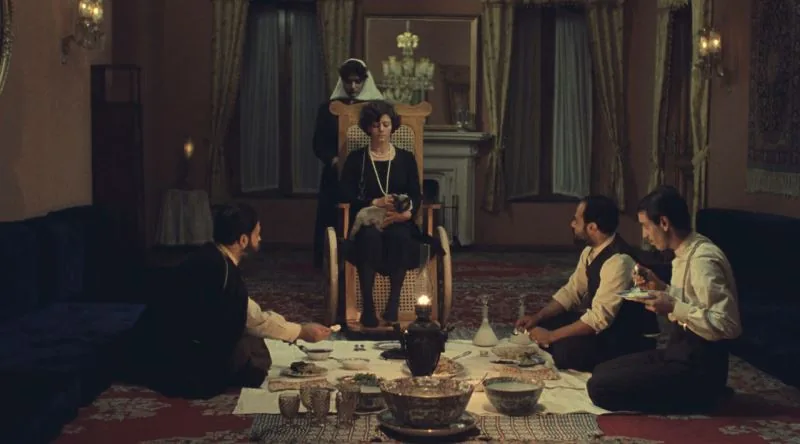
The "Chess of the Wind" film, a 1976 Iranian masterpiece directed by Mohammad Reza Aslani, was lost for decades until a chance discovery in a Tehran junk shop brought it back to life. The story of its rescue, restoration, and triumphant return to screens in 2020 is a testament to the enduring power of cinema and one daughter's determination to honor her father's legacy.
"Chess of the Wind," directed by Mohammad Reza Aslani, was made in Iran in 1976 and then vanished after being banned. Decades later, a print surfaced in a junk shop, was restored by the Film Foundation's World Cinema Project, and premiered at festivals in 2020 to widespread acclaim.
- Mohammad Reza Aslani directed "Chess of the Wind" in Iran in 1976.
- The film disappeared from circulation after its initial release and was presumed lost.
- A 35mm print was discovered in a Tehran junk shop, sparking its revival.
- The Film Foundation's World Cinema Project restored the film for modern audiences.
- The restored version screened at international festivals beginning in 2020.
A 1976 Premiere That Went Horribly Wrong
Mohammad Reza Aslani's first feature, Chess of the Wind, had its premiere in Tehran in 1976, and it was a disaster from the very first screening. The Iranian poet turned filmmaker watched his debut get torn apart by both critics and audiences alike, a humiliation that would echo through the next four decades of the film's strange, winding history.
According to the accounts that survived, the film managed only two screenings in Tehran. The first was catastrophic, a public failure that must have stung deeply. The second screening played to a nearly empty hall, as if the city had already made up its mind. As if that weren't enough punishment, the pre-revolutionary government stepped in and banned the film outright during those turbulent years leading up to the Islamic Revolution. The authorities of the Pahlavi era, already nervous about cultural expression, pulled the plug on this strange, poetic work.
And then the film simply vanished. For decades, Chess of the Wind was considered lost, a ghost of Iranian cinema that existed only in the memories of the few who had seen it and in the film cans that nobody could locate. The director's ambitious first feature, a work that had cost him so much, seemed destined to be forgotten entirely.
It's a brutal opening chapter for any film, but the story was far from over. The real miracle, the kind that makes you believe in cinematic fate, was still waiting to happen years later in a dusty junk shop in Tehran.
A Daughter's Search and a Junk Shop Miracle
Gita Aslani was the one person who refused to let Chess of the Wind die. While pursuing doctoral studies in Paris, she decided she needed to find her father Mohammad Reza Aslani's lost 1976 feature, both for her research and, one suspects, for her own peace of mind. She called her brother in Tehran and asked him to dig through the archives on her behalf.
They searched for a long time. They combed through official records, film catalogs, and whatever paperwork had survived the turbulent years after the Islamic Revolution. The results were grim. Every trail went cold, and every lead turned up nothing. The film, it seemed, had truly vanished from the earth. It was as if it had never existed at all.
Then came the kind of luck that only happens in stories. Her brother, while poking around Tehran, stumbled upon a junk shop. Not an antique dealer, not a collector's basement. A junk shop, the kind of place where dusty odds and ends go to be forgotten. Stacked in a corner were film cans, piled up like discarded relics. Inside those cans, almost impossibly, sat the original materials for Chess of the Wind.
The discovery was thrilling, but it came with a catch. The film was still banned in Iran, so the reels could not stay there. They were quietly moved to Europe, where the real work could begin. The cans made their way to the Film Foundation's World Cinema Project, co-founded by Martin Scorsese, and restoration started in earnest. By 2020, the once-lost picture was gleaming again on screens at major festivals, a miracle made real by a daughter's stubborn love and a junk shop's forgotten shelf.
Restoration and a Second Life at Festivals
Chess of the Wind found its way back to the screen thanks to The Film Foundation's World Cinema Project, the preservation initiative co-founded by Martin Scorsese, working hand in hand with Cineteca di Bologna. Together they brought Mohammad Reza Aslani's 1976 masterpiece back from the dead. The restored version had its world premiere at the 2020 Berlin International Film Festival, where audiences finally got to see what they had been missing for over four decades.
Once the film left Iran, still officially banned there, it traveled across Europe like a long-lost relative finally coming home. The BFI London Film Festival picked it up later that same year, giving British audiences their first chance to experience this rediscovered gem. Critics who caught these screenings didn't hold back. They called Chess of the Wind a discovered treasure, a time capsule from an Iran that no longer exists, and proof that cinema can survive even the harshest attempts to erase it.
There was something electric in the air at those festival screenings. Here was a film that had been shown exactly twice in Tehran back in 1976, jeered at by critics and ignored by audiences, then banned by the government and lost for years. Now it was playing to packed houses in Berlin and London, with people leaning forward in their seats, unable to believe what they were watching. The restoration team didn't just patch up old reels. They gave a new generation the chance to judge for themselves whether the original critics were right or hopelessly wrong.
The festival circuit embraced the film with open arms, and suddenly this forgotten work was being discussed in the same breath as the great lost classics of world cinema. For those who had worked on the restoration, seeing audiences respond so passionately was the ultimate vindication. Chess of the Wind had waited a long time for its moment in the spotlight, and when it finally came, it did not disappoint.
What 'Chess of the Wind' Is Actually About
Chess of the Wind drops us into 1920s Iran, inside a grand house where a wealthy matriarch has just died, and the vultures are already circling her fortune. Haji Amoo, her second husband, believes the entire estate now belongs to him. But the dead woman's daughter from a first marriage, Aghdas, who lives in a wheelchair, has no intention of accepting him as a father figure or surrendering a single thing he claims.
The tension crackles from the very first scenes. Haji Amoo struts around the property like he's already won, but Aghdas matches his arrogance with a quiet, steely resistance. She knows what he's after, and she's not about to make it easy for him. It's a battle of wills played out in candlelit rooms and shadowed corridors, where every glance carries a threat and every word feels loaded.
As if the two of them weren't enough, Haji's two nephews have their own schemes simmering in the background. They want a piece of that inheritance too, and one of them goes so far as to dream of marrying Aghdas to get it. So you've got multiple people circling the same fortune, each one convinced they deserve it more than the others. The house becomes a pressure cooker of greed and resentment, and you can feel it building toward something explosive.
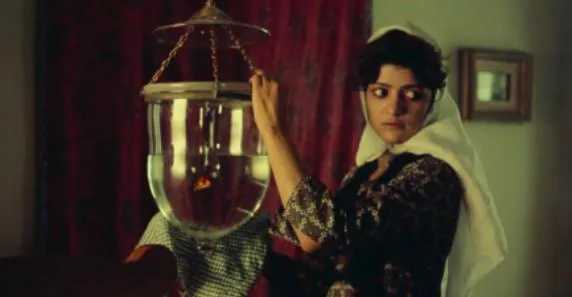
What makes Chess of the Wind truly stand out, though, isn't just the inheritance plot. It's how boldly it pushes against the conventions of pre-revolutionary Iranian cinema. The dialogue is poetic, almost lyrical, the kind of language that feels closer to verse than conversation. And then there's the content that made it so daring for its time: subtle same-sex undertones woven into the story, plus an unmistakable erotic tension between Aghdas and a young maid in the household. These aren't background details; they're central to the atmosphere that makes the film feel so alive and dangerous.
The source account claims director Mohammad Reza Aslani drew clear inspiration from Henri-Georges Clouzot's 1955 French thriller Diabolique. The skeletal structure of the suspense, the way the tension ratchets upward, reportedly mirrors that earlier masterpiece in several respects. Aslani's own daughter has said her father was deeply influenced by European cinema and always wanted to make films in that style. Whether you see it as homage or something closer to adaptation, the influence is hard to miss once you know to look for it.
The 'Diabolique' Connection: Inspired or Coincidence?
Watching Chess of the Wind, you might feel a strange tug of familiarity, especially if you know your French thrillers. The source account claims the plot closely mirrors Henri-Georges Clouzot's 1955 masterpiece Diabolique, a film about a murder plot hatched by a wife and her husband's mistress. Yet no reliable source has ever confirmed that director Mohammad Reza Aslani directly drew from that specific film, so we are left with a tantalizing question rather than a proven answer.
What makes the comparison so striking is the structural skeleton both films share. In Diabolique, set in a run-down boarding school, a domineering man is the target of a scheme that blurs the line between reality and nightmare. In Aslani's 1976 work, the power dynamics shift to a wealthy Tehran household where every character circles a dying matriarch's fortune like vultures. The erotic tension, the suffocating interiors, the sense that no one can be trusted. These elements feel like cousins across cultures.
Here is where the story gets curious. The original account insists that neither foreign nor local reviews ever mentioned this resemblance. You would think someone would have raised an eyebrow, but apparently the connection went unnoticed for decades. Aslani's daughter Gita, who later found the lost film in a Tehran junk shop, has said her father was deeply influenced by European cinema and always wanted to make films in that style. That much rings true, but it stops short of confirming a direct Diabolique inspiration.
According to the source account, Aslani admired the French thriller tradition and absorbed its techniques. The pacing, the slow burn, the way tension coils beneath polite surfaces. Those fingerprints are all over Chess of the Wind, whether or not Clouzot's specific work was on his mind. His daughter's words point to a broader European sensibility, not a single borrowing.
So what do we make of the resemblance? The honest answer is that we cannot know for certain. The claim that Aslani openly imitated Diabolique remains unverified, a piece of cinematic gossip that adds flavor to the film's legend without solid proof behind it. What we can say with confidence is that the film breathes the same air as postwar European thrillers, and that alone makes the comparison worth pondering.

Frequently asked questions
What is the story behind the lost Iranian film Chess of the Wind?
Chess of the Wind premiered in Tehran in 1976, directed by poet and filmmaker Mohammad Reza Aslani. It was screened only twice in Tehran before being suppressed by the pre-revolutionary Pahlavi government, then vanished for decades. The film was eventually rediscovered by accident in a Tehran junk shop, restored, and returned to screens in 2020.
How was Chess of the Wind rediscovered?
Gita Aslani, the director's daughter, found the lost film in a junk shop in Tehran. She had been searching for her father's missing work while doing doctoral research in Paris, and asked her brother living in Tehran to help. After lengthy archive searches turned up nothing, a pile of film canisters in a secondhand shop turned out to hold the treasure.
Who directed Chess of the Wind and what is its plot?
Mohammad Reza Aslani, an Iranian poet and filmmaker, directed Chess of the Wind. Set in 1920s Iran, the story centers on a wealthy family torn apart by an inheritance dispute after the matriarch dies. Her wheelchair-bound daughter Aghdas refuses to hand the fortune to her stepfather, while his two nephews scheme to grab a share for themselves.
Why was Chess of the Wind banned?
The pre-revolutionary Pahlavi government suppressed the film in the tense years before the Islamic Revolution. The suppression came on top of a disastrous initial reception: the first screening went terribly, and the second played to a nearly empty hall. After the ban, the film simply disappeared from circulation and was presumed lost for decades.
What role did Gita Aslani play in the film's restoration?
Gita Aslani found the film and helped bring it to restoration. After the reels were discovered in the Tehran junk shop, the film was still banned in Iran, so it was moved to Europe. The Film Foundation's World Cinema Project, co-founded by Martin Scorsese, restored it in partnership with Cineteca di Bologna, and the restored version premiered at the 2020 Berlin International Film Festival.
What makes Chess of the Wind significant?
Chess of the Wind stands as a rediscovered pre-revolutionary Iranian work with bold themes and a poetic visual style. Critics have hailed it as a hidden treasure, notable for its daring same-sex undertones and an erotic tension between Aghdas and the young housemaid. Some observers have suggested parallels with Henri-Georges Clouzot's 1955 French thriller Diabolique, though this connection remains speculative rather than confirmed.
Got a take on this? Add your voice to the conversation below →
No comments yet. Be the first.