Moltke's Letters on Mahmud II: Ottoman Reforms
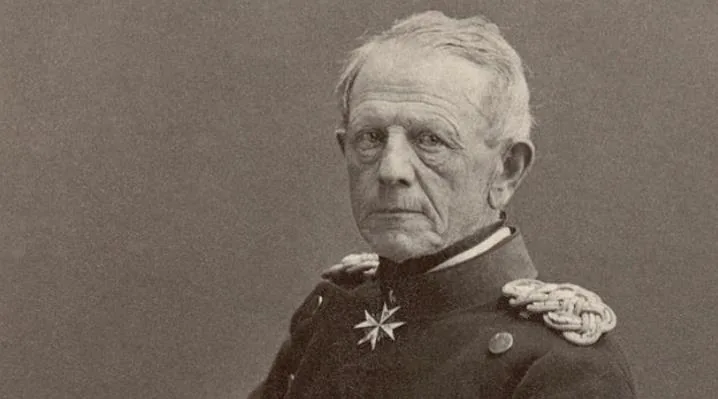
Moltke's letters on Mahmud II, written between 1836 and 1839, offer a Prussian officer's firsthand account of the Ottoman sultan's sweeping modernization drive, centered in Istanbul, as he dismantled the Janissary order and built a new army from the ground up. The correspondence captures a dying empire's desperate, brilliant attempt to reinvent itself, seen through the eyes of a foreign professional who both admired and despaired at the project. There is an aching intimacy to these dispatches, a sense of watching a man move against time with a state that could barely keep pace.
Prussian officer Helmuth von Moltke served as a military advisor to Sultan Mahmud II in the Ottoman Empire from 1836 to 1839. His letters document the sultan's determined efforts to modernize the army and administration after abolishing the Janissaries, painting a vivid portrait of reform, resistance, and a realm struggling to survive.
- Helmuth von Moltke arrived in Constantinople in 1836 as part of a Prussian military mission sent to assist the Ottoman army.
- Sultan Mahmud II had already abolished the Janissary corps in 1826, clearing the way for a new, European-style military.
- Moltke's letters describe the sultan's efforts to reform military training, education, and administration across the empire.
- The Prussian officer served in the Ottoman theater until 1839, the year Mahmud II died, leaving his reforms unfinished.
- Moltke's observations provide a rare foreign perspective on the Ottoman Empire's struggle to modernize in the 1830s.
The Day the Janissaries Fell
On June 15, 1826, Sultan Mahmud II ended a centuries-old nightmare in a single morning. The Janissary corps, which Moltke described as "rebellious and spoiled," had long been the most dangerous force in the Ottoman Empire. The Prussian officer, who served as a military advisor in Istanbul from 1836 to 1839, understood exactly what the Sultan had accomplished. Mahmud II had done what no ruler had managed before him: he crushed the Janissaries in one decisive stroke, an event history now calls the Auspicious Incident.
A popular telling claims that four sultans had lost their thrones and lives to Janissary revolts before Mahmud II. Historical records confirm only three such cases, but the threat was real enough either way. Mahmud II spent years preparing, gathering intelligence and waiting with remarkable patience. When the moment came, he moved with brutal efficiency. The corps that had terrorized the empire for generations simply ceased to exist.
Moltke noted that the ulema, the Islamic scholars who had historically sided with the Janissaries against the Sultan's arbitrary orders, were now too frightened to resist openly. They could only oppose the reforms through covert resistance and quiet disapproval. The destruction itself, however, proved to be the easy part. As Moltke observed, tearing down a corrupt institution took a single day. Building something better in its place would take decades and nearly break the Sultan in the process.
A Sultan Alone: The Search for Educated Minds
Helmuth von Moltke, the Prussian officer who spent 1836 to 1839 training Mahmud II's Ottoman army, wrote home with a startling confession: the sultan could not find a single enlightened person among his own people to help with his reforms. The man who had crushed the Janissaries and remade the empire's military stood utterly alone when it came to building something new. Moltke's letters paint a picture of a ruler isolated not by enemies, but by the sheer scarcity of educated minds around him.
The Prussian officer struggled to convey to his European readers just how low the educational level stood. He claimed that a literate Turk was called "hafız," meaning scholar, though this observation is contested: the term actually refers specifically to someone who has memorized the entire Quran, not merely a person who can read. According to Moltke's account, education often amounted to memorizing the first and last surahs of the Quran, and very few people properly understood even basic arithmetic. Many high officials, he observed, had to have letters written in their own language read aloud to them because they could not decipher the text themselves.
One anecdote from his letters stands out, though it has not been independently verified. Moltke recalled a high-ranking officer, a ferik, who had just learned to write his own name from his clerk. He practiced it over and over with a reed pen on scraps of paper. Whether or not that specific story is accurate, it captures the reality of an administration where literacy was a rare and precious skill.
Yet Moltke saw one exception worth noting. He explicitly set apart those Ottomans who had studied in Europe, predicting that these men would become important in the future. Mahmud II had already begun sending students abroad, sowing seeds that the sultan himself would never live to harvest. In 1839, the year Moltke's service ended, those seeds were still buried in the ground, but they would eventually grow into something far larger than anyone in that room could have imagined.
Seeds of a Republic
Moltke saw something in Mahmud II that most European observers missed entirely. The Prussian officer, who spent 1836 to 1839 advising and training the Ottoman army, concluded that the sultan had planted seeds he would never live to harvest. The demolition was complete, but the reconstruction had barely begun.
"Sultan Mahmud had the happiness of scattering these seeds," Moltke wrote in one of his letters, "but he had not yet gathered the fruits." Those letters, compiled into the book Türkiye Mektupları (Letters from Turkey), capture a ruler caught between destruction and creation. Mahmud II had spent years dismantling the old order, most dramatically when he eliminated the Janissary corps on June 15, 1826, in a single day and hour. But building something new proved far harder than tearing down what had come before.
The sultan searched desperately for educated allies to help him modernize the empire. He found almost none. Moltke described a startling intellectual vacuum. He claimed a literate Turk was called "hafız," meaning scholar, yet most had merely memorized portions of the Quran. A high-ranking official he met had just learned to write his own name, reportedly taught by his clerk only days earlier. The Prussian noted that many Turks in senior positions had to have their own letters read aloud to them.
Moltke's letters on Mahmud II remain one of the most vivid eyewitness accounts of this pivotal moment in Ottoman history. The Prussian officer understood that the sultan was working for a future he would never see. And indeed, the editorial note in the source observes that roughly 80 years after Mahmud II's death, the modern Turkish Republic was born. Moltke's words proved prophetic, even if neither he nor the sultan lived to witness it.
Frequently asked questions
What did Helmuth von Moltke write about Sultan Mahmud II in his letters from Turkey?
Helmuth von Moltke, a Prussian military officer who advised the Ottoman army from 1836 to 1839, described Sultan Mahmud II as a determined reformer who courageously eliminated the Janissaries but found himself isolated by a lack of educated collaborators. His letters, later compiled into "Türkiye Mektupları" (Letters from Turkey), paint a portrait of a ruler who demolished an old order faster than he could build a new one. Moltke arrived in Constantinople in 1836, one of several German officers Mahmud II had invited to modernize Ottoman forces. The letters he sent home to his family were never meant for publication, which makes their observations feel remarkably candid. He watched the Sultan up close, and what he saw impressed him, even as it worried him.
How did Mahmud II manage to abolish the Janissary corps?
Mahmud II eliminated the Janissary corps in a single day on June 15, 1826, an event known as the Auspicious Incident. He spent years preparing for this moment, carefully waiting until the political conditions favored him before striking decisively against the elite infantry force that had long terrorized the empire. The Janissaries had become a law unto themselves, staging revolts and toppling rulers who displeased them. Moltke noted that previous sultans had paid with their thrones and lives in confrontations with this rebellious force. Mahmud II understood he could not simply order them disbanded. He bided his time, built alliances, and when the moment came, he acted with swift brutality. The corps was shattered in hours, its power broken forever.
Why did Mahmud II struggle to find educated collaborators for his reforms?
Moltke reported that the educational level among Ottoman officials was extremely low, with few literate men and many high-ranking officers unable to read letters written in their own language. The Prussian officer claimed that a literate Turk was called "hafız," meaning one who memorized the Quran, and that education often amounted to little more than memorizing scripture. One anecdote from Moltke's letters stands out. He recalled a ferik, a high-ranking military officer, who had just learned to write his own name from his clerk, proudly practicing the letters over and over with a reed pen. According to the original account, even this modest skill was a recent achievement for the man. Moltke found the situation almost unbelievable, noting that Europeans could hardly imagine how low the intellectual level had sunk in the East.
Did Moltke believe Mahmud II's reforms would succeed?
Moltke admired the Sultan's courage but doubted whether rebuilding could match the speed of destruction. He saw genuine promise in the young Ottomans who had studied in Europe, predicting they would one day become enormously important to the empire's future. The Prussian officer watched Mahmud II clear the construction site of the old order with intelligence and determination. But when it came time to build something new, the Sultan found himself alone. Moltke wrote that Mahmud II had the rare happiness of scattering seeds for the future, even though he would never live to harvest the crop himself.
How did Mahmud II's reforms eventually lead to the modern Turkish Republic?
The editorial note accompanying Moltke's letters suggests that the seeds Mahmud II planted bore fruit roughly 80 years later, with the founding of the Turkish Republic in 1923. The Sultan died in 1839, never seeing the full results of his efforts, but his push toward Western-style modernization created a foundation that later reformers would build upon. Moltke's letters capture a moment of profound transition. He saw a ruler who understood that the old ways could not continue, who had the intelligence to recognize what needed to change and the courage to attempt it. What he lacked was a generation of educated men to help him carry the burden. The Ottomans who studied in Europe, whom Moltke singled out for praise, would eventually carry that work forward, though the road from Mahmud II's Istanbul to Atatürk's Ankara would prove long and winding. Editorial note: Any facts that remain unconfirmed from the historical record are presented as such, with clear hedging where details are uncertain.
Got a take on this? Add your voice to the conversation below →
No comments yet. Be the first.